
BuddhistCatholicContemplativeEvangelicalGeneral ChristianHinduJewishLatter-day SaintMuslimNew VisionsProgressive Christian
Beliefs
- Buddhist
- Catholic
- Contemplative
- Evangelical
- General Christian
- Hindu
- Jewish
- Latter-day Saint
- More Voices
- Muslim
- New Visions
- Pagan
- Progressive Christian
Topics
- Religion News
- Food and Religion
- Sports and Religion
- Religious Art
- Religious Music and Entertainment
- Religious Events
- History and Religion
- Style and Religion
- Politics and Religion
- Women in Religion
- Recreation Outdoors and Religion
- Business Finance and Religion
- Careers Workplace and Religion
- Education and Religion
- Family Parenting and Religion
- Health Fitness and Religion
- Home and Religion
- Relationships and Religion
- Technology and Religion
- Travel and Religion
Columnists
- Buddhist Columnists
- Business Finance and Religion Columnists
- Careers Workplace and Religion Columnists
- Catholic Columnists
- Contemplative Columnists
- Education and Religion Columnists
- Evangelists Columnists
- Family Parenting and Religion Columnists
- General Christian Columnists
- Health Fitness and Religion Columnists
- Hindu Columnists
- History and Religion Columnists
- Home and Religion Columnists
- Jewish Columnists
- More Voices Columnists
- Latter Day Columnists
- Muslim Columnists
- New Visions Columnists
- Nonreligious Columnists
- Pagan Columnists
- Politics and Religion Columnists
- Progressive Columnists
- Recreation Outdoors and Religion Columnists
- Relationships and Religion Columnists
- Religion News Columnists
- Religious Art Columnists
- Religious Events Columnists
- Religious Music and Entertainment Columnists
- Sports and Religion Columnists
- Style and Religion Columnists
- Technology and Religion Columnists
- Travel and Religion Columnists
- Women in Religion Columnists
Resource Library
- 2026 Calendar
- Library of World Religions
- The 100 Most Holy Places on Earth
- Patheos Answers
- Podcasts
- Videos
- Faith Leaders Database
- Anglican Episcopalian
- Bahai
- Baptist
- Buddhism
- Christianity
- Confucianism
- Eastern Orthodoxy
- Hinduism
- Holiness and Pentecostal
- ISKCON
- Islam
- Judaism
- Lutheran
- Methodist
- The Church of Jesus Christ of Latter-day Saints
- New Age
- Paganism
- Presbytarian and Reformed
- Protestantism
- Religion Behind the Scenes
- Roman Catholic
- Scientology
- Shia Islam
- Sikhism
- Sufism
- Sunni Islam
- Taoism
- Zen
- See all religions
Research Tools
 Ad-Free & Subscriber Log-In Subscription Support
Ad-Free & Subscriber Log-In Subscription Support
Follow Patheos 

- Trending:
- Forgiveness
- |
- Marriage
- |
- Consciousness
- |
- Death Penalty
- |
- Election
- |
- Halloween
 Messy Inspirations
- Home
- Catholic
- Biblical Languages Useful?
Biblical Languages Useful?
Last updated on: July 2, 2021 at 5:09 pm by Fellow Dying Inmate
Biblical Languages Useful? 2021-07-02T17:09:36-04:00 Fellow Dying Inmate
Patheos Explore the world's faith through different perspectives on religion and spirituality! Patheos has the views of the prevalent religions and spiritualities of the world.
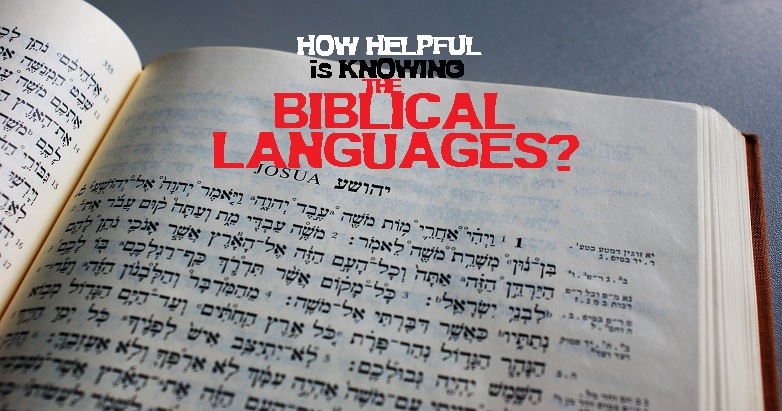
Biblical Languages Helpful? / Image by FotoRieth from Pixabay
Biblical languages aren’t much help in understanding Scripture without understanding the cultural background.
How useful is knowing the Biblical languages? Not much if you don’t grasp the cultural world of the Bible. Maybe you can read Hebrew, Greek, and Aramaic fluently. But if you are reading these with the wrong cultural context, those languages won’t help. In fact, instead of understanding the Sacred Page, all you’ll get is non-understanding and distortion.
Here’s a video about what gives languages meaning:
Biblical Language: Abba, Heaven & Hell
Jesus used the Aramaic expression, abba. But what does abba mean? Everyone “knows” that abba means daddy. We American Christians, Catholics included, have all been taught that. One slight problem, though—abba doesn’t mean, can’t mean, and never will mean “daddy.” But everyone believes it does! Too bad. Everyone thinking something spurious doesn’t make it so.
Abba comes from the Mediterranean world of ancient Mediterranean, Israelite fathers and those men were not daddies. Daddy comes from our post-industrial, Romantic-era of superabundance.
Do you know how many Ph.Ds I know that refuse to get this? Why? Psychological blocks reinforced by culture. They insist on reading the Mediterranean Bible with American lenses. And when you present evidence otherwise, the old two-step gets played: “if it gets me pissed, I must dismiss!”
Jesus showed the way to go to heaven, and he often taught about hell, right? Wrong!—that’s just more spurious familiarity “everyone knows.” Jesus and the Bible don’t talk about “heaven” or “hell,” later-evolved theological concepts ideally at home in our prayers and catechism, but foreign to Scripture. Instead, the Old and New Testaments speak about sky-vaults—that is, the proper translation of the Hebrew šāmayim, the Aramaic šĕmayin, and the Greek ouranois.
Salty Biblical Language & Parables
Sure, “John” tells his readers, “In the beginning was the Word” (John 1:1), but the truth is “in the beginning was the interpretation.” So what if you know the Hebrew, Aramaic, and Greek words for fire, salt, and earth. If you don’t have the culture, you’ve got nothing other than mental and emotional fiction congenial to our Western, 21st-century cultural values.
Jesus told simple stories called “parables.” But you complicate him by insisting that these parables are really allegories. They weren’t. As we’ve explored, allegories and parables are different animals. Did he belong to the elite status of later Church Fathers, or was he more familiar with starving peasants’ lowliness and metaphors?
Think how different Jesus’ words become upon realizing that he wasn’t a nice person? But he sounds pleasant to Western ears, no? Or is that our confirmation bias working on overdrive? Could it be our Western brains demanding that Jesus buy American values and become what we wish him to be—a culturally congenial Jesus? Jesus wasn’t nice, folks.
Healing VS Curing
We read in our Bibles that Jesus healed the sick. What does that mean, exactly? Does that mean that Jesus fixed or repaired biomedical malfunctions called “diseases”? Or is biblical healing something entirely different than what our world of medical science perceives? That would make a colossal difference to our reading, no? Surely it would.
How often I hear Christians of all stripes claiming that the Bible is obvious. How much more do those trained in the biblical languages accept this supposed Scriptural perspicuity but exclusively for their deeply learned eyes. But maybe they should think again. Indeed, if they are still reading the Mediterranean Scriptures with Western cultural cues, all the Hebrew, Aramaic, and Greek they know will be of little help.
Knowing Biblical Language & Jesus
Catholics today say they love Jesus, Mary, and Joseph—but can you really love someone you refuse to get to know? Do I love someone I refuse to accept as they really are? In that case, is it that I love them, or instead, my mental image of them? Say I claim to love you. What happens to my so-called love for you when I chose a mental fiction I have of you rather than the actual person you are? What is the worth of such love?
Are you still reading this? “If it gets me pissed, I must dismiss!”
How arrogantly we become in our spurious familiarity of often repeated Gospel scenes and stories. We claim that the so-called parable of the Prodigal Son is really about repentance and forgiveness. Is it? What if it is something else entirely? What if the father in the story is not an analog for God? And what then becomes of the endless homilies told Lent after Lent about this story?
Or what about the parable of the Shrewd Steward? Do we have a clue what that story was about? With insights from the social sciences, yeah, we do! But how was such a bewildering story good news for Jesus’ peasant audience? Don’t know? Don’t feel too bad—the evangelist we call “Luke” clearly didn’t understand this story either! That’s why he tagged four different punchlines onto the story, and none of them work very well!
What Does “Gospel” Mean?
And what is “the Gospel” anyway? What was the Gospel according to Jesus? Or, for that matter, what was the Gospel of God that Paul preached? Are these different from each other? And how are they any different than what often gets called “good news” these days, namely, a message of brutal, oppressive, coercive force? Is the God behind the message of cruel empire the God of Jesus?
So you have learned the biblical languages and can read them. That’s little defense against distortion if you continue anachronistically reading later ideas into the Scriptures! Do you understand what Paul was talking about “looking through” in 1 Corinthians 13:12? How do you imagine that? You know, Paul, the “Roman Citizen” according to that spinmeister, “Luke”? Or is that just another anachronism pretending to be a translation? And how would knowing the Greek words English translators botch into “mirror” and “Roman citizen” help without the cultural background?
Jesus is the Good Shepherd, and we are his flock. But what did sheep mean in the first century Mediterranean? Cute, cuddly, weak, and stupid—the way Americans imagine? Or were they instead symbols of Meditteranean hyper ethnomasculinity? How does culture impact our understanding of Jesus, the Mediterranean hero of Good Friday and the “Lamb of God”? Ultimately, your reading about sheep and shepherds in Scripture needs more than just knowing the biblical languages.
Biblical Language, Theologians & Historians
The New Testament authors were theologians, right? Wrong! They weren’t! What does knowing that do to your Bible reading? It changes things. Everyone knows (cough, cough, spurious familiarity, cough, cough!) that the Scriptures testify to the natural world and the supernatural world. Except they don’t—that concept doesn’t exist before Origen of Alexandria. With Origen come the theologians, not before!
And we all “know” (again via spurious familiarity) that “Luke” and the other Gospel writers were historians writing history. Except they were not. Neither “Luke,” Jesus, nor anyone else in antiquity had our Western “sense of history.” For them, past and present shared the same quality. So what does that do with all this talk about “Salvation History”? That’s a very modern theological idea, by the way—save citing Ireneaus. Save the anachronism.
Universalism & Trinitarian Monotheism in the Bible?
Thank God we are “certain” (via spurious anachronistic “facts”) that Jesus was a universalist. Except he wasn’t. In reality, neither was Paul or any other New Testament writer or character. Maybe we may perceive a trajectory of development moving in that direction from the earliest New Testament documents to the later ones and beyond. Still, true universalism doesn’t arrive on the scene anytime proximate to the first century Jesus groups. Reading the original biblical languages won’t help you.
In the Gospels, we see monotheistic believers just like today’s Christians. Better check your reading glasses—monotheism develops after the New Testament. The Bible is predominantly henotheistic. Reading in biblical languages won’t help here.
“Everyone knows” (via spurious belief) that the Gospels claim Jesus could violate the physical laws governing the universe. That’s what miracle—a nice post-Enlightenment word—means, right? Except that the authors of the Gospels or the characters they write about, Jesus included, could not think in terms of physical laws governing the universe. Therefore, they could not conceive of any violations of such physical laws. Call superhuman acts God did in Jesus marvels, signs, wonders, and mighty deeds—but hold off on using the anachronism “miracle.”
And who doesn’t know that the Bible is filled with Jews and Christians? Except there are none to be found within the Scriptures!
So, How Useful Is Knowing the Biblical Languages?
So let’s say you have a Ph.D. in ancient biblical languages and can read the Bible without English translation. If you remain latched on to these anachronistic understandings I list above, your reading is toast!
By the way, in all that I say above, I am referring to the Literal Sense of Scripture. That means what Scripture meant in the minds of the inspired human authors, what they meant to communicate to their audiences. That is the meaning that, according to official Catholic teaching, comes first. Before we read Scripture spiritually (i.e., allegorically), we must read it respectfully of what the human authors meant to say.
So, do you read ancient Hebrew, Aramaic, and Greek? Great! But the first reading of Scripture isn’t the original biblical languages. The first reading of Scripture is Mediterranean culture.
Previous Post

June 17, 2021
Don’t Be Stupid, American Catholics
Next Post

July 3, 2021 Upset? Too Bad!
Browse Our Archives
Select a Category Uncategorized
Select a Month August 2021 July 2021 June 2021 May 2021 April 2021 March 2021 February 2021 January 2021 December 2020 November 2020 October 2020 September 2020 August 2020 July 2020 June 2020 May 2020 April 2020 March 2020 February 2020 January 2020 December 2019 November 2019 October 2019 September 2019 August 2019
Follow Us!
TAKE THE
Religious Wisdom Quiz
How many times did Elijah pray for rain?
Select your answer to see how you score.
3 9 7 5
Support this
Column


Related posts from Messy Inspirations

Understanding Apocalypse & Its Creatures



TRENDING AT PATHEOS Catholic

Rejecting Doom: Christian Hope And Human Action
Christianity is a religion of hope. We are to have hope and...

It’s What Comes From Within Which Matters
One of the most difficult things for us to understand is why...

Why I Choose the Eucharist Over the Sermon
Choose the Eucharist, Not the Sermon What are we supposed to get...

5 Design Elements Found in Spiritually Rooted Homes
Putting Spirituality Into Home Decor Our homes are more than our living...

Credo: A Story of God Told with the...
About 10 years ago, I began to imagine a personal "Credo" that...

The Anatomy of Divine Revelation in Catholic Thought
The claim that God has made Himself known to human beings is...
view all Catholic blogs
Ad-Free & Subscriber Log-In Subscription Support
- About Us
- 2026 Calendar
- Videos
- Podcasts
- Library of World Religions
- Faith In Media Tracker
- Advertise With Us
- Write for Us
- Privacy Policy
- Terms of Service
- Do Not Sell My Data
- Contact Us
- Radiant Digital
- Manage Newsletter Subscriptions
- Unsubscribe From Notifications
- Sitemap
Copyright 2008-2026, Patheos. All rights reserved.
Subscription Support Ad-Free & Subscriber Log-In
Follow Patheos