
BuddhistCatholicContemplativeEvangelicalGeneral ChristianHinduJewishLatter-day SaintMuslimNew VisionsProgressive Christian
Beliefs
- Buddhist
- Catholic
- Contemplative
- Evangelical
- General Christian
- Hindu
- Jewish
- Latter-day Saint
- More Voices
- Muslim
- New Visions
- Pagan
- Progressive Christian
Topics
- Religion News
- Food and Religion
- Sports and Religion
- Religious Art
- Religious Music and Entertainment
- Religious Events
- History and Religion
- Style and Religion
- Politics and Religion
- Women in Religion
- Recreation Outdoors and Religion
- Business Finance and Religion
- Careers Workplace and Religion
- Education and Religion
- Family Parenting and Religion
- Health Fitness and Religion
- Home and Religion
- Relationships and Religion
- Technology and Religion
- Travel and Religion
Columnists
- Buddhist Columnists
- Business Finance and Religion Columnists
- Careers Workplace and Religion Columnists
- Catholic Columnists
- Contemplative Columnists
- Education and Religion Columnists
- Evangelists Columnists
- Family Parenting and Religion Columnists
- General Christian Columnists
- Health Fitness and Religion Columnists
- Hindu Columnists
- History and Religion Columnists
- Home and Religion Columnists
- Jewish Columnists
- More Voices Columnists
- Latter Day Columnists
- Muslim Columnists
- New Visions Columnists
- Nonreligious Columnists
- Pagan Columnists
- Politics and Religion Columnists
- Progressive Columnists
- Recreation Outdoors and Religion Columnists
- Relationships and Religion Columnists
- Religion News Columnists
- Religious Art Columnists
- Religious Events Columnists
- Religious Music and Entertainment Columnists
- Sports and Religion Columnists
- Style and Religion Columnists
- Technology and Religion Columnists
- Travel and Religion Columnists
- Women in Religion Columnists
Resource Library
- 2026 Calendar
- Library of World Religions
- The 100 Most Holy Places on Earth
- Patheos Answers
- Podcasts
- Videos
- Faith Leaders Database
- Anglican Episcopalian
- Bahai
- Baptist
- Buddhism
- Christianity
- Confucianism
- Eastern Orthodoxy
- Hinduism
- Holiness and Pentecostal
- ISKCON
- Islam
- Judaism
- Lutheran
- Methodist
- The Church of Jesus Christ of Latter-day Saints
- New Age
- Paganism
- Presbytarian and Reformed
- Protestantism
- Religion Behind the Scenes
- Roman Catholic
- Scientology
- Shia Islam
- Sikhism
- Sufism
- Sunni Islam
- Taoism
- Zen
- See all religions
Research Tools
 Ad-Free & Subscriber Log-In Subscription Support
Ad-Free & Subscriber Log-In Subscription Support
Follow Patheos 

- Trending:
- Forgiveness
- |
- Marriage
- |
- Consciousness
- |
- Death Penalty
- |
- Election
- |
- Halloween
 Messy Inspirations
- Home
- Catholic
- People—What Do We Mean By That?
People—What Do We Mean By That?
Last updated on: May 16, 2021 at 11:44 am by Fellow Dying Inmate
People—What Do We Mean By That? 2021-05-16T11:44:45-04:00 Fellow Dying Inmate
Patheos Explore the world's faith through different perspectives on religion and spirituality! Patheos has the views of the prevalent religions and spiritualities of the world.
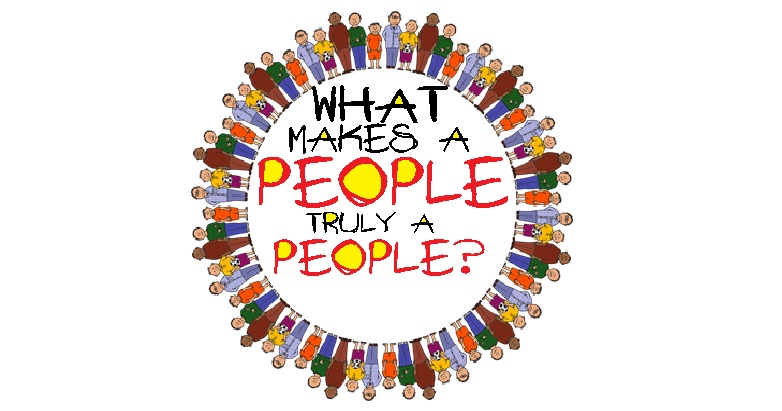
People as People / Image by Gordon Johnson from Pixabay
Most people misuse the term people by way of spurious familiarity.
Many people think and talk about familiar things in spurious ways. We get lulled into perilously imagining that we are so familiar with what we communicate about. Since we thoroughly understand it, we assume that no further reflection or clarification is needed. But quite often we are clueless on the issues we think we understand, and worse, in the business of pooling ignorance.
Many people, for instance, imagine they clearly understand what the term “people” means. You can see this in how they apply the term. It seems that they never bother to reflect on what makes a people a people. Instead, they adopt a popular yet spurious “fact” that “everyone knows” and run with that. Folks, we do this a lot, and the results, in this case with “people,” are disastrous and far-reaching.
Take a look at this video presentation here:
Sometimes, well-meaning people mistake spiritual realities for ethnic or genetic phenomena. In other words, they confuse spiritual or religious people with being a race. It’s as if you can see the DNA evidence. Geo-politics gets involved in that. So do racists.
Clearing Up Ideas About People
Allow me to illustrate why we aren’t really so clear with the concept of people with a thought experiment, one taken from Israeli historian Shlomo Sand. My mom, rest her soul, was not Jewish. Let’s say I am weary of being Catholic—God knows why I would ever wind up like that (har, har)! So, let’s imagine that I am shopping around, and I desire to become a secular Jew. How could I go about transitioning into that?
If you think about it, you should see the problem. I mean, it isn’t the same thing as joining any number of other “clubs.” Someone with a non-Jewish mother can become so many things—a Democrat, a U.S. citizen, a communist, a Catholic, a journalist, a Muslim, an Orthodox Jew, an atheist, an Israeli citizen, etc. All of these options are possible, and some are easy to become. But what about becoming a secular Jew?
Again, my mom wasn’t Jewish. So can I become a secular Jew? Not really. Like Sand says, that club is exclusive, closed off to people like me. Therefore I cannot join. Now think about why someone like me really cannot become a secular Jew. Think really hard on that and what it tells us about the meaning of “people” and Jewish identity. Does secular Judaism exist?
Getting Real
Indeed, Jews exist. And inexorably bound to that truth, Judaism, a religious tradition, exists. Jews are a religious people. Jewish identity is religious identity, and spiritual. But is there really such a thing as ethnic Jews? Is there a Jewish race? Hitler thought so. But what about reality?
Just like Jews (the religious people) exist, so also the very recent state of Israel exists. So also Israelis exist. Thus, Israeli culture must exist as well—we see Israeli food, music, a common language, cinema, and art, etc., all existing. Look carefully at that list as it helps show what makes up what a people is. The Israeli people do exist, and there is such a thing as Israeli identity. With me so far?
At one point, in Eastern Europe, another influential and significant culture existed—Yiddish culture. It was something quite distinct from Israeli culture. Tragically, Yiddish culture was destroyed by many forces (including Nazism, Bolshevism, Zionism, etc.). But once upon a time, there was indeed a Yiddish identity. People spoke Yiddish, dined on Yiddish food while Yiddish music played. And people could join Yiddish political parties. And so forth, and so on.
But there is no “secular Jewish culture.” Do you know why? It is because there is no such thing as the “secular Jewish people.”
No Secular Jewish Race
Think about Woody Allen, called a “secular Jew.” It should be very evident how very American Woody Allen is. Likewise, meet a secular Jew residing in Sofia, Bulgaria—don’t be astonished when you discover how thoroughly Bulgarian she is. Or perhaps travel to Nice in France and meet a secular Jewish person there. Please expect this person to behave mightily French.
This should all be apparent to many people reading this. But, strangely, it is not obvious to many people. Do you know why? It is spurious familiarity again at work. Spurious familiarity means information that seems obvious and is presumed and accepted by everyone, but is difficult or maybe even impossible to document or demonstrate. This is the same culprit why many wrongly imagine Paul went out to convert Gentiles, why Jesus was Jewish, and his immediate followers like Peter were Christians.
Many people believe these spurious facts. Among them, many Jews and “secular Jews” even believe the same. They believe all sorts of things like how the “race” of Jews are the closest thing we have to an eternal ethnic group or race that is five thousand years old.
But not every Jew or Israeli believes this. Even Israeli scholars like Shlomo Sand don’t, for example. Be careful with insufficient samples. And even if everyone did believe that, so what? Everyone can be wrong, right? Truth isn’t subject to democracy. Remember that when you go out to poison Socrates or burn Boris Karloff, okay Americans? Do us all a favor and season a dash of scholarly opinion into your democratic enterprise.
Spurious Beliefs Concerning People
Not all opinions are of equal value. Beliefs are, well, beliefs. Some are sound, some not so much, and some are idiotic. I know Christians who wrongly believe that their convictions in the rapture and in their individualistic take on sola Scriptura go back two thousand years. They think, mistakenly, that Jesus thought and taught their doctrinal essentials. Yes, there is such a thing as a spurious belief.
Are there really ethnic Jews? Is there really a Jewish race? Folks, “people” is a cultural concept. And like culture, the word “people” evolves.
What exactly is meant by people? What makes a people be a people? How far in time do any people go back? How far do the English go back? The French? The Italians? Everyone on earth living today is a mutt. I know beliefs get involved in this and emotions as well, but facts are facts.
Eternal People & Bad Ideas
Contrary to spurious belief, there are no “eternal people,” except in Marvel comics. No real people really goes back 5,000 years or even 2,000 years.
That doesn’t make Jews fake or “unreal” as a people. Amen, Jews are real and deserve our respect. As Muslims and Christians, Jews are a spiritual people. Yes, spiritual is real, my American materialist friends. Spiritual is really-real! But the word “people” evolves as we move through time and space. “Jew” and “Jewish people” are culture-concepts, not genetic phenomena. But Jewish race? Sorry, there are no races. Yes, like Dr. Cornel West writes, indeed, race matters. But please, don’t let the racists win.
Beliefs often change when contrary evidence gets presented. Or for pragmatic reasons. The national founder of the state of Israel, David Ben-Gurion, initially believed that the Palestinian residents of the early 20th-century Levant were the direct descendants of 1st-century Jews. He changed his opinion once resistance came from them. So we humans can change our beliefs for various reasons.
I know some “Black Hebrew Israelites” who claim to be the only authentic Jews on Planet Earth. And they will not budge on their beliefs. Moreover, they mock any Ashkenazi or Sephardim they encounter. They ridicule them and denigrate them as being “fake Jews.” Yeah, humans believe lots of spurious things! And they insist on many spurious things. Gratuitous insistence is always in surplus. Reason? Not so much!
Tolerating Beliefs, Reasonably
By the way, does questioning spurious familiarity and bringing up uncomfortable truths challenge the legitimacy of religious Jews? No. Does it deny or downplay the atrocities committed against people labeled Jews or who identified themselves as Jews over a thousand years? No. Does it eliminate the tremendous contributions Jews continue to give our world? No.
Some people believe many things, some spurious. I think belief is acceptable. Hey, I tolerate your right to believe even in ridiculous things, popular or unpopular. The only exception is when your belief gets weaponized to harm people. Like for geopolitical aspirations to promote a master-race democracy/apartheid state. Then, I might have a problem with that. Indeed, Catholics have, over the centuries, done similar evil things with our beliefs. Doing such things has always been wrong.
Hearing Everyone
Did you know that there are about 500 or so persons residing today on Mount Gerizim who claim to be the direct descendants of the Samaritans in Jesus day? It’s true. They believe that their practice and identity go back way further than that. How come I don’t see any Vatican acknowledgment of those people? Is it strange that I don’t read any official statements or Catechism entries saying we have to learn from this group? Why is that? Is 500 too small to teach anything of value? Is it too small to count?
I ardently believe we Christians (religious, spiritual people) ought to learn from Jews (religious, spiritual people). We need to expand our relationship, and understand and respect each other like two parallel branches on the same Abrahamic tree. We are sister branches. And look! There are MORE branches besides our two. There is the Muslim branch and its shoots. And look at the Samaritan branch, which does indeed count as well. And there are still other sisters, like the Mandaeans and a whole bunch more.
The entire tree should be dialoguing. It’s a spiritual tree of spiritual peoples, not ethnic peoples, spiritual peoples. Ultimately, we shouldn’t confuse parallel shoots with roots.
Spiritual, Not Ethnic
Ethnically speaking, Jews are like everyone else: a messy mix of many, many origins. That’s you, that’s me, Palestinians, and everyone else as well. Why are we reading our Bibles, Talmuds, and Qurans like scientifically accurate DNA-precise guides and history books? Don’t do that, folks.
As I said before, there is no actual blood links, or Ancestry.com DNA-accurate connections between…
1. Apiru like Abraham and Moses with Canaanite/Israelite David
2. Canaanite/Israelite David with Persian-period Yahud-people
3. Judaeans/Galileans/Pereans with post-500 CE religious Jews
The ties between 1, 2, and 3 are mostly mythological. Mostly. We’ll pick this topic up again, real soon. We need to talk about the so-called Jewishness of Jesus. And we need to discuss the myths of a “Judeo-Christian Tradition” and “Judeo-Christian Ethics.”
Previous Post
April 15, 2021
Dawkins & the Eucharist
Next Post
April 17, 2021 Jewish Homeland & DNA Findings
Browse Our Archives
Select a Category Uncategorized
Select a Month August 2021 July 2021 June 2021 May 2021 April 2021 March 2021 February 2021 January 2021 December 2020 November 2020 October 2020 September 2020 August 2020 July 2020 June 2020 May 2020 April 2020 March 2020 February 2020 January 2020 December 2019 November 2019 October 2019 September 2019 August 2019
Follow Us!
TAKE THE
Religious Wisdom Quiz
What was Jesus nailed to?
Select your answer to see how you score.
A treehouse A stake A ladder A cross
Support this
Column


Related posts from Messy Inspirations

Understanding Apocalypse & Its Creatures



TRENDING AT PATHEOS Catholic

Rejecting Doom: Christian Hope And Human Action
Christianity is a religion of hope. We are to have hope and...

It’s What Comes From Within Which Matters
One of the most difficult things for us to understand is why...

Why I Choose the Eucharist Over the Sermon
Choose the Eucharist, Not the Sermon What are we supposed to get...

5 Design Elements Found in Spiritually Rooted Homes
Putting Spirituality Into Home Decor Our homes are more than our living...

Credo: A Story of God Told with the...
About 10 years ago, I began to imagine a personal "Credo" that...

The Anatomy of Divine Revelation in Catholic Thought
The claim that God has made Himself known to human beings is...
view all Catholic blogs
Ad-Free & Subscriber Log-In Subscription Support
- About Us
- 2026 Calendar
- Videos
- Podcasts
- Library of World Religions
- Faith In Media Tracker
- Advertise With Us
- Write for Us
- Privacy Policy
- Terms of Service
- Do Not Sell My Data
- Contact Us
- Radiant Digital
- Manage Newsletter Subscriptions
- Unsubscribe From Notifications
- Sitemap
Copyright 2008-2026, Patheos. All rights reserved.
Subscription Support Ad-Free & Subscriber Log-In
Follow Patheos