
BuddhistCatholicContemplativeEvangelicalGeneral ChristianHinduJewishLatter-day SaintMuslimNew VisionsProgressive Christian
Beliefs
- Buddhist
- Catholic
- Contemplative
- Evangelical
- General Christian
- Hindu
- Jewish
- Latter-day Saint
- More Voices
- Muslim
- New Visions
- Pagan
- Progressive Christian
Topics
- Religion News
- Food and Religion
- Sports and Religion
- Religious Art
- Religious Music and Entertainment
- Religious Events
- History and Religion
- Style and Religion
- Politics and Religion
- Women in Religion
- Recreation Outdoors and Religion
- Business Finance and Religion
- Careers Workplace and Religion
- Education and Religion
- Family Parenting and Religion
- Health Fitness and Religion
- Home and Religion
- Relationships and Religion
- Technology and Religion
- Travel and Religion
Columnists
- Buddhist Columnists
- Business Finance and Religion Columnists
- Careers Workplace and Religion Columnists
- Catholic Columnists
- Contemplative Columnists
- Education and Religion Columnists
- Evangelists Columnists
- Family Parenting and Religion Columnists
- General Christian Columnists
- Health Fitness and Religion Columnists
- Hindu Columnists
- History and Religion Columnists
- Home and Religion Columnists
- Jewish Columnists
- More Voices Columnists
- Latter Day Columnists
- Muslim Columnists
- New Visions Columnists
- Nonreligious Columnists
- Pagan Columnists
- Politics and Religion Columnists
- Progressive Columnists
- Recreation Outdoors and Religion Columnists
- Relationships and Religion Columnists
- Religion News Columnists
- Religious Art Columnists
- Religious Events Columnists
- Religious Music and Entertainment Columnists
- Sports and Religion Columnists
- Style and Religion Columnists
- Technology and Religion Columnists
- Travel and Religion Columnists
- Women in Religion Columnists
Resource Library
- 2026 Calendar
- Library of World Religions
- The 100 Most Holy Places on Earth
- Patheos Answers
- Podcasts
- Videos
- Faith Leaders Database
- Anglican Episcopalian
- Bahai
- Baptist
- Buddhism
- Christianity
- Confucianism
- Eastern Orthodoxy
- Hinduism
- Holiness and Pentecostal
- ISKCON
- Islam
- Judaism
- Lutheran
- Methodist
- The Church of Jesus Christ of Latter-day Saints
- New Age
- Paganism
- Presbytarian and Reformed
- Protestantism
- Religion Behind the Scenes
- Roman Catholic
- Scientology
- Shia Islam
- Sikhism
- Sufism
- Sunni Islam
- Taoism
- Zen
- See all religions
Research Tools
 Ad-Free & Subscriber Log-In Subscription Support
Ad-Free & Subscriber Log-In Subscription Support
Follow Patheos 

- Trending:
- Forgiveness
- |
- Marriage
- |
- Consciousness
- |
- Death Penalty
- |
- Election
- |
- Halloween
 Messy Inspirations
- Home
- Catholic
- Eastertide Resources on the Resurrection
Eastertide Resources on the Resurrection
Last updated on: April 4, 2021 at 2:38 pm by Fellow Dying Inmate
Eastertide Resources on the Resurrection 2021-04-04T14:38:24-04:00 Fellow Dying Inmate
Patheos Explore the world's faith through different perspectives on religion and spirituality! Patheos has the views of the prevalent religions and spiritualities of the world.
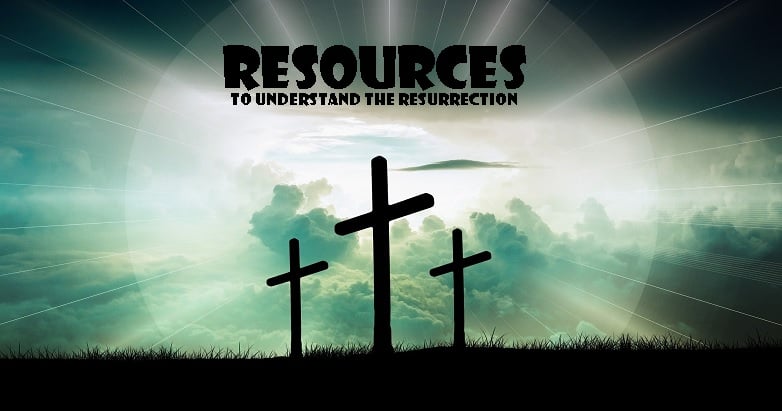
Eastertide Resources / Image by Gerd Altmann from Pixabay
Messy Inspirations offers several challenging resources about the Resurrection throughout Eastertide.
The Eastertide proclamation is one of Resurrection—Jesus Christ is risen! He is risen indeed! Amen, but, what does that mean? All week long and throughout Eastertide, Messy Inspirations will explore this fascinating topic, the core of our Christian faith.
Happy Easter to all of my readers! Here’s a preview of what is coming up—
Defining Eastertide
Resurrection, the center of and defining mystery to us Easter People, is the beginning and commissioning to Beloved Disciples. But what is the Resurrection? Is it a simple reanimation or resuscitation of a biomedically-dead Jesus? Is the Risen Jesus a physical reality, a return to biomedical life? Or is the resurrection something more?—a new life that does not pass away, a life unhindered by what we Westerners recognize as space, time, matter, and energy?
In any case, how can we communicate the significance of Eastertide for 21st century Christians? What is the real meaning of the empty tomb in John 20:1-9? Is this made more difficult because there is no single unified picture of the Resurrection of Jesus in the New Testament?
Eastertide Spotlight: Mary Magdalene
As presented in “John,” Mary Magdalene belongs to the highest status as the one officially commissioned as the apostle of the Risen Jesus. Magdalene certainly was very special to “John.” But given the Mediterranean cultural world in which the Fourth Gospel originated, why would any woman be deemed exceptional? First-century Israelite peasant women were people without voice except for that of the significant males of her life.
So why then are Mary Magdalene (John 20:11-18) and other women (John 4:49; 11:27; 12:3) featured so prominently by the Fourth Gospel? If our male ancestors in the faith were so patriarchal, how could it be that they were assisted in such crucial ways—understanding the very heart of the Gospel and Eastertide!—by women?
Many people today like to think that Jesus was married to Mary Magdalene. Could that explain why she was featured prominently in the Gospels? Was Jesus really married to her? If not, why?
The Shroud of Turin: Proof For Eastertide?
Is the Shroud of Turin, the so-called burial cloth of Jesus, scientific proof of the resurrection? Every Eastertide, we are flooded with documentaries and published articles on this strange and beloved relic. But what if I told you that the atrocious health conditions of first-century Galilean peasants contrast sharply with the robust figure presented on the Shroud of Turin? If someone proved that the Shroud is fake, what would that do to your faith?
Doubting Thomas & Eastertide
“Doubting” Thomas, the disciple associated with incredulity, is featured prominently in the original ending of the Gospel called “John” (20:19-31). Why? Often “John” presents “typical characters” to his readers. These “typical characters” are symbols turned into historical persons, some actually named from real historical people, but others, theological fictions invented to communicate a point.
These Johannine “typical characters” represent theological positions or traits that address pastoral problems that the Johannine Jesus group suffered. Some figure prominently in our Eastertide celebrations. Examples of typical characters in “John” include the Samaritan Woman, the Sighted Blind Man, the Beloved Disciples Lazarus and Martha, and Mary Magdalene.
Understanding Resurrection and the Tomb
Christians have a lot of spurious familiarity with understanding the mourning and burial customs of first-century Israelites. What was the significance of Israelite burial and mourning custom in Jesus’ day? Without this, can we truly appreciate the heart of Eastertide? What was the usual process of burial and mourning?
Ask most Christians, and they will happily reveal to you that they are ardent 21st-century disciples of Plato, Aristotle, and Plotinus. That means they believe that humans are either souls with bodies or souls and bodies. But is that really how Jesus, Paul, and other New Testament people believed? What if I told you that most Mediterraneans in the first century, even most elites, did not hold to what Plato and Aristotle believed about death or souls separating from bodies?
What did first-century Israelites believe happened when the flesh rotted off the bones of a dead person? What did the flesh hold? Why did Israelites believe that the bones essential for resurrection? What did they believe resurrection was, anyway?
By the way, was the death of Jesus really necessary? One Gospel tradition claims it was suitable and essential for the benefit of others. But this is in stark disagreement with another Gospel tradition adamant about how Jesus’ death was utterly wrong! This discrepancy has led some Western Christians to exaggerate the former, neglect the latter, and even imagine God as a sadistic monster.
Emmaus & Eastertide
What was really going on with the Resurrection appearances, like the one on the way to Emmaus? Appearances of Jesus risen and alive—like in the Emmaus story—vary among the Gospels. But insights from culturally sensitive investigation open up exciting possibilities.
What should modern American readers make of these accounts? Are these appearances literary creations? Did their authors write fables meant to teach readers a message or, at worst, fake news? Or are they exact representations of what literally happened, fact-precise accounts? Could they instead be reports of psychological delusions, products of the human brain coping with despair? What does all this do to our Eastertide journey?
What if Jesus’ contemporaries truly experienced him risen and alive but by way of altered states of consciousness experiences, a capacity for which God hardwired all human beings? Relatedly, what if, besides alleviating grief, such occurrences also helped the earliest believers better understand Jesus’ life and teaching and gave assurance of Jesus’ current whereabouts in the Realm of God? Ultimately, what if these experiences gave them new directions for problems?
There is so much to talk about over Eastertide.
Did Jesus really rise from the dead?
Previous Post
April 3, 2021
Jehovah the Hutt & Why Jesus Had To Die
Next Post

April 6, 2021 Faithful Yet Clueless: A Resurrection Reflection
Browse Our Archives
Select a Category Uncategorized
Select a Month August 2021 July 2021 June 2021 May 2021 April 2021 March 2021 February 2021 January 2021 December 2020 November 2020 October 2020 September 2020 August 2020 July 2020 June 2020 May 2020 April 2020 March 2020 February 2020 January 2020 December 2019 November 2019 October 2019 September 2019 August 2019
Follow Us!
TAKE THE
Religious Wisdom Quiz
True or False: Gideon defeated the Midianites with an army of just 3,000 men.
Select your answer to see how you score.
TRUE FALSE
Support this
Column


Related posts from Messy Inspirations

Understanding Apocalypse & Its Creatures



TRENDING AT PATHEOS Catholic

Rejecting Doom: Christian Hope And Human Action
Christianity is a religion of hope. We are to have hope and...

It’s What Comes From Within Which Matters
One of the most difficult things for us to understand is why...

Why I Choose the Eucharist Over the Sermon
Choose the Eucharist, Not the Sermon What are we supposed to get...

5 Design Elements Found in Spiritually Rooted Homes
Putting Spirituality Into Home Decor Our homes are more than our living...

Credo: A Story of God Told with the...
About 10 years ago, I began to imagine a personal "Credo" that...

The Anatomy of Divine Revelation in Catholic Thought
The claim that God has made Himself known to human beings is...
view all Catholic blogs
Ad-Free & Subscriber Log-In Subscription Support
- About Us
- 2026 Calendar
- Videos
- Podcasts
- Library of World Religions
- Faith In Media Tracker
- Advertise With Us
- Write for Us
- Privacy Policy
- Terms of Service
- Do Not Sell My Data
- Contact Us
- Radiant Digital
- Manage Newsletter Subscriptions
- Unsubscribe From Notifications
- Sitemap
Copyright 2008-2026, Patheos. All rights reserved.
Subscription Support Ad-Free & Subscriber Log-In
Follow Patheos