
BuddhistCatholicContemplativeEvangelicalGeneral ChristianHinduJewishLatter-day SaintMuslimNew VisionsProgressive Christian
Beliefs
- Buddhist
- Catholic
- Contemplative
- Evangelical
- General Christian
- Hindu
- Jewish
- Latter-day Saint
- More Voices
- Muslim
- New Visions
- Pagan
- Progressive Christian
Topics
- Religion News
- Food and Religion
- Sports and Religion
- Religious Art
- Religious Music and Entertainment
- Religious Events
- History and Religion
- Style and Religion
- Politics and Religion
- Women in Religion
- Recreation Outdoors and Religion
- Business Finance and Religion
- Careers Workplace and Religion
- Education and Religion
- Family Parenting and Religion
- Health Fitness and Religion
- Home and Religion
- Relationships and Religion
- Technology and Religion
- Travel and Religion
Columnists
- Buddhist Columnists
- Business Finance and Religion Columnists
- Careers Workplace and Religion Columnists
- Catholic Columnists
- Contemplative Columnists
- Education and Religion Columnists
- Evangelists Columnists
- Family Parenting and Religion Columnists
- General Christian Columnists
- Health Fitness and Religion Columnists
- Hindu Columnists
- History and Religion Columnists
- Home and Religion Columnists
- Jewish Columnists
- More Voices Columnists
- Latter Day Columnists
- Muslim Columnists
- New Visions Columnists
- Nonreligious Columnists
- Pagan Columnists
- Politics and Religion Columnists
- Progressive Columnists
- Recreation Outdoors and Religion Columnists
- Relationships and Religion Columnists
- Religion News Columnists
- Religious Art Columnists
- Religious Events Columnists
- Religious Music and Entertainment Columnists
- Sports and Religion Columnists
- Style and Religion Columnists
- Technology and Religion Columnists
- Travel and Religion Columnists
- Women in Religion Columnists
Resource Library
- 2026 Calendar
- Library of World Religions
- The 100 Most Holy Places on Earth
- Patheos Answers
- Podcasts
- Videos
- Faith Leaders Database
- Anglican Episcopalian
- Bahai
- Baptist
- Buddhism
- Christianity
- Confucianism
- Eastern Orthodoxy
- Hinduism
- Holiness and Pentecostal
- ISKCON
- Islam
- Judaism
- Lutheran
- Methodist
- The Church of Jesus Christ of Latter-day Saints
- New Age
- Paganism
- Presbytarian and Reformed
- Protestantism
- Religion Behind the Scenes
- Roman Catholic
- Scientology
- Shia Islam
- Sikhism
- Sufism
- Sunni Islam
- Taoism
- Zen
- See all religions
Research Tools
 Ad-Free & Subscriber Log-In Subscription Support
Ad-Free & Subscriber Log-In Subscription Support
Follow Patheos 

- Trending:
- Forgiveness
- |
- Marriage
- |
- Consciousness
- |
- Death Penalty
- |
- Election
- |
- Halloween
 Messy Inspirations
- Home
- Catholic
- Biblical Jews?—Real Scholars Weigh In
Biblical Jews?—Real Scholars Weigh In
Last updated on: April 18, 2021 at 10:31 am by Fellow Dying Inmate
Biblical Jews?—Real Scholars Weigh In 2021-04-18T10:31:51-04:00 Fellow Dying Inmate
Patheos Explore the world's faith through different perspectives on religion and spirituality! Patheos has the views of the prevalent religions and spiritualities of the world.

Biblical Jews? / Image by congerdesign from Pixabay
Growing numbers of biblical scholars believe that any mention of Jews in Scripture translations is erroneous.
Just another quick post here. I have been blogging recently on what is meant by “people,” particularly the Jewish people. Then, in my last post, I got into the subject of a Jewish homeland and “Jewish DNA.“ What was presented there makes apparent that there were no Jews 2,000 years ago. But if indeed there were no Jews before 500 CE, why then are Biblical translations filled with references to Jews?
Before reading on, I encourage you to read these earlier posts.
And if you haven’t already, watch this video presentation—
What About Biblical Jews?
So what about all the times we read about Jews in the Scriptures? I open up my English Bible translation, and I see Jews mentioned all over in various books. What gives?
Some weeks ago, on Good Friday, English-speaking Catholics heard the Passion According to John (18:1—19:42). Repeatedly this story, badly translated into English, mentions “the Jews” in the most horrific light imaginable for Christians. This disastrous persistence in anachronism carelessly committed by parishes throughout the U.S. was addressed decades ago by Context Scholar John Pilch. Read his thoughts concerning Biblical Jews here.
Now you might be thinking something like,
What’s the big deal, Fellow Dying Inmate? We all know that Jesus was a Jew, right? Heck, Jesus was a Jewish Rabbi. And Jesus’ followers were all Jews. Paul was a Jew who converted to Christianity. Doesn’t that end the discussion of whether Jews go back thousands of years? Biblical Jews? Of course, there were biblical Jews!
Scholars Explain Biblical Jews
Catholics and other Christians should take seriously what various scholars like John Pilch have to say about so-called biblical Jews like Jesus. Another scholar to take seriously is Pilch’s colleague, Dr. John Elliott. He writes:
Jesus was neither a ‘Jew’ nor a ‘Christian’. This is true at diverse levels and stages of discourse. For one thing, Jesus was neither a ‘Jew’ nor a ‘Christian’ in the sense that these terms are used today in ordinary discourse.
As Jacob Neusner and a growing number of scholars have been emphasizing for some time now, the concept ‘Jew’ as understood today derives not from the first century but from the fourth and following centuries CE. It denotes persons shaped by and oriented to not only Torah and Tanakh but Mishnah, Midrashim and Talmudim. (See Jacob Neusner, Judaism and Christianity in the Age of Constantine: History, Messiah, Israel, and the Initial Confrontation, Chicago Studies in the History of Judaism; Chicago: University of Chicago Press, 1987, p. ix.)
In similar fashion the name ‘Christian’ as used and understood today designates persons marked more by doctrines and events of the fourth and later centuries (trinity of the godhead, double natures of Christ, consolidating and hierarchically structured catholic church) than by those of the first. (please see Rosemary Radford Ruether, ‘Judaism and Christianity: Two Fourth-Century Religions’, Sciences Religieuses/Studies in Religion 2, 1972, pp. 1-10)
Biblical scholar Elliott continues …
Thirty years ago Rosemary Radford Ruether had already pointed out that it was in the fourth century that Judaism and Christianity assumed the features by which they are known today. Indeed, Jewish scholar Daniel Boyarin (Dying for God: Martyrdom and the Making of Christianity and Judaism [Stanford: Stanford University Press, 1999], p. 6) cites Ruether with approval and aptly describes both collectivities as ‘twins in the womb’ until the fourth century.
To call Jesus a ‘Jew’ or a ‘Christian’, as these words are understood in the vernacular today, not only confuses the matter historically, but has led to disastrous social and inter-religious consequences.
In the lexicon entry on Ἰουδαῖος in A Greek-English Lexicon on the New Testament and Other Early Christian Literature (2000, p. 478), Frederick Danker laments that:
‘Incalculable harm has been caused by simply glossing Ἰουδαῖος with ‘Jew’, for many readers or auditors of the Bible translations do not practice the historical judgment necessary to distinguish between circumstances and events of an ancient time and contemporary ethnic-religious-social realities, with the result that anti-Judaism in the modern sense of the term is needlessly fostered through biblical texts.’
So No Biblical Jews?
Elliott explains,
“Despite the growing number of scholars in agreement with these positions [see below—FDI], use of ‘Jew’ and ‘Judaism’ in reference to Israel and Israelites in the Second Temple period and use of ‘Christian’ and ‘Christianity’ in reference to Jesus and his earliest followers continue unabated in both professional and lay circles.”
I invite everyone to download and carefully read John Elliott’s tour de force,
Jesus the Israelite Was Neither a `Jew’ Nor a `Christian’: On Correcting Misleading Nomenclature
See also—
A.T. Kraabel, ‘The Roman Synagogue: Six Disputable Assumptions’, JJS 33 (1982), pp. 445-64; Robert J. Miller (ed*.), The Complete Gospels: Annotated Scholars Version* (Sonoma: Polebridge Press, 1992);
Bruce J. Malina, Windows on the World of Jesus (Louisville, KY: Westminster/John Knox Press, 1993), p. xv;
Richard A. Horsley, ‘The Death of Jesus’, in Bruce Chilton and Craig A. Evans (eds.), Studying the Historical Jesus: Evaluations of the State of Current Research (Leiden: Brill, 1994), pp. 395-422 (398);
idem, Galilee: History, Politics, People (Valley Forge, PA: Trinity Press International, 1995);
Helmut Koester, ‘The Historical Jesus and the Historical Situation of the Quest: An Epilogue’, in Bruce Chilton and Craig A. Evans (eds.), Studying the Historical Jesus: Evaluations of the State of Current Research (Leiden: Brill, 1994), pp. 535-46 (541-42);
idem, ‘Historic Mistakes Haunt the Relationship of Christianity and Judaism’, Biblical Archaeological Review 21.2 (1995), pp. 26-27;
John H. Elliott, 1 Peter: A New Translation and Commentary (AB, 37B; New York: Doubleday, 2000), p. 6;
John J. Pilch, ‘Are There Jews and Christians in the Bible?’, Hervormde Teologiese Studies 53 (1997), pp. 119-25;
John J. Pilch, ‘Jews and Christians’, in idem, The Cultural Dictionary of the Bible (Collegeville: Liturgical Press, 1999), pp. 98-104;
Philip F. Esler, Galatians (New Testament Readings; London and New York: Routledge, 1998), p. 4;
Philip F. Esler, Conflict and Identity in Romans: The Social Setting of Paul’s Letter (Minneapolis: Fortress Press, 2003), pp. 62-74;
Bruce J. Malina and Richard L. Rohrbaugh, Social-Science Commentary on the Synoptic Gospels (Minneapolis: Fortress Press, 1992), pp. 32-34;
Bruce J. Malina and Richard L. Rohrbaugh, Social-Science Commentary on the Gospel of John (Minneapolis: Fortress Press, 1998), pp. 44-46.
Previous Post
April 17, 2021
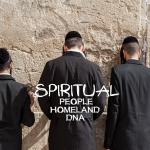
Jewish Homeland & DNA Findings
Next Post

April 21, 2021 Marty the Manipulator: Sociopaths in Ministry
Browse Our Archives
Select a Category Uncategorized
Select a Month August 2021 July 2021 June 2021 May 2021 April 2021 March 2021 February 2021 January 2021 December 2020 November 2020 October 2020 September 2020 August 2020 July 2020 June 2020 May 2020 April 2020 March 2020 February 2020 January 2020 December 2019 November 2019 October 2019 September 2019 August 2019
Follow Us!
TAKE THE
Religious Wisdom Quiz
True or False: Abraham was 100 years old when Isaac was born.
Select your answer to see how you score.
TRUE FALSE
Support this
Column


Related posts from Messy Inspirations

Understanding Apocalypse & Its Creatures



TRENDING AT PATHEOS Catholic

Rejecting Doom: Christian Hope And Human Action
Christianity is a religion of hope. We are to have hope and...

It’s What Comes From Within Which Matters
One of the most difficult things for us to understand is why...

Why I Choose the Eucharist Over the Sermon
Choose the Eucharist, Not the Sermon What are we supposed to get...

5 Design Elements Found in Spiritually Rooted Homes
Putting Spirituality Into Home Decor Our homes are more than our living...

Credo: A Story of God Told with the...
About 10 years ago, I began to imagine a personal "Credo" that...

The Anatomy of Divine Revelation in Catholic Thought
The claim that God has made Himself known to human beings is...
view all Catholic blogs
Ad-Free & Subscriber Log-In Subscription Support
- About Us
- 2026 Calendar
- Videos
- Podcasts
- Library of World Religions
- Faith In Media Tracker
- Advertise With Us
- Write for Us
- Privacy Policy
- Terms of Service
- Do Not Sell My Data
- Contact Us
- Radiant Digital
- Manage Newsletter Subscriptions
- Unsubscribe From Notifications
- Sitemap
Copyright 2008-2026, Patheos. All rights reserved.
Subscription Support Ad-Free & Subscriber Log-In
Follow Patheos