
BuddhistCatholicContemplativeEvangelicalGeneral ChristianHinduJewishLatter-day SaintMuslimNew VisionsProgressive Christian
Beliefs
- Buddhist
- Catholic
- Contemplative
- Evangelical
- General Christian
- Hindu
- Jewish
- Latter-day Saint
- More Voices
- Muslim
- New Visions
- Pagan
- Progressive Christian
Topics
- Religion News
- Food and Religion
- Sports and Religion
- Religious Art
- Religious Music and Entertainment
- Religious Events
- History and Religion
- Style and Religion
- Politics and Religion
- Women in Religion
- Recreation Outdoors and Religion
- Business Finance and Religion
- Careers Workplace and Religion
- Education and Religion
- Family Parenting and Religion
- Health Fitness and Religion
- Home and Religion
- Relationships and Religion
- Technology and Religion
- Travel and Religion
Columnists
- Buddhist Columnists
- Business Finance and Religion Columnists
- Careers Workplace and Religion Columnists
- Catholic Columnists
- Contemplative Columnists
- Education and Religion Columnists
- Evangelists Columnists
- Family Parenting and Religion Columnists
- General Christian Columnists
- Health Fitness and Religion Columnists
- Hindu Columnists
- History and Religion Columnists
- Home and Religion Columnists
- Jewish Columnists
- More Voices Columnists
- Latter Day Columnists
- Muslim Columnists
- New Visions Columnists
- Nonreligious Columnists
- Pagan Columnists
- Politics and Religion Columnists
- Progressive Columnists
- Recreation Outdoors and Religion Columnists
- Relationships and Religion Columnists
- Religion News Columnists
- Religious Art Columnists
- Religious Events Columnists
- Religious Music and Entertainment Columnists
- Sports and Religion Columnists
- Style and Religion Columnists
- Technology and Religion Columnists
- Travel and Religion Columnists
- Women in Religion Columnists
Resource Library
- 2026 Calendar
- Library of World Religions
- The 100 Most Holy Places on Earth
- Patheos Answers
- Podcasts
- Videos
- Faith Leaders Database
- Anglican Episcopalian
- Bahai
- Baptist
- Buddhism
- Christianity
- Confucianism
- Eastern Orthodoxy
- Hinduism
- Holiness and Pentecostal
- ISKCON
- Islam
- Judaism
- Lutheran
- Methodist
- The Church of Jesus Christ of Latter-day Saints
- New Age
- Paganism
- Presbytarian and Reformed
- Protestantism
- Religion Behind the Scenes
- Roman Catholic
- Scientology
- Shia Islam
- Sikhism
- Sufism
- Sunni Islam
- Taoism
- Zen
- See all religions
Research Tools
 Ad-Free & Subscriber Log-In Subscription Support
Ad-Free & Subscriber Log-In Subscription Support
Follow Patheos 

- Trending:
- Forgiveness
- |
- Marriage
- |
- Consciousness
- |
- Death Penalty
- |
- Election
- |
- Halloween
 Messy Inspirations
- Home
- Catholic
- Jesus Wasn’t Christian
Jesus Wasn’t Christian
Last updated on: March 15, 2021 at 4:30 pm by Fellow Dying Inmate
Jesus Wasn’t Christian 2021-03-15T16:30:12-04:00 Fellow Dying Inmate
Patheos Explore the world's faith through different perspectives on religion and spirituality! Patheos has the views of the prevalent religions and spiritualities of the world.
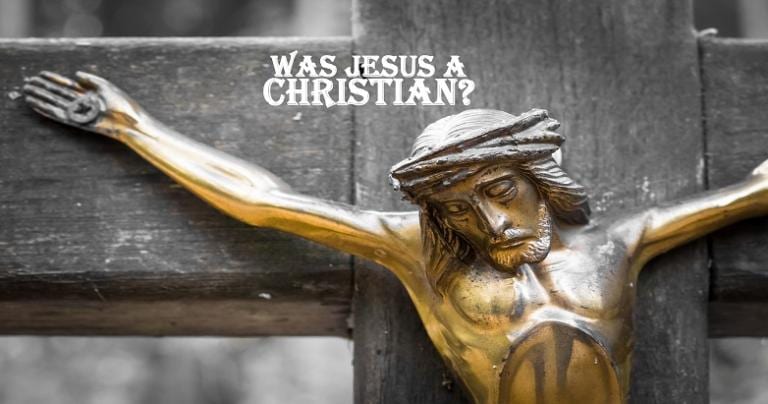
Jesus Wasn’t Christian / Image by Thomas B. from Pixabay
Jesus wasn’t Christian, and neither were the Twelve, Paul, or any other first-century persons.
Do you think of Jesus as the founder of Christianity? And do you imagine his disciples and the Apostle Paul as the first to convert to the religion he founded? If so, better think again because Jesus wasn’t Christian, and neither were his immediate followers.
We are no longer in Sunday school, brothers and sisters. To see what I mean, watch the following presentation—
Jesus Wasn’t Christian or Χριστιανός
The Greek term transliterated into “Christian” by Bible translators is Χριστιανός. It’s okay if you can’t understand those squiggles—I want it to appear strange because, in truth, it is alien to our familiar words, “Christian” and “Christianity.” In other words, Χριστιανός (pronounced “Christianos”) meant something different in the mind of New Testament authors.
Χριστιανός, or some form of it, is found only three times in the New Testament, in just two documents, “Acts” and “1 Peter.”
Acts 11:26 For a whole year they met with the [Jesus group] assembly and taught a large number of people, and it was in Antioch that the disciples were first called [by other people] Χριστιανούς.
Reading Acts 11:26, it is clear that that the name was given to the group by outsiders. Western people have an extreme difficulty understanding the passive voice. “They were called…” indicates the passive voice. That means they didn’t call themselves Χριστιανούς. Instead, other people—enemies, as we will see—called them that.
Acts 26:28 Then Agrippa said to Paul, “You will soon persuade me to play the Χριστιανον.”
Coming to Acts 26:28, we read that Agrippa uses a form of the term. Two things to note here. First, Agrippa is an outsider to the Jesus group. Second, he uses Χριστιανον mockingly.
1 Peter 4:16 But whoever is made to suffer as a Χριστιανός (Christ-lackey) should not be ashamed but glorify God because of the name.
Finally, we read Χριστιανός in 1 Peter 4:16. Here it appears to bear a pejorative meaning. So the term Χριστιανός is best translated as “Christ-lackeys.”
Since Jesus Wasn’t Christian, How??
How did Χριστιανός or “Christ-lackey” give rise to Christians and Christianity? Following Context Group scholars John Elliott and Richard Rohrbaugh’s insights, you necessarily change the meaning whenever you move the language. Whether it is words or sentences, language can only mean what it means where and when you use it.
Folks, when we 21st-century people think “Christian” or use the word, its meaning comes from fourth-century realities, not those of the first century. The meanings of “Christian” and “Christianity” got shaped three centuries after the Jesus Movement. Therefore whenever we apply these terms to Jesus or his immediate followers and their groups, we are guilty of anachronism. Ultimately that means that Jesus wasn’t Christian, and neither was Peter, the Twelve, nor Paul, and his circle.
When we call someone “Christian,” usually we mean a person who holds doctrines formulated in the fourth century or afterward. “Christians” usually accept the trinity of God and Christ’s two natures. Many “Christians” today have been shaped by, if not believe in, a hierarchically structured organizational church. These realities grow out from Constantinian times.
Not Only Jesus Wasn’t Christian, But…
Whether we are speaking about biblical times or texts, there are no ‘Christians’ as we understand and use the term today. Christianity emerges only from the Christological debates of the fourth century CE. In first-century Yahwism, you will find various sects—Pharisees, Messianists, Sadducees, Essenes, and others, but no Christians.
It should be evident for several reasons that Jesus wasn’t Christian. First, the term Χριστιανός did not yet exist in the time of the prepaschal Jesus. Second, the name, originally meaning “Christ-lackey” could never have been applied to Jesus, who was believed to be the Messiah or “Christ.”
During his ministry, none of Jesus’ followers were called Χριστιανόι, because this was before that nomenclature had come about. As we’ve just seen, Χριστιανός does not appear until the latter half of the first century, found in only two documents written at the very end (Acts 11.26; 26.28; 1 Peter 4.16).
Even then, followers of Jesus did not call themselves that.
“Christian” in the First Three Centuries
So “Christianity” and the designation “Christian” grew out from an opprobrious label coined by enemy outsiders to dehumanize early followers of Jesus the Messiah. Only gradually did Christ-followers accept the term and recontextualize it into an honorable self-designation.
You really cannot find Christianity in the New Testament, which ironically is the normative and inspired library for Christians! Christianity didn’t exist in the first century CE. Indeed, we don’t really see Christianity in Ignatius of Antioch (d. 108? or ca. 140?), either. Instead, he uses a different Greek term, Χριστιανισμός, which literally translates to “christianism” (see Magnesians 10:1, 3; Romans 3:3; Philadelphians 6:1). This “christianism” is not official fourth-century Christian doctrine and practice.
Whenever we 21st-century people use “Christian” and “Christianity” to identify Jesus and his earliest followers, it is always anachronistic and problematic. Despite academic immobility and laziness and popular yet spurious familiarity, we should stop this. How can you have Christians or Christianity without the elaboration of official Christology and Trinitarian doctrine? Before 325 CE, there is no Christianity, folks.
Jesus wasn’t Christian. And Jesus’ disciples weren’t, either. Neither was Paul nor the later evangelists after his death. None of these people were “Christians” during their lifetimes.
Christian Was a Degrading Slur
It took a while before “Christ” became Jesus’ last name. And a much greater period had to pass before the Messiah Jesus’ followers would accept Χριστιανόι as their own self-designation. Originally it was a terrible label coined by outsiders to demean the foolish followers of a crucified disgrace. Ultimately, situations changed, and it became a noble label for believers, proudly used to designate themselves.
This process can help American Christians better understand how Χριστιανός grew and changed in meaning. Initially, in the late first century, it was a slur with grotesque opprobrium. But it slowly evolved through different contexts into an honorific self-designation, especially under Emperor Constantine.
None of this disproves Christianity or shows its beliefs and practices to be false. All it does is help demonstrate the evolution of such. If there is a continuity between Christians today and the Jesus Movement, it must be a continuity-within-development.
What Do We Call Them?
So what to do? For starters, let’s stop using ‘Christian(s)’ and ‘Christianity’ to identify Jesus and his earliest followers.
But what should we call them then? Elliott offers sound wisdom here. He suggests we should use the same designations they used to identify themselves. These would include “Israelites,” “disciples,” “Holy ones,” “children of God,” “brothers” and “sisters,” “household of God,” “Israel of God,” “Followers of the Way,” “the New Creation,” “the Body of Christ,” and more.
We can also call these early followers “Messianists,” not to be confused with “Messianic Jews.”
I strongly recommend reading John Elliott’s tour-de-force on the subject here:
Jesus the Israelite Was Neither a `Jew’ Nor a `Christian’: On Correcting Misleading Nomenclature
Next time, we will discuss the supposed “Jewishness” of Jesus.
Previous Post

March 11, 2021
Shinola & Scripture: How Readers Complete Texts
Next Post

March 19, 2021 Joseph-Test: How Well Do You Know Him?
Browse Our Archives
Select a Category Uncategorized
Select a Month August 2021 July 2021 June 2021 May 2021 April 2021 March 2021 February 2021 January 2021 December 2020 November 2020 October 2020 September 2020 August 2020 July 2020 June 2020 May 2020 April 2020 March 2020 February 2020 January 2020 December 2019 November 2019 October 2019 September 2019 August 2019
Follow Us!
TAKE THE
Religious Wisdom Quiz
Who played instruments in Temple?
Select your answer to see how you score.
Prophets Kings Priests Levites
Support this
Column


Related posts from Messy Inspirations

Understanding Apocalypse & Its Creatures



TRENDING AT PATHEOS Catholic

Rejecting Doom: Christian Hope And Human Action
Christianity is a religion of hope. We are to have hope and...

It’s What Comes From Within Which Matters
One of the most difficult things for us to understand is why...

Why I Choose the Eucharist Over the Sermon
Choose the Eucharist, Not the Sermon What are we supposed to get...

5 Design Elements Found in Spiritually Rooted Homes
Putting Spirituality Into Home Decor Our homes are more than our living...

Credo: A Story of God Told with the...
About 10 years ago, I began to imagine a personal "Credo" that...

The Anatomy of Divine Revelation in Catholic Thought
The claim that God has made Himself known to human beings is...
view all Catholic blogs
Ad-Free & Subscriber Log-In Subscription Support
- About Us
- 2026 Calendar
- Videos
- Podcasts
- Library of World Religions
- Faith In Media Tracker
- Advertise With Us
- Write for Us
- Privacy Policy
- Terms of Service
- Do Not Sell My Data
- Contact Us
- Radiant Digital
- Manage Newsletter Subscriptions
- Unsubscribe From Notifications
- Sitemap
Copyright 2008-2026, Patheos. All rights reserved.
Subscription Support Ad-Free & Subscriber Log-In
Follow Patheos