
BuddhistCatholicContemplativeEvangelicalGeneral ChristianHinduJewishLatter-day SaintMuslimNew VisionsProgressive Christian
Beliefs
- Buddhist
- Catholic
- Contemplative
- Evangelical
- General Christian
- Hindu
- Jewish
- Latter-day Saint
- More Voices
- Muslim
- New Visions
- Pagan
- Progressive Christian
Topics
- Religion News
- Food and Religion
- Sports and Religion
- Religious Art
- Religious Music and Entertainment
- Religious Events
- History and Religion
- Style and Religion
- Politics and Religion
- Women in Religion
- Recreation Outdoors and Religion
- Business Finance and Religion
- Careers Workplace and Religion
- Education and Religion
- Family Parenting and Religion
- Health Fitness and Religion
- Home and Religion
- Relationships and Religion
- Technology and Religion
- Travel and Religion
Columnists
- Buddhist Columnists
- Business Finance and Religion Columnists
- Careers Workplace and Religion Columnists
- Catholic Columnists
- Contemplative Columnists
- Education and Religion Columnists
- Evangelists Columnists
- Family Parenting and Religion Columnists
- General Christian Columnists
- Health Fitness and Religion Columnists
- Hindu Columnists
- History and Religion Columnists
- Home and Religion Columnists
- Jewish Columnists
- More Voices Columnists
- Latter Day Columnists
- Muslim Columnists
- New Visions Columnists
- Nonreligious Columnists
- Pagan Columnists
- Politics and Religion Columnists
- Progressive Columnists
- Recreation Outdoors and Religion Columnists
- Relationships and Religion Columnists
- Religion News Columnists
- Religious Art Columnists
- Religious Events Columnists
- Religious Music and Entertainment Columnists
- Sports and Religion Columnists
- Style and Religion Columnists
- Technology and Religion Columnists
- Travel and Religion Columnists
- Women in Religion Columnists
Resource Library
- 2026 Calendar
- Library of World Religions
- The 100 Most Holy Places on Earth
- Patheos Answers
- Podcasts
- Videos
- Faith Leaders Database
- Anglican Episcopalian
- Bahai
- Baptist
- Buddhism
- Christianity
- Confucianism
- Eastern Orthodoxy
- Hinduism
- Holiness and Pentecostal
- ISKCON
- Islam
- Judaism
- Lutheran
- Methodist
- The Church of Jesus Christ of Latter-day Saints
- New Age
- Paganism
- Presbytarian and Reformed
- Protestantism
- Religion Behind the Scenes
- Roman Catholic
- Scientology
- Shia Islam
- Sikhism
- Sufism
- Sunni Islam
- Taoism
- Zen
- See all religions
Research Tools
 Ad-Free & Subscriber Log-In Subscription Support
Ad-Free & Subscriber Log-In Subscription Support
Follow Patheos 

- Trending:
- Forgiveness
- |
- Marriage
- |
- Consciousness
- |
- Death Penalty
- |
- Election
- |
- Halloween
 Messy Inspirations
- Home
- Catholic
- Fasting—Why Did New Testament People Do It?
Fasting—Why Did New Testament People Do It?
Last updated on: February 17, 2021 at 9:21 pm by Fellow Dying Inmate
Fasting—Why Did New Testament People Do It? 2021-02-17T21:21:48-04:00 Fellow Dying Inmate
Patheos Explore the world's faith through different perspectives on religion and spirituality! Patheos has the views of the prevalent religions and spiritualities of the world.
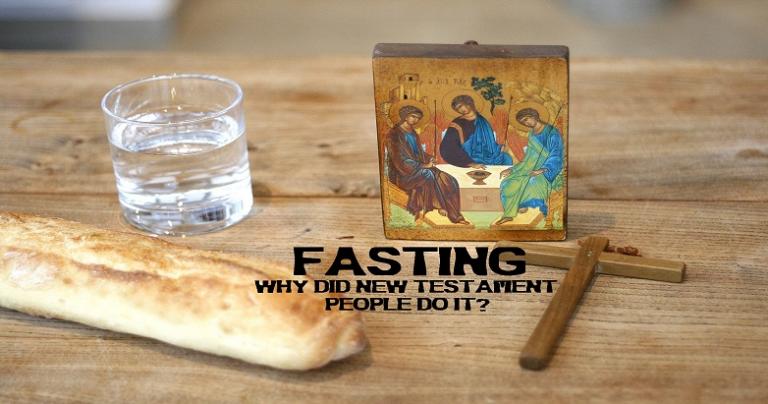
Fasting / Image by Prierlechapelet from Pixabay
While Western Bible readers can easily discover that biblical people fasted, learning why they did so and what it meant remains obfuscated.
What is the meaning of fasting in New Testament writings? Why did New Testament people fast?
As Context Group scholar Bruce Malina has demonstrated, answers to these questions often come by way of highly subjective reasons that cannot be tested. Or, reasons offered are anachronistic, full of 21st-century ideas remote from the experiences of our biblical ancestors.
From where does meaning come? This video explains…
Fasting from Spurious Assumptions
As we said, anachronism abounds in responses to the question “why do New Testament people fast?” Consider Joseph Wimmer, who writes, “In answer to the question, ‘Why should I fast?’, the New Testament responds, ‘As a sign of your love’” (see “The Meaning and Motivation of Fasting According to the Synoptic Gospels, p. 22). Pretty, poetic words. But wrong.
As Malina explains, often exegetes list biblical and extra-biblical passages showing that people fasted, but not why they did so (e.g., Mark 1:12–13 -> Matthew 4:1–4 = Luke 4:1–4; Mark 2:18–20 -> Matthew 9:14–17 = Luke 5:33–39; Mark 14:22–25 -> Matthew 26:26–29 = Luke 22:14–18); Acts 23:12–22; “Q” material found in Matthew 11:16–19 and Luke 7:31–35); single traditions [Mark 9:29(?); Matthew 6:16–18; Luke 2:36–37; 18:9–14; Acts 9:9; 13:2–3; 14:23; Mishnah Taanith].
Different scholars will address who fasted or how they fasted in New Testament times. They speculate as to what foods were abstained from, and when this happened. But generally speaking, they completely ignore the culturally specific meaning of fasting.
So we should inquire—what is the social meaning of fasting? Why would first-century Mediterranean peoples, like Israelites, refrain from eating and drinking? In what way would this behavior make sense to their contemporaries? Where did fasting fit into understanding how the New Testament world works?
The Why of Fasting
You can’t possibly know what the Bible means until you realize what the Bible meant. The meaning of language is derived from social systems. So, if you want to understand what New Testament fasting meant, you need recourse to the social system behind the New Testament. Otherwise, forget it! Ultimately, this will involve a culturally-sensitive reading of this ancient Mediterranean library.
First off, what is fasting? Whatever the culture, fasting basically is willful non-consumption of food and/or drink. We can offer various explanations why human groups fast. One of the easiest explanations is that, during times of chronic scarcity (i.e., the winter stretch), fasting allowed adequate distribution of provisions.
Consider the Christian season of Lent. It wasn’t accidental how it evolved in late antiquity and the Middle Ages. Lent took place annually prior to first harvests. This was because food supplies dwindled to the extreme. So, it makes sense why Lenten fasting took place in these lean months. But what were the meanings realized by the fasting?
What Fasting Communicates
Fasting communicates something, but what? It communicates a refusal to consume, which is a refusal to reciprocate in social interaction. The message being communicated by this refusal is one requesting status reversal. That the Jesus-group people are to do this privately (i.e., together as their Jesus-group-self), means this was vertical fasting, a communication directed toward their Patron God, the only one who could see them do it. This vertical direction means they, as clients, sought power from their patron to effect change, namely status reversal.
But the Jesus Movement rejected public or horizontal fasting. This communicated to fellow Israelites two possible messages. One, that Jesus and his followers had acquiesced to the status quo (which may explain why they were shamed as remembered by Matthew 11:16–19 // Luke 7:31–35). Or two, there was no need to fast because status reversal has already been realized somehow.
Generally speaking, ancient village life lacked privacy. The business of everyone was minding everyone else’s business. Jesus couldn’t get rid of crowds even when he went to deserted locales (Matthew 14:13).
Getting the Message of Fasting
To get at what fasting means, we need to understand the message it communicated. In the Mediterranean New Testament world, fasting related to mourning. Mourning, in turn, was a ritual protesting evil. “Blessed are those who mourn” therefore means “blessed are those who protest injustice.” New Testament fasting is part of this pattern and therein lies its meaning.
What does refusing to eat communicate? Think about angry silence, that is, the refusal to speak or communicates to others. Someone willful silent says, “I am not pleased!” Indeed, this silence speaks volumes.
Fasting (i.e., social protesting) in the Jesus Movement was like that kind of silence. It communicated, “help us in our affliction.” Fasting Israelites disfigured their face to communicate their need to their neighbors. That was horizontal communication, performed by parties who believed that relieving the affliction came by way group solidarity.
Fasting Matthean-Style
But the Matthean group fasted with clean faces. This was an Israelite novelty! Doing it that way meant that the horizontal (their peers) would be hoodwinked and deceived into thinking the Jesus-group was fine with the status quo! In other words, when Matthean Jesus-group members fasted, they communicated exclusively to God. Only God would notice it! This means the Matthean Jesus group believed that only God, by establishing Theocracy (note the demanding “thy kingdom come!”), could solve the problem.
The Matthean Jesus group criticized the (Ben Zakkaist) Pharisees. The latter group called attention to their fasting, almsgiving, and prayer. This was to win honor from their fellow Israelites—in perfect conformity to culture. Jesus wasn’t countercultural—he was still about winning honor. The difference was, to him, the only honor that mattered came from God alone. Therefore, counter-structural Jesus commanded his disciples to the same behavior, but do it in secret (Matthew 6:1-18).
Fasting and Altered States of Consciousness
Incidentally, fasting is one of several ways humans can induce trance, an altered state of consciousness experience. By fasting you stimulate the nervous system. The nutritional deficit affects serotonin synthesis, producing emotional disturbances and trance states. This, in turn, alters cognitive and emotional functioning. New life-changing possibilities and metamorphoses can occur when the cerebral cortex “turns off.”
Early Jesus groups were adept at these panhuman experiences. 21st-century Western Catholics and other Christians? Not so much! This is a tragedy, given that our liturgies evolved out of early shamanic meals and rituals.
The Intelligibility of Fasting
Speaking of going through motions that are meaningless (except on maybe a sentimental or intellectual level) to “the faithful,” consider fasting and abstinence done today. I know a catechist who, if he saw you with a $.99 cheeseburger in your hand, would risk an assault charge by slapping it across the room. But this ultra-conservative Catholic has no compunction spending days prepping his bacalao de vizcaina made especially for Ash Wednesday and Good Friday.
Or consider a Lenten Friday evening after bible study some years ago. Several young adults had gone over to a nearby Chinese restaurant. Joining them was a racist and traditionalist toxic fellow. The douche ordered a $60 boat of sushi meanwhile condemning other members of the group who could only afford to split the pork fried rice special.
As we’ve discussed before, sacramentality, the spiritual sight that finds God everywhere, demands intelligibility. Sacramentality is a key principle for Catholicism. We must therefore ask: are our Lenten practices intelligible? Is our Gospel?
Why did early Christians fast?
Previous Post

February 15, 2021
Grapple with Jesus and Scripture, Before Lent Begins
Next Post

February 21, 2021 Testing, Not Temptation—Jesus & Satan in the Wilderness
Browse Our Archives
Select a Category Uncategorized
Select a Month August 2021 July 2021 June 2021 May 2021 April 2021 March 2021 February 2021 January 2021 December 2020 November 2020 October 2020 September 2020 August 2020 July 2020 June 2020 May 2020 April 2020 March 2020 February 2020 January 2020 December 2019 November 2019 October 2019 September 2019 August 2019
Follow Us!
TAKE THE
Religious Wisdom Quiz
How many disciples did Jesus have?
Select your answer to see how you score.
Ten Twenty Seven Twelve
Support this
Column


Related posts from Messy Inspirations

Understanding Apocalypse & Its Creatures



TRENDING AT PATHEOS Catholic

Rejecting Doom: Christian Hope And Human Action
Christianity is a religion of hope. We are to have hope and...

It’s What Comes From Within Which Matters
One of the most difficult things for us to understand is why...

Why I Choose the Eucharist Over the Sermon
Choose the Eucharist, Not the Sermon What are we supposed to get...

5 Design Elements Found in Spiritually Rooted Homes
Putting Spirituality Into Home Decor Our homes are more than our living...

Credo: A Story of God Told with the...
About 10 years ago, I began to imagine a personal "Credo" that...

The Anatomy of Divine Revelation in Catholic Thought
The claim that God has made Himself known to human beings is...
view all Catholic blogs
Ad-Free & Subscriber Log-In Subscription Support
- About Us
- 2026 Calendar
- Videos
- Podcasts
- Library of World Religions
- Faith In Media Tracker
- Advertise With Us
- Write for Us
- Privacy Policy
- Terms of Service
- Do Not Sell My Data
- Contact Us
- Radiant Digital
- Manage Newsletter Subscriptions
- Unsubscribe From Notifications
- Sitemap
Copyright 2008-2026, Patheos. All rights reserved.
Subscription Support Ad-Free & Subscriber Log-In
Follow Patheos