
BuddhistCatholicContemplativeEvangelicalGeneral ChristianHinduJewishLatter-day SaintMuslimNew VisionsProgressive Christian
Beliefs
- Buddhist
- Catholic
- Contemplative
- Evangelical
- General Christian
- Hindu
- Jewish
- Latter-day Saint
- More Voices
- Muslim
- New Visions
- Pagan
- Progressive Christian
Topics
- Religion News
- Food and Religion
- Sports and Religion
- Religious Art
- Religious Music and Entertainment
- Religious Events
- History and Religion
- Style and Religion
- Politics and Religion
- Women in Religion
- Recreation Outdoors and Religion
- Business Finance and Religion
- Careers Workplace and Religion
- Education and Religion
- Family Parenting and Religion
- Health Fitness and Religion
- Home and Religion
- Relationships and Religion
- Technology and Religion
- Travel and Religion
Columnists
- Buddhist Columnists
- Business Finance and Religion Columnists
- Careers Workplace and Religion Columnists
- Catholic Columnists
- Contemplative Columnists
- Education and Religion Columnists
- Evangelists Columnists
- Family Parenting and Religion Columnists
- General Christian Columnists
- Health Fitness and Religion Columnists
- Hindu Columnists
- History and Religion Columnists
- Home and Religion Columnists
- Jewish Columnists
- More Voices Columnists
- Latter Day Columnists
- Muslim Columnists
- New Visions Columnists
- Nonreligious Columnists
- Pagan Columnists
- Politics and Religion Columnists
- Progressive Columnists
- Recreation Outdoors and Religion Columnists
- Relationships and Religion Columnists
- Religion News Columnists
- Religious Art Columnists
- Religious Events Columnists
- Religious Music and Entertainment Columnists
- Sports and Religion Columnists
- Style and Religion Columnists
- Technology and Religion Columnists
- Travel and Religion Columnists
- Women in Religion Columnists
Resource Library
- 2026 Calendar
- Library of World Religions
- The 100 Most Holy Places on Earth
- Patheos Answers
- Podcasts
- Videos
- Faith Leaders Database
- Anglican Episcopalian
- Bahai
- Baptist
- Buddhism
- Christianity
- Confucianism
- Eastern Orthodoxy
- Hinduism
- Holiness and Pentecostal
- ISKCON
- Islam
- Judaism
- Lutheran
- Methodist
- The Church of Jesus Christ of Latter-day Saints
- New Age
- Paganism
- Presbytarian and Reformed
- Protestantism
- Religion Behind the Scenes
- Roman Catholic
- Scientology
- Shia Islam
- Sikhism
- Sufism
- Sunni Islam
- Taoism
- Zen
- See all religions
Research Tools
 Ad-Free & Subscriber Log-In Subscription Support
Ad-Free & Subscriber Log-In Subscription Support
Follow Patheos 

- Trending:
- Forgiveness
- |
- Marriage
- |
- Consciousness
- |
- Death Penalty
- |
- Election
- |
- Halloween
 Messy Inspirations
- Home
- Catholic
- Sea in the Gospels is a Person
Sea in the Gospels is a Person
Last updated on: May 20, 2020 at 3:06 pm by Fellow Dying Inmate
Sea in the Gospels is a Person 2020-05-20T15:06:37-04:00 Fellow Dying Inmate
Patheos Explore the world's faith through different perspectives on religion and spirituality! Patheos has the views of the prevalent religions and spiritualities of the world.
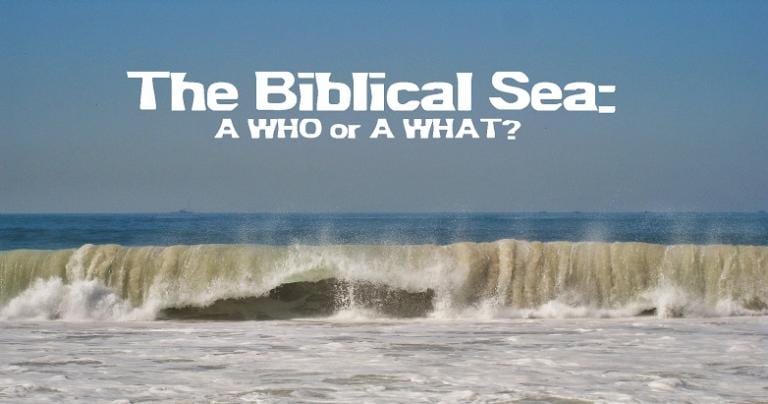
The Sea Jesus walked on is a great body of water to us, but to his contemporaries, was seen as a great other-than-human person.
Sea and sky and land are all what’s according to our Western understandings. As you already know from regular English usage, a what is different than a who. The word who refers to persons, whereas what refers to things. Americans read about Jesus walking on the sea (Mark 6;45-52; Matthew 14:22-33; John 6:16-21) and take that sea to be a what. In contrast, for ancient people hearing this story, it was quite different. When Jesus walked on the Sea, our ancient ancestors in the faith would understand that he strode over a who rather than a what!
Yesterday we explored three Gospel readings reporting Jesus walking on the Sea. Last time we asked about the meaning of these three similar but different stories. Was Jesus overriding the physical laws governing the universe?
Today we follow this up with a brief exploration of what Jesus walked on exactly, or rather who. Confused? Please watch the video below…
The Sea Jesus Walked On
One of the biggest obstacles to Bible reading is putting meanings into the texts that don’t belong, understandings that come from our culture but are alien to the ancient cultural world of Scripture. Making this common mistake throws everything off and distorts what the text is trying to say. Misunderstanding results.
With that in mind, some questions: Did Jesus walk on water, as in H2O? We 21st century people see any body of water in ways particular to our time and culture that contrasts sharply with ancient views. For example, we think about a sea or lake or ocean chemically, made of molecules and such, and this is particular to our time and culture. But what about Jesus’ culture? Before we can really inquire about whether or not Jesus actually could walk on water or the Sea (not necessarily the same thing), we need to understand what we are reading.
Personified Sea
These stories are not really talking about Jesus walking on top of a thing called water, anyway. Unlike our universe of impersonal what’s, Jesus’ world was personified. By that I mean that pretty much everything in it was a who, whether a human who, or an other-than-human who (a “spirit”). The stars, whether singular or constellated, above Jesus’ head were all understood to be who’s, giant other-than-human who’s. So too was the Sea beneath his feet. The ancient world of Palestine personified much of reality.
That’s a vastly different view than our typical ways of interpreting and understanding a sea or similar body of water! And it causes us much difficulty in grasping what is really being communicated by these stories.
Americans & Miracles
As Dr. John Pilch explains, 21st century Scripture readers interpret these stories of Jesus walking on the Sea in various ways. Among these interpretations are those who consider Jesus walking on the Sea to be a “nature miracle.” In other words, an event that surpasses scientific laws of nature.
Now if the Gospels had been written by, for, and about Americans living today, and they reported a similar tale about someone doing what we think Jesus did, many of us take from it that the person in question was breaking natural laws. You see this kind of thing in Marvel Comic literature with mutants and other superheroes happily accomplishing amazing feats, but it all gets explained from powers and energies that gives some logic for why scientific laws seemingly become violated.
Even if a superhero character is a magical creature, such as Thor or Dr. Strange, you can bet that the comic writers will tie the “magic” into some kind of unknown, not-yet-learned science. We are a science-obsessed, rationalistic culture and it shows up in our fiction.
Even though our comic book superhero stories are obviously fictional, they can nevertheless convey great truth. It is true that with great power comes great responsibility, and Americans like Peter Parker need to implement that cultural folk wisdom, regardless if their blood is “radioactive.” Is this what is going on with Gospel “miracle” stories? Some Bible readers think so.
Gospels Are Not American
However the Gospels were not written by, for, and about 21st century Western people. Instead, they were written by first century Mediterranean Israelite people by, for, and about first century Israelites in their respective Jesus groups. The Gospels are therefore occasional documents, and thus not written for all peoples of all times. Spiritually they have come down to us and we keep deriving meaning from them. But this should not be done apart from the foundational meanings intended by the human authors, what Church tradition refers to as “the Literal Sense.”
Would ancient Israelites look at the Dead Sea, or the Sea of Galilee, or the Mediterranean and perceive what we perceive, understand what we understand about these realities? Culture affects how humans do these things. Our culture is radically different than the first century biblical world. They wouldn’t look at these Seas according to chemistry, oceanography, marine geology, and marine ecology!
This series continues here!
altered states of consciousness
Previous Post

May 18, 2020
Walking on the Sea
Next Post

May 20, 2020 Miracle—Something Jesus Really Did?
Browse Our Archives
Select a Category Uncategorized
Select a Month August 2021 July 2021 June 2021 May 2021 April 2021 March 2021 February 2021 January 2021 December 2020 November 2020 October 2020 September 2020 August 2020 July 2020 June 2020 May 2020 April 2020 March 2020 February 2020 January 2020 December 2019 November 2019 October 2019 September 2019 August 2019
Follow Us!
TAKE THE
Religious Wisdom Quiz
What Christian group believes in baptism for the dead?
Select your answer to see how you score.
Pentecostals Anglicans Presbyterians Latter-day Saints
Support this
Column


Related posts from Messy Inspirations

Understanding Apocalypse & Its Creatures



TRENDING AT PATHEOS Catholic

The Parable Of The Sower And The Word...
One of Christ’s most famous parables is that of the sower who...

Rejecting Doom: Christian Hope And Human Action
Christianity is a religion of hope. We are to have hope and...

Why I Choose the Eucharist Over the Sermon
Choose the Eucharist, Not the Sermon What are we supposed to get...

5 Design Elements Found in Spiritually Rooted Homes
Putting Spirituality Into Home Decor Our homes are more than our living...

Credo: A Story of God Told with the...
About 10 years ago, I began to imagine a personal "Credo" that...

The Anatomy of Divine Revelation in Catholic Thought
The claim that God has made Himself known to human beings is...
view all Catholic blogs
Ad-Free & Subscriber Log-In Subscription Support
- About Us
- 2026 Calendar
- Videos
- Podcasts
- Library of World Religions
- Faith In Media Tracker
- Advertise With Us
- Write for Us
- Privacy Policy
- Terms of Service
- Do Not Sell My Data
- Contact Us
- Radiant Digital
- Manage Newsletter Subscriptions
- Unsubscribe From Notifications
- Sitemap
Copyright 2008-2026, Patheos. All rights reserved.
Subscription Support Ad-Free & Subscriber Log-In
Follow Patheos