
BuddhistCatholicContemplativeEvangelicalGeneral ChristianHinduJewishLatter-day SaintMuslimNew VisionsProgressive Christian
Beliefs
- Buddhist
- Catholic
- Contemplative
- Evangelical
- General Christian
- Hindu
- Jewish
- Latter-day Saint
- More Voices
- Muslim
- New Visions
- Pagan
- Progressive Christian
Topics
- Religion News
- Food and Religion
- Sports and Religion
- Religious Art
- Religious Music and Entertainment
- Religious Events
- History and Religion
- Style and Religion
- Politics and Religion
- Women in Religion
- Recreation Outdoors and Religion
- Business Finance and Religion
- Careers Workplace and Religion
- Education and Religion
- Family Parenting and Religion
- Health Fitness and Religion
- Home and Religion
- Relationships and Religion
- Technology and Religion
- Travel and Religion
Columnists
- Buddhist Columnists
- Business Finance and Religion Columnists
- Careers Workplace and Religion Columnists
- Catholic Columnists
- Contemplative Columnists
- Education and Religion Columnists
- Evangelists Columnists
- Family Parenting and Religion Columnists
- General Christian Columnists
- Health Fitness and Religion Columnists
- Hindu Columnists
- History and Religion Columnists
- Home and Religion Columnists
- Jewish Columnists
- More Voices Columnists
- Latter Day Columnists
- Muslim Columnists
- New Visions Columnists
- Nonreligious Columnists
- Pagan Columnists
- Politics and Religion Columnists
- Progressive Columnists
- Recreation Outdoors and Religion Columnists
- Relationships and Religion Columnists
- Religion News Columnists
- Religious Art Columnists
- Religious Events Columnists
- Religious Music and Entertainment Columnists
- Sports and Religion Columnists
- Style and Religion Columnists
- Technology and Religion Columnists
- Travel and Religion Columnists
- Women in Religion Columnists
Resource Library
- 2026 Calendar
- Library of World Religions
- The 100 Most Holy Places on Earth
- Patheos Answers
- Podcasts
- Videos
- Faith Leaders Database
- Anglican Episcopalian
- Bahai
- Baptist
- Buddhism
- Christianity
- Confucianism
- Eastern Orthodoxy
- Hinduism
- Holiness and Pentecostal
- ISKCON
- Islam
- Judaism
- Lutheran
- Methodist
- The Church of Jesus Christ of Latter-day Saints
- New Age
- Paganism
- Presbytarian and Reformed
- Protestantism
- Religion Behind the Scenes
- Roman Catholic
- Scientology
- Shia Islam
- Sikhism
- Sufism
- Sunni Islam
- Taoism
- Zen
- See all religions
Research Tools
 Ad-Free & Subscriber Log-In Subscription Support
Ad-Free & Subscriber Log-In Subscription Support
Follow Patheos 

- Trending:
- Forgiveness
- |
- Marriage
- |
- Consciousness
- |
- Death Penalty
- |
- Election
- |
- Halloween
 Messy Inspirations
- Home
- Catholic
- Mother of Jesus in “John” is Highly Symbolic
Mother of Jesus in “John” is Highly Symbolic
Last updated on: May 23, 2020 at 4:05 pm by Fellow Dying Inmate
Mother of Jesus in “John” is Highly Symbolic 2020-05-23T16:05:34-04:00 Fellow Dying Inmate
Patheos Explore the world's faith through different perspectives on religion and spirituality! Patheos has the views of the prevalent religions and spiritualities of the world.
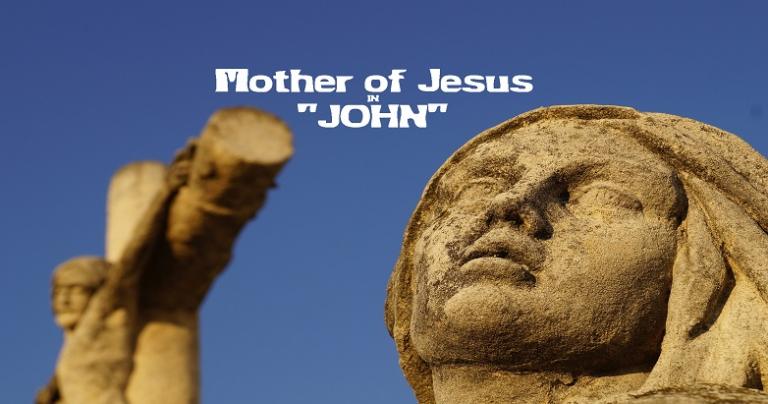
Image by Andrea Tóth from Pixabay
The Mother of Jesus becomes a powerful symbol for the Johannine community that wrote the Fourth Gospel.
Mother to Jesus, Mary is seen differently throughout various Gospels. Earlier we gave reasons why there is relatively little said about Mary by New Testament documents. We begin with a very negative Markan portrayal of Mary that we explored here. “Matthew” is only a little bit better, as we saw here. But then we saw here how “Luke” massively improves the image of Mary, presenting her from the beginning of his story as the faithful slavegirl of God voice of Israelite poor.
Today we talk about the mother of Jesus in the maverick Gospel called “John.” The Fourth Gospel lacks an Infancy Narrative. It also never names the mother of Jesus. We see her featured in two places within the Gospel, at the start at a wedding in Galilee, and toward the end, beneath the cross. Watch the video carefully…
That’s No Way to Speak to Your Mother!
In the ancient Mediterranean, parents prearranged marriage partners, the ideal of which were patrilateral first cousins (Genesis 24:15; 25:19; 28:1-4). The wedding guests would be mostly comprised of relatives, but nonrelatives could also be present. Note that Jesus and his mother interfere in the wedding without hesitating (John 2:4-7). Since it would be dishonorable for nonrelatives to meddle in this way, the story strongly suggests that Jesus and his mother were related to the wedding party.
The wine runs short, and Jesus’ mother mentions this with the suggestion he should do something about it (John 2:3). Look at how Jesus responds to his unnamed mother in John 2:4—“What to me and to you, Woman?” Sounds harsh!
A form of this phrase pops up now and again throughout the Bible. Whenever someone feels unjustly bothered by someone else, they use it (see Judges 11:12; 2 Chronicles 35:21; 1 Kings 17:18; Mark 1:24; 5:7). Sometimes it is employed by one who refuses to meddle in the affairs of another (see 2 Kings 3:13; Hosea 14:9). Is Jesus bothered by his mother? Is he rebuking her for meddling in other people’s business?
And look at what he calls her—“Woman” (gynai). Is that how you address your mother in our culture? How about the honor-shame culture of first century Palestine? In one sense, “Woman” is a respectful way of addressing females found in ancient Greek literature. And Jesus uses it respectfully all over the Gospels (see Matthew 15:28; John 4:21; 8:10; 20:13). But nowhere in all Hebrew or Greek literature is calling one’s mother “Woman” to be found besides John 2:4.
Marian Mental Gymnastics
Here is usually where some Catholics begin stretching for a Adam-Eve symbolism being implied by “John.” All such Genesis-symbolisms related to this story evolved long after the first century. Reading that back into the text is anachronism. Exaggerated Marian piety has tried to soften Jesus’ retort in John 2:4. But a balanced approach must accept that some of the harshness cannot be removed.
A couple things can be said here. In antiquity, Mediterranean mothers spoiled and pampered prepubescent boys. Indeed they smothered their sons so much that something Western people might mistake for codependent disorder developed between mother and eldest son. But at puberty, males are brutally separated from the world of females and forced into the harsh world of Mediterranean men.
So was the Johannine Jesus, the adult son, embarrassed by his mother’s comment (John 2:3)? Was he establishing independence from her by putting up some boundaries and distance? Knowing what the Fourth Gospel claims of Jesus’ preexistence from the ineffable world of John 1:1, as scholar Francis Moloney says, the unnamed Mother of Jesus simply has no access to the special relationship between the Johannine Jesus and God. “Know your place” makes sense in that regard as well.
The Johannine Jesus rebukes his mother! He seems to dismiss her implied request to do something about the wine (2:4). But then, in the face of the rebuke, the mother does something likewise unexpected, saying “Do whatever he tells you” to the servants (John 2:5). And then Jesus fulfills her request by getting involved and turning water into wine!
A Pattern in “John”
Given all of this, does “John” present the mother of Jesus negatively (as do “Mark” and to a lesser extent, “Matthew”)? Or does he present her in a positive light (as does “Luke”)? Before answering that, we ought to consider a few more things.
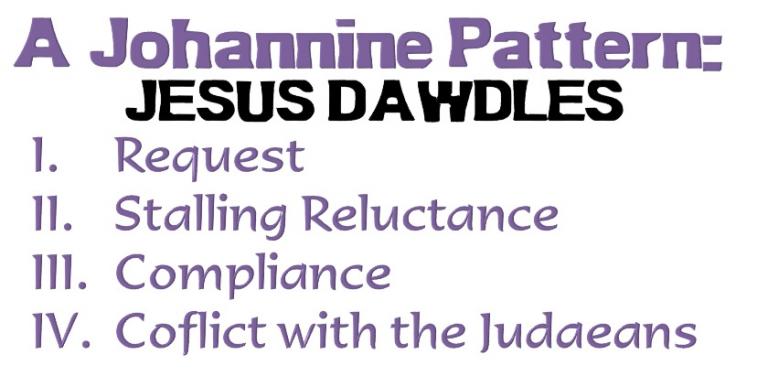
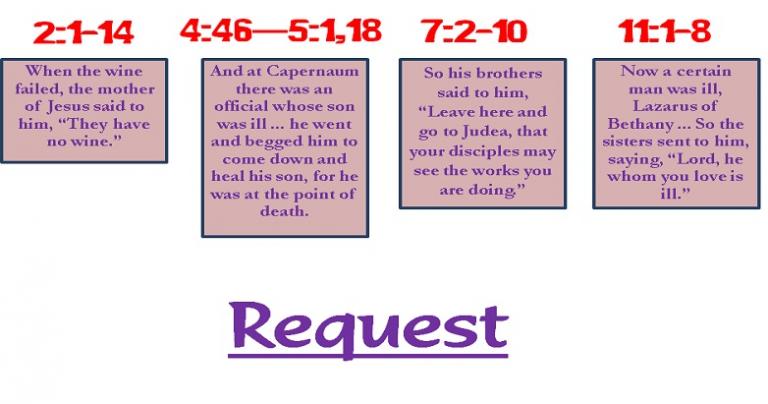
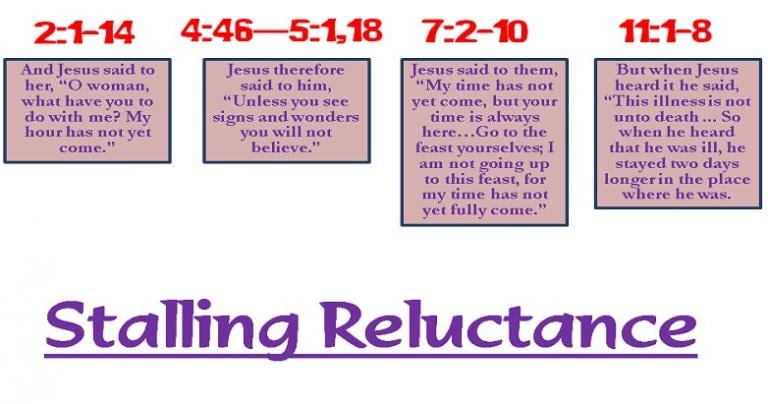
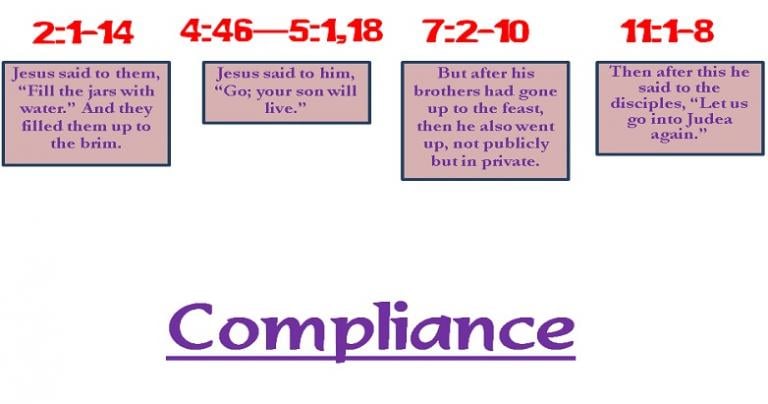
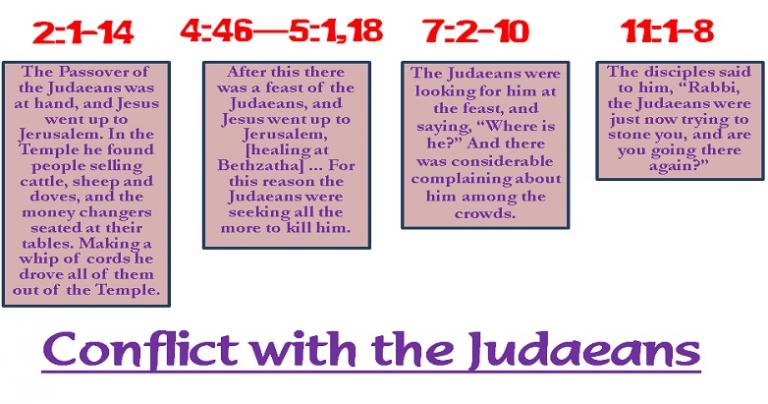
First we should consider that within the Fourth Gospel there is a pattern established whereby someone requests a favor from Jesus (John 11:1-3), followed by him dawdling (11:4-6), until, finally, he complies and helps (11:7-8).
This pattern, seen at several points in the Johannine narrative, begins with the Wedding at Cana story. Look here—
Fellow Dying Inmate / All rights reserved
Part of understanding how “John” thinks of the unnamed Mother of Jesus depends on the part she plays in pattern of persistent faith and Jesus’ eventual response. As scholars Richard Rohrbaugh and Bruce Malina explain, figures are left anonymous in the Fourth Gospel to make them serve better as types or symbols for the Johannine community. The unnamed mother of Jesus is a made a symbol of the part of Israel that believes into Jesus.
Behold Your Mother
Considering how “John” views the mother of Jesus depends also on his account of Jesus’ crucifixion. In this Gospel, the mother of Jesus is at the foot of the cross. Every Gospel tradition mentions certain women watching the crucifixion from a distance—unlike men, they weren’t considered a threat to Roman order. In the Gospel tradition they witness Jesus’ death (Mark 15:40; Matthew 27:55), burial (Mark 15:47; Matthew 27:61), and empty tomb (Mark 16:1-4; Matthew 28:1). None but “John” mentions the unnamed mother of Jesus at cross, and he places her with others extremely close to it.
Suddenly, popping out of nowhere, is the also unnamed “disciple whom he loved” (v. 26—see also John 1:35-40; 11:3-5; 13:23-25; 18:15-16; 19:25-27; 20:2-10; 21:7; 21:20-24). Somehow he is attached to Jesus’ mother.
Johannine, not Marian
Something deeply symbolic is going on in the exchange between Jesus, the Beloved Disciple, and the Mother in John 19:25-30. The lifted up Sky Vault Man Jesus brings into life a new community of disciples. He does this by breathing life from the Cross (John 19:30). The mother represents faithful Israel that believes into Jesus—she is the Johannine Jesus group. The Beloved Disciple represents all those beloved disciples loyal to the Jesus group to whom Jesus reveals himself and who is authorized to correctly interpret Jesus.
This story is not about Marian in concerns, but Johannine. More is going on in than a mere biographical factoid about Jesus’ honorably caring for his mother and providing for her. In his hour, the lifted-up Jesus hands over his faithful followers (= the mother of Jesus), out of whom will be born further “children of God,” all to be cared for by the beloved disciple. This is the bringing to life a great family,
Mariology Evolved
We’ve come a long way since “Mark.” There, Mary and the brothers of Jesus are outsiders, not part of Jesus’ new family (Mark 3:31-35). But in “John,” while the brothers of Jesus do remain as outsiders (John 7:3-10), not so his mother who is highly symbolized.
As these Gospels were collected together in the fourth century, recontextualizations happened and Johannine and Lukan elements merged in ways unintended by the unknown Evangelists. A road opened for further Marian symbolizing.
We will continue with this later…
Previous Post

May 22, 2020
Miraculous Walking on the Sea—Experienced in Alternate Reality
Next Post
May 25, 2020 Gospels—What are They & Why?
Browse Our Archives
Select a Category Uncategorized
Select a Month August 2021 July 2021 June 2021 May 2021 April 2021 March 2021 February 2021 January 2021 December 2020 November 2020 October 2020 September 2020 August 2020 July 2020 June 2020 May 2020 April 2020 March 2020 February 2020 January 2020 December 2019 November 2019 October 2019 September 2019 August 2019
Follow Us!
TAKE THE
Religious Wisdom Quiz
What city is home to the headquarters of the Roman Catholic Church?
Select your answer to see how you score.
London Jerusalem Paris Vatican City
Support this
Column


Related posts from Messy Inspirations

Understanding Apocalypse & Its Creatures



TRENDING AT PATHEOS Catholic

Rejecting Doom: Christian Hope And Human Action
Christianity is a religion of hope. We are to have hope and...

It’s What Comes From Within Which Matters
One of the most difficult things for us to understand is why...

Why I Choose the Eucharist Over the Sermon
Choose the Eucharist, Not the Sermon What are we supposed to get...

5 Design Elements Found in Spiritually Rooted Homes
Putting Spirituality Into Home Decor Our homes are more than our living...

Credo: A Story of God Told with the...
About 10 years ago, I began to imagine a personal "Credo" that...

The Anatomy of Divine Revelation in Catholic Thought
The claim that God has made Himself known to human beings is...
view all Catholic blogs
Ad-Free & Subscriber Log-In Subscription Support
- About Us
- 2026 Calendar
- Videos
- Podcasts
- Library of World Religions
- Faith In Media Tracker
- Advertise With Us
- Write for Us
- Privacy Policy
- Terms of Service
- Do Not Sell My Data
- Contact Us
- Radiant Digital
- Manage Newsletter Subscriptions
- Unsubscribe From Notifications
- Sitemap
Copyright 2008-2026, Patheos. All rights reserved.
Subscription Support Ad-Free & Subscriber Log-In
Follow Patheos