
BuddhistCatholicContemplativeEvangelicalGeneral ChristianHinduJewishLatter-day SaintMuslimNew VisionsProgressive Christian
Beliefs
- Buddhist
- Catholic
- Contemplative
- Evangelical
- General Christian
- Hindu
- Jewish
- Latter-day Saint
- More Voices
- Muslim
- New Visions
- Pagan
- Progressive Christian
Topics
- Religion News
- Food and Religion
- Sports and Religion
- Religious Art
- Religious Music and Entertainment
- Religious Events
- History and Religion
- Style and Religion
- Politics and Religion
- Women in Religion
- Recreation Outdoors and Religion
- Business Finance and Religion
- Careers Workplace and Religion
- Education and Religion
- Family Parenting and Religion
- Health Fitness and Religion
- Home and Religion
- Relationships and Religion
- Technology and Religion
- Travel and Religion
Columnists
- Buddhist Columnists
- Business Finance and Religion Columnists
- Careers Workplace and Religion Columnists
- Catholic Columnists
- Contemplative Columnists
- Education and Religion Columnists
- Evangelists Columnists
- Family Parenting and Religion Columnists
- General Christian Columnists
- Health Fitness and Religion Columnists
- Hindu Columnists
- History and Religion Columnists
- Home and Religion Columnists
- Jewish Columnists
- More Voices Columnists
- Latter Day Columnists
- Muslim Columnists
- New Visions Columnists
- Nonreligious Columnists
- Pagan Columnists
- Politics and Religion Columnists
- Progressive Columnists
- Recreation Outdoors and Religion Columnists
- Relationships and Religion Columnists
- Religion News Columnists
- Religious Art Columnists
- Religious Events Columnists
- Religious Music and Entertainment Columnists
- Sports and Religion Columnists
- Style and Religion Columnists
- Technology and Religion Columnists
- Travel and Religion Columnists
- Women in Religion Columnists
Resource Library
- 2026 Calendar
- Library of World Religions
- The 100 Most Holy Places on Earth
- Patheos Answers
- Podcasts
- Videos
- Faith Leaders Database
- Anglican Episcopalian
- Bahai
- Baptist
- Buddhism
- Christianity
- Confucianism
- Eastern Orthodoxy
- Hinduism
- Holiness and Pentecostal
- ISKCON
- Islam
- Judaism
- Lutheran
- Methodist
- The Church of Jesus Christ of Latter-day Saints
- New Age
- Paganism
- Presbytarian and Reformed
- Protestantism
- Religion Behind the Scenes
- Roman Catholic
- Scientology
- Shia Islam
- Sikhism
- Sufism
- Sunni Islam
- Taoism
- Zen
- See all religions
Research Tools
 Ad-Free & Subscriber Log-In Subscription Support
Ad-Free & Subscriber Log-In Subscription Support
Follow Patheos 

- Trending:
- Forgiveness
- |
- Marriage
- |
- Consciousness
- |
- Death Penalty
- |
- Election
- |
- Halloween
 Messy Inspirations
- Home
- Catholic
- Miracle—Something Jesus Really Did?
Miracle—Something Jesus Really Did?
Last updated on: May 22, 2020 at 12:20 pm by Fellow Dying Inmate
Miracle—Something Jesus Really Did? 2020-05-22T12:20:52-04:00 Fellow Dying Inmate
Patheos Explore the world's faith through different perspectives on religion and spirituality! Patheos has the views of the prevalent religions and spiritualities of the world.

Image by Gerd Altmann from Pixabay
Miracle, meaning an overriding of physical laws governing the universe, is a nice post-Enlightenment word alien to the Bible.
Miracle. Jesus did many of them, right? The Synoptic Gospels, first century documents, speak of wonders and marvels, called “mighty deeds.” “John” calls these “signs” and “works.” The word miracle is not used anywhere in Scripture. Yet many Christians readily proclaim that Jesus performed miracles and that “it is right there in the Bible.” Spurious familiarity seems to be the most trusted authority for 21st century Bible readers.
In the past two posts, we have been talking about Jesus walking on the Sea. Certain insects can walk on the surface of water, but not human beings. Recognizing scientific facts like buoyancy and how objects stay afloat, a 160lb man would have to displace twenty gallons of water with each step to stay on top of the Sea of Galilee. That what Jesus did? Is that what the Gospels are telling us Jesus is doing when he walked on the Sea?
Watch the video…
Nature Miracle?
Western Bible readers, be they believing Christians or atheists or whatever, are familiar with “laws of nature.” Therefore when they read about Jesus walking on the sea (Mark 6;45-52; Matthew 14:22-33; John 6:16-21), their understanding of the story is impacted by this auxiliary scientific background information. To do such a thing would override the “laws of nature,” physical laws governing the universe! So this story must be describing a miracle, something violating the physical laws governing the universe.
Two Different People Read a “Miracle Story”
So imagine a sophisticated, 21st century Western Catholic named Stephen. Stephen is not only smart and well-educated, he’s a compassionate person. In addition, he is a veteran catechist teaching Sunday school. Stephen reads the Gospel accounts of Jesus walking on the Sea. His conclusion? “This story is claiming that Jesus had the power to override laws of nature. It says Jesus walked on water. It says Jesus performed a miracle. I believe it.”
Now imagine another sophisticated, 21st century Western person, an atheist named Ricky. Ricky is not only smart and well-educated, he’s a compassionate person. He is ardently committed to atheism. Ricky reads the Gospel accounts of Jesus walking on the Sea. His conclusion? “This story is claiming that Jesus had the power to override laws of nature. It says Jesus walked on water. It says Jesus performed a miracle. It’s complete rubbish—I don’t believe it.”
Do you know what both these very different 21st century men have in common? Besides being sophisticated, well-educated, and compassionate? They both completely wrong about the story and its meaning. Both have misread the story by way of anachronism and ethnocentrism. They have distorted its meaning.
Anachronism & Ethnocentrism
The understanding of both Stephen and Ricky is completely alien to ancient people like the Gospel authors, Jesus, and his inner circle of followers. There is no belief or idea in the ancient world equivalent to our post-Enlightenment understanding of “physical laws governing the universe” or “natural laws.”

Fellow Dying Inmate / All rights reserved
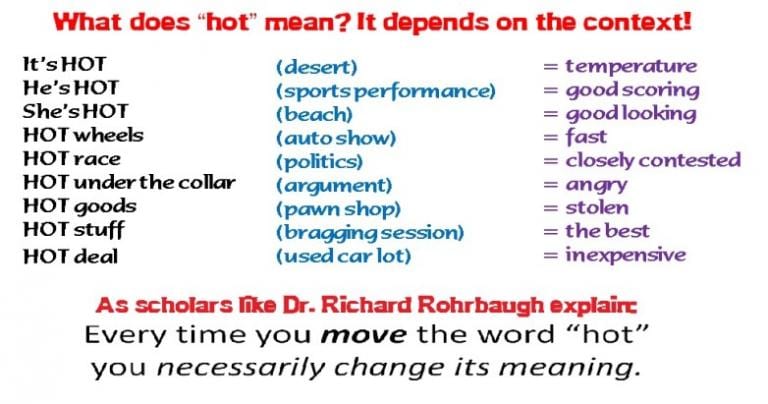
As scholar Richard Rohrbaugh says, whenever you move the language, you necessarily change the meaning. That goes for “nature” (physin) and “natural” (physike) as used by Paul, and then later on by Thomas Aquinas, and then later on by Carl Sagan and Neil Degrasse Tyson. Language only means what it means where and when it gets used! Move that word “nature” and you necessarily change its meaning.
Fellow Dying Inmate / All rights reserved
“Nature” According to Paul
So what did “nature” (physin) mean for Paul? Whenever Paul talks about nature, he isn’t using the term like Aquinas would in Medieval times, or like Sagan and Tyson would in our times. By “nature” Paul means cultural custom. Therefor Paul thinks it is contrary to nature (para physin) for men to have long hair. In other words, it goes against cultural custom and is thus dishonorable.
How did Paul figure that? His father had short hair. His father’s father had short hair, also. That’s as far back as Paul could remember. So Mediterranean men, especially Israelites, must have had short hair all the way back to Adam. Ultimately, God established nature in this sense, that is, custom.
Ancient biblical authors, you see, did not conceive of nature as did Medieval philosophers (essence as viewed as the font of its activities) or modern scientists (the physical world). It’s so easy to read later ideas from our culture (ethnocentric anachronism) back into the Gospels thereby distorting them.
If It Happened, It Really Happened!
To ancient people like Jesus, his immediate followers, and the later Evangelists, if something happens, it happens, and is therefore real. And whatever happens, the question is never “WHAT happened?” but rather, “WHO did it?” Whatever happens, it must have had a personal cause. There is no impersonal causality in the world of the Gospels.
So whatever occurs, it happens because a person was responsible for making it happen. If no human person was responsible, it must be that a non-human person did it—maybe God. And if not God, then some lesser god or spirit or demon.
If a human being is seen walking on the Sea, it happened, and therefore it must be real, according to the ancients. But humans can’t do such a thing, because to walk on a Sea-Demon shamefully is impossible for lowly humans! So that means that some other, higher, other-than-human person (God or a god or some other spirit) had to empower the lowly human to be able to do this.
Logical Considerations
Consider a triangle. Recognize that the concept of triangle is different from the image of a triangle. A triangle is a plane figure having three straight sides and three angles. Before you can have the concept of “triangle” you must logically first have the concept of angle—the space between two intersecting lines or surfaces at or close to the point where they meet. This is true even if both concepts are arrived at simultaneously—you cannot understand triangle without (logically, of not temporally) first understanding angle.
This relates to the concept of miracle, a nice post-Enlightenment word. A miracle is a violation of the physical laws governing the universe. Before you can understand what a miracle is, you first have to understand that there are physical laws governing the universe! Without that, there can be no concept of miracle.
How then can there be “miracles” anywhere in the Bible since miracle means violating the physical laws governing the universe, something unknown to the biblical authors? That isn’t how ancient people perceived, thought about, understood, and communicated reality. Beware ethnocentrism and anachronism when reading ancient Mediterranean Scripture.
Avoiding Extremes with Miracle
This is a delicate issue among today’s Christians. Are we deluding the Faith if we ask these questions? But there is likewise the danger of presenting fundamentalist biblical literalism as counterfeit Christianity. We have to read these Biblical stories according to their cultural context. Mediterranean culture is the first reading, the first interpretation of Scripture.
This series concludes here…
Previous Post
May 19, 2020
Sea in the Gospels is a Person
Next Post
May 21, 2020 Ascension of Jesus and Other Sky Journeys
Browse Our Archives
Select a Category Uncategorized
Select a Month August 2021 July 2021 June 2021 May 2021 April 2021 March 2021 February 2021 January 2021 December 2020 November 2020 October 2020 September 2020 August 2020 July 2020 June 2020 May 2020 April 2020 March 2020 February 2020 January 2020 December 2019 November 2019 October 2019 September 2019 August 2019
Follow Us!
TAKE THE
Religious Wisdom Quiz
True or False: Abraham was 100 years old when Isaac was born.
Select your answer to see how you score.
TRUE FALSE
Support this
Column


Related posts from Messy Inspirations

Understanding Apocalypse & Its Creatures



TRENDING AT PATHEOS Catholic

Rejecting Doom: Christian Hope And Human Action
Christianity is a religion of hope. We are to have hope and...

It’s What Comes From Within Which Matters
One of the most difficult things for us to understand is why...

Why I Choose the Eucharist Over the Sermon
Choose the Eucharist, Not the Sermon What are we supposed to get...

5 Design Elements Found in Spiritually Rooted Homes
Putting Spirituality Into Home Decor Our homes are more than our living...

Credo: A Story of God Told with the...
About 10 years ago, I began to imagine a personal "Credo" that...

The Anatomy of Divine Revelation in Catholic Thought
The claim that God has made Himself known to human beings is...
view all Catholic blogs
Ad-Free & Subscriber Log-In Subscription Support
- About Us
- 2026 Calendar
- Videos
- Podcasts
- Library of World Religions
- Faith In Media Tracker
- Advertise With Us
- Write for Us
- Privacy Policy
- Terms of Service
- Do Not Sell My Data
- Contact Us
- Radiant Digital
- Manage Newsletter Subscriptions
- Unsubscribe From Notifications
- Sitemap
Copyright 2008-2026, Patheos. All rights reserved.
Subscription Support Ad-Free & Subscriber Log-In
Follow Patheos