
BuddhistCatholicContemplativeEvangelicalGeneral ChristianHinduJewishLatter-day SaintMuslimNew VisionsProgressive Christian
Beliefs
- Buddhist
- Catholic
- Contemplative
- Evangelical
- General Christian
- Hindu
- Jewish
- Latter-day Saint
- More Voices
- Muslim
- New Visions
- Pagan
- Progressive Christian
Topics
- Religion News
- Food and Religion
- Sports and Religion
- Religious Art
- Religious Music and Entertainment
- Religious Events
- History and Religion
- Style and Religion
- Politics and Religion
- Women in Religion
- Recreation Outdoors and Religion
- Business Finance and Religion
- Careers Workplace and Religion
- Education and Religion
- Family Parenting and Religion
- Health Fitness and Religion
- Home and Religion
- Relationships and Religion
- Technology and Religion
- Travel and Religion
Columnists
- Buddhist Columnists
- Business Finance and Religion Columnists
- Careers Workplace and Religion Columnists
- Catholic Columnists
- Contemplative Columnists
- Education and Religion Columnists
- Evangelists Columnists
- Family Parenting and Religion Columnists
- General Christian Columnists
- Health Fitness and Religion Columnists
- Hindu Columnists
- History and Religion Columnists
- Home and Religion Columnists
- Jewish Columnists
- More Voices Columnists
- Latter Day Columnists
- Muslim Columnists
- New Visions Columnists
- Nonreligious Columnists
- Pagan Columnists
- Politics and Religion Columnists
- Progressive Columnists
- Recreation Outdoors and Religion Columnists
- Relationships and Religion Columnists
- Religion News Columnists
- Religious Art Columnists
- Religious Events Columnists
- Religious Music and Entertainment Columnists
- Sports and Religion Columnists
- Style and Religion Columnists
- Technology and Religion Columnists
- Travel and Religion Columnists
- Women in Religion Columnists
Resource Library
- 2026 Calendar
- Library of World Religions
- The 100 Most Holy Places on Earth
- Patheos Answers
- Podcasts
- Videos
- Faith Leaders Database
- Anglican Episcopalian
- Bahai
- Baptist
- Buddhism
- Christianity
- Confucianism
- Eastern Orthodoxy
- Hinduism
- Holiness and Pentecostal
- ISKCON
- Islam
- Judaism
- Lutheran
- Methodist
- The Church of Jesus Christ of Latter-day Saints
- New Age
- Paganism
- Presbytarian and Reformed
- Protestantism
- Religion Behind the Scenes
- Roman Catholic
- Scientology
- Shia Islam
- Sikhism
- Sufism
- Sunni Islam
- Taoism
- Zen
- See all religions
Research Tools
 Ad-Free & Subscriber Log-In Subscription Support
Ad-Free & Subscriber Log-In Subscription Support
Follow Patheos 

- Trending:
- Forgiveness
- |
- Marriage
- |
- Consciousness
- |
- Death Penalty
- |
- Election
- |
- Halloween
 Messy Inspirations
- Home
- Catholic
- Matthew and Mary: A Somewhat Nicer Picture
Matthew and Mary: A Somewhat Nicer Picture
Last updated on: May 11, 2020 at 9:28 pm by Fellow Dying Inmate
Matthew and Mary: A Somewhat Nicer Picture 2020-05-11T21:28:44-04:00 Fellow Dying Inmate
Patheos Explore the world's faith through different perspectives on religion and spirituality! Patheos has the views of the prevalent religions and spiritualities of the world.
Image by Kerryanna Kershner from Pixabay
Matthew follows Mark, but slightly improves his overwhelmingly negative picture of Jesus’ mother.
Matthew makes Mary look a tad better than does “Mark.” But not by much!
Last time we saw how the unknown, anonymous author called “Mark” considered Mary and the biological kin of Jesus—it was overwhelmingly negative. But “Mark” is not the only Gospel. Neither is it the only New Testament text to speak of Mary.
Our attention turns to “Matthew” next, particularly his depiction of the mother of Jesus. Watch the video here…
Why is “Matthew” Different than “Mark”?
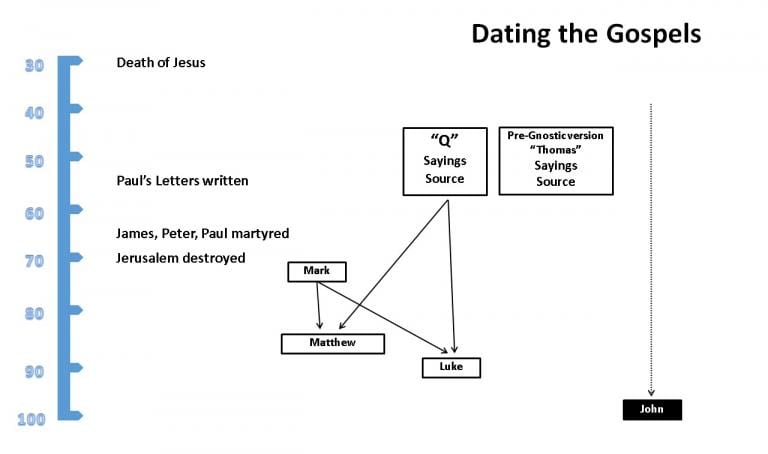
Clearly the Gospels evolved. As the stories of the Risen Jesus spread geographically throughout the Mediterranean world, they took on new meaning as contexts changed and multiplied. As the meaning of the Jesus-stories changed, so too new meanings were found in Jesus and those related to him, both followers and kin. Therefore, some big changes happened between “Mark” (ca 70 CE) and “Matthew” (ca. 80s CE).
Fellow Dying Inmate / All rights reserved
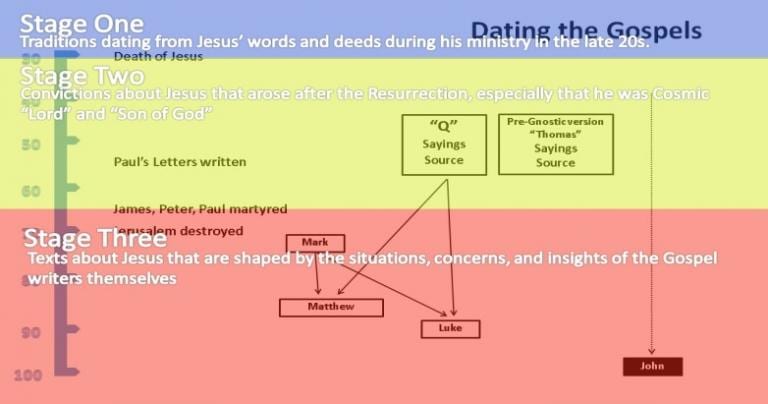
According to Vatican II’s Dogmatic Constitution on Divine Revelation, or Dei Verbum (§19), the Pontifical Biblical Commission’s, “Instruction on the Historical Truth of the Gospels” (§6-9), and the Universal Catechism (no. 126), the Gospels emerged through a three-stage process of development—
- First Stage—These are the original words and deeds of Jesus.
- Second Stage—The oral proclamation of the Apostles and disciples (including catechesis, narratives, testimonies, hymns, doxologies, and prayers).
- Third Stage—This would be the Gospel documents themselves.
Fellow Dying Inmate / All rights reserved
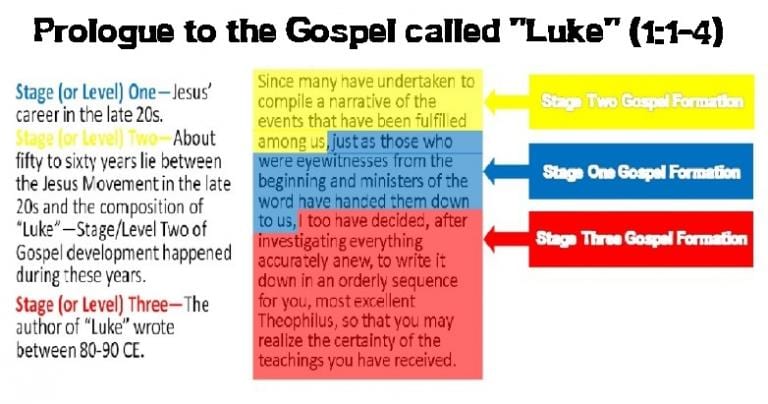
Understanding the Gospels means understanding these stages. Quite often they all are on display in the same Gospel passage.
Fellow Dying Inmate / All rights reserved
The Recontextualization of Mary in “Matthew”
Both the document called “Matthew” and Mary’s depiction within it could not escape the forces of recontextualization and changing meanings. Watch here…
“Matthew” depends on “Mark,” and is another Jesus group’s attempt at an improved “Mark 2.0.” As scholars like Felix Just show us, “Matthew” corrects or omits various grammatical, literary, historical, and geographical errors. Indeed, there are many ways to show that “Matthew” came after and was dependent on “Mark.”
“Matthew” also includes an “Infancy Narrative” for honor purposes to fortify what “Mark” proclaims about Jesus. As with the very different “Infancy Narrative” of “Luke,” the Matthean birth story of Jesus is mostly invented by the author. The only way ancients got accounts written about their childhood is if they died and became famous. To die and be raised as Cosmic Lord and Messiah made Jesus famous, so, eventually, two different authors wrote two irreconcilably different Infancy Narratives.
Not Biographies and Not Enough Yet for Mariology!
As we have explained before, these two different stories were not written to be fitted together like jigsaw puzzle pieces into one Western linear biographical account. Neither were they written to satiate Western 21st century curiosity about the Holy Family. They certainly were not composed for Marian purposes. Please understand that “Matthew” is focused on Jesus, and how he is understood, not his mother. His interests are not Marian!
“Matthew” follows “Mark” pretty close. Almost accidentally, because of how Mary is featured in his Infancy Narrative (Matthew 1—2), the negative view “Mark” has of her is softened somewhat. But we still have a long way to go before we can have enough material from which to evolve Rosary or acknowledge an Immaculate Heart!
Let’s explore more, tomorrow.
Previous Post

May 11, 2020
Techniques to See God
Next Post
May 12, 2020 Visionary Seeing the Word
Browse Our Archives
Select a Category Uncategorized
Select a Month August 2021 July 2021 June 2021 May 2021 April 2021 March 2021 February 2021 January 2021 December 2020 November 2020 October 2020 September 2020 August 2020 July 2020 June 2020 May 2020 April 2020 March 2020 February 2020 January 2020 December 2019 November 2019 October 2019 September 2019 August 2019
Follow Us!
TAKE THE
Religious Wisdom Quiz
According to Titus, what appeared to all people, bringing salvation?
Select your answer to see how you score.
The grace of God The gospel God's mercy Jesus Christ
Support this
Column


Related posts from Messy Inspirations

Understanding Apocalypse & Its Creatures



TRENDING AT PATHEOS Catholic

Rejecting Doom: Christian Hope And Human Action
Christianity is a religion of hope. We are to have hope and...

It’s What Comes From Within Which Matters
One of the most difficult things for us to understand is why...

Why I Choose the Eucharist Over the Sermon
Choose the Eucharist, Not the Sermon What are we supposed to get...

5 Design Elements Found in Spiritually Rooted Homes
Putting Spirituality Into Home Decor Our homes are more than our living...

Credo: A Story of God Told with the...
About 10 years ago, I began to imagine a personal "Credo" that...

The Anatomy of Divine Revelation in Catholic Thought
The claim that God has made Himself known to human beings is...
view all Catholic blogs
Ad-Free & Subscriber Log-In Subscription Support
- About Us
- 2026 Calendar
- Videos
- Podcasts
- Library of World Religions
- Faith In Media Tracker
- Advertise With Us
- Write for Us
- Privacy Policy
- Terms of Service
- Do Not Sell My Data
- Contact Us
- Radiant Digital
- Manage Newsletter Subscriptions
- Unsubscribe From Notifications
- Sitemap
Copyright 2008-2026, Patheos. All rights reserved.
Subscription Support Ad-Free & Subscriber Log-In
Follow Patheos