
BuddhistCatholicContemplativeEvangelicalGeneral ChristianHinduJewishLatter-day SaintMuslimNew VisionsProgressive Christian
Beliefs
- Buddhist
- Catholic
- Contemplative
- Evangelical
- General Christian
- Hindu
- Jewish
- Latter-day Saint
- More Voices
- Muslim
- New Visions
- Pagan
- Progressive Christian
Topics
- Religion News
- Food and Religion
- Sports and Religion
- Religious Art
- Religious Music and Entertainment
- Religious Events
- History and Religion
- Style and Religion
- Politics and Religion
- Women in Religion
- Recreation Outdoors and Religion
- Business Finance and Religion
- Careers Workplace and Religion
- Education and Religion
- Family Parenting and Religion
- Health Fitness and Religion
- Home and Religion
- Relationships and Religion
- Technology and Religion
- Travel and Religion
Columnists
- Buddhist Columnists
- Business Finance and Religion Columnists
- Careers Workplace and Religion Columnists
- Catholic Columnists
- Contemplative Columnists
- Education and Religion Columnists
- Evangelists Columnists
- Family Parenting and Religion Columnists
- General Christian Columnists
- Health Fitness and Religion Columnists
- Hindu Columnists
- History and Religion Columnists
- Home and Religion Columnists
- Jewish Columnists
- More Voices Columnists
- Latter Day Columnists
- Muslim Columnists
- New Visions Columnists
- Nonreligious Columnists
- Pagan Columnists
- Politics and Religion Columnists
- Progressive Columnists
- Recreation Outdoors and Religion Columnists
- Relationships and Religion Columnists
- Religion News Columnists
- Religious Art Columnists
- Religious Events Columnists
- Religious Music and Entertainment Columnists
- Sports and Religion Columnists
- Style and Religion Columnists
- Technology and Religion Columnists
- Travel and Religion Columnists
- Women in Religion Columnists
Resource Library
- 2026 Calendar
- Library of World Religions
- The 100 Most Holy Places on Earth
- Patheos Answers
- Podcasts
- Videos
- Faith Leaders Database
- Anglican Episcopalian
- Bahai
- Baptist
- Buddhism
- Christianity
- Confucianism
- Eastern Orthodoxy
- Hinduism
- Holiness and Pentecostal
- ISKCON
- Islam
- Judaism
- Lutheran
- Methodist
- The Church of Jesus Christ of Latter-day Saints
- New Age
- Paganism
- Presbytarian and Reformed
- Protestantism
- Religion Behind the Scenes
- Roman Catholic
- Scientology
- Shia Islam
- Sikhism
- Sufism
- Sunni Islam
- Taoism
- Zen
- See all religions
Research Tools
 Ad-Free & Subscriber Log-In Subscription Support
Ad-Free & Subscriber Log-In Subscription Support
Follow Patheos 

- Trending:
- Forgiveness
- |
- Marriage
- |
- Consciousness
- |
- Death Penalty
- |
- Election
- |
- Halloween
 Messy Inspirations
- Home
- Catholic
- Luke: First to Depict Mary Positively
Luke: First to Depict Mary Positively
Last updated on: May 13, 2020 at 8:41 pm by Fellow Dying Inmate
Luke: First to Depict Mary Positively 2020-05-13T20:41:18-04:00 Fellow Dying Inmate
Patheos Explore the world's faith through different perspectives on religion and spirituality! Patheos has the views of the prevalent religions and spiritualities of the world.
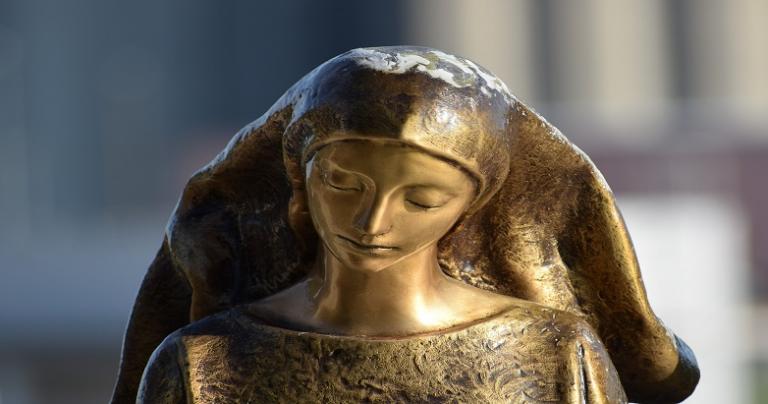
Image by Goran Horvat from Pixabay
Luke expands the role of Mary positively, setting the stage for later Mariological development.
Luke presents an enormous expansion of the role of Mary. Unlike the negative portrayal of Mary found in “Mark” (3:20-35), “Luke” depicts Mary proclaiming good news in her Magnificat (1:46-55). Indeed, the Lukan Mary is a chosen Israelite woman, favored and blessed by God. In contrast to the Markan Mary who attempts to obstruct Jesus’ mission, Mary is depicted throughout Luke as a disciple. Watch the video, please…
As we’ve stated before, the New Testament is relatively silent about Mary. Ultimately, Mediterranean culture was the foundation and explanation to Christian (and Muslim!) Marian devotion and understanding. Little is said about Mary by the New Testament, and what is said differs widely among the Gospels.
Recapping Depictions of Mary Before Luke
We explored how “Mark,” the earliest canonical Gospel, is pretty negative concerning Mary (Mark 3:20–35). Right after he selects his new family (Mark 3:13–19), his own biological family declares him out of his mind (Mark 3:21) and attempts to, by force, prevent his ministry (Mark 8:31-33). Once arriving to take him away, the Markan Jesus bluntly explains who his real family is (Mark 3:33–35). And Mark 6:4 seals the deal on this Gospel’s negative understanding of Mary and Jesus’ biological kin—
Jesus said to them, “A prophet is not without honor except in his native place and among his own kin and in his own house.”
Before Luke, Matthew’s Mary
We saw last time that the image of Mary improves just a tad once we reach the next Gospel to be composed, called “Matthew.” This is due to the virginal conception recounted in the Infancy Narrative of “Matthew” (1—2). But as far as Mary goes throughout the rest of the Matthean narrative, things are pretty much the same as in “Mark.”
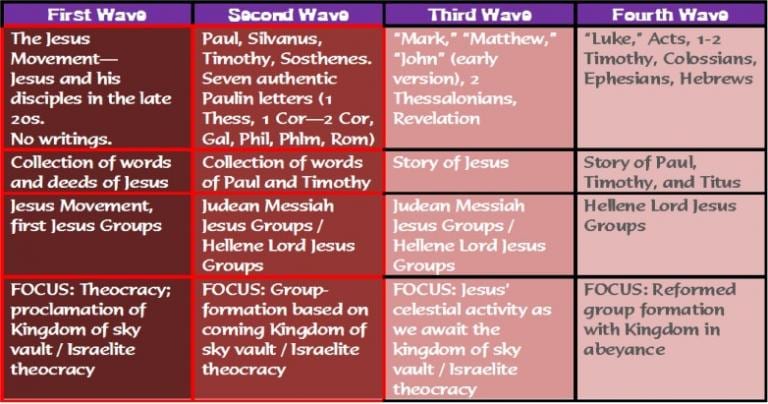
Image by Fellow Dying Inmate (with information by John Pilch) / All rights reserved
Well, almost the same. “Matthew” softens the harsh introduction of Jesus’ kin in Mark 3:20–21 (compare with the parallel in Matthew 12:46-50). Nowhere does “Matthew” have the biological kin trying to drag Jesus away for being crazy.
But that is where the softening ends. “Matthew” still has his Jesus asking, “Who are my mother and my brothers?” The Matthean Jesus, like the Markan Jesus, chooses his new fictive kin in the Jesus Movement over his biological relatives from Nazareth—which includes Mary too, folks (Matthew 12:49-50). Note also that “Matthew” slightly modifies Mark 6:4, softening things slightly, yet retaining the harsh phrase “in his own house” in Matthew 13:57—
Jesus said to them, “A prophet is not without honor except in his native place and in his own house.”
Mary in Luke is a Big Change!
But as we enter the next wave of the earliest Jesus groups, and read the Gospel called “Luke,” my how things change. Luke esteems Mary! In his Infancy Narrative (1—2), Mary, experiencing an altered state of consciousness, is hailed by one of God’s greatest sky servants as being highly favored by God (1:28, 30). She responds to this as would an obedient slavegirl of the God of Israel (1:38).
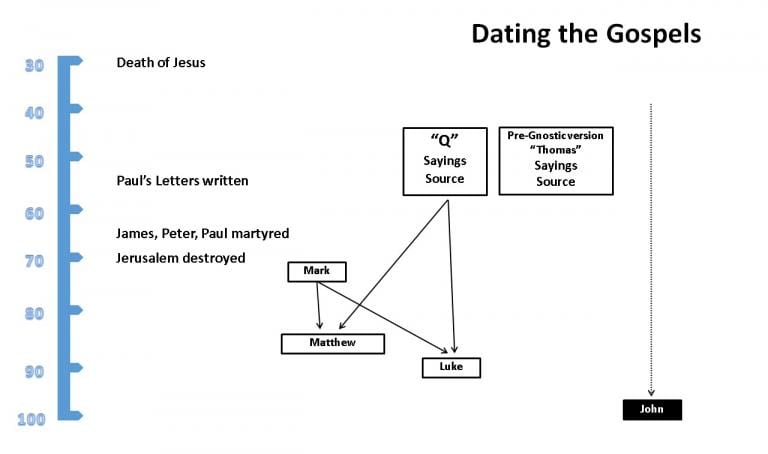
Fellow Dying Inmate / All rights reserved
In Luke, Mary’s kinswoman Elizabeth refers to her as “the mother of my Lord” (1:43). In a rather extraordinary account, the pregnant Middle Eastern Mary has (alone??!!) traveled to her kin in the demon-infested Judaean hill country, apparently recognizing her fetus as being apotropaic (cf. 1:41). Receiving her, Elizabeth praises Mary as blessed by God (1:42). Elizabeth says that, because of Mary’s faith, “there would be a fulfillment of what was spoken to her by the Lord” (1:45).
In Luke, Mary is made to represent the anawim, the poor and voiceless of Israel that Yahweh rushes to defend. In her own canticle (1:46-55), the Lukan Mary proclaims that “the Mighty One has done great things for me” (1:49). Mary in Luke hears the Word of God and keeps it obediently.
The Harshness is Gone!
Just like “Matthew” (12:46-50), so too Luke drops any mention of Mary and Jesus’ relatives coming to drag him away (as in Mark 3:20-21). But unlike “Matthew,” Luke also eliminates Jesus asking, “Who are my mother and my brothers?” In Luke the biological kin of Jesus are not coming to prevent his ministry, but rather to join with Jesus (8:19-21)! That’s quite a difference!
Mary in Luke is obedient to God’s Word from the start and never tries to obstruct her Son’s journey to Jerusalem. When a woman declares Mary blessed just for being his biological mother, Jesus responds by saying the truly blessed are those who hear the word of God and keep it. Well, that describes the Lukan Mary splendidly. From the first chapter of the Gospel she did that.
So in this Synoptic Gospel called “Luke,” when Jesus gets rejected by his hometown of Nazareth, the Markan material is softened even more than in the Matthean version. For in 4:24 we read—
And [Jesus] said, “Amen, I say to you, no prophet is accepted in his own native place.”
Let’s Not Get Carried Away by Luke…
However, despite the positive Lukan picture of Mary, we are still far away from Rosaries, Marian Feasts, calling her “Star of the Sea,” etc. In his “Acts of the Apostles,” the author called Luke only mentions Mary one time (Acts 1:14). This happens after Jesus is taken up into the sky vault, and before the Pentecost event.
Also it is easy to demonstrate that “Luke” is a spinmeister, a first century James Carville or David Axelrod . He makes those early communities look very good and spins well-written, ingenious theological fictions. So treating his Gospel or Acts, or especially his Infancy Narrative, as if it is biographically fact-precise is unwise. Even Emeritus Benedict XVI admits that portrayals in “Luke-Acts” of various historical figures sometimes comes by way of literary fiction. The Bible is all true and some of it actually happened.
How much can we say about the historical Mary literally being her son’s disciple? About as much or as little as we can say with certainty about the less-than-flattering depiction of Mary in “Mark” corresponding with history.
Marian Development Begins with Luke
However, if we do start with the Lukan Mary, who is clearly obedient to God and a faithful disciple to her Messiah-son, we can say that she shared the Easter-faith of the post-resurrectional Jesus group. With that, we might have the beginnings of a trajectory of development for later Marian devotion and dogma.
But before leaving the New Testament first we should look at how the author known as “John” treats the mother of Jesus. And we should also understand who exactly is the pregnant sky woman in Revelation is. We’ll do that soon…
Previous Post
May 12, 2020
Visionary Seeing the Word
Next Post

May 16, 2020 More Contradictions and Disagreements in the Gospels
Browse Our Archives
Select a Category Uncategorized
Select a Month August 2021 July 2021 June 2021 May 2021 April 2021 March 2021 February 2021 January 2021 December 2020 November 2020 October 2020 September 2020 August 2020 July 2020 June 2020 May 2020 April 2020 March 2020 February 2020 January 2020 December 2019 November 2019 October 2019 September 2019 August 2019
Follow Us!
TAKE THE
Religious Wisdom Quiz
In the Sermon on the Mount, who did Jesus say would "inherit the earth"?
Select your answer to see how you score.
The wise The meek The strong The just
Support this
Column


Related posts from Messy Inspirations

Understanding Apocalypse & Its Creatures



TRENDING AT PATHEOS Catholic

Rejecting Doom: Christian Hope And Human Action
Christianity is a religion of hope. We are to have hope and...

It’s What Comes From Within Which Matters
One of the most difficult things for us to understand is why...

Why I Choose the Eucharist Over the Sermon
Choose the Eucharist, Not the Sermon What are we supposed to get...

5 Design Elements Found in Spiritually Rooted Homes
Putting Spirituality Into Home Decor Our homes are more than our living...

Credo: A Story of God Told with the...
About 10 years ago, I began to imagine a personal "Credo" that...

The Anatomy of Divine Revelation in Catholic Thought
The claim that God has made Himself known to human beings is...
view all Catholic blogs
Ad-Free & Subscriber Log-In Subscription Support
- About Us
- 2026 Calendar
- Videos
- Podcasts
- Library of World Religions
- Faith In Media Tracker
- Advertise With Us
- Write for Us
- Privacy Policy
- Terms of Service
- Do Not Sell My Data
- Contact Us
- Radiant Digital
- Manage Newsletter Subscriptions
- Unsubscribe From Notifications
- Sitemap
Copyright 2008-2026, Patheos. All rights reserved.
Subscription Support Ad-Free & Subscriber Log-In
Follow Patheos