
BuddhistCatholicContemplativeEvangelicalGeneral ChristianHinduJewishLatter-day SaintMuslimNew VisionsProgressive Christian
Beliefs
- Buddhist
- Catholic
- Contemplative
- Evangelical
- General Christian
- Hindu
- Jewish
- Latter-day Saint
- More Voices
- Muslim
- New Visions
- Pagan
- Progressive Christian
Topics
- Religion News
- Food and Religion
- Sports and Religion
- Religious Art
- Religious Music and Entertainment
- Religious Events
- History and Religion
- Style and Religion
- Politics and Religion
- Women in Religion
- Recreation Outdoors and Religion
- Business Finance and Religion
- Careers Workplace and Religion
- Education and Religion
- Family Parenting and Religion
- Health Fitness and Religion
- Home and Religion
- Relationships and Religion
- Technology and Religion
- Travel and Religion
Columnists
- Buddhist Columnists
- Business Finance and Religion Columnists
- Careers Workplace and Religion Columnists
- Catholic Columnists
- Contemplative Columnists
- Education and Religion Columnists
- Evangelists Columnists
- Family Parenting and Religion Columnists
- General Christian Columnists
- Health Fitness and Religion Columnists
- Hindu Columnists
- History and Religion Columnists
- Home and Religion Columnists
- Jewish Columnists
- More Voices Columnists
- Latter Day Columnists
- Muslim Columnists
- New Visions Columnists
- Nonreligious Columnists
- Pagan Columnists
- Politics and Religion Columnists
- Progressive Columnists
- Recreation Outdoors and Religion Columnists
- Relationships and Religion Columnists
- Religion News Columnists
- Religious Art Columnists
- Religious Events Columnists
- Religious Music and Entertainment Columnists
- Sports and Religion Columnists
- Style and Religion Columnists
- Technology and Religion Columnists
- Travel and Religion Columnists
- Women in Religion Columnists
Resource Library
- 2026 Calendar
- Library of World Religions
- The 100 Most Holy Places on Earth
- Patheos Answers
- Podcasts
- Videos
- Faith Leaders Database
- Anglican Episcopalian
- Bahai
- Baptist
- Buddhism
- Christianity
- Confucianism
- Eastern Orthodoxy
- Hinduism
- Holiness and Pentecostal
- ISKCON
- Islam
- Judaism
- Lutheran
- Methodist
- The Church of Jesus Christ of Latter-day Saints
- New Age
- Paganism
- Presbytarian and Reformed
- Protestantism
- Religion Behind the Scenes
- Roman Catholic
- Scientology
- Shia Islam
- Sikhism
- Sufism
- Sunni Islam
- Taoism
- Zen
- See all religions
Research Tools
 Ad-Free & Subscriber Log-In Subscription Support
Ad-Free & Subscriber Log-In Subscription Support
Follow Patheos 

- Trending:
- Forgiveness
- |
- Marriage
- |
- Consciousness
- |
- Death Penalty
- |
- Election
- |
- Halloween
 Messy Inspirations
- Home
- Catholic
- Death of Jesus was Necessary… or Was It?
Death of Jesus was Necessary… or Was It?
Last updated on: May 8, 2020 at 4:40 pm by Fellow Dying Inmate
Death of Jesus was Necessary… or Was It? 2020-05-08T16:40:33-04:00 Fellow Dying Inmate
Patheos Explore the world's faith through different perspectives on religion and spirituality! Patheos has the views of the prevalent religions and spiritualities of the world.
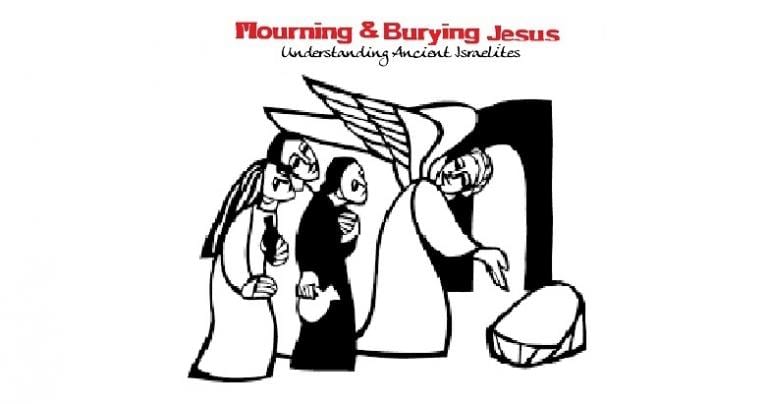
Modified Clipart by Fellow Dying Inmate / KissClipart.com
Death of Jesus was right and necessary for salvation says one Gospel tradition, in disagreement with another that says the death was wrong.
Death and Jesus the author of life. Seems like a contradiction in terms! And Easter Season, still ongoing through these dark days of pandemic, embraces the paradox. So do we, Easter People. Following the Johannine Tradition, we Christians profess that the Source of all life became death and conquered it.
Recalling Israelite Burial & Mourning Customs
In a recent post, we explored the mourning and burial rituals of first century elite Israelites. This was to better understand how the Evangelists, themselves literate elites, understood Jesus’ resurrection, an event that interrupted the mourning and burial process. What did their resurrection accounts say, therefore, about the death of Jesus? Was it something right and necessary (in accord with God’s will)? Or was it wrong and thus overturned by God?
We also learned that ancient Israelites believed that suffering in the flesh continued after death. Israelites believed that the process of decay was agonizingly painful for the dead person. The flesh was believed to contain all the sinful acts the deceased Israelite had committed through life. But once the flesh had melted away, so too had the shameful offenses against the honor of God, and what remained was suitable for resurrection.
We also explored the widespread practice of ossilegium or the “gathering of the bones,” an essential final step in the mourning process. This was because it was widely believed that God would use the bones in giving resurrection to the deceased Israelite. For it was believed that the bones held the personality of the dead person. Without those bones, what is there to resurrect?
After the Death: The Horror of Magdalene
Therefore, as scholars Bruce Malina and Richard Rohrbaugh inform us, all Israelites would understand the horror if the corpse went missing. They would understand the terrible predicament of Mary Magdalene finding the tomb empty and the body of Jesus gone. But before we can truly understand her predicament and the impact of experiencing the Risen One, we need to consider a few more things. This is because Jesus was not an elite. Moreover, Jesus was condemned and executed.
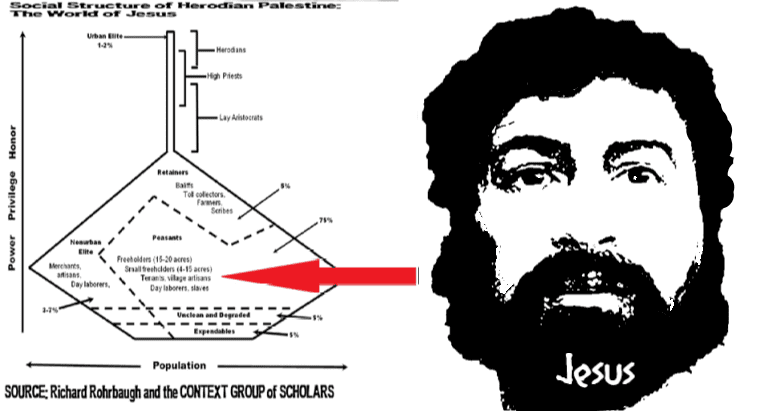
Fellow Dying Inmate (with inspiration from Donato Giancarlo) / All rights reserved
The Death of a Condemned Israelite Elite
First imagine a Judaean elite person who was executed as a criminal. Rohrbaugh and Malina explain that under the law, the bones of the condemned elite had to be returned to his family, eventually. But this would not happen before one whole year following the execution! In the meantime the Sanhedrin would take custody of the corpse. It would be placed into a special tomb maintained for this function.
Was this supposed to happen to the executed Jesus taken down from the Cross? Despite Jesus’ peasant status, perhaps an echo of this is preserved in the Gospels with accounts of elites like Joseph of Arimathea (Mark 15:43; John 19:39-40) getting involved in the burial? “John” adds another “ruler of the Judaeans,” Nicodemus. These are polished accounts, mind you.
Could these story details be echoes of the Sanhedrin taking proper custody of the dead bodies of elite condemned criminals? If so, over the decades between crucifixion and composition of the Gospels, things got polished by the Jesus groups!
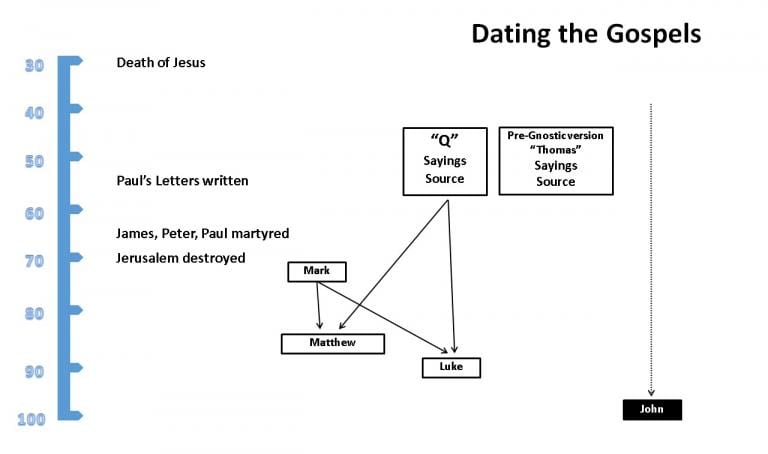
Fellow Dying Inmate / All rights reserved
Malina and Rohrbaugh help us to see that the original or historical purpose of Sanhedrin members taking possession of the corpse wasn’t to honor the executed body. It certainly wasn’t to provide peasant Jesus with enough embalming material as if he were a king being buried (see John 19:39)!
Culture Shapes How We Interpret Death
In our United States cultural world, when lethal injection, electrocution, or other execution method is employed, either professional physician or the medical examiner’s office determines the exact “point of death.” Next, a coroner confirms this by signing a death certificate. Again, 21st century Western people understand death biomedically and occurring at an exact, unextended point in time.
As all the Context Scholars, including Malina and Rohrbaugh, tirelessly remind us, culture shapes how human beings can and do perceive, think about, understand, and communicate reality. This applies to our relationship with death also. Therefore capital punishment, like death itself, was understood quite differently in the Mediterranean cultural world of first century Israelites. It was far more involved than simply ending the life of the condemned person. In the Biblical world, sentence of punishment lasted beyond physical death.
Punishment Lasting Beyond Death
Following the last breath of the condemned, all mourning for that person was suppressed. The dead corpse of the executed elite Israelite was imprisoned in a special tomb to languish through the agonizing yet purifying rotting process. He would rot isolated and alone, without mourners. The court oversaw the whole process. But once the flesh had all disintegrated, then the bones, now eligible for resurrection, would be returned to the family. Finally the debt was paid, and the sentence carried out to the full.
The Grim Fate of Crucified Peasants
This, of course, reflects the fate of condemned and executed elites. But Galilean nothing-person Jesus was not an elite. Nor was Jesus executed like most elites were. Rather, Jesus was crucified. So we should ask: what became of the corpses of crucified peasants?
The answer is grim. To be crucified in antiquity almost always was synonymous with being made food for scavengers—wild dogs and birds. Again, don’t think that what the elite enjoyed was the same as the plight of peasants.
There is some evidence from Josephus and Philo that some crucified bodies were taken down from their crosses and buried, but these are exceptions that prove the rule of allowing the crucified dead to be eaten by animals. And again, tortures and humiliation continue past death in this cultural world. Once more, the Gospels were written by people belonging to two percent of the total population that could write, not Galilean peasants, nothing-folk. Things percolated and evolved through the decades.
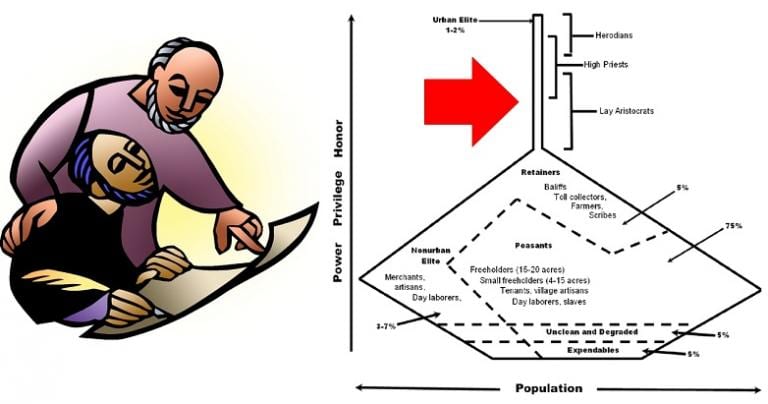
Modified Clipart by Fellow Dying Inmate / KissClipart.com / with information from Richard Rohrbaugh
In any case, Rohrbaugh and Malina inform us as to these cultural beliefs and practices which give us a contextual framework through which to understand the significance of Gospel accounts of Jesus’ burial. By this context, we should better understand what is being claimed by the first generations of Jesus groups concerning the resurrected Jesus.
Death, Burial, and Resurrection of Jesus According to “John”
When we read the account given in the Fourth Gospel, Jesus is crucified by the Romans, but was condemned by the Judaean populace, both the crowds and leaders together. According to “John,” the body of Jesus was taken down from the Cross and placed in custody by a high-ranking Judaean, Joseph of Arimathea. Jesus’ body was secured in a tomb in order to serve out the sentence of decay so as to atone for its sins or dishonoring the God of Israel. Jesus’ proper burial place in Nazareth is far away to the north, so this would be a horror story, were it not for the Fourth Gospel’s comedic irony.
To suddenly find the tomb empty (John 20:1-2) means that the penal/atonement process has been interrupted. In Johannine thought, Israel’s chief priests and the entire Judaean populace had judged that Jesus needed to rot away in atonement for his shameful acts to prepare for resurrection.
However the understanding and proclamation that Jesus was raised (John 20:17-18) means that the God of Israel has overturned the judgment of Israel. Because there was no shameful sin in Jesus’ flesh, according to “John” the God of Israel received Jesus into resurrection directly from his last breath (John 19:30). God overturned the death and decay sentence. Before the rotting happened, God had intervened. That’s how the Johannine Jesus group saw it.
God Overturned a Great Injustice, Says “John”
For the Fourth Gospel to make the claim that Jesus was raised (passive voice) by God means that all of the deeds and words of Jesus have been vindicated. Indeed, it could be no other way as far as the Johannine Jesus group was concerned. After all, according to the anti-society that wrote the Fourth Gospel, Jesus was the Word made flesh in Israel (John 1:14). How could God allow the Word of life to rot (John 1:3-5)? Thus, God preserves the fleshly record of Jesus complete and whole.
There are major points of difference and disagreement between the Synoptic Gospels and the Fourth Gospel we call “John.” The earliest followers of Jesus who experienced the Risen One still had to contend with the shameful death of Jesus. They grappled with this.
Death of Jesus: Was it Wrong? Or Right and Necessary?
Looking at the greater tradition which undergirds all the New Testament documents, we find the earlier pre-Gospel claim that Jesus was given resurrection by God. This was the cultural understanding of ancient Israel applied to Jesus. Seen culturally, to claim resurrection for Jesus is to assert that his death was WRONG, not belonging to God’s will, and thus, God, the highest of all judges, has overturned this wrong.
But according to the culturally-specific THEOLOGICAL perspective found within many New Testament documents, in a certain sense Jesus’ death was RIGHT and NECESSARY! Throughout its history, Israel interpreted itself as suffering wrath, vengeance from God for having shamed God, its patron deity.
God was being viewed in Mediterranean analogy as if God were a Mediterranean patron. If a client sins against his Mediterranean patron, as in “The Godfather” movies, the patron “calls out a hit” on you in order to defend his honor!
And this was believed evident by being humiliatingly dominated under foreign powers for seven centuries—God must have allowed that. Indeed, the wrath hurled collectively at all Israel, was served out as Romans crucified Israelites! God allowed this to happen, so the Israelite interpretation went, and in doing so, took satisfaction in defending God’s honor shamed repeatedly by Israel.
Jesus’ Macho Death
But so manfully heroic were Jesus’ sufferings on the Cross, so unwavering was Jesus’ undying loyalty, something extraordinary happened. God, seen as a Mediterranean patron and father, was so impressed by this Israelite Jesus’ honorable sufferings, that he waived the honor-debt owed him by Israelites, to all Israelites united to the Godfather-style loyalty (faith) of Jesus, whom God rewarded with resurrection.
By raising the crucified Israelite Jesus, establishing him Cosmic Lord and Messiah, God was about to institute Israelite theocracy (“the Kingdom of God”) in the land of Israel. This was the Gospel or Innovation that Paul proclaimed (Romans 1:1; Galatians 1:12—see all his seven authentic letters) decades prior to the composition of the Gospels!
Death of Jesus is Interpreted Two Different Ways in the New Testament!
So according to Malina and Rohrbaugh, we have a CULTURAL INTERPRETATION of Jesus’ death (it was WRONG!) and a THEOLOGICAL INTERPRETATION of Jesus’ death (it was RIGHT and NECESSARY!). Do you see how both clash? They contrast sharply. The theological interpretation has Jesus’ death removing the shame of Israelite sin (i.e., so honored by Jesus was God, that God waives his right to exact Mediterranean-style revenge on those who have dishonored God). But the cultural interpretation is that Jesus’ resurrection means that the death was plainly wrong because God had overturned the injustice.
Malina and Rohrbaugh recommend a careful reading the Synoptic Gospels, inviting readers to take care and notice that both interpretations, the cultural and theological, have been braided together there. Someone took both these contradictory traditions and artistically weaved them together, and creatively blended them into one story. They run smoothly in one narrative sequence. Hence, in the Synoptics, Jesus even predicts three times that he will die and be raised up (Mark 8:31; 9:31; 10:33-34).
In contrast, “John” rejects this juxtaposition completely. Therefore he presents no dissonance between the two interpretations. For “John,” the theological idea of Jesus’ necessary redemptive suffering is abandoned. Only the cultural view remains—Jesus’ death was WRONG. Only that view was intelligible and definitive to the Johannine anti-society.
The Gospels Fundamentally Disagree Why Jesus Had to Die!
Why did Jesus have to die crucified according to the Synoptic Gospels? It was for some mixture of right and wrong, the “right” being the necessary act of a true Israelite honoring God in an ultimate way thereby impressing God to change, and waive his right to avenge his besmirched honor. Here Jesus must die, and God desired this deliberately for the benefit of others. (Please understand that this idea is a far cry from later Christian penal substitutionary atonement theories)
Why did Jesus have to die crucified according to the Fourth Gospel? He didn’t have to die!—except for the calamitous intransigence of the wicked and hopelessly blind Judaeans. Regardless of this vile evil, the God of Israel rescued and vindicated Jesus, the very mediator of life itself. Either “John” knows nothing or rejects completely any idea that Jesus died deliberately due to God wanting him dead to benefit anyone.
21st Century Christian Blindness
The problem for us is that this subtle yet major difference between the Synoptics and “John” is almost impossible for Western believers to see. Our blindness here results from sitting on two thousand years of theological and devotional freight. Our pietism has produced a continual blending of all the Gospel accounts together like a cake batter through our Christmas and Easter observances, religious art, private devotions, and films. Consequently, 21st century Westeners tend to read to the Synoptic understanding into “John.”
Later we will counter the common objection and misunderstanding that by calling Jesus “the Lamb of God,” the Fourth Gospel does see Jesus’ death as right and necessary.
Previous Post

May 3, 2020
Sheep in the Gospels—Cute or Macho?
Next Post

May 9, 2020 Mary in May
Browse Our Archives
Select a Category Uncategorized
Select a Month August 2021 July 2021 June 2021 May 2021 April 2021 March 2021 February 2021 January 2021 December 2020 November 2020 October 2020 September 2020 August 2020 July 2020 June 2020 May 2020 April 2020 March 2020 February 2020 January 2020 December 2019 November 2019 October 2019 September 2019 August 2019
Follow Us!
TAKE THE
Religious Wisdom Quiz
What does "Ephrathah" mean in Hebrew?
Select your answer to see how you score.
The Lord’s House Chosen Land Fruitful Holy Place
Support this
Column


Related posts from Messy Inspirations

Understanding Apocalypse & Its Creatures



TRENDING AT PATHEOS Catholic

Rejecting Doom: Christian Hope And Human Action
Christianity is a religion of hope. We are to have hope and...

It’s What Comes From Within Which Matters
One of the most difficult things for us to understand is why...

Why I Choose the Eucharist Over the Sermon
Choose the Eucharist, Not the Sermon What are we supposed to get...

5 Design Elements Found in Spiritually Rooted Homes
Putting Spirituality Into Home Decor Our homes are more than our living...

Credo: A Story of God Told with the...
About 10 years ago, I began to imagine a personal "Credo" that...

The Anatomy of Divine Revelation in Catholic Thought
The claim that God has made Himself known to human beings is...
view all Catholic blogs
Ad-Free & Subscriber Log-In Subscription Support
- About Us
- 2026 Calendar
- Videos
- Podcasts
- Library of World Religions
- Faith In Media Tracker
- Advertise With Us
- Write for Us
- Privacy Policy
- Terms of Service
- Do Not Sell My Data
- Contact Us
- Radiant Digital
- Manage Newsletter Subscriptions
- Unsubscribe From Notifications
- Sitemap
Copyright 2008-2026, Patheos. All rights reserved.
Subscription Support Ad-Free & Subscriber Log-In
Follow Patheos