
BuddhistCatholicContemplativeEvangelicalGeneral ChristianHinduJewishLatter-day SaintMuslimNew VisionsProgressive Christian
Beliefs
- Buddhist
- Catholic
- Contemplative
- Evangelical
- General Christian
- Hindu
- Jewish
- Latter-day Saint
- More Voices
- Muslim
- New Visions
- Pagan
- Progressive Christian
Topics
- Religion News
- Food and Religion
- Sports and Religion
- Religious Art
- Religious Music and Entertainment
- Religious Events
- History and Religion
- Style and Religion
- Politics and Religion
- Women in Religion
- Recreation Outdoors and Religion
- Business Finance and Religion
- Careers Workplace and Religion
- Education and Religion
- Family Parenting and Religion
- Health Fitness and Religion
- Home and Religion
- Relationships and Religion
- Technology and Religion
- Travel and Religion
Columnists
- Buddhist Columnists
- Business Finance and Religion Columnists
- Careers Workplace and Religion Columnists
- Catholic Columnists
- Contemplative Columnists
- Education and Religion Columnists
- Evangelists Columnists
- Family Parenting and Religion Columnists
- General Christian Columnists
- Health Fitness and Religion Columnists
- Hindu Columnists
- History and Religion Columnists
- Home and Religion Columnists
- Jewish Columnists
- More Voices Columnists
- Latter Day Columnists
- Muslim Columnists
- New Visions Columnists
- Nonreligious Columnists
- Pagan Columnists
- Politics and Religion Columnists
- Progressive Columnists
- Recreation Outdoors and Religion Columnists
- Relationships and Religion Columnists
- Religion News Columnists
- Religious Art Columnists
- Religious Events Columnists
- Religious Music and Entertainment Columnists
- Sports and Religion Columnists
- Style and Religion Columnists
- Technology and Religion Columnists
- Travel and Religion Columnists
- Women in Religion Columnists
Resource Library
- 2026 Calendar
- Library of World Religions
- The 100 Most Holy Places on Earth
- Patheos Answers
- Podcasts
- Videos
- Faith Leaders Database
- Anglican Episcopalian
- Bahai
- Baptist
- Buddhism
- Christianity
- Confucianism
- Eastern Orthodoxy
- Hinduism
- Holiness and Pentecostal
- ISKCON
- Islam
- Judaism
- Lutheran
- Methodist
- The Church of Jesus Christ of Latter-day Saints
- New Age
- Paganism
- Presbytarian and Reformed
- Protestantism
- Religion Behind the Scenes
- Roman Catholic
- Scientology
- Shia Islam
- Sikhism
- Sufism
- Sunni Islam
- Taoism
- Zen
- See all religions
Research Tools
 Ad-Free & Subscriber Log-In Subscription Support
Ad-Free & Subscriber Log-In Subscription Support
Follow Patheos 

- Trending:
- Forgiveness
- |
- Marriage
- |
- Consciousness
- |
- Death Penalty
- |
- Election
- |
- Halloween
 Messy Inspirations
- Home
- Catholic
- Health of Jesus VS the Shroud of Turin
Health of Jesus VS the Shroud of Turin
Last updated on: April 23, 2020 at 8:54 am by Fellow Dying Inmate
Health of Jesus VS the Shroud of Turin 2020-04-23T08:54:30-04:00 Fellow Dying Inmate
Patheos Explore the world's faith through different perspectives on religion and spirituality! Patheos has the views of the prevalent religions and spiritualities of the world.
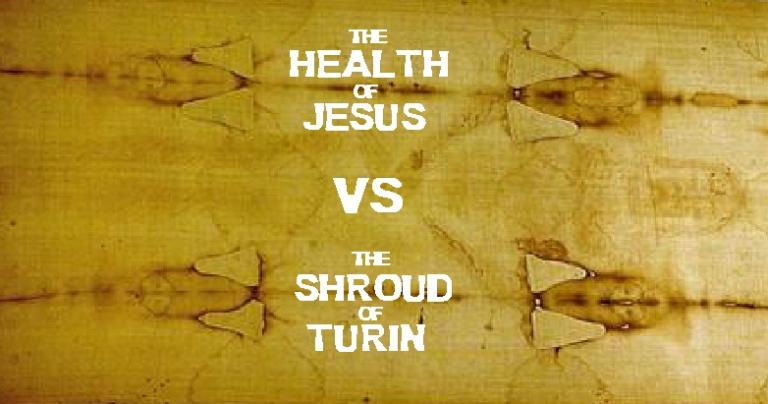
Antonio Calanni / AP fuke
Health conditions of first century Galilean peasants, atrocious, contrasts sharply with the robust figure presented on the Shroud of Turin.
Health is a big deal these days. It seems that all our minds are bent on it due to the COVID-19 pandemic. As of this writing, just under 35,000 Americans have been killed by the novel coronavirus, a slice of the almost 146,000 lost worldwide.
Meanwhile incompetent U.S. leadership itches to loosen restrictions and roll back social distancing, the only safeguards keeping us safe and the virus from spreading. Right-wing yahoos and megachurch pastors, enabled by their POTUS God Emperor, protest and disregard safety protocols endangering lives. Both mental and physical health are very much on our minds these days.
Spiritual Health & the Shroud of Turin
It is Eastertide also. The Shroud of Turin, perhaps the most famous of all things claimed to be relics, is once again making the news rounds. Believed far and wide by many Christians to be the genuine burial cloth of Jesus, this fourteen foot long linen cloth is scrutinized and used as a template for artistic depictions of Jesus. The resulting images are purported to be the closest we can to come to a photograph of him. Looking at the Shroud, many imagine that we have a scientific proof of what Jesus looked like.
Considering health again (and putting aside its signs of wounds and trauma), what does the human image imprinted on the Shroud convey? We see a long-limbed, very robust and healthy figure, quite handsome to Western standards. The figure is strong, implying good nutrition and sound health. The impression in the cloth shows a man, somewhere between 5’10” and 6’2,” with long hair (see 1 Corinthians 11:14).
The Shroud first appears on the historical record in the middle of 14th century France. Roughly thirty years later, Pope Clement VII declared the Shroud was not the actual burial cloth of Christ. The pope had been informed by the Bishop of Troyes that an artist had confessed to having forged it. Still, Clement VII declared the Shroud to be a man-made icon, and that churches could still display it. Pope Francis maintains this position and language.
Is that which is presented on the Shroud of Turin realistic? Does it correspond with the real historical situation and health conditions of first century Galilean peasants like the historical Jesus? How does the Shroud stack up to the ample skeletal evidence we have from first century Syro-Palestine? Let’s explore this.
Just How Healthy was Jesus?
Consider Jesus, a first century peasant village artisan. How do you picture him as he looked when he was living and working in Nazareth and the Galilee? Just how good is his health? Does he look like the figure on the Shroud of Turin? Is he robust? Strong? Tall? Does he have clean and healthy hair?
And also why not try to imagine Mary, his mother, as she was historically. How does this village peasant woman appear? What is the status of her health? How do you see her hair? Does she smell like roses?
Imagine if Jesus and Mary smiled at you. What would their teeth look like? Perfectly ordered, rows of white and clean?
Now pause a moment to consider how often Jesus in the Gospels heals sick people. These were mostly peasants like himself and his mother. There were so many sick that Jesus touched and interacted with and the Gospels all attest to this.
Unhealthy Predilection for Congenial Jesuses
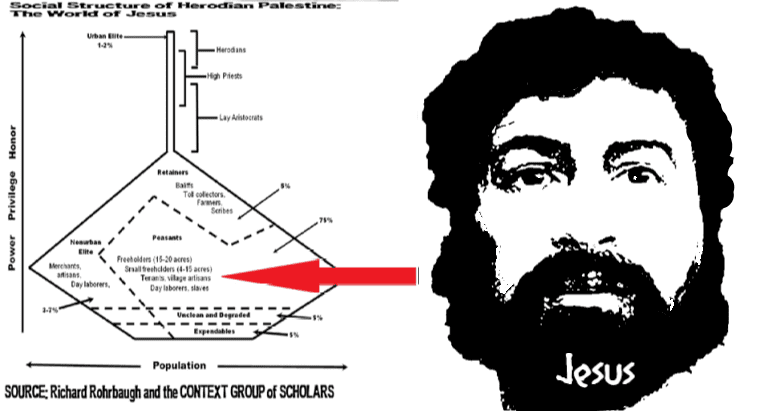
Sadly, the health of our imagination of many historical situations is quite bad, having been tainted and distorted, even poisoned by what is culturally familiar to us. Dr. Richard Rohrbaugh (“The New Testament in Cross-Cultural Perspective,” pp. 28-29) explains that the nineteenth-century romanticized the peasant way of life. We have been imprinted by Sunday school and Religious Education art and pictures from storybooks, Christmas cards, cartoons and movies.
These media present a fantasy world about what life was like for ancient peasants like Jesus and Mary. Yet it stuck! But the brutal life of a Galilean villager was alien to 19th century abundance and 20th century superabundance.
Jesus Died an Old Man
Scholars like Rohrbaugh inform us that in the first century Galilee—Jesus’ place and time—birthrates were approximately forty per thousand per year, twice that in the United States presently, although death rates were even higher still. This means that in our modern world we have the curious phenomenon of far fewer births and a rapidly rising population.
In many peasant societies today, infant mortality rates have been estimated at 30 percent, and that amount was probably the same for first-century Syro-Palestine. One third of all children died before reaching six years old. Your sixteenth birthday was bittersweet, because if you made it that age, 60 percent of your fellow villagers had died.
At twenty-six years old, 75 percent of your generation was in the grave. By age forty-five, 90 percent were gone. If you made it to 60 years old, you were incredibly fortunate, because only three percent of the total population got to be that old (read “The Shape of the Past: Models of Antiquity” by Thomas Carney, page 88)!
Given these facts, was 30-something Jesus a young man or an old man when he died? Consider that percent of his audience was younger than he was! And most of these people were looking forward to about ten years of life remaining. The average age of death for male peasants like Jesus was 27; the average age of death for female peasants like Mary, his mother, was 18. Therefore, Jesus died an old man.
Fellow Dying Inmate (with inspiration from Donato Giancarlo) / All rights reserved
Atrocious Health of Galilean Peasantry
Rohrbaugh and other scholars tell us that disease and death rates fell disproportionately upon the lower classes of both city and village—being a village artisan put Jesus and Mary among those lower classes. But Jesus and Mary did indeed make it to adulthood! So how would their health have been? Answer: a far cry from what is depicted on the Shroud of Turin.
At thirty years old, internal parasites, tooth decay, and bad eyesight afflicted the majority of peasants like Jesus and Mary. Parasites—carried by sheep, goats, and wild dogs—were everywhere. One half of all the hair combs found at Qumran, Masada, and Murabbat were infected with lice and lice eggs, and this probably reflected conditions elsewhere (See “Death and Disease in Ancient Israel” by Joseph Zias, p. 148.).
We have abundant skeletal remains from Jesus’ time. In archaeological digs throughout the Holy Land lots of bone fragments get discovered. Paleobiologists look at these remains and can tell what killed a person and how old they were when they died. As far as dental health goes, we have never uncovered from first century Palestine a skull with a complete set of teeth. So maybe we should drop those sentimental images of smiling Jesus, huh?
Bad Health: Disease and Malnutrition
Malnutrition was a constant problem in Galilean villages. We know this because of the high infant mortality rates, the age structure of the population, and pathological evidence from skeletal remains (See “The Social History of Palestine in the Herodian Period: The Land is Mine” by David A. Fiensy, p. 98).
From childhood, Galilean peasants would have suffered the debilitating results of protein deficiency. As much as one-fourth of a male Palestinian peasant’s caloric intake came from alcohol. Half of all calories came from bread.
Infectious disease was the most serious threat to life for ancients, the number one killer for people in Biblical times and a long time after. Ancient people had no way to control infection. We know for certain that infectious disease caused most peasant children to die (again, “Death and Disease in Ancient Israel” by Joseph Zias, p. 149).
Few peasants could afford professional physicians. And aggression from other-than-human persons (“spirits”) was deemed the cause of illnesses by biblical peoples. Therefore the only hope for most peasants came from shamanic folk healers—“holy men” of various kinds—such as Jesus.
Health and Middle Eastern Violence
And in Jesus’ agonistic society, violence was a part of daily village life. Scholar Douglas Oakman details how it was a regular and routine experience all over the Galilee (see his “The Countryside in Luke-Acts” in “The Social World of Luke-Acts: Models for Interpretation,” p. 158).
The Jesus story is filled with accounts of fraud, robbery, forced imprisonment or labor, beatings, inheritance disputes, and forcible removal of rents. In “Mark” alone are fifteen reports about such violent incidents (1:14; 1:45; 3:6; 3:27; 5:3; 6:16-28; 10:33-34; 12:1-8; 12:40; 12:41-44; 13:9-13; 14:1; 14:43-48; 15:7; 15:15-20).
The most common victims of violence? Widows, aged parents without children or parents of children with disabilities, the very young, the very old, those with diseases, deformities, or disabilities, and those whose land had been taken by greedy elites. As Rohrbaugh says, peasant villagers constantly were suspicious of outsiders, feared and distrusted of officials (especially of men who could read and write), and hated anyone who threatened their subsistence.
The Shroud of Turin is Fake??
What does all this add up to? Think about it: poor housing, nonexistent sanitation, constant violence, economically inaccessible medical care, and horrendous dietary habits. You don’t get the figure seen on the Shroud of Turin from that hard data, folks.
What does the overwhelming evidence about Galilean peasant health conditions do to devotionally romanticizing Jesus into a tall, attractive to Western standards, robust and healthy male? (See Magen Broshi’s “The Diet of Palestine in the Roman Period—Introductory Notes,” pp. 41-56). Painfully, it invites us into metanoia.
Pietism and hyper-devotional obsessions shield and hide closet Docetism. When people claiming to scientifically prove from unproven relics the Shroud of Turin that Jesus was healthy and robust, isn’t this a rather insidious case of identity theft? Can we love someone we refuse to get to know? Belief in the Incarnation demands the messiness and funk of the prefix in.
Jesus, help us to see you and those from whom you came. Amen.
Previous Post

April 15, 2020
Magdalene in "John": Herald of the Resurrection
Next Post

April 19, 2020 Thomas the Doubter
Browse Our Archives
Select a Category Uncategorized
Select a Month August 2021 July 2021 June 2021 May 2021 April 2021 March 2021 February 2021 January 2021 December 2020 November 2020 October 2020 September 2020 August 2020 July 2020 June 2020 May 2020 April 2020 March 2020 February 2020 January 2020 December 2019 November 2019 October 2019 September 2019 August 2019
Follow Us!
TAKE THE
Religious Wisdom Quiz
True or False: The Corinthians were told that if Christ has not been raised, their preaching and faith are useless.
Select your answer to see how you score.
FALSE TRUE
Support this
Column


Related posts from Messy Inspirations

Understanding Apocalypse & Its Creatures



TRENDING AT PATHEOS Catholic

Creation, Preservation, and Teleology in Catholic Theology
As I write this, it is very early Monday morning. Like millions...

The Parable Of The Sower And The Word...
One of Christ’s most famous parables is that of the sower who...

Rejecting Doom: Christian Hope And Human Action
Christianity is a religion of hope. We are to have hope and...

Why I Choose the Eucharist Over the Sermon
Choose the Eucharist, Not the Sermon What are we supposed to get...

5 Design Elements Found in Spiritually Rooted Homes
Putting Spirituality Into Home Decor Our homes are more than our living...

Credo: A Story of God Told with the...
About 10 years ago, I began to imagine a personal "Credo" that...
view all Catholic blogs
Ad-Free & Subscriber Log-In Subscription Support
- About Us
- 2026 Calendar
- Videos
- Podcasts
- Library of World Religions
- Faith In Media Tracker
- Advertise With Us
- Write for Us
- Privacy Policy
- Terms of Service
- Do Not Sell My Data
- Contact Us
- Radiant Digital
- Manage Newsletter Subscriptions
- Unsubscribe From Notifications
- Sitemap
Copyright 2008-2026, Patheos. All rights reserved.
Subscription Support Ad-Free & Subscriber Log-In
Follow Patheos