
BuddhistCatholicContemplativeEvangelicalGeneral ChristianHinduJewishLatter-day SaintMuslimNew VisionsProgressive Christian
Beliefs
- Buddhist
- Catholic
- Contemplative
- Evangelical
- General Christian
- Hindu
- Jewish
- Latter-day Saint
- More Voices
- Muslim
- New Visions
- Pagan
- Progressive Christian
Topics
- Religion News
- Food and Religion
- Sports and Religion
- Religious Art
- Religious Music and Entertainment
- Religious Events
- History and Religion
- Style and Religion
- Politics and Religion
- Women in Religion
- Recreation Outdoors and Religion
- Business Finance and Religion
- Careers Workplace and Religion
- Education and Religion
- Family Parenting and Religion
- Health Fitness and Religion
- Home and Religion
- Relationships and Religion
- Technology and Religion
- Travel and Religion
Columnists
- Buddhist Columnists
- Business Finance and Religion Columnists
- Careers Workplace and Religion Columnists
- Catholic Columnists
- Contemplative Columnists
- Education and Religion Columnists
- Evangelists Columnists
- Family Parenting and Religion Columnists
- General Christian Columnists
- Health Fitness and Religion Columnists
- Hindu Columnists
- History and Religion Columnists
- Home and Religion Columnists
- Jewish Columnists
- More Voices Columnists
- Latter Day Columnists
- Muslim Columnists
- New Visions Columnists
- Nonreligious Columnists
- Pagan Columnists
- Politics and Religion Columnists
- Progressive Columnists
- Recreation Outdoors and Religion Columnists
- Relationships and Religion Columnists
- Religion News Columnists
- Religious Art Columnists
- Religious Events Columnists
- Religious Music and Entertainment Columnists
- Sports and Religion Columnists
- Style and Religion Columnists
- Technology and Religion Columnists
- Travel and Religion Columnists
- Women in Religion Columnists
Resource Library
- 2026 Calendar
- Library of World Religions
- The 100 Most Holy Places on Earth
- Patheos Answers
- Podcasts
- Videos
- Faith Leaders Database
- Anglican Episcopalian
- Bahai
- Baptist
- Buddhism
- Christianity
- Confucianism
- Eastern Orthodoxy
- Hinduism
- Holiness and Pentecostal
- ISKCON
- Islam
- Judaism
- Lutheran
- Methodist
- The Church of Jesus Christ of Latter-day Saints
- New Age
- Paganism
- Presbytarian and Reformed
- Protestantism
- Religion Behind the Scenes
- Roman Catholic
- Scientology
- Shia Islam
- Sikhism
- Sufism
- Sunni Islam
- Taoism
- Zen
- See all religions
Research Tools
 Ad-Free & Subscriber Log-In Subscription Support
Ad-Free & Subscriber Log-In Subscription Support
Follow Patheos 

- Trending:
- Forgiveness
- |
- Marriage
- |
- Consciousness
- |
- Death Penalty
- |
- Election
- |
- Halloween
 Messy Inspirations
- Home
- Catholic
- Transfiguration—an Altered State of Consciousness Experience
Transfiguration—an Altered State of Consciousness Experience
Last updated on: March 9, 2020 at 11:37 pm by Fellow Dying Inmate
Transfiguration—an Altered State of Consciousness Experience 2020-03-09T23:37:49-04:00 Fellow Dying Inmate
Patheos Explore the world's faith through different perspectives on religion and spirituality! Patheos has the views of the prevalent religions and spiritualities of the world.
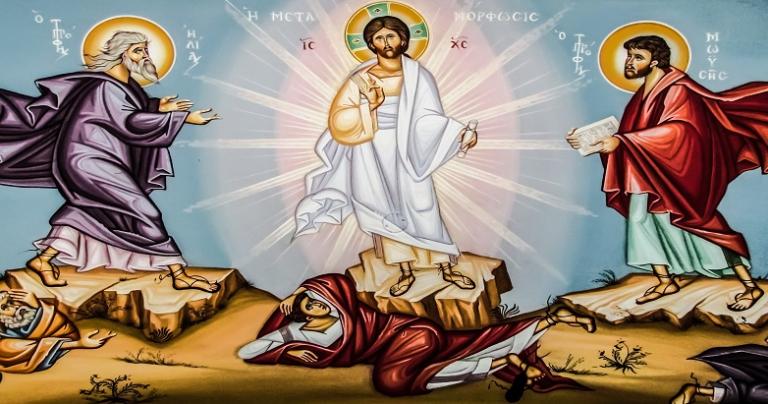
Image by Dimitris Vetsikas from Pixabay
Transfiguration of Jesus is but one of five major Altered States of Consciousness experiences in his career.
“Transfiguration”—the subject of last Sunday’s Gospel (Matthew 17:1-9). But what really happened? Is this a real event from the historical Jesus’ life? Remember, the Gospels are not fact-precise biographies—while all true, they are not all factual. So was the “transfiguration” yet another theological fiction?
The “transfiguration” is featured in all three Synoptic Gospels (Mark 9:2-10//Matthew 17:1-9//Luke 9:28-36), and the Matthean version is seasoned by the Matthean narrative. The anonymous scribe we call “Matthew” interprets Jesus as another Moses. The face of the Matthean Jesus in this transfiguration story shines just as Moses’ face did (Exodus 34:29-30).
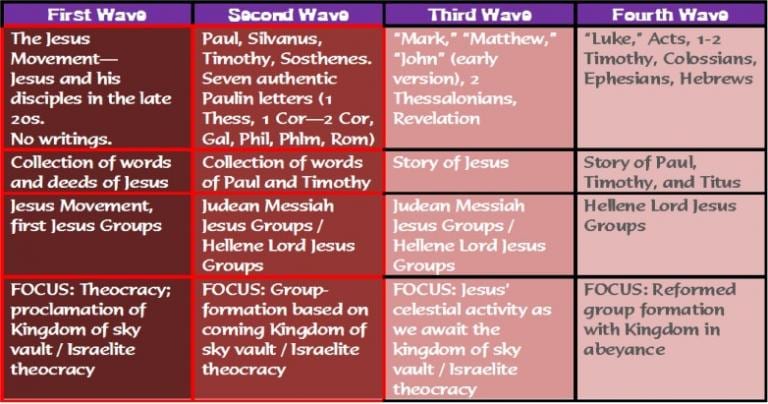
With obvious literary allusions at work, how then can we understand the “transfiguration” of Jesus (Gospel Development Stage One)? What really happened? Scholars remind us of the impossibility of knowing what precisely occurred. However, help in understanding what is being described may come from by way of the social sciences and cognitive neuroscience.
The Honor of the “Transfiguration”
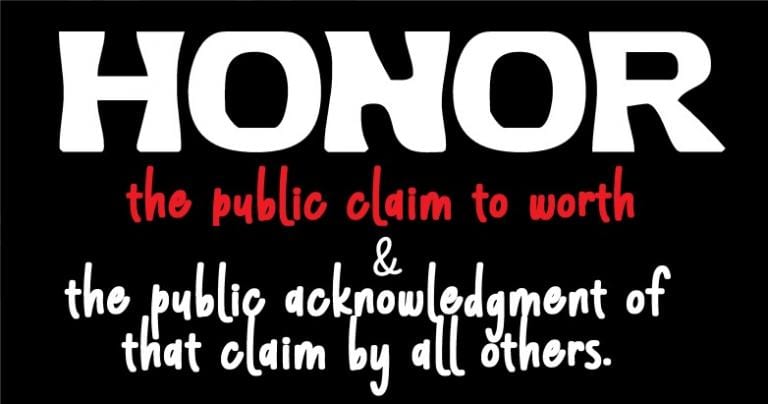
Scholars like the late John Pilch explain that honor is the core value in the Mediterranean, generally speaking, and therefore in the Scriptures, Mediterranean documents, likewise. Honor is a claim to worth or value that is acknowledged publicly. If you “have honor,” that means you enjoy publicly acknowledged value. “To be honored” means to be ascribed such worth or be acclaimed for it.
Fellow Dying Inmate / All rights reserved
Pilch and friends explain that as a folk healer, Jesus demonstrated power over other-than-human persons (i.e., demons). Despite being a village peasant artisan, this authority over spirits awarded Jesus great honor. But being a shamanic folk healer contrasted sharply to his lowly peasant Galilean status (John 1:46). Also, through the gossip network, people knew of Jesus’ shameful origins.
Transfiguration & Danger
Pilch reminds us that no one, not even his powerful enemies, denied that Jesus had authority over demons (Matthew 13:54). But concerns were raised about whether Jesus’ power was legitimate—was he an authorized shaman (holy man)? Therefore, we must ask: from where did this peasant nothing-person acquire this authority (Matthew 21:23)? It would be very shameful and dangerous for Jesus to acquire gifts beyond his status. Was this done by uniting with the ruler over the demons (Matthew 9:34)?
The Pharisees and other enemies of the Matthean Jesus acknowledged his power. But publicly they tried to undermine it by labeling Jesus a deviant using evil power. The most serious of all types of deviance labeling were accusations of sorcery, meaning, magical empowerment from “the prince of demons,” Beelzebul (Matthew 12:22-32; Mark 3:22; Luke 11:15). Once your reputation was stained with such a label, it marred you forever.
Transfiguration: A Political Jesus
Often today, U.S. Christians will claim that Jesus was not political. On the contrary, Jesus’ faction and movement were very political. Indeed, “messiah” and “Kingdom of God” (i.e., Israelite theocracy) are political religious ideas.
Pilch explains that talking about power in the Biblical world is identical with talking about politics. To heal by performing exorcisms is to be politically active in the Mediterranean world of Scripture. Jesus knew that. His followers and friends recognized that. And his enemies recognized this also. It helps explain worries behind Matthew 21:23. A good way to rush to death in the Middle Eastern world of Jesus would be to commit yourself to political actions that were not approved.
Jesus didn’t require any divine insight or mystical visions to know exactly what inevitably would befall him if he continued with his political activities (Matthew 16:21). Jesus knew the risks and he kept on. He trusted that the God of Israel would vindicate him.
Transfiguration of the Matthean Jesus Group
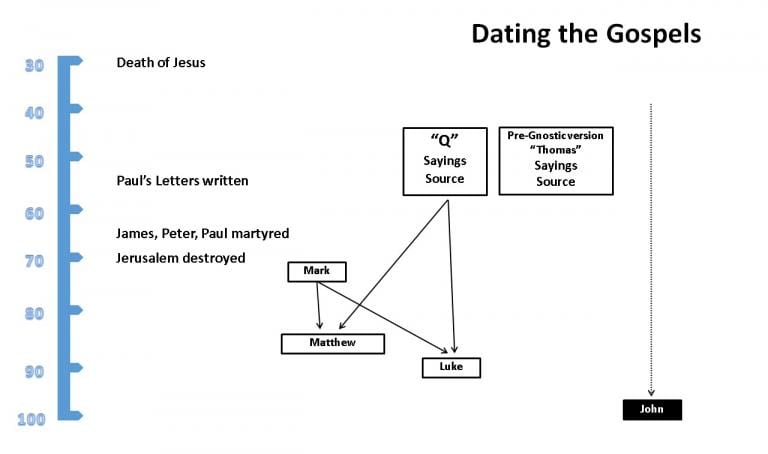
Between Jesus’ crucifixion and the composition of the Gospel called “Matthew” is a span of about fifty to sixty years. The Matthean Jesus group was very Israelite in make-up, totally Mediterranean and steeped in Mediterranean values. Its troubles were Mediterranean, also—for instance, such people asked, why does it appear as if God abandoned Jesus to such a shameful death?
Fellow Dying Inmate / All rights reserved
Pilch explains that “Matthew” portrays Jesus as a Moses-figure. Just as God always stuck by Moses, so too God stuck like glue to Jesus through everything. So “Matthew” exhorts his Jesus group to be steadfast in loyalty to this “Second Moses” who gives laws to their community. Just as Moses judged Israel from the mountain, so too Jesus will judge the Matthean Jesus group under the higher standard of righteousness he instructed it (Matthew 5—7).
Fellow Dying Inmate / All rights reserved
Transfiguration? Or Vision?
This event, told in Mark 9:2-10, Matthew 17:1-9, and Luke 9:28-36, has been called the “transfiguration” of Jesus. This Sunday’s Gospel is the Matthean version of this Synoptic story. “Matthew” provides us with very important information in telling his audience that it was a vision (Matthew 17:9). Pilch informs that in both the ancient and contemporary Mediterranean world, the solution to crises and worries often come by way of altered state of consciousness experiences (such as visions) induced without smoking, injecting, drinking, or eating anything. Indeed, this is normal human experience for most cultures worldwide.
John Pilch did the definitive study on altered states of consciousness as related to the biblical texts. According to anthropologists who study cross-cultural psychology, altered states of consciousness (henceforth “ASC” experiences) are defined as conditions in which sensations, perceptions, cognition, and emotions are altered.
When experiencing an ASC, human perception, feeling, and thought are changed over various levels. Such experiences modify how the individual human person relates to self, body, and the environment (including time, space, and others).
Many ASCs have been documented, and only one of the many is culturally “normal” or consensus reality.
Vision is yet another ASC experience. Pilch maintained that the visionary, deep in trance, enters another level or aspect of reality. This is registered physiologically in the brain.
Revelations & ASC Experiences
Besides dreams and angelic appearances, the Synoptic Gospels report five main ASC incidents in the ministry or political movement of Jesus, including the “transfiguration”:
- The Baptism of Jesus (Mark 1:9-11//Matthew 3:13-17//Luke 3:21-22).
- The Testing of Jesus (or temptation story) (Mark 1:12-13//Matthew 4:1-11//Luke 4:1-13).
- Walking on the Sea (Mark 6:45-52//Matthew 14:22-33//John 6:16-21).
- Transfiguration (Mark 9:2-10//Matthew 17:1-9//Luke 9:28-36).
- And the various Resurrection Appearances.
Again, problems and worries many people have find answers in alternate reality accessible via ASC experiences. What was the worry or problem had by Jesus and his followers? Jesus and others believed God was calling them to this work, but many times Israelites violently rejected them. They—Jesus and his followers—needed reassurance.
Vision of Who and Calling
The vision we call “transfiguration” was experienced by three core disciples and Jesus himself. The three followers of Jesus, in their vision, see him transformed. But all four men hear a voice. It reassures all four men who Jesus is (beloved Son, just like back in Matthew 3:17) and his divinely authorized mission. Therefore, Jesus is to be listened to even closer than an Israelite heeds the Law (Moses) and the Prophets (Elijah).
Remember that “Matthew” must put aside worries in the minds of his audience.
Matthew 17:5
While he was still speaking, look!—a bright cloud cast a shadow over them, then from the cloud came a voice that said, “This is my beloved Son, with whom I am well pleased; listen to him.”
Pretty much everything in “Matthew” affirms Jesus’ honor status. This was stressed at his dunking at the Jordan river before the Jesus Movement began. Now as his ministry comes to an ending, it is given again.
American Takeaway
To a Mediterranean obsessed with honor and shame, Jesus never fails at being loyal to God. True his beginnings and ending on the Cross appeared horrifically shameful. But the God of Israel bestowed honor on Jesus in a way beyond any human praise or capacity. Consequently, the document called “Matthew” was designed to show this and to bring out this Mediterranean understanding of Jesus.
Unlike “Matthew” and his audience, American Christians do not come from an honor-shame culture. Ours is a win-guilt culture. We prize self-reliance. But like our Mediterranean biblical ancestors in the faith, we also find it hard to trust anyone, including God. Ignorant that we are but an aneurism away from death, we falsely believe we are in control of our lives and everything around us.
How can individualistic Christians from our culture find meaningful truth from vision experience of the four ancient peasants named Jesus, Peter, James, and John?
altered states of consciousness
Previous Post

March 7, 2020
Meaning and the Words of Scripture
Next Post

March 11, 2020 COVID-19 & Liturgical Idolatry: Vatican II, Where Are You?
Browse Our Archives
Select a Category Uncategorized
Select a Month August 2021 July 2021 June 2021 May 2021 April 2021 March 2021 February 2021 January 2021 December 2020 November 2020 October 2020 September 2020 August 2020 July 2020 June 2020 May 2020 April 2020 March 2020 February 2020 January 2020 December 2019 November 2019 October 2019 September 2019 August 2019
Follow Us!
TAKE THE
Religious Wisdom Quiz
What does "Maranatha" mean?
Select your answer to see how you score.
Be joyful Praise Him Come, Lord It is finished
Support this
Column


Related posts from Messy Inspirations

Understanding Apocalypse & Its Creatures



TRENDING AT PATHEOS Catholic

Rejecting Doom: Christian Hope And Human Action
Christianity is a religion of hope. We are to have hope and...

It’s What Comes From Within Which Matters
One of the most difficult things for us to understand is why...

Why I Choose the Eucharist Over the Sermon
Choose the Eucharist, Not the Sermon What are we supposed to get...

5 Design Elements Found in Spiritually Rooted Homes
Putting Spirituality Into Home Decor Our homes are more than our living...

Credo: A Story of God Told with the...
About 10 years ago, I began to imagine a personal "Credo" that...

The Anatomy of Divine Revelation in Catholic Thought
The claim that God has made Himself known to human beings is...
view all Catholic blogs
Ad-Free & Subscriber Log-In Subscription Support
- About Us
- 2026 Calendar
- Videos
- Podcasts
- Library of World Religions
- Faith In Media Tracker
- Advertise With Us
- Write for Us
- Privacy Policy
- Terms of Service
- Do Not Sell My Data
- Contact Us
- Radiant Digital
- Manage Newsletter Subscriptions
- Unsubscribe From Notifications
- Sitemap
Copyright 2008-2026, Patheos. All rights reserved.
Subscription Support Ad-Free & Subscriber Log-In
Follow Patheos