
BuddhistCatholicContemplativeEvangelicalGeneral ChristianHinduJewishLatter-day SaintMuslimNew VisionsProgressive Christian
Beliefs
- Buddhist
- Catholic
- Contemplative
- Evangelical
- General Christian
- Hindu
- Jewish
- Latter-day Saint
- More Voices
- Muslim
- New Visions
- Pagan
- Progressive Christian
Topics
- Religion News
- Food and Religion
- Sports and Religion
- Religious Art
- Religious Music and Entertainment
- Religious Events
- History and Religion
- Style and Religion
- Politics and Religion
- Women in Religion
- Recreation Outdoors and Religion
- Business Finance and Religion
- Careers Workplace and Religion
- Education and Religion
- Family Parenting and Religion
- Health Fitness and Religion
- Home and Religion
- Relationships and Religion
- Technology and Religion
- Travel and Religion
Columnists
- Buddhist Columnists
- Business Finance and Religion Columnists
- Careers Workplace and Religion Columnists
- Catholic Columnists
- Contemplative Columnists
- Education and Religion Columnists
- Evangelists Columnists
- Family Parenting and Religion Columnists
- General Christian Columnists
- Health Fitness and Religion Columnists
- Hindu Columnists
- History and Religion Columnists
- Home and Religion Columnists
- Jewish Columnists
- More Voices Columnists
- Latter Day Columnists
- Muslim Columnists
- New Visions Columnists
- Nonreligious Columnists
- Pagan Columnists
- Politics and Religion Columnists
- Progressive Columnists
- Recreation Outdoors and Religion Columnists
- Relationships and Religion Columnists
- Religion News Columnists
- Religious Art Columnists
- Religious Events Columnists
- Religious Music and Entertainment Columnists
- Sports and Religion Columnists
- Style and Religion Columnists
- Technology and Religion Columnists
- Travel and Religion Columnists
- Women in Religion Columnists
Resource Library
- 2026 Calendar
- Library of World Religions
- The 100 Most Holy Places on Earth
- Patheos Answers
- Podcasts
- Videos
- Faith Leaders Database
- Anglican Episcopalian
- Bahai
- Baptist
- Buddhism
- Christianity
- Confucianism
- Eastern Orthodoxy
- Hinduism
- Holiness and Pentecostal
- ISKCON
- Islam
- Judaism
- Lutheran
- Methodist
- The Church of Jesus Christ of Latter-day Saints
- New Age
- Paganism
- Presbytarian and Reformed
- Protestantism
- Religion Behind the Scenes
- Roman Catholic
- Scientology
- Shia Islam
- Sikhism
- Sufism
- Sunni Islam
- Taoism
- Zen
- See all religions
Research Tools
 Ad-Free & Subscriber Log-In Subscription Support
Ad-Free & Subscriber Log-In Subscription Support
Follow Patheos 

- Trending:
- Forgiveness
- |
- Marriage
- |
- Consciousness
- |
- Death Penalty
- |
- Election
- |
- Halloween
 Messy Inspirations
- Home
- Catholic
- Samaritan Woman at the Well: John 4:5-42
Samaritan Woman at the Well: John 4:5-42
Last updated on: March 15, 2020 at 4:09 am by Fellow Dying Inmate
Samaritan Woman at the Well: John 4:5-42 2020-03-15T04:09:17-04:00 Fellow Dying Inmate
Patheos Explore the world's faith through different perspectives on religion and spirituality! Patheos has the views of the prevalent religions and spiritualities of the world.
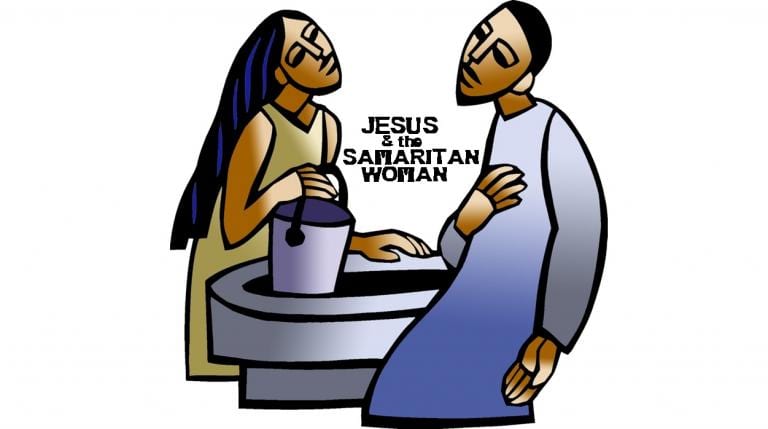
Modified Clipart by Fellow Dying Inmate / KissClipart.com
Samaritan Woman at the Well is a character from a shocking story of jarring irregularities to those familiar with the Mediterranean cultural world of the Bible.
Spurious familiarity with Gospel stories we have heard many times over often keeps us Western readers from understanding many important insights they have to offer. Such is the case with this Sunday’s selection (John 4:5-42). This is further muddled by unrealistic Western expectations stupidly and unfairly saddled onto ancient stories, such as demands that they only report what factually happened otherwise they have no value or truthfulness.
Samaritan Woman Encounter: Truthful or Factual?
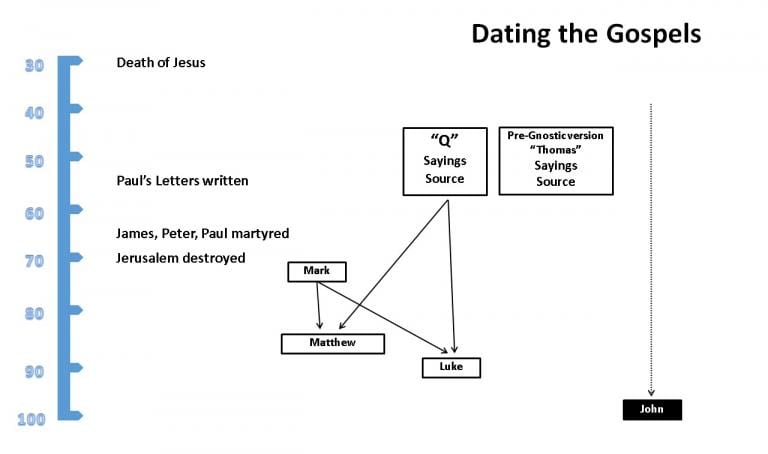
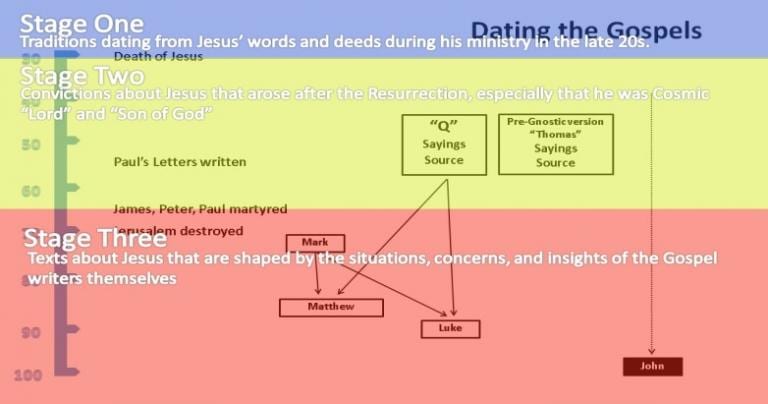
Must Catholics and other Christians believe that this story of Jesus meeting a Samaritan woman actually occurred in the historical Jesus’ life? Look carefully at the Second Vatican Council’s Dogmatic Constitution on Divine Revelation, or Dei Verbum (§19), the Pontifical Biblical Commission’s, “Instruction on the Historical Truth of the Gospels” (§6-9), and the Universal Catechism (no. 126). There we see acceptance that the Gospels emerged through a three-stage process of development. Consequently, not everything within them must be factual or biographical with 21st century precision and exactitude.
Fellow Dying Inmate / All rights reserved
Fellow Dying Inmate / All rights reserved
Indeed, as scholars such as John Meier and Jerome Neyrey explain, there are scholarly reasons to doubt that this encounter ever happened to the prepaschal Jesus. For example, the Synoptic Gospels don’t present a Samaritan ministry. As the late Context Group biblical scholar John Pilch explains, the Matthean Jesus forbade such a ministry (see Matthew 10:5-6). But that does not make the story of the Samaritan Woman untrue!
Ways of Reading the Story
Before the 1800s, virtually every reader understood this story as a factual report of something that really happened to the historical Jesus. However that did not stop Origen and others from assigning it a symbolic, allegorical meaning, or Oscar Cullman and others reading it through a sacramental perspective.
A number of scholars, like Meier and Neyrey, believe that this story was created by the Johannine Jesus group. They believe that this community—unlike the Matthean Jesus group!—had Samaritan members. They believe that because the mission to Samaria (Acts 8:4-25) took place only after the death and resurrection of Jesus, this pastorally-brilliant story was crafted to help believers in a later time. So united was Jesus with the Johannine Jesus group that their history became his. So, creatively, this story might have been fitted into Jesus’ lifetime by the Johannine author. The Bible is all true and some of it actually happened!
Western Christians come from a very different cultural than our biblical ancestors. Ours is the only culture that fails to distinguish truth and facts. For Western Christians demanding Biblical literalness and who will not distinguish between truth and facts, let me ask you: are we believers not truly Christ’s hands and feet? Is he not still united with us? The Spirit of Jesus extends his Good News beyond so many expectations and boundaries.
Legends and Naming the Nameless Samaritan Woman
Polish biblical scholar Swietłana Wiśniewska published the Eastern Church’s interpretation of the Samaritan woman (Ruch Biblijny I Liturgiczny, 2004). Although “John” never names the Samaritan Woman, legend says Jesus himself bestowed upon this anonymous character the name Photina (in Polish: Swietłana; in Russian: Svetlana), which means “enlightened one.” “Photina” comes from phōs or photos, Greek for “light.”
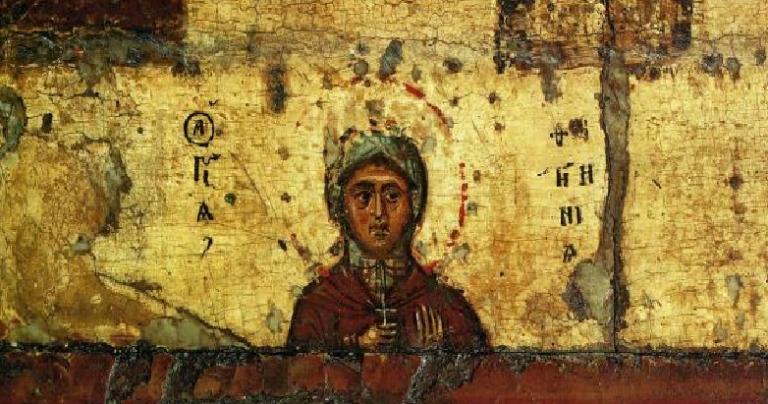
Anonymous: St. Photina / Wikimedia Commons

The Bible is filled with unnamed characters who eventually acquired a name and identity from legend or extra-biblical literature. Without doubt, the nameless wife of Noah (Genesis 6:18ff) has been assigned the largest amount of legendary names, 103 in all.
How do all these legendary names proliferate? Pilch says it results from the synergy of a prolific “fertility of pious imagination” added to “the unwillingness to respect the silence and gaps of the biblical narratives.” The extremely popular “The Passion of the Christ” by Mel Gibson and “The Da Vinci Code” (both Ron Howard film and Dan Brown novel) testify to the appeal of this enduring synergy.
There are numerous irregularities with this story. Let’s explore a few.
Perceiving Gender-Divisions
The Second Vatican Council’s Dogmatic Constitution on Divine Revelation— **“**Due attention must be paid to the customary and characteristic style of perceiving, speaking, and narrating which prevailed at the time of the sacred writer, and to the customs [human beings] normally followed at that period in their everyday dealings with one another” (n. 12).
Consider that phrase “style of perceiving” in the above paragraph. As a 21st century United States person, I don’t ever worry when I enter a movie theater about sitting down wherever I like (unless, of course, my seat is pre-selected). If I went to the front of an average American movie theater and looked it over, I would see many unrelated women and men intermingled. No sweat for my American self! But this arrangement would shock and scandalize our Mediterranean ancestors in the faith!
The world of the Bible is sharply gender-divided. Some places are masculine in this Mediterranean cultural world (field, marketplace, gate, and generally the public outdoors). Other places are feminine (e.g., the home and kitchen). But the gender of some Mediterranean places changes depending on the time. The well is one such place. Therefore while it can be occupied by both males and females, ordinarily this should not happen at the same time. Women come the well at morning and evening (Genesis 24:11), whereas men come during the day. Thus, the Samaritan Woman is out of bounds (John 4:6-7)!
Why do you think that the Samaritan Woman comes to the well at noon? Probably she does this so as not to be seen by other women. This odd behavior screams to the Mediterranean audience hearing the Fourth Gospel being read that this woman is shameless (lacking a positive sense of shame, see John 4:16-18). The woman is alone, likely trying to avoid being shunned by her female peers.
Talking with Men!!??
Two other strange peculiarities would strike ancient audiences to “John.” The first is why would a Judean ever have anything to do with a Samaritan, much less strike up a conversation? But the second is even more irregular—why would a woman be talking in public with a strange man? The Samaritan Woman understands this plainly (John 4:9). And Jesus’ own disciples are scandalized by this (John 4:27).
Then, after being enlightened by the Johannine Jesus, the Samaritan Woman goes and tells what has happened to her to Samaritan men in the village marketplace! Again she is in the wrong place at the wrong time! Incredibly, she tells the men there that Jesus was aware of something known by all of them—she is shameless. In talking about her married status, Jesus somehow knew that she disregarded the cultural rules overseeing the right behavior between men and women.
What is this Story About?
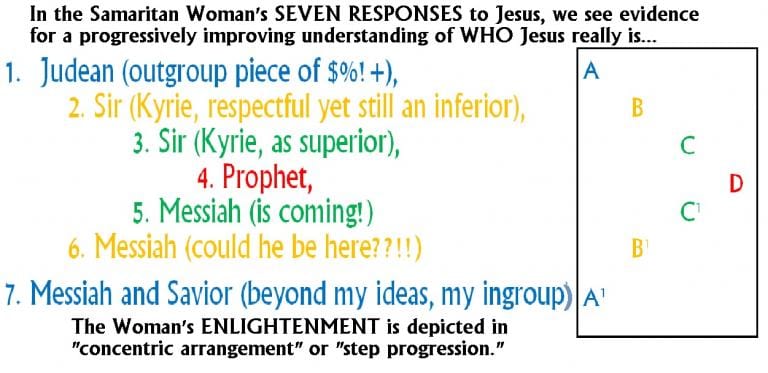
To find out what this Gospel story is all about, let’s learn how to read it. According to Pilch, this Sunday’s Gospel is an example of cultural subversion and cultural innovation. In a meticulously constructed seven-part dialogue (with each speaker speaking seven times), the Samaritan Woman becomes what Pilch calls, “the most carefully and intensely catechized person in this entire Gospel!”

Fellow Dying Inmate / All rights reserved
She moves from hateful ignorance into being enlightened, step-by-step going from misunderstanding into the light of clarity.
Fellow Dying Inmate / All rights reserved
Could it be that the unknown author we call “John” is saying something about new roles for women in the Johannine Jesus group?
What is really going on here and what is “John” trying to communicate with his subversive story? Feminist scholars marvel at how the Johannine Jesus seems to commission her into being a disciple and evangelist! Was he really doing that? Other scholars focus on well-symbolism, sexual and marriage motifs and how everything in the story is wrong. Are these scholars correct?
What if both these groups are wrong? Let’s explore more later…
Previous Post

March 11, 2020
COVID-19 & Liturgical Idolatry: Vatican II, Where Are You?
Next Post

March 16, 2020 Pandemic: Deadly Serious Reasons to be Safe
Browse Our Archives
Select a Category Uncategorized
Select a Month August 2021 July 2021 June 2021 May 2021 April 2021 March 2021 February 2021 January 2021 December 2020 November 2020 October 2020 September 2020 August 2020 July 2020 June 2020 May 2020 April 2020 March 2020 February 2020 January 2020 December 2019 November 2019 October 2019 September 2019 August 2019
Follow Us!
TAKE THE
Religious Wisdom Quiz
But the fruit of the Spirit is love, joy, peace, forbearance, kindness, goodness, ____ and self-control.
Select your answer to see how you score.
Faithfulness Hope Charity Gratitude
Support this
Column


Related posts from Messy Inspirations

Understanding Apocalypse & Its Creatures



TRENDING AT PATHEOS Catholic

The Parable Of The Sower And The Word...
One of Christ’s most famous parables is that of the sower who...

Rejecting Doom: Christian Hope And Human Action
Christianity is a religion of hope. We are to have hope and...

Why I Choose the Eucharist Over the Sermon
Choose the Eucharist, Not the Sermon What are we supposed to get...

5 Design Elements Found in Spiritually Rooted Homes
Putting Spirituality Into Home Decor Our homes are more than our living...

Credo: A Story of God Told with the...
About 10 years ago, I began to imagine a personal "Credo" that...

The Anatomy of Divine Revelation in Catholic Thought
The claim that God has made Himself known to human beings is...
view all Catholic blogs
Ad-Free & Subscriber Log-In Subscription Support
- About Us
- 2026 Calendar
- Videos
- Podcasts
- Library of World Religions
- Faith In Media Tracker
- Advertise With Us
- Write for Us
- Privacy Policy
- Terms of Service
- Do Not Sell My Data
- Contact Us
- Radiant Digital
- Manage Newsletter Subscriptions
- Unsubscribe From Notifications
- Sitemap
Copyright 2008-2026, Patheos. All rights reserved.
Subscription Support Ad-Free & Subscriber Log-In
Follow Patheos