
BuddhistCatholicContemplativeEvangelicalGeneral ChristianHinduJewishLatter-day SaintMuslimNew VisionsProgressive Christian
Beliefs
- Buddhist
- Catholic
- Contemplative
- Evangelical
- General Christian
- Hindu
- Jewish
- Latter-day Saint
- More Voices
- Muslim
- New Visions
- Pagan
- Progressive Christian
Topics
- Religion News
- Food and Religion
- Sports and Religion
- Religious Art
- Religious Music and Entertainment
- Religious Events
- History and Religion
- Style and Religion
- Politics and Religion
- Women in Religion
- Recreation Outdoors and Religion
- Business Finance and Religion
- Careers Workplace and Religion
- Education and Religion
- Family Parenting and Religion
- Health Fitness and Religion
- Home and Religion
- Relationships and Religion
- Technology and Religion
- Travel and Religion
Columnists
- Buddhist Columnists
- Business Finance and Religion Columnists
- Careers Workplace and Religion Columnists
- Catholic Columnists
- Contemplative Columnists
- Education and Religion Columnists
- Evangelists Columnists
- Family Parenting and Religion Columnists
- General Christian Columnists
- Health Fitness and Religion Columnists
- Hindu Columnists
- History and Religion Columnists
- Home and Religion Columnists
- Jewish Columnists
- More Voices Columnists
- Latter Day Columnists
- Muslim Columnists
- New Visions Columnists
- Nonreligious Columnists
- Pagan Columnists
- Politics and Religion Columnists
- Progressive Columnists
- Recreation Outdoors and Religion Columnists
- Relationships and Religion Columnists
- Religion News Columnists
- Religious Art Columnists
- Religious Events Columnists
- Religious Music and Entertainment Columnists
- Sports and Religion Columnists
- Style and Religion Columnists
- Technology and Religion Columnists
- Travel and Religion Columnists
- Women in Religion Columnists
Resource Library
- 2026 Calendar
- Library of World Religions
- The 100 Most Holy Places on Earth
- Patheos Answers
- Podcasts
- Videos
- Faith Leaders Database
- Anglican Episcopalian
- Bahai
- Baptist
- Buddhism
- Christianity
- Confucianism
- Eastern Orthodoxy
- Hinduism
- Holiness and Pentecostal
- ISKCON
- Islam
- Judaism
- Lutheran
- Methodist
- The Church of Jesus Christ of Latter-day Saints
- New Age
- Paganism
- Presbytarian and Reformed
- Protestantism
- Religion Behind the Scenes
- Roman Catholic
- Scientology
- Shia Islam
- Sikhism
- Sufism
- Sunni Islam
- Taoism
- Zen
- See all religions
Research Tools
 Ad-Free & Subscriber Log-In Subscription Support
Ad-Free & Subscriber Log-In Subscription Support
Follow Patheos 

- Trending:
- Forgiveness
- |
- Marriage
- |
- Consciousness
- |
- Death Penalty
- |
- Election
- |
- Halloween
 Messy Inspirations
- Home
- Catholic
- Blindness in John 9:1-41—Real, Metaphorical, or Both?
Blindness in John 9:1-41—Real, Metaphorical, or Both?
Last updated on: March 23, 2020 at 12:41 am by Fellow Dying Inmate
Blindness in John 9:1-41—Real, Metaphorical, or Both? 2020-03-23T00:41:13-04:00 Fellow Dying Inmate
Patheos Explore the world's faith through different perspectives on religion and spirituality! Patheos has the views of the prevalent religions and spiritualities of the world.
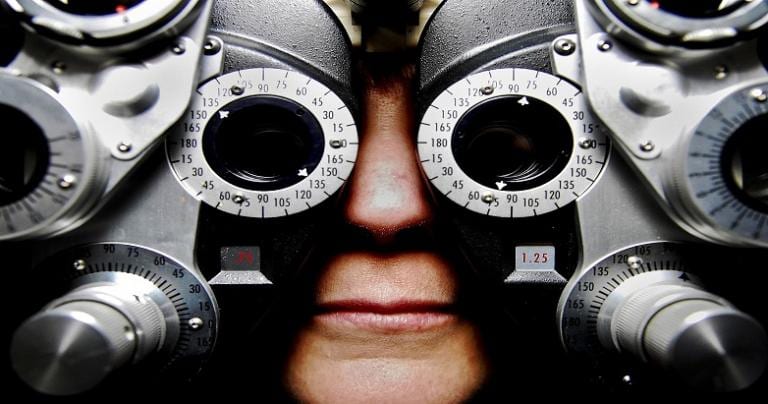
Blindness in the man born blind in this Sunday’s Gospel speaks to a people who were not biomedical in their interpretation of illness.
Blindness. Metaphorically speaking, it is on ready display today. We can speak of the blindness of foolish American collegians disregarding the recommendations of professional health officials pouring down to Florida beaches this week for Spring Break. Again we see blindness in another dangerously irresponsible form in the few pastors and bishops encouraging the faithful to disregard safety measures and assemble to worship. Blindness is on ready display yet again in government officials who make promises about relief packages to Americans during the COVID-19 pandemic, but give the least to the poorest and most vulnerable!
Reversals are featured in this Sunday’s Gospel selection (John 9:1-41). Throughout the Fourth Gospel, the Johannine Jesus is a revealer, the One Sent from the Father who brings light and life. But the occasion of Jesus brokering physical sight and spiritual insight for the man born blind comes at Jesus’ enemies steeped in darkness and becoming blind. This is a story of ironic reversals.
Look below for a basic breakdown of the text we call “John.”
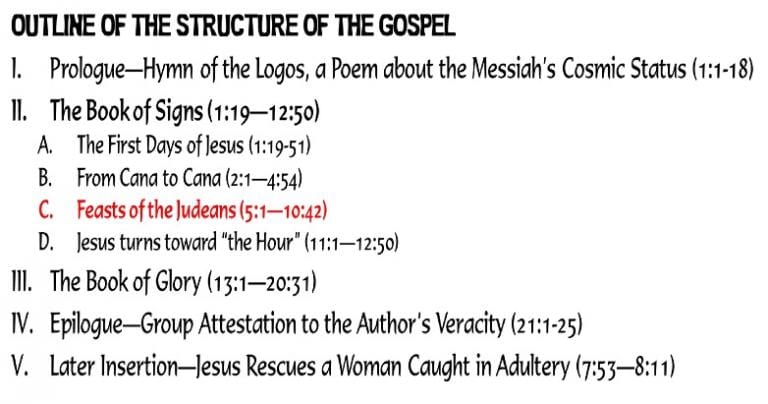
Fellow Dying Inmate / All rights reserved
Blindness and Reversals
The story of Jesus’ rescue of the man born blind takes place in Jerusalem. Jesus has just left the Temple area with his disciples. The time is Sukkoth, Judaean Feast of light and life given to Israel.
First the anonymous author of “John” introduces matters (John 9:1-5). Four episodes follow through which an ironic reversal of light and darkness, sight and blindness happen. It begins with the healing (John 9:6-12). Then the healed man gets interrogated (John 9:13-17). Then his parents are interrogated (John 9:18-23). This is followed by the healed man, once again, interrogated (John 9:24-34). Jesus finds the healed man and includes him into his ingroup (John 9:35-38). Finally, a conclusion confirming the reversal is provided (John 9:39-41).
The People who Wrote “John” were ANGRY
By the time they produced the document we call “John,” the Johannine Jesus group was bitterly angry. Unlike other Jesus Groups, the Johannine community did not see itself as a continuation of Israel, but rather a conscious rejection of and alternative to it. In many ways “the man born blind” represents their bitterly lived experience. Just as he was abandoned by his father and mother and expelled from the Synagogue, so too probably they collectively were. This story is a good example for seeing the Three Stages of Gospel Development at work.
Scholars such as Jerome Neyrey, Bruce Malina, John Pilch, and Richard Rohrbaugh understand that the Johannine Jesus group that produced the text called “John” was an antisociety. And like the Johannine Jesus group, antisocieties are usually composed of people who, in one of many different ways, have been socially displaced. They have been rejected as misfits, depersonalized, made into outsiders, branded as “social deviants” by those in control of the dominant society (what “John” calls “the world”). An antisociety is a human group presenting a conscious alternative and willed rejection to the dominant society.
Hence the Johannine Jesus group remained in Israel (“the world”) but was opposed to and in conflict with Israel (“the world”). That is to say that Johannine Jesus group people were in “the world” but not of it.
Blindness and Sign in Alienation
Malina and Rohrbaugh explain that since members of any antisociety frequently experience socially sanctioned depersonalization and rejection, they must look elsewhere for value and meaning. This results in bonding intense interpersonal relationships within their antisocietal group all the while disconnecting from the broader society.
Therefore, antisociety members glue together in ingroup loyalty (“love” in Johannine antilanguage). All this is centered around the key person in the antisociety. It becomes a fictive kin group sharing a group identity.
Go through “John” looking for it’s antisocietal thought. See how deeply antagonistic it is against “the world” (i.e., first century Israel/Judaean society)? How often does the Johannine Jesus speak about his own alienation? It is similar to the case with the healed blind man.
Johannine Jesus informs his brothers that “the world” (i.e., contemporary Israelite/Judaean society) hates him. Why? It is because he publicaly condemns their evil doings (John 7:7). See how the Johannine Jesus reminds the Pharisees how he is not part of the larger society, but they are (John 8:23)? The Johannine Jesus, just like the sighted blind man, is very aware of his alienation (John 15:18). He is also aware that tight ingroup-glue he and his followers share came out a mutual experience of rejection (John 17:14, 16).
Every Antisociety in Some Ways Thinks Like “John”
Every antisociety and all socially depersonalized and alienated people intuit the Johannine Jesus when he says, “If you belonged to the world [the dominant Israelite/Judaean society], the world [the dominant Israelite/Judaean society] would love you as its own” (John 15:19). So the Johannine Jesus also says, “If the world [the dominant Israelite/Judaean society] hates you, be aware that it hated me before it hated you” (John 15:18-19).
There can be no return to “the world” for the Johannine Jesus. Peace and eternal life are only found by hating life in the dominant Israelite/Judaean society (John 12:25) and sticking like glue in the Johannine Jesus group (John 14:27). Would Paul agree with that? Would “Matthew”? How about Peter or James?
Here is where we can understand the very peculiar and deeply significant Johannine expression “believing into” Jesus, used 34 times in the Fourth Gospel. It means the same thing as when “John” expresses the necessity to “remain” or “abide” in the Johannine Jesus (translations of the same Greek verb employed 53 times in “John”). It’s all about continual emotional embedding into the Johannine antisociety, maintaining fiercely close interpersonal relationships.
A Brief History of the Johannine Antisociety
How did this Jesus group become such an antisociety? Scholars recognize that the Johannine Jesus group evolved through various stages of development. It its nascent stage sometime in the mid 50s of the first century, this group was like most other Jesus groups. It saw “the world” (the dominant Israelite/Judaean society) as something good, even if it needed reform in Jesus through evangelization. Indeed, Israel deserved evangelization!
But then time passed. By the late 80s, some Judaean audiences violently ejected male believers in humiliating ways from the synagogues. This scared the Johannine group. It shocked them so much to occasion the evolution of a new perspective. They gained an intensely negative attitude toward “the world.”
The story of the man born blind is in many ways the story of the blindness given by Judaeans toward Johannine misfits. It’s not hard to see why we have to be very careful reading this all in historical context and never translating Ioudaioi as “Jews.” The Fourth Gospel has been continually misinterpreted along antisemitic lines. But there are no Jews in “John.” In fact, there cannot be.
Please read John Elliott’s tour-de-force on the subject, here:
Jesus the Israelite Was Neither a `Jew’ Nor a `Christian’: On Correcting Misleading Nomenclature
More light later.
Previous Post

March 21, 2020
Wellness and the Coronavirus
Next Post
March 24, 2020 Royal Healing & Gospel Contradictions
Browse Our Archives
Select a Category Uncategorized
Select a Month August 2021 July 2021 June 2021 May 2021 April 2021 March 2021 February 2021 January 2021 December 2020 November 2020 October 2020 September 2020 August 2020 July 2020 June 2020 May 2020 April 2020 March 2020 February 2020 January 2020 December 2019 November 2019 October 2019 September 2019 August 2019
Follow Us!
TAKE THE
Religious Wisdom Quiz
Which Psalm begins, "The Lord is my light and my salvation; whom shall I fear?"
Select your answer to see how you score.
Psalm 91 Psalm 139 Psalm 27 Psalm 14
Support this
Column


Related posts from Messy Inspirations

Understanding Apocalypse & Its Creatures



TRENDING AT PATHEOS Catholic

Rejecting Doom: Christian Hope And Human Action
Christianity is a religion of hope. We are to have hope and...

It’s What Comes From Within Which Matters
One of the most difficult things for us to understand is why...

Why I Choose the Eucharist Over the Sermon
Choose the Eucharist, Not the Sermon What are we supposed to get...

5 Design Elements Found in Spiritually Rooted Homes
Putting Spirituality Into Home Decor Our homes are more than our living...

Credo: A Story of God Told with the...
About 10 years ago, I began to imagine a personal "Credo" that...

The Anatomy of Divine Revelation in Catholic Thought
The claim that God has made Himself known to human beings is...
view all Catholic blogs
Ad-Free & Subscriber Log-In Subscription Support
- About Us
- 2026 Calendar
- Videos
- Podcasts
- Library of World Religions
- Faith In Media Tracker
- Advertise With Us
- Write for Us
- Privacy Policy
- Terms of Service
- Do Not Sell My Data
- Contact Us
- Radiant Digital
- Manage Newsletter Subscriptions
- Unsubscribe From Notifications
- Sitemap
Copyright 2008-2026, Patheos. All rights reserved.
Subscription Support Ad-Free & Subscriber Log-In
Follow Patheos