
BuddhistCatholicContemplativeEvangelicalGeneral ChristianHinduJewishLatter-day SaintMuslimNew VisionsProgressive Christian
Beliefs
- Buddhist
- Catholic
- Contemplative
- Evangelical
- General Christian
- Hindu
- Jewish
- Latter-day Saint
- More Voices
- Muslim
- New Visions
- Pagan
- Progressive Christian
Topics
- Religion News
- Food and Religion
- Sports and Religion
- Religious Art
- Religious Music and Entertainment
- Religious Events
- History and Religion
- Style and Religion
- Politics and Religion
- Women in Religion
- Recreation Outdoors and Religion
- Business Finance and Religion
- Careers Workplace and Religion
- Education and Religion
- Family Parenting and Religion
- Health Fitness and Religion
- Home and Religion
- Relationships and Religion
- Technology and Religion
- Travel and Religion
Columnists
- Buddhist Columnists
- Business Finance and Religion Columnists
- Careers Workplace and Religion Columnists
- Catholic Columnists
- Contemplative Columnists
- Education and Religion Columnists
- Evangelists Columnists
- Family Parenting and Religion Columnists
- General Christian Columnists
- Health Fitness and Religion Columnists
- Hindu Columnists
- History and Religion Columnists
- Home and Religion Columnists
- Jewish Columnists
- More Voices Columnists
- Latter Day Columnists
- Muslim Columnists
- New Visions Columnists
- Nonreligious Columnists
- Pagan Columnists
- Politics and Religion Columnists
- Progressive Columnists
- Recreation Outdoors and Religion Columnists
- Relationships and Religion Columnists
- Religion News Columnists
- Religious Art Columnists
- Religious Events Columnists
- Religious Music and Entertainment Columnists
- Sports and Religion Columnists
- Style and Religion Columnists
- Technology and Religion Columnists
- Travel and Religion Columnists
- Women in Religion Columnists
Resource Library
- 2026 Calendar
- Library of World Religions
- The 100 Most Holy Places on Earth
- Patheos Answers
- Podcasts
- Videos
- Faith Leaders Database
- Anglican Episcopalian
- Bahai
- Baptist
- Buddhism
- Christianity
- Confucianism
- Eastern Orthodoxy
- Hinduism
- Holiness and Pentecostal
- ISKCON
- Islam
- Judaism
- Lutheran
- Methodist
- The Church of Jesus Christ of Latter-day Saints
- New Age
- Paganism
- Presbytarian and Reformed
- Protestantism
- Religion Behind the Scenes
- Roman Catholic
- Scientology
- Shia Islam
- Sikhism
- Sufism
- Sunni Islam
- Taoism
- Zen
- See all religions
Research Tools
 Ad-Free & Subscriber Log-In Subscription Support
Ad-Free & Subscriber Log-In Subscription Support
Follow Patheos 

- Trending:
- Forgiveness
- |
- Marriage
- |
- Consciousness
- |
- Death Penalty
- |
- Election
- |
- Halloween
 Messy Inspirations
- Home
- Catholic
- Blessed or Most Honorable? Beatitudes on All Saints
Blessed or Most Honorable? Beatitudes on All Saints
Last updated on: November 1, 2019 at 8:13 pm by Fellow Dying Inmate
Blessed or Most Honorable? Beatitudes on All Saints 2019-11-01T20:13:49-04:00 Fellow Dying Inmate
Patheos Explore the world's faith through different perspectives on religion and spirituality! Patheos has the views of the prevalent religions and spiritualities of the world.

Photo by Ali Arif Soydaş on Unsplash
“Blessed are…” go the Beatitudes of Jesus, but maybe wrongly in our English translations!
Blessed with critical tools unknown by throughout Church history, our age is gifted with unique opportunities for diving deep into the Gospels! Solemnity for All Saints our Gospel reading is the longer form of the Beatitudes, from the Gospel called “Matthew.” We shared in an earlier blog post about the Woes and Beatitudes and how they function in the Mediterranean core cultural values of honor and shame.
There is nothing more basic to learn about the Mediterranean world of Jesus and the Scriptures than the core cultural value of honor. The Church teaches that the Literal Sense of Scripture comes first. In order to acquire that, one needs to understand Mediterranean culture. Therefore the first interpretation of the Bible—including the Gospels, the Beatitudes, and Jesus!—is Mediterranean culture. Without grasping the value of honor, you are far away from understanding Jesus.
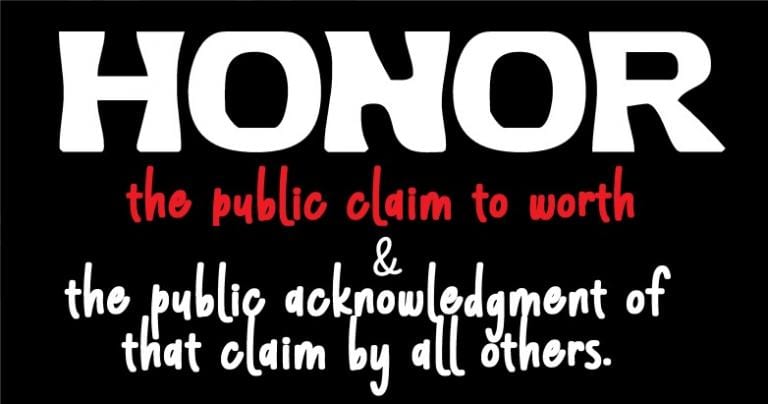
As we have stressed numerous times before, honor is the engine generating all behavior in the world of Jesus. But what is honor?
Honor The public claim, whether by person or group, to value and the society’s acknowledgement of that claim.
Fellow Dying Inmate / All rights reserved
“Blessed are the…”
Throughout the Scriptures are a little over eighty poetic sayings called “beatitudes.” All of these praise, encourage, celebrate, and present honorable behavior. Jesus’ beatitudes found differently in “Matthew” and in “Luke” are no different.
English Bible translations abound with anachronism and ethnocentric blunders. The New American Bible Revised Edition, for all its benefits, is no exception. Every time you see “blessed,” or “fortunate,” or “happy” when reading a beatitude, it’s a mistake. Scratch it out and replace it with “highly esteemed” or “most honorable” is he who does or thinks this way.
So let’s repair the bad work done on these parables by well-meaning yet errant translators.
Blessed are the POOR in spirit…
NABRE Matthew 5:3
Blessed are the poor in spirit,
for theirs is the kingdom of heaven.
Corrected Matthew 5:3
Truly honorable is the one who [cannot maintain and] has lost his honor-status
for theirs is the kingdom of sky vault [politically correct expression of Israelite theocracy, which restores without surpassing their original status]
The Matthean Jesus presents a new basis for honor and honoring someone. It goes completely contrary to ancient Mediterranean social norms to praise the categories of people Jesus does in his beatitudes—the poor, the mourning, and the hungry. These are people who are helpless and cannot defend their honor. Yet Jesus affirms they will be honored by the God of Israel.
“The Poor” are those unable to maintain their social status. In the Bible “poor” never designates an economic situation. Instead, “poor” in the Bible refers to someone who has temporarily lost their honor rating or social status. Now they must do whatever it takes to recover their lost honor, but not one smidgen more than their original status.
Astonishingly, Jesus calls being poor in this sense as being honorable! He says theocracy is theirs. Out of reverence for the God of Israel, in a divinely passive voice, the insinuation is that God will provide their honor and social status in the Kingdom.
Blessed are they who mourn…
NABRE Matthew 5:4
Blessed are they who mourn,
for they will be comforted.
Corrected Matthew 5:4
Truly honorable is the one who [engages in social protest by] mourn[ing],
for they will be comforted [ = theocracy will restore their lost kinship network members].
Those who are poor in the Biblical sense mourn (and fasts), that is, engages in social protest against their unjust condition. But even if their neighbors and kin neglect them, God will comfort them in theocracy.
Blessed are the meek…
NABRE Matthew 5:5
Blessed are the meek,
for they will inherit the land.
Corrected Matthew 5:5
Truly honorable are the meek [ = those who CAN resort to violence to take back their rightful status, but are confident in the God of Israel and therefore choose instead gentle non-violence],
for they will inherit the land [of ancient Israel, and with it, their original honor-status, no more, no less].
Jesus was nonviolent, but his nonviolence should not be confused with that of a Mahatma Gandhi or a Martin Luther King Jr. He was not a pacifist. Although certainly nonviolent, Jesus was deeply embedded into his agonistic culture. He accepted the reality of honor debts and that violent retribution was owed—but Jesus canceled the debt and he promoted canceling the debt among his followers. His nonviolence consisted often of cancelling the honor-debt.
Blessed are those who hunger and thirst…
NABRE Matthew 5:6
Blessed are they who hunger and thirst for righteousness,
for they will be satisfied.
Corrected Matthew 5:6
Truly honorable is the one who hungers and thirsts for righteousness [= who fasts, engaging in social protest],
for they will be satisfied [in theocracy].
This again furthers the Matthean Jesus declaring the poor who mourn as honorable. God will satisfy their hunger for justice.
Blessed are the merciful…
NABRE Matthew 5:7
Blessed are the merciful,
for they will be shown mercy.
Corrected Matthew 5:7
Truly honorable are the merciful [those who fulfill filial obligations to others, who give what is owed],
for they will be shown mercy [the fulfillment of obligations, the giving of that which is owed].
In the Bible, “mercy” means paying your debts of interpersonal obligation to God and neighbor. So with that in mind, you know what a cry for mercy means in the Bible—“Give me what I am owed!” And you should also realize what it means to be merciful in the Biblical sense.
Blessed are the single-hearted…
NABRE Matthew 5:8
Blessed are the clean of heart,
for they will see God.
Corrected Matthew 5:8
Truly honorable are the pure of heart [single-hearted/single-minded person who seeks only to honor God],
for they will see God [in theocracy].
This verse has nothing to do with sexual purity. It has to do with honor concerns. Those poor who will enter theocracy and see the glory (i.e., honor) of God are precisely those who care for God’s honor here and now. God will give them their proper honor and they will never be stripped of it again.
Blessed are the peacemakers…
NABRE Matthew 5:9
Blessed are the peacemakers,
for they will be called children of God.
Corrected Matthew 5:9
Truly honorable are the mediators [those who head-off blood feuds],
for they will be called children of God [ = clients of the Patron, the God of Israel = genuine Israelites = honored].
The Greek for this verse about what the mediators get called is “sons of God” (υἱοἱ θεοῦ) and not “children of God” (τέκνα θεοῦ), which, by the way, happened to be the self-designation of the Johannine Jesus group. Sometimes inclusive language attempts from the translators really distort things. It may tingle our American ears and make us feel good, but our ancestors did not perceive or believe many things that we do.
“Son of…” in the Bible means “having the qualities of…” “Son of God” therefore means “one with divine-like qualities.” It originally meant a holy man, one who can broker favors with alternate reality, the realm of God. Long before the Church came to understand Jesus as the Second Person of the Trinity, he was recognized as and lived according to all the criteria of a Mediterranean “son of God,” or holy man. Such holy men and women are identified by anthropologists in their cross-cultural studies as shamans.
To arbitrate between parties and prevent blood feuds was a great responsibility. Given the intensely agonistic society of Jesus, to be such a peacemaker who heads of violence would require God-like talent.
Blessed are they who are persecuted…
NABRE Matthew 5:10-12
Blessed are they who are persecuted for the sake of righteousness,
for theirs is the kingdom of heaven.
Blessed are you when they insult you and persecute you and utter every kind of evil against you [falsely] because of me. Rejoice and be glad, for your reward will be great in heaven. Thus they persecuted the prophets who were before you.
Corrected Matthew 5:10
Truly honorable are they who are persecuted [those hazed/publicly humiliated to conform to other Israelite ingroup norms] for the sake of righteousness [proclaiming theocracy],
for theirs is the kingdom of sky vault [Israelite theocracy].
Truly honorable are you when they insult [shame] you and persecute [haze to conform someone back into their ingroup norms] you and utter every kind of evil against you [falsely] because of me. Rejoice and be glad, for your reward will be great in sky vault [publicly seen, and everyone will see]. Thus they persecuted the prophets who were before you.
As we saw in the story of The Two Lost Sons, the village poor in all agrarian societies face marginalization and ostracism, especially by the greedy urban elites. Any person with surplus who joins the Jesus group will suffer the same fate. “Matthew” is aware of the terrible costs but presents it without compromise (Matthew 12:46; 22:1-14).
Jesus in his counter-structural vision sees things differently than the vast majority of those in his ancient world. Ultimately, the honor and esteem of elites doesn’t matter. What matters is the honor bestowed by God. All honor is public, and all will see God’s honoring his faithful ones. God did this for the prophets who could be seen in the sky vaults above Israel together with the angels as glorious stars.
Conclusion
As we consider all the saints and martyrs today, perhaps some good can come out of observing the perennial temptation to turn them into inhuman things, unrelatable and alien to the human condition. But the saints were and are very human. Christ is the very definition of human, more human than any of us humans becoming precisely because he is divine. He turns the world upside down. How can we be more inclusive of the excluded, more canceling with debts, more loving? Such is the Way of saints—to be human. Such is the Way of Christ.
Previous Post

October 30, 2019
Satan, Devil, and Serpent Were Once Different Persons??
Next Post

November 5, 2019 Hell is NOT in the Bible
Browse Our Archives
Select a Category Uncategorized
Select a Month August 2021 July 2021 June 2021 May 2021 April 2021 March 2021 February 2021 January 2021 December 2020 November 2020 October 2020 September 2020 August 2020 July 2020 June 2020 May 2020 April 2020 March 2020 February 2020 January 2020 December 2019 November 2019 October 2019 September 2019 August 2019
Follow Us!
TAKE THE
Religious Wisdom Quiz
Who said, "Here am I! Send me"?
Select your answer to see how you score.
Ezekiel Moses Isaiah Jeremiah
Support this
Column


Related posts from Messy Inspirations

Understanding Apocalypse & Its Creatures



TRENDING AT PATHEOS Catholic

The Parable Of The Sower And The Word...
One of Christ’s most famous parables is that of the sower who...

Rejecting Doom: Christian Hope And Human Action
Christianity is a religion of hope. We are to have hope and...

Why I Choose the Eucharist Over the Sermon
Choose the Eucharist, Not the Sermon What are we supposed to get...

5 Design Elements Found in Spiritually Rooted Homes
Putting Spirituality Into Home Decor Our homes are more than our living...

Credo: A Story of God Told with the...
About 10 years ago, I began to imagine a personal "Credo" that...

The Anatomy of Divine Revelation in Catholic Thought
The claim that God has made Himself known to human beings is...
view all Catholic blogs
Ad-Free & Subscriber Log-In Subscription Support
- About Us
- 2026 Calendar
- Videos
- Podcasts
- Library of World Religions
- Faith In Media Tracker
- Advertise With Us
- Write for Us
- Privacy Policy
- Terms of Service
- Do Not Sell My Data
- Contact Us
- Radiant Digital
- Manage Newsletter Subscriptions
- Unsubscribe From Notifications
- Sitemap
Copyright 2008-2026, Patheos. All rights reserved.
Subscription Support Ad-Free & Subscriber Log-In
Follow Patheos