
BuddhistCatholicContemplativeEvangelicalGeneral ChristianHinduJewishLatter-day SaintMuslimNew VisionsProgressive Christian
Beliefs
- Buddhist
- Catholic
- Contemplative
- Evangelical
- General Christian
- Hindu
- Jewish
- Latter-day Saint
- More Voices
- Muslim
- New Visions
- Pagan
- Progressive Christian
Topics
- Religion News
- Food and Religion
- Sports and Religion
- Religious Art
- Religious Music and Entertainment
- Religious Events
- History and Religion
- Style and Religion
- Politics and Religion
- Women in Religion
- Recreation Outdoors and Religion
- Business Finance and Religion
- Careers Workplace and Religion
- Education and Religion
- Family Parenting and Religion
- Health Fitness and Religion
- Home and Religion
- Relationships and Religion
- Technology and Religion
- Travel and Religion
Columnists
- Buddhist Columnists
- Business Finance and Religion Columnists
- Careers Workplace and Religion Columnists
- Catholic Columnists
- Contemplative Columnists
- Education and Religion Columnists
- Evangelists Columnists
- Family Parenting and Religion Columnists
- General Christian Columnists
- Health Fitness and Religion Columnists
- Hindu Columnists
- History and Religion Columnists
- Home and Religion Columnists
- Jewish Columnists
- More Voices Columnists
- Latter Day Columnists
- Muslim Columnists
- New Visions Columnists
- Nonreligious Columnists
- Pagan Columnists
- Politics and Religion Columnists
- Progressive Columnists
- Recreation Outdoors and Religion Columnists
- Relationships and Religion Columnists
- Religion News Columnists
- Religious Art Columnists
- Religious Events Columnists
- Religious Music and Entertainment Columnists
- Sports and Religion Columnists
- Style and Religion Columnists
- Technology and Religion Columnists
- Travel and Religion Columnists
- Women in Religion Columnists
Resource Library
- 2026 Calendar
- Library of World Religions
- The 100 Most Holy Places on Earth
- Patheos Answers
- Podcasts
- Videos
- Faith Leaders Database
- Anglican Episcopalian
- Bahai
- Baptist
- Buddhism
- Christianity
- Confucianism
- Eastern Orthodoxy
- Hinduism
- Holiness and Pentecostal
- ISKCON
- Islam
- Judaism
- Lutheran
- Methodist
- The Church of Jesus Christ of Latter-day Saints
- New Age
- Paganism
- Presbytarian and Reformed
- Protestantism
- Religion Behind the Scenes
- Roman Catholic
- Scientology
- Shia Islam
- Sikhism
- Sufism
- Sunni Islam
- Taoism
- Zen
- See all religions
Research Tools
 Ad-Free & Subscriber Log-In Subscription Support
Ad-Free & Subscriber Log-In Subscription Support
Follow Patheos 

- Trending:
- Forgiveness
- |
- Marriage
- |
- Consciousness
- |
- Death Penalty
- |
- Election
- |
- Halloween
 Messy Inspirations
- Home
- Catholic
- Forgeries Inspired: “Second Thessalonians”
Forgeries Inspired: “Second Thessalonians”
Last updated on: November 13, 2019 at 7:40 pm by Fellow Dying Inmate
Forgeries Inspired: “Second Thessalonians” 2019-11-13T19:40:45-04:00 Fellow Dying Inmate
Patheos Explore the world's faith through different perspectives on religion and spirituality! Patheos has the views of the prevalent religions and spiritualities of the world.
Photo by Priscilla Du Preez on Unsplash
Forgeries like Second Thessalonians are inspired even though Paul didn’t write them.
Forgeries being read at Mass!!?? On Sundays we have been going over the document called “Second Thessalonians” in the Liturgy of the Word. Last Sunday it was 2 Thessalonians 1:11—2:2. This Sunday we will read 2 Thessalonians 2:16—3:5. The following Sunday it will be 2 Thessalonians 3:7-12.
When the lector comes to the ambo to give the Second Reading, she or he will no doubt say, “A reading from the Second Letter of Saint Paul to the Thessalonians.” That’s fine and it’s true, if not a factual or historically accurate statement. It is true in the sense that we honor Paul and historically have honored him by associating this inspired document with his pen. But it’s very likely that the historical Paul never wrote it. Indeed, it is probably a forgery.
Forgeries and Pseudepigrapha
There are many such forgeries in the Bible. We have many First Testament documents written by an anonymous author yet attributed to the name of another, better-known figure. Such documents are called pseudepigrapha. A pseudepigraph is a kind of forgery, a writing bearing a false title or ascribed to someone other than the genuine author. As Biblical scholar Felix Just explains:
From the Greek pseudo = “false” epi = “over” graphē = “writing” epi-graph = “superscript, title”
For nonfundamentalists, the Pentateuch or “five books of Moses” (the written Torah) are pseudepigrapha. Persian scribes wrote them, redacting, splicing, and recontextualizing earlier traditions. Under Persian authority, these were edited together for immigrants to the Persian colony, Yehud. Inspiration is messy, folks!
So pseudepigraphy means to falsely attribute authorship of a writing to someone different from the actual author. When it comes to biblical pseudepigraphic works, usually an anonymous figure forges the document, indicating within it that a famous figure from the past authored the text. This famous person could be a hero from long ago times or the actual author’s deceased teacher.
Forgeries Don’t Invalidate!
American and other Western believers should caution themselves here. Please don’t call these pseudepigraphic works and forgeries like “2 Thessalonians” false. It is true that there is something false about them. But that does not make their content false. What is false is the attributed authorship. In the ancient Mediterranean world, secrecy, lying, and deception are legitimate strategies for preserving honor. The Bible was not written for, by, or about Western 21st century people. Sorry!
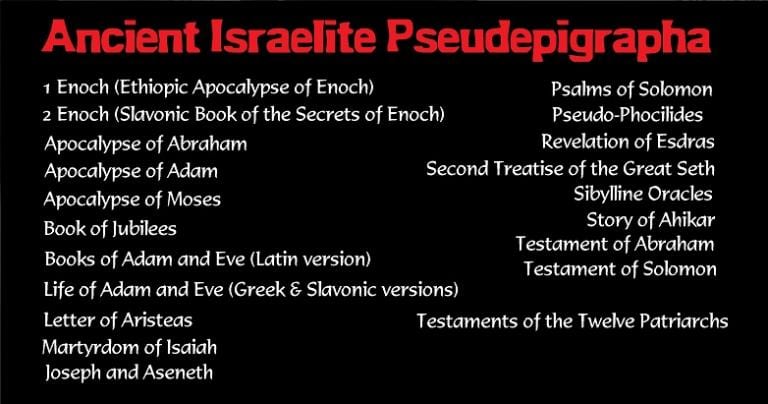
Scholars know of many ancient Israelite writings that were falsely attributed to various biblical figures. These writings could never have been scribed by their purported authors. Evidence points to anonymous writers composing these forgeries centuries or even millennia after. Have a look here:
Fellow Dying Inmate / All rights reserved
We can define a forgery as any written document whose producer(s) intend it to purport to be something other than what it really is. All forgeries bear two essentials. The first is that the forged document’s genuine identity has been effaced or obfuscated. The second is that the forger intends deception.
Pauline Forgeries
Scholars can tell that the document known as “Second Thessalonians” could not have been written by the historical Paul. Its producers obfuscated the true author. Moreover, its producers intended to deceive. Together with other New Testament documents (Colossians, Ephesians, 1—2 Timothy, and Titus), scholars have dubbed this letter Deutero-Pauline (“Secondary Pauline”). Therefore “Second Thessalonians” and these other inspired New Testament writings are pseudepigraphic, and thus, are forgeries.
Was the document we call “Second Thessalonians” directed to the Jesus group(s) in Thessalonica? We aren’t certain. Perhaps. Perhaps not. It might have been sent to second generation Pauline Jesus groups dismayed and confounded by Paul’s unexpected demise sometime in the 60s.
Paul expected Israelite theocracy in his lifetime. He expected to be alive when Jesus returned. Indeed, Paul assured his Jesus group clients that he would be very much alive for the Parousia (1 Thessalonians 4:15; 1 Corinthians 15:51-52).
But by the 70s CE Paul was dead, the Temple City of Jerusalem had been destroyed, and yet Cosmic-Lord Messiah Jesus had not yet returned! Could “Second Thessalonians” have been a circulatory letter sent to a number of Jesus-groups? In life, the historical Paul got around, you know. Many Mediterranean Jesus groups would be in shock that Paul was dead but Theocracy could not be found. They could identify with Thessalonian Jesus group. One thing is almost certain: the letter writer intended to deceive his recipients into thinking Paul wrote it.
Forgeries and Authorizing Authority
Before you begin thinking that all this renders many New Testament texts as somehow uninspired or invalid, take courage. We need to go deeper with our tradition. There we find that validity has nothing to do with who actually wrote a Scripture. Rather our tradition considers validity in light of the authorizing authority.
For example, consider again the Pentateuch. In that case, a Persian-appointed high priest or court prophet was the authorizing authority. God works in the mess, folks.
Moving forward several centuries we come to consider all the New Testament literature attributed to Paul. Those Jesus groups finding agreement with the letters and retained them as special and to some extent normative became their authorizing authority.
The idea of something being authentic because it is genuine is a much later idea. The Pauline literature was not preserved because Jesus groups considered them actually authored by the historical Paul. Rather, these documents got preserved because they bore authority to address relevant crises and situations in these Jesus groups. In other words, they were authentic because they were authorized.
Forgeries Validate the Message
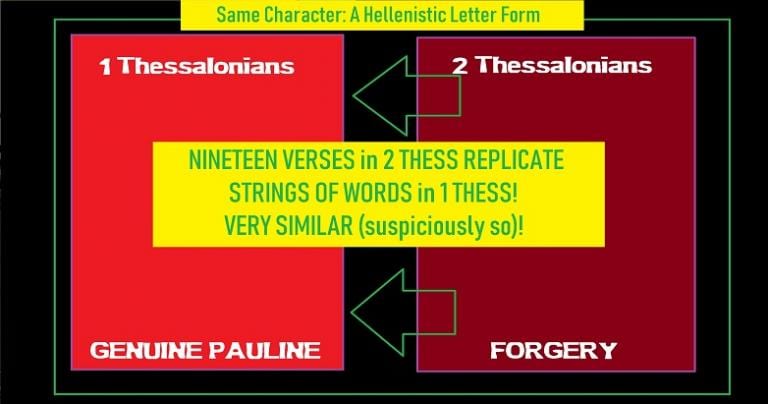
A forgery serves to validate its message. Forgers attempt to pattern their works after genuine documents. Scholars believe that “Second Thessalonians” was modeled on “First Thessalonians,” an authentic Pauline original. This is why they are the same literary form, that of a Hellenistic letter. And this could explain why both texts share nineteen verses—the forger of “Second Thessalonians” has replicated strings of words from “First Thessalonians.”
Fellow Dying Inmate / All rights reserved
Recipients in Paul’s world judged a document as being authentic in face-to-face communication. This was essential for validation. These letters were recited before the Jesus group, and this played the key authorizing role in assessing the document’s validity. Hellenistic documents were not authorized as valid following a scrutinizing for deception, fictionality, or false identity. Such features existed in many authentic documents! Sniffing these out then wouldn’t be of much help!
In few instances, an ancient document might validate itself by the power of its composition. One striking example is the self-validating Qur’an, hailed as being so beautiful it could not have come from mere human literary skill. In this regard, the First and New Testaments do not compare. With the exception of “Luke-Acts,” much of the Greek New Testament is a crude, ugly, simple form. Therefore, for Biblical documents, we must search elsewhere for validation—the authorizing power of the Jesus groups.
Textualization via Forgeries
Forgeries textualize. Those who delivered them, and recited them, like the forger himself, made the message shine with honor. They claimed that the letter’s message originated from and was intended for renowned and honorable communities and personages (e.g., Paul, Timothy, Titus, Silvanus, etc.).
And consider that the first century Jesus groups lacked email, phone, texting, and all other 21st century immediate communication means. It could take years before the report came around of even a famous figure’s death. So, sometimes the audience of the forger presumes Paul is still alive! And if they had heard of his demise, perhaps the report of it had been greatly exaggerated.
To keep the work of Paul going, and adapt it for new situations and crises, the forger had to work hard to make the forgery sound very Pauline. Forgers have to take into account very seriously the expectations of their audience. Paul’s own authentic letters had to “textualize” with the forgery. Recepients upon hearing would have to go, “Yeah, that sounds like Paul and his team!”
Forgeries Help Analysis
Even in the case of Paul’s seven authentic letters, the “producer” was usually someone anonymous working under Paul. He was a corporate sender. So were the forgers of documents like “Second Thessalonians.” Such consistent writing impacted the Jesus groups. They focused on the texts. Because the texts addressed current worries and problems, the Jesus group treasured and needed them. Thus, forgeries prodded Jesus groups to analysis.
Not only does all of this apply to the Pauline forgeries, but also to the canonical Gospels. Originally these texts remained anonymous. But the Gospels eventually got ascribed to well-known Jesus group heroes now long dead. Hence, “Mark,” “Matthew,” “Luke,” and “John.” By linking these Gospels with well-known holy figures reminded Jesus groups far away from Jerusalem that God cannot forget or cease his concern over all Israel. This helps explain the diverse perspectives and recontextualized Jesus traditions that evolved in the many Jesus groups.
Paul the Big Shot
It’s a very Western notion to think of Paul or Peter or James or even Jesus as “the Big Shot” who ran the show of early Christianity. Paul was not an individualistic American. Paul, even though a key figure, was very much a collaborator. Please don’t forget about Timothy, Silvanus, Sosthenes, Titus, and others in his team.
The spuriously familiar idea that Jesus was the founder of Christianity, and Paul was its “second founder,” is highly addictive. One of the few things made very clear by the New Testament is that the God of Israel founded what would become Christianity under Constantine around 325 CE. Of paramount importance to the earliest Jesus groups was God raising crucified Jesus thereby validating his proclamation of theocracy. To switch the focus onto Jesus or Paul misses the thrust of all 27 New Testament documents.
Previous Post

November 7, 2019
Apocalyptic Nonsense and Mistaken Eschatology
Next Post

November 14, 2019 Heaven is NOT in the Bible??
Browse Our Archives
Select a Category Uncategorized
Select a Month August 2021 July 2021 June 2021 May 2021 April 2021 March 2021 February 2021 January 2021 December 2020 November 2020 October 2020 September 2020 August 2020 July 2020 June 2020 May 2020 April 2020 March 2020 February 2020 January 2020 December 2019 November 2019 October 2019 September 2019 August 2019
Follow Us!
TAKE THE
Religious Wisdom Quiz
What did Jesus do at the Last Supper?
Select your answer to see how you score.
Washed the floor Built an altar Broke bread and shared wine Wrote in the sand
Support this
Column


Related posts from Messy Inspirations

Understanding Apocalypse & Its Creatures



TRENDING AT PATHEOS Catholic

Rejecting Doom: Christian Hope And Human Action
Christianity is a religion of hope. We are to have hope and...

It’s What Comes From Within Which Matters
One of the most difficult things for us to understand is why...

Why I Choose the Eucharist Over the Sermon
Choose the Eucharist, Not the Sermon What are we supposed to get...

5 Design Elements Found in Spiritually Rooted Homes
Putting Spirituality Into Home Decor Our homes are more than our living...

Credo: A Story of God Told with the...
About 10 years ago, I began to imagine a personal "Credo" that...

The Anatomy of Divine Revelation in Catholic Thought
The claim that God has made Himself known to human beings is...
view all Catholic blogs
Ad-Free & Subscriber Log-In Subscription Support
- About Us
- 2026 Calendar
- Videos
- Podcasts
- Library of World Religions
- Faith In Media Tracker
- Advertise With Us
- Write for Us
- Privacy Policy
- Terms of Service
- Do Not Sell My Data
- Contact Us
- Radiant Digital
- Manage Newsletter Subscriptions
- Unsubscribe From Notifications
- Sitemap
Copyright 2008-2026, Patheos. All rights reserved.
Subscription Support Ad-Free & Subscriber Log-In
Follow Patheos