
BuddhistCatholicContemplativeEvangelicalGeneral ChristianHinduJewishLatter-day SaintMuslimNew VisionsProgressive Christian
Beliefs
- Buddhist
- Catholic
- Contemplative
- Evangelical
- General Christian
- Hindu
- Jewish
- Latter-day Saint
- More Voices
- Muslim
- New Visions
- Pagan
- Progressive Christian
Topics
- Religion News
- Food and Religion
- Sports and Religion
- Religious Art
- Religious Music and Entertainment
- Religious Events
- History and Religion
- Style and Religion
- Politics and Religion
- Women in Religion
- Recreation Outdoors and Religion
- Business Finance and Religion
- Careers Workplace and Religion
- Education and Religion
- Family Parenting and Religion
- Health Fitness and Religion
- Home and Religion
- Relationships and Religion
- Technology and Religion
- Travel and Religion
Columnists
- Buddhist Columnists
- Business Finance and Religion Columnists
- Careers Workplace and Religion Columnists
- Catholic Columnists
- Contemplative Columnists
- Education and Religion Columnists
- Evangelists Columnists
- Family Parenting and Religion Columnists
- General Christian Columnists
- Health Fitness and Religion Columnists
- Hindu Columnists
- History and Religion Columnists
- Home and Religion Columnists
- Jewish Columnists
- More Voices Columnists
- Latter Day Columnists
- Muslim Columnists
- New Visions Columnists
- Nonreligious Columnists
- Pagan Columnists
- Politics and Religion Columnists
- Progressive Columnists
- Recreation Outdoors and Religion Columnists
- Relationships and Religion Columnists
- Religion News Columnists
- Religious Art Columnists
- Religious Events Columnists
- Religious Music and Entertainment Columnists
- Sports and Religion Columnists
- Style and Religion Columnists
- Technology and Religion Columnists
- Travel and Religion Columnists
- Women in Religion Columnists
Resource Library
- 2026 Calendar
- Library of World Religions
- The 100 Most Holy Places on Earth
- Patheos Answers
- Podcasts
- Videos
- Faith Leaders Database
- Anglican Episcopalian
- Bahai
- Baptist
- Buddhism
- Christianity
- Confucianism
- Eastern Orthodoxy
- Hinduism
- Holiness and Pentecostal
- ISKCON
- Islam
- Judaism
- Lutheran
- Methodist
- The Church of Jesus Christ of Latter-day Saints
- New Age
- Paganism
- Presbytarian and Reformed
- Protestantism
- Religion Behind the Scenes
- Roman Catholic
- Scientology
- Shia Islam
- Sikhism
- Sufism
- Sunni Islam
- Taoism
- Zen
- See all religions
Research Tools
 Ad-Free & Subscriber Log-In Subscription Support
Ad-Free & Subscriber Log-In Subscription Support
Follow Patheos 

- Trending:
- Forgiveness
- |
- Marriage
- |
- Consciousness
- |
- Death Penalty
- |
- Election
- |
- Halloween
 Mere Chris-ianity
- Home
- General Christian
- On mourning and the offense of death
On mourning and the offense of death
Last updated on: July 26, 2018 at 10:28 pm by Chris Williams
On mourning and the offense of death 2018-07-26T22:28:46+00:00 Chris Williams
Patheos Explore the world's faith through different perspectives on religion and spirituality! Patheos has the views of the prevalent religions and spiritualities of the world.
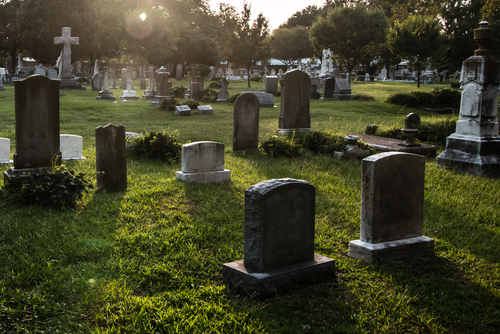
photo via Shutterstock
In the past two months, my family lost a generation of matriarchs.
In May, my maternal grandmother, my Nana, died after a short battle with pancreatic cancer. The same week she was diagnosed with the disease, my wife’s grandmother, her last remaining grandparent, received the same diagnosis and prognosis; she died two weeks ago. Last Thursday, my father’s mother was rushed to the hospital after an aneurysm burst. A woman who I had never seen sick — indeed, who I predicted would outlive all my grandparents — died in a hospital that evening, surrounded by her family.
I’ve been blessed throughout most my life to have been spared much tragedy. Up until May, I still had all four of my grandparents. My parents and siblings are all healthy. That’s a gift that few receive, and I confess that it’s something I have taken for granted.
In recent years, I’ve had acquaintances and family friends die, but my immediate family and friends have remained safe. My experiences with death came from funerals of people I wasn’t especially close with or from the odd twinge of seeing a friend’s name on Facebook who I knew was no longer alive. It also came from movies. And it’s not the same as experiencing it yourself.
We have a tendency to sanitize death, romanticize it, blunt the impact. We don’t say “died,” we say “passed away” or that the person is sleeping. We make sure to let funeral attendees know that our loved ones died peacefully, that in some way this was a blessing or “this is what they wanted” (if we’re truthful, what they probably wanted more was to not die). We dress their bodies up in their finest clothing and do their hair and makeup. In the movies, people die in soft focus with a halo of light around them, still radiant even as they draw their final breaths.
If you’ve been at someone’s deathbed, you know that’s not how it works. Eyes that once sparkled with life are closed or dull. Dignity is taken away by sweat, vomit, blood and medical equipment. Hands that once rubbed your back or held you as you cried are now feeble, the voices that prayed with you now robbed of energy. There’s no dramatic moment when someone breathes their last; they just stop breathing, and a person who you loved is now a cold shell. A deathbed vigil is a holy moment, but it’s not a pretty one. The power is simply in being there.
Twice this summer, I’ve been a pallbearer. That means twice, I’ve had to carry one of the first persons to carry me to their final resting place. That’s a sobering responsibility, and I’ll be honest that it’s been difficult. To see my grandmothers in their final moments has rocked me to my core. To see such energetic, vibrant women in such vulnerable states has broken my heart. To realize that even those who love and serve God with their whole being still wind up in such devastating final moments has shaken me. To realize that we all share the same fate — even though the details of our leaving can change — has troubled me.
And yet, it’s also reaffirmed my faith (atheists who like to chime in the comments about why I’m wrong: maybe sit this round out). It’s reminded me that death is not something to be romanticized or dressed up, seen as a blessing or gift. Death is ugly. It is offensive. It is unnatural. And deep down in our souls, we know it.
It’s why we fight so hard against it, pushing for cures and encouraging wellness. We weep at gravesites because even though we know we will all die, something inside us refuses to believe it’s natural. It’s why death is so ghastly; even when the person in the coffin looks like the person we knew, it still feels off, because it’s not them. What’s them included a spark, an energy, a vitality; it’s the soul that makes a living body a person. To lose that doesn’t just seem unnatural, it feels impossible. There has to be somewhere they went. It’s why I believe even so many atheists believe in ghosts or the non-religious often cling to some idea of spirituality. It’s because deep down, we feel that life isn’t supposed to end with our cold bodies in the ground. It’s as if eternity has been imprinted on our hearts whether our intellect wants to believe it or not (see: Ecclesiastes 3:11).
I think it’s why we have funerals. If death were something natural and to be accepted, we’d make like the animals and just move on. But we can’t do that. We have to mourn what was taken. We have to remember the life that impacted others. And we gather in hope that there is something more to come.
Death is sad. A packed funeral, though, can be a thing of joy. It moved me to see churches and funeral homes packed for both of my grandmothers’ funerals. These weren’t services just for family and a few still-living friends. These were services of celebration where people of all ages came to pay honor. Stories of the impact these women made on others’ lives — many coming from people I’d never met, who shared stories that allowed me to see these women in a new light — were told. There were tears, but there was also laughter. We wept over what was lost but we also celebrated what we we shared. These were not only times of mourning, but services to acknowledge two women who had been models of faith, service, family and joy.
In the book of Hebrews, the author writes about the long line of believers — the “cloud of witnesses” — who surround us, inspiring us to run the race of faith. I have long been humbled to know that my cloud of witnesses comprises my family. There’s a heritage of faith passed down that extends from these matriarchs and their spouses. I am sad they are gone, but I am deeply grateful for their influence, and I hope to see them again.

About Chris Williams
Chris Williams has been writing about faith, culture and film since 2005. His work has appeared in the Source and Grosse Pointe News newspapers, Local Celebs magazine, Patheos, and Christ and Pop Culture. He is the co-host of the podcasts “CROSS.CULTURE.CRITIC.” and “It’s My Favorite.” Chris lives in the Detroit area with his wife and two children. You can read more about the author here.
Previous Post

July 20, 2018
The bride of Christ is not a Stepford Wife
Next Post

August 9, 2018 You won't attend my funeral
Browse Our Archives
Select a Category christian living culture five for friday interviews parenting podcast reviews sacred cows suffering theology Uncategorized worship
Select a Month November 2018 October 2018 September 2018 August 2018 July 2018 June 2018 May 2018 April 2018 March 2018
Follow Us!
TAKE THE
Religious Wisdom Quiz
Who taught, "Love your enemies and pray for those who persecute you"?
Select your answer to see how you score.
Jesus Paul John James
Related posts from Mere Chris-ianity


Church via app is spiritual masturbation

You don't have to fight every battle

"Only God is master of the universe": Growing...
TRENDING AT PATHEOS General Christian

Seventy and Five Years Old: God Still Starts...
There is a small detail tucked into Genesis 12 that I skipped...

A Biblical Vision of Success in Christian Life...
The Concern and Quest Recent trends and tendencies I note around me...

Indigenous Peoples’ Day and the Church
Indigenous' Peoples Day or Columbus Day? Depending on where you live...

When Spiritual Growth Looks Like Losing Ground
Four Passive Spiritual Disciplines: An Introduction When I was a college freshman,...

Faith and Finding Your Current Season
“To everything there is a season,” Ecclesiastes tells us, “and a time...

Did Jesus Fear God's Wrath in Gethsemane?
That Time Jesus Was Terrified Before we begin, let me say at...
view all General Christian blogs
Ad-Free & Subscriber Log-In Subscription Support
- About Us
- 2026 Calendar
- Videos
- Podcasts
- Library of World Religions
- Faith In Media Tracker
- Advertise With Us
- Write for Us
- Privacy Policy
- Terms of Service
- Do Not Sell My Data
- Contact Us
- Radiant Digital
- Manage Newsletter Subscriptions
- Unsubscribe From Notifications
- Sitemap
Copyright 2008-2026, Patheos. All rights reserved.
Subscription Support Ad-Free & Subscriber Log-In
Follow Patheos