
BuddhistCatholicContemplativeEvangelicalGeneral ChristianHinduJewishLatter-day SaintMuslimNew VisionsProgressive Christian
Beliefs
- Buddhist
- Catholic
- Contemplative
- Evangelical
- General Christian
- Hindu
- Jewish
- Latter-day Saint
- More Voices
- Muslim
- New Visions
- Pagan
- Progressive Christian
Topics
- Religion News
- Food and Religion
- Sports and Religion
- Religious Art
- Religious Music and Entertainment
- Religious Events
- History and Religion
- Style and Religion
- Politics and Religion
- Women in Religion
- Recreation Outdoors and Religion
- Business Finance and Religion
- Careers Workplace and Religion
- Education and Religion
- Family Parenting and Religion
- Health Fitness and Religion
- Home and Religion
- Relationships and Religion
- Technology and Religion
- Travel and Religion
Columnists
- Buddhist Columnists
- Business Finance and Religion Columnists
- Careers Workplace and Religion Columnists
- Catholic Columnists
- Contemplative Columnists
- Education and Religion Columnists
- Evangelists Columnists
- Family Parenting and Religion Columnists
- General Christian Columnists
- Health Fitness and Religion Columnists
- Hindu Columnists
- History and Religion Columnists
- Home and Religion Columnists
- Jewish Columnists
- More Voices Columnists
- Latter Day Columnists
- Muslim Columnists
- New Visions Columnists
- Nonreligious Columnists
- Pagan Columnists
- Politics and Religion Columnists
- Progressive Columnists
- Recreation Outdoors and Religion Columnists
- Relationships and Religion Columnists
- Religion News Columnists
- Religious Art Columnists
- Religious Events Columnists
- Religious Music and Entertainment Columnists
- Sports and Religion Columnists
- Style and Religion Columnists
- Technology and Religion Columnists
- Travel and Religion Columnists
- Women in Religion Columnists
Resource Library
- 2026 Calendar
- Library of World Religions
- The 100 Most Holy Places on Earth
- Patheos Answers
- Podcasts
- Videos
- Faith Leaders Database
- Anglican Episcopalian
- Bahai
- Baptist
- Buddhism
- Christianity
- Confucianism
- Eastern Orthodoxy
- Hinduism
- Holiness and Pentecostal
- ISKCON
- Islam
- Judaism
- Lutheran
- Methodist
- The Church of Jesus Christ of Latter-day Saints
- New Age
- Paganism
- Presbytarian and Reformed
- Protestantism
- Religion Behind the Scenes
- Roman Catholic
- Scientology
- Shia Islam
- Sikhism
- Sufism
- Sunni Islam
- Taoism
- Zen
- See all religions
Research Tools
 Ad-Free & Subscriber Log-In Subscription Support
Ad-Free & Subscriber Log-In Subscription Support
Follow Patheos 

- Trending:
- Forgiveness
- |
- Marriage
- |
- Consciousness
- |
- Death Penalty
- |
- Election
- |
- Halloween
 Mercy Not Sacrifice
-
More
- Home
- Progressive Christian
- Ten Spiritual Lessons From A Decade of Failures
Ten Spiritual Lessons From A Decade of Failures
Last updated on: January 4, 2020 at 11:51 am by Morgan Guyton
Ten Spiritual Lessons From A Decade of Failures 2020-01-04T11:51:58-05:00 Morgan Guyton
Patheos Explore the world's faith through different perspectives on religion and spirituality! Patheos has the views of the prevalent religions and spiritualities of the world.
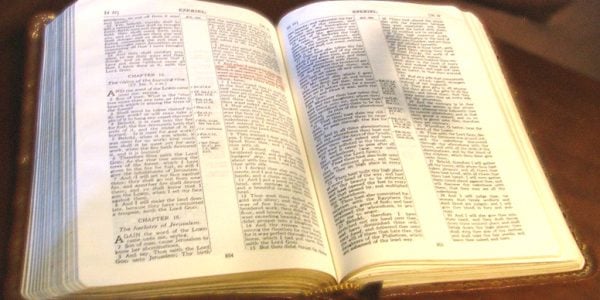
“Bible with Cross Shadow,” David Campbell, Flickr C.C.
I first became a licensed local pastor in July 2010. Over the course of the past decade, I have tried a whole lot of things as a pastor, and very few of them turned out the way that I planned or hoped. Thus you could say it’s been a decade of failures. I don’t intend that to be negative or self-pitying. Sometimes I actually made mistakes which taught me specific lessons; most often the circumstances and decisions of other people did not align with whatever important mission I thought God had given me, which was infuriating and demoralizing to the point that it broke me and tilled the soil of my heart until it was rich and deep.
Ten years ago, I thought being a pastor was like baseball where you start out in the minor leagues and prove your skills until you make it to the big leagues. I was supposed to pay my dues as an associate pastor, then rise through the ranks by creating pretty looking, upward curving worship attendance graphs until I would gain recognition as an important leader with a bio that included phrases like “a sought-after speaker who pastors one of the largest growing churches in the country.”
One of the greatest miracles that happened in the last decade was that God evaporated my need to be a famous Christian leader. I suppose that my initial ambition was useful to his purpose for a season. I might not have gone through the agony of cranking out a book that I thought was going to save the American church if I had been liberated from my ego sooner. Some people have said the book was helpful to them so overall it was probably useful to God.
I’ll never forget the moment I handed my book to Rob Bell and started gushing about how it was all inspired by his book Love Wins. He gave me 30 seconds to gush and then turned and looked at the next person in line until I took the hint and stopped talking. God saved me from my ego in maybe half a dozen moments like that over the course of my failure to get the progressive Christian celebrities to see how important I was. Teenage boy Morgan had to throw a tantrum that the cool kids still wouldn’t let me sit with them at lunch. But then all of a sudden it didn’t matter anymore and I got to start enjoying life.
So here are 10 spiritual lessons in no particular order that I can distill from my decade of failures as a pastor.
1. The only thing you can count on God to do is show up
As a pastor, one of the most infuriating things I learned about God is that he isn’t transactional. No matter how hard I prayed, I could not make God guarantee my success. Whether it was my struggling contemporary worship service in my first ministry appointment or my book release process or my campus ministry, I wanted God to make things fall into place for me. I wanted him to provide the mojo that would synergize a community into one of those perfectly choreographed videos that I always see about other ministries. He didn’t do that.
But he showed up when I cried out to him in rage. And when God showed up, it was actually wonderful in and of itself. So eventually, I started praying just to spend time with God rather than asking God to bless my agendas. It’s strange but when I prostrate myself on the ground in front of the fountain at Notre Dame Seminary or the prayer labyrinth in Audubon Park and his light seeps into the corners of my eyes, I think about the old Metallica song, “Nothing else matters.” Because that’s the truth that I discover in those moments. He doesn’t give me what I think I’m asking for; he just gives me himself. And somehow I suspect that if I get thrown in prison one day and have only a small cell to move about in, it will be enough if God simply shows up when I throw myself on the ground before him.
2. Moments matter more than outcomes
In the data-driven world of United Methodism, ministry “fruit” is measured in terms of outcomes, specifically whether the number of butts in your pews increase over the course of your ministry. Nothing has given me greater misery over the past decade than obsessing over these outcomes (for which I blame our system’s frantic, capitalist mindset as much as my own personal neurosis).
The beauty has happened when I’ve been able to relish moments instead of outcomes. I’ve had a lot of really incredible conversations. I’ve seen people change in unexpected ways. It gives me great pleasure to go back over the moments when I’ve seen breakthroughs. And I’ve decided that those moments count, even though the number of faces in our campus ministry Christmas card hasn’t doubled every year (and even shrank dramatically this year).
The best I can do is be fully present to God’s presence in every moment and let those moments be my reality rather than the ruthless analysis of all the ways that I am failing. When I live with God in each moment instead of regretting the past and worrying about the future, I am living eternally (and I am probably able to be a much more effective pastor).
3. Helplessness is the most liberating gift
One of the most sacred moments I’ve had in the last ten years happened in 2014 when I had just parked in the Detroit airport parking lot on my way to interview for my campus ministry job. My ulcerative colitis was raging and I knew that I needed to find a toilet immediately. I was wearing the suit that I planned to interview in. The airport shuttle flew past me without stopping, and for a moment I thought I was going to have to drop my drawers in between two cars and do the best that I could.
In that moment, I was completely helpless. I just started repeating, “Carry me, God,” while I squeezed my insides as tightly as I could. Somehow another shuttle came and I miraculously made it to the airport toilet. The desperation of narrowly escaping shitting my pants several dozen times in similar circumstances is what has deepened my prayer life more than any other factor in the past decade. I’ve experienced helplessness in many other ways: marketing for my book, trying to get college students to come to church, parenting two special needs kids. In every situation, my helplessness has set me a little more free.
4. Everyone has a word from God to share
This is a mantra that I’ve been repeating for most of my time as a pastor. I’m not sure whether or not it’s objectively true, but I’ve made it an a priori premise of my ministry and I will stubbornly cling to it no matter how much evidence contradicts it. Just because I’m a “reverend” doesn’t mean that I’m the one who has the official word from God to share with everyone else. Everyone has a word from God, and my job as a pastor is to help people find the word that is theirs to contribute.
It’s not just a matter of principle. When I listen to people as though God has decided to prophesy to me through them, then they actually do start prophesying to me. He often visits me in the form of homeless people. I’ll never forget the homeless man who told me he was going to visit an Orthodox monastery. It was such an unusual thing for a homeless person to say that I gave him twenty bucks. I saw him around town on his bike a few weeks later so I presumed I had been played. But then six months after that, he showed up at my church on a Saturday morning when I happened to be stopping by at the same time with an icon and a prayer rope from the monastery that he wanted me to have. And I told God I would never doubt one of his angels again.
5. I don’t have to prove anything to anybody
This is what my salvation looks like: Jesus shows me I am accepted completely, unconditionally, and he invites me to stop trying to prove myself. I still have not completely accepted his invitation. But I’m getting better at it. I truly believe the toxic aspects of any religion happen when religious people are trying to prove themselves (whether it’s through crucifying the gays or flying planes into buildings). That’s why our justification through Jesus’ sacrifice is such an important Christian doctrine. But I think it’s critical to understand that justification saves us from self-justification. Because too many Christians try to justify themselves through their beliefs about Jesus instead of letting Jesus justify them on the cross.
When we stop trying to prove ourselves, then we discover the joy of God’s grace. Of course, the implications of this for me are that I have decided to refuse to prove my “orthodoxy” to other Christians and I reject any Christian “orthodoxy” that is composed of litmus tests created for the sake of self-justification, even if it’s all supposedly rooted in scripture. Orthodoxy is whatever range of beliefs allow me to best surrender to Christ and gain synchronicity with the Holy Spirit.
6. Repentance and forgiveness feel better than being right
Feeling like I’m right is intoxicating. I don’t think I’m a full-blown narcissist, but I get really infatuated with my cleverness and brilliance sometimes, especially when I’m taking somebody down and putting them in their place. But that feeling is never actually satisfying. And all it takes to make me feel lousy is to see any aspect of the other person’s humanity. Maybe they do something kind or they open up about feeling overwhelmed or they express some humility. And then I feel like a total dick.
The moments I’ve felt most deeply in the bosom of God are when I’m convicted by my own sin and I ask someone else for forgiveness or when a long-term resentment of someone else is melted away instantaneously by their unexpected ask for my forgiveness. The exchange of repentance and forgiveness should be the centerpiece of Christian life. The apostle Paul said that all of us are ministers of reconciliation. Being always ready to repent and forgive is much more important than living infallibly.
7. Truth is always particular and contextual
I’m not sure I’m satisfied with the way I worded this one. But I am increasingly suspicious of ideas that are supposed to be generic and universal. Like Christian salvation for instance. I need Jesus to prove to me that I don’t need to prove myself. My salvation needs are similar to Martin Luther and most of the other privileged, egotistical European men who have shaped Christian doctrine throughout the centuries. But I’m not sure that a slave or a refugee or an indigenous person with a rich ceremonial culture needs exactly the same thing from Jesus that I do.
Jesus says that he came to “preach good news to the poor.” Whatever else is true about me, I am not poor. When white men like me read the Bible, we often presume that whatever good news Jesus is sharing needs to fit together in a single generic, universal package (so we say ah, but Jesus is talking about spiritual poverty). But maybe Jesus actually has good news for materially poor people that’s different than the good news he has to offer the rich. For example, black slaves in 19th century America interpreted Jesus’ suffering on the cross differently than their white masters did. While white slave-owners viewed the cross as their exoneration from being punished for their sins, their slaves viewed it as God’s solidarity with their suffering.
The presumption that truth is innately generic and universal makes us read the Bible differently than if we allow for the possibility that God’s strategy for reconciling the world to himself actually involves offering different Bible verses and interpretive frames for his truth that speak to all the different cultures, personalities, and life circumstances of people who read the Bible. There’s no reason we can’t read Jesus’ stories together and allow God to speak particular, contextual truths into each of our lives as we discuss these stories. That’s what many Christians already naturally do when they read the Bible together, though many remain committed in the abstract to the idea of generic, universal truth.
8. Different religious traditions can be interpreted harmoniously
Richard Rohr introduced a concept called “interfaith catholicity” that has become my default when I engage with other religious traditions. Basically I interpret other traditions as harmoniously with my own religious tradition as I can do with integrity. In other words, I try not to caricature other religious traditions into straw men that I can contrast with the supposedly exclusive truth of Christianity. I don’t see any reason to presume that every other spirituality has to be a manipulation of Satan (which many Christians presume).
My presumption is that there is one divine reality humanity is interacting with and many different stories that have been developed for explaining it. I don’t think God has specifically withheld himself from every spiritual community around the world other than Christianity. I can’t explain why he would allow so many different stories to be told about himself, but I think it must be part of his purpose since he is a good God who loves everybody. I choose the Christian story, but I actually believe that my grasp of the Christian story gets better when I read it in harmony with concepts from other religious stories.
To me, when Hindus and Buddhists talk about escaping the tedious suffering of samsara and finding their way to nirvana, I hear resonance with the talk in Christianity of escaping what’s called “the world” and finding our way to God’s kingdom. I used to think that meditation and other “eastern” spiritual practices were a selfish form of escapism that I contrasted with the way that Christianity motivates people to transform their societies. Now I understand that I need to be rooted very deeply in prayer for my heart to be in sync with the Holy Spirit when I try to transform society. The bodhisattva vows of Buddhism seem consistent for me with the ministry of reconciliation that Christians are supposed to be committed to.
I’ve been very grateful for interspiritual voices like Vietnamese Buddhist monk Thich Nhat Hahn who seeks to find points of harmony with other religious traditions. In particular, Thich Nhat Hahn’s Living Buddha, Living Christ impacted me powerfully because I saw how he took great care to try to understand and learn from Christianity in his Buddhism. Over the past year, I have looked at writings and practices that are Buddhist, Sufi, Jewish, pagan, and indigenous in order to enhance my spiritual journey. I believe that Christians who are passionate about defending and focusing on Christian orthodoxy have an important role to play in my life and the life of the church. I think God has called me to a different role.
9. The true rastas are up in the hills
At the beginning of this past decade, I spent a week in the ICU with a young man who was dying of cancer. His older brother, who happens to now be the drummer of Thievery Corporation, was there. A casual comment he made in conversation became cataclysmic in my life journey. Talking about the reggae culture that he has been a part of musically, he said, “The true rastas are up in the hills.” That phrase has been echoing in my mind ever since. And it’s taken almost a decade for it to work on me.
See, my greatest fear as an Enneagram 4 has always been obscurity. I felt like it was my sacred duty to have a great impact on the world. When I would go to the annual conference gatherings where hundreds of Methodist pastors from Virginia convened, I would see so many anonymous faces in the crowd and fret over the possibility of becoming an anonymous nobody at an indistinguishable small church in the middle of nowhere. I feel pretty embarrassed to have written down that sentence openly.
But actually I can have a wild, beautiful, mystical life in complete obscurity. I can have secrets that I get to share with the people who find me and befriend me (not that my secrets are any more or less important than anyone else’s). To be obscure is not to be any less connected with God or any less capable of deep, satisfying friendships. I think for a long time, my pursuit of worldly importance was a substitute for the personal community that I didn’t think I could have. Now as I ponder how my journey will reset this summer at a Methodist church to be determined in Virginia, I am going to prioritize building authentic local community over trying to be a famous globe-trotting, conference hopping “thought leader.” I would rather be a true rasta than a lonely, spiritually emaciated viral tweeter.
10. Obedience and openness are the same thing
Obedience is the favorite word of the evangelical Christian tradition that I come from. It is usually taken to signify that I repress my own intuitions and observations about the truth in order to conform with whatever the official authoritative proclamation is (a.k.a. “the Bible” as interpreted by the patriarch in charge whether it’s Pastor Bobby or Rush Limbaugh). I have written about why this definition of truth as authoritative proclamation results in the post-truth authoritarianism that has ensnared evangelicals in the age of Trump.
What has happened in my life over the past decade is that a very still, small voice has offered me significant invitations that were too lovely to resist. First, I was invited to fast on Mondays. Then, I was invited to fast on Fridays. Then, the voice said, “You really don’t have to drink” on March 16, 2016. Then the voice told me at a shamanic ceremony at the Wild Goose Festival, “You’re not a hero; you’re a healer.” I don’t have any valid explanation for how I can distinguish this voice from all of the other thoughts in my monkey brain, but the voice has always seemed consistent with how Henri Nouwen described the voice of love, and Nouwen’s Life of the Beloved became the foundation of my understanding of the Christian gospel.
I have received revelation from God in a very specific journey from a combination of Bible verses, mystical writers, friendships, and still, small invitations. Because I am obedient to the journey of revelation I have received, I could not simply jump into an entirely different framework for understanding truth even if I was successfully pinned down argumentatively by a brilliant evangelical apologist. God would have to do some maneuvering to make me question all of my prior realizations and reinterpret them.
The best I can do is to remain open to what God has to reveal. There may come a point when I realize that everything I’m saying now is ridiculously silly. And that will be fine. Because it’s happened before on several occasions. What would be disobedient would be if I decided that I had arrived at a perfect apprehension of God’s truth and I had to close myself off to every other possibility. My grandpa, who was my original Southern Baptist deacon spiritual director, believed that if he didn’t keep changing his mind throughout life, then he had stopped growing. He changed more radically the older he got. He even stopped saying the N word!
So I intend to keep listening to God and when I hear the still, small voice, I will follow it. Thankfully, God has put Christians who love me and think very differently than I do into my life so I can benefit from their discernment as well.
Previous Post

December 13, 2019
Is David French or Mayor Pete Right About Christian Salvation?
Next Post

January 6, 2020 Iran, Mike Pompeo, and the Total Depravity of The Other
Browse Our Archives
Select a Category Advent Beauty Will Save the World Bible Big Picture: Ephesians Bloggers Book Christian salvation and the Beautitudes Culture Daily Office Danceable Homiletics Deadly Sins Deep Roots: Genesis Devotions Dominican Republic May 2011 El Principio Misericordia (The Mercy Principle) Five verses God tattooed on my heart Fundraising FutureGospel Good Biblical Words Henri Nouwen Interview Jennings' Christian Imagination Jesus inside the beltway Jesus Is My Candidate Jesus vs the Pharisees Jesus vs. Plato Journey to Eternity Looking Back on 2012 Love Actually Monday Merton Monday Merton Music Occupy the manger On Earth As It Is In Heaven Original Sin Podcast Poetry Politics Prayer Psalm 119 Radical Jesus 101 Reviews Sermon on the Mount Sermons Spanish Bible study Special Series Spiritual but not religious Synchroblog Theology Things that made me think Thomas a Kempis Ugliness Into Beauty Uncategorized Viaje Dominicano 2013 Walking in the Valley (Lent) Welcome: It's More than a Mat Wild Goose 2013 Wrestling
Select a Month March 2022 January 2022 December 2021 September 2021 April 2021 September 2020 August 2020 July 2020 June 2020 May 2020 April 2020 March 2020 February 2020 January 2020 December 2019 November 2019 October 2019 September 2019 August 2019 June 2019 May 2019 April 2019 March 2019 February 2019 January 2019 December 2018 November 2018 October 2018 September 2018 August 2018 July 2018 June 2018 May 2018 April 2018 March 2018 February 2018 January 2018 December 2017 November 2017 October 2017 September 2017 August 2017 July 2017 June 2017 May 2017 April 2017 March 2017 February 2017 January 2017 December 2016 November 2016 October 2016 September 2016 August 2016 July 2016 June 2016 May 2016 April 2016 March 2016 February 2016 January 2016 December 2015 November 2015 October 2015 September 2015 August 2015 July 2015 June 2015 May 2015 April 2015 February 2015 January 2015 December 2014 November 2014 October 2014 September 2014 August 2014 July 2014 June 2014 May 2014 April 2014 March 2014 February 2014 January 2014 December 2013 November 2013 October 2013 September 2013 August 2013 July 2013 June 2013 May 2013 April 2013 March 2013 February 2013 January 2013 December 2012 November 2012 October 2012 September 2012 August 2012 July 2012 June 2012 May 2012 April 2012 February 2012 January 2012 December 2011 November 2011 October 2011 September 2011 August 2011 July 2011 June 2011 May 2011
Follow Us!
TAKE THE
Religious Wisdom Quiz
What is "the beginning of knowledge," according to Proverbs?
Select your answer to see how you score.
Riches Humility Fear of the Lord Power
Related posts from Mercy Not Sacrifice


When God's A Cop, Every Cop Is God


"All People Are Holy": The Theology Of Alexandria...
TRENDING AT PATHEOS Progressive Christian

What Being a Modern-Day Apostle Means to Me
In my last column, I discussed the ins and outs of modern-day...

Did Ancient China Once Worship the God of...
Across human history, a common thread weaves through the origins of the...

Love Your Neighbor – Including Earth-Kin: Lev. 19,...
God’s command to love your neighbor means acting in an ethical and...

Lead a Church Study of “Jesus and Lao...
Guest writer Jack Thomas (The Irreverent Reverend) reflects on leading his church...

Pastoral Wisdom for Responding to Sermon Pushback
Getting sermon pushback on your social justice sermon? Learn practical, Proverbs-based strategies...

Principles for Understanding the Apostolic Ministry Today
Whenever people discover that my formal ministry title is "apostle," as in...
view all Progressive Christian blogs
Ad-Free & Subscriber Log-In Subscription Support
- About Us
- 2026 Calendar
- Videos
- Podcasts
- Library of World Religions
- Faith In Media Tracker
- Advertise With Us
- Write for Us
- Privacy Policy
- Terms of Service
- Do Not Sell My Data
- Contact Us
- Radiant Digital
- Manage Newsletter Subscriptions
- Unsubscribe From Notifications
- Sitemap
Copyright 2008-2026, Patheos. All rights reserved.
Subscription Support Ad-Free & Subscriber Log-In
Follow Patheos