
BuddhistCatholicContemplativeEvangelicalGeneral ChristianHinduJewishLatter-day SaintMuslimNew VisionsProgressive Christian
Beliefs
- Buddhist
- Catholic
- Contemplative
- Evangelical
- General Christian
- Hindu
- Jewish
- Latter-day Saint
- More Voices
- Muslim
- New Visions
- Pagan
- Progressive Christian
Topics
- Religion News
- Food and Religion
- Sports and Religion
- Religious Art
- Religious Music and Entertainment
- Religious Events
- History and Religion
- Style and Religion
- Politics and Religion
- Women in Religion
- Recreation Outdoors and Religion
- Business Finance and Religion
- Careers Workplace and Religion
- Education and Religion
- Family Parenting and Religion
- Health Fitness and Religion
- Home and Religion
- Relationships and Religion
- Technology and Religion
- Travel and Religion
Columnists
- Buddhist Columnists
- Business Finance and Religion Columnists
- Careers Workplace and Religion Columnists
- Catholic Columnists
- Contemplative Columnists
- Education and Religion Columnists
- Evangelists Columnists
- Family Parenting and Religion Columnists
- General Christian Columnists
- Health Fitness and Religion Columnists
- Hindu Columnists
- History and Religion Columnists
- Home and Religion Columnists
- Jewish Columnists
- More Voices Columnists
- Latter Day Columnists
- Muslim Columnists
- New Visions Columnists
- Nonreligious Columnists
- Pagan Columnists
- Politics and Religion Columnists
- Progressive Columnists
- Recreation Outdoors and Religion Columnists
- Relationships and Religion Columnists
- Religion News Columnists
- Religious Art Columnists
- Religious Events Columnists
- Religious Music and Entertainment Columnists
- Sports and Religion Columnists
- Style and Religion Columnists
- Technology and Religion Columnists
- Travel and Religion Columnists
- Women in Religion Columnists
Resource Library
- 2026 Calendar
- Library of World Religions
- The 100 Most Holy Places on Earth
- Patheos Answers
- Podcasts
- Videos
- Faith Leaders Database
- Anglican Episcopalian
- Bahai
- Baptist
- Buddhism
- Christianity
- Confucianism
- Eastern Orthodoxy
- Hinduism
- Holiness and Pentecostal
- ISKCON
- Islam
- Judaism
- Lutheran
- Methodist
- The Church of Jesus Christ of Latter-day Saints
- New Age
- Paganism
- Presbytarian and Reformed
- Protestantism
- Religion Behind the Scenes
- Roman Catholic
- Scientology
- Shia Islam
- Sikhism
- Sufism
- Sunni Islam
- Taoism
- Zen
- See all religions
Research Tools
 Ad-Free & Subscriber Log-In Subscription Support
Ad-Free & Subscriber Log-In Subscription Support
Follow Patheos 

- Trending:
- Forgiveness
- |
- Marriage
- |
- Consciousness
- |
- Death Penalty
- |
- Election
- |
- Halloween
 Mercy Not Sacrifice
-
More
- Home
- Progressive Christian
- The Bursting Of The Methodist Wineskin
The Bursting Of The Methodist Wineskin
Last updated on: September 17, 2019 at 12:13 pm by Morgan Guyton
The Bursting Of The Methodist Wineskin 2019-09-17T12:13:30-05:00 Morgan Guyton
Patheos Explore the world's faith through different perspectives on religion and spirituality! Patheos has the views of the prevalent religions and spiritualities of the world.
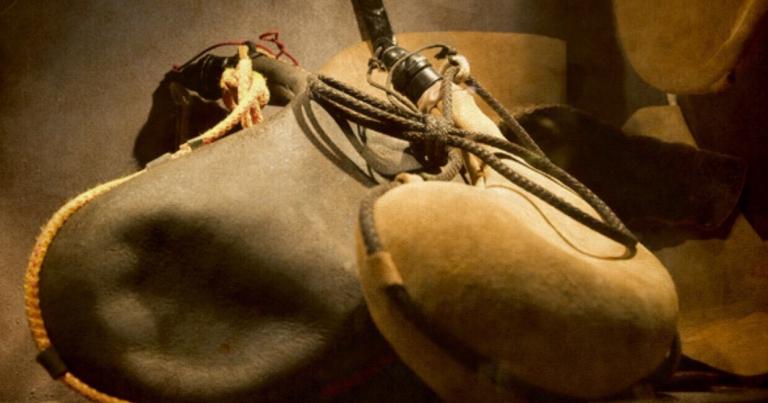
One of the most uncomfortable and least talked about parables of Jesus is his parable of the wineskins. Jesus says that new wine cannot be poured into old wineskins without bursting them; it requires new wineskins. The implications of this parable for the continuity of apostolic tradition are highly problematic. Which is why they are usually qualified, explained away, and bracketed. Otherwise Jesus’ parable might be held guilty of Marcionism, the heresy that says Christianity must throw away the old wineskin of its context within the story of Israel (which would not be an unreasonable straightforward interpretation of what Jesus is saying).
But there is a truth in Jesus’ parable that cannot be ignored. The Holy Spirit does new things that cannot be seamlessly assimilated into the old tradition. When the household of Cornelius started speaking in tongues, it was enough to convince Peter that Cornelius and his family did not need to take a mikvah bath, get circumcised, and become Jews before they could be Christian. But there was no basis within the old spiritual framework to justify this spiritual innovation.
No justification could be found within the old law to revise the law to accommodate Gentiles. The apostle James rather found a prophecy that could be reinterpreted in light of the Spirit’s testimony through the charismatic gifts of Cornelius’ house (though nothing about the prophecy explicitly permitted the revocation of the circumcision covenant). A new wineskin was discovered for the new wine that burst the old wineskin.
So what about United Methodism today? Now that the US progressives and conservatives have agreed that the only way forward is to split into two churches, the African bishops have put out a statement saying that they will accept a split under no circumstances. And so the toxic family system of our haphazardly globalized church polity displays its perfectly synergistic dysfunction.
There’s a reason that the United States has not dissolved our federal government and given the United Nations complete jurisdiction over our citizens. There’s a reason we differentiate between powers reserved for states and municipalities and those given to the federal government.
One of the founding core precepts of our nation is a mistrust of the centralization of power. Which makes it very interesting when conservative US Methodists who are constitutional originalists when it comes to conversations about things like universalized health care and gun control in US politics suddenly become “globalist” when it comes to conversations about LBGTQ inclusion in Methodist polity.
Methodism is the product of a renegade Anglican priest who wanted to remain in good standing with the Church of England on his own terms. When John Wesley said, “I look upon the world as my parish,” he wasn’t solely casting a vision for the revitalized evangelism his words are appropriated for today; he was also importantly defying an Anglican church hierarchy that wanted him to stay out of other priests’ parishes.
The decisions and discernment of the original Methodist annual conferences may have institutional authority for Methodists today, but in terms of their relationship to the church in which John Wesley was ordained, they would be analogous to the annual gatherings of the caucus groups within Methodism today like the Wesleyan Covenant Association and the Reconciling Ministries Network.
Methodism did not form by an edict of the British Parliament, the legislative body entrusted with official decision-making for the church in which John Wesley was ordained. Methodism simply established itself alongside the institutional structure of the Church of England. It was a movement of the Spirit that didn’t ask anyone’s permission to exist; the original Methodists certainly felt they were obeying God but they did not consider themselves beholden to the institution out of which they emerged. John Wesley remained Anglican for pragmatic reasons, not out of loyal institutionalism.
This is why it’s puzzling to me that so many moderate Methodists take moral offense at their colleagues who are convinced that obeying God requires violating the Book of Discipline. Why is conformity to the protocols and polity of our institution so assuredly equated with following the will of God? Why are we pretending that people who mostly lack authentic personal relationships with one another are in any semblance of covenant when they gather every four years to exercise the hyper-centralized power of our entire denomination?
When in the 1700’s John Wesley asked a series of questions of his annual conference of traveling preachers as a basis for their collective decision-making, he was creating a new wineskin that fit the new wine he had discovered better than solely submitting to the politics of the Anglican hierarchy or the British Parliament itself. But now United Methodists find ourselves in the reality that our General Conference has become an old wineskin that cannot hold the new wine the Holy Spirit is pouring.
You don’t have to agree with me about gay people to agree that the institutional quagmire of our General Conference process is stifling the missional potential of at least the American church which continues its rapid decline. It is highly likely that General Conference 2020 will conclude without any way forward that a majority of delegates can agree upon. I am coming to the belief that no legislative solution to our crisis is possible within the framework of our present constitution.
The old wineskins are going to have to be shredded for the new wineskins to be discovered. In other words, the way forward is going to happen when a critical mass of Methodists decide upon an “illegal” course of action according to our polity, and their ideological opponents decide to let that “illegality” stand rather than lawyer up and spend millions of dollars heaping litigious misery on each other. As long as enough of us are committed to point-scoring, posturing, and pearl-clutching as our primary response to other sides’ actions, we will continue to sabotage the Spirit’s work. We need a thousand Gamaliels to gather in Minneapolis in 2020 so that God can show us which ways of understanding his gospel are spiritually viable when they are untangled from each other.
I think it would be awesome if we could agree to split the US church into Inclusive Methodism and Orthodox Methodism while the church outside the US takes the mantle of United Methodism and receives missional support from both branches within the US. But it seems very unlikely that any kind of amicable separation is possible because there is a perfect synergy of dysfunction between the conflicting parties that are involved.
If the conservative churches want to unilaterally break away and form their own new denomination, they should be allowed to do so. In exchange, conservatives should allow inclusive Methodists to disregard judicial processes that belong to a polity that is defunct and unsalvageable. And we should become what God wants us to become whether General Conference ever officially decides to do so or not.
The Holy Spirit does not need the endorsement and confirmation of United Methodism’s official legislative process to evolve our church how God wants to do so. As long as Methodists equate institutional fidelity with obedience to God, we will persist in our impossible quagmire. It is only by shredding the old wineskin that the new Methodist wine can be poured.
Previous Post

August 20, 2019
Methodism Needs A No Fault Divorce
Next Post
October 9, 2019 How I Would Rewrite Desiring God's "Joy" Tweet
Browse Our Archives
Select a Category Advent Beauty Will Save the World Bible Big Picture: Ephesians Bloggers Book Christian salvation and the Beautitudes Culture Daily Office Danceable Homiletics Deadly Sins Deep Roots: Genesis Devotions Dominican Republic May 2011 El Principio Misericordia (The Mercy Principle) Five verses God tattooed on my heart Fundraising FutureGospel Good Biblical Words Henri Nouwen Interview Jennings' Christian Imagination Jesus inside the beltway Jesus Is My Candidate Jesus vs the Pharisees Jesus vs. Plato Journey to Eternity Looking Back on 2012 Love Actually Monday Merton Monday Merton Music Occupy the manger On Earth As It Is In Heaven Original Sin Podcast Poetry Politics Prayer Psalm 119 Radical Jesus 101 Reviews Sermon on the Mount Sermons Spanish Bible study Special Series Spiritual but not religious Synchroblog Theology Things that made me think Thomas a Kempis Ugliness Into Beauty Uncategorized Viaje Dominicano 2013 Walking in the Valley (Lent) Welcome: It's More than a Mat Wild Goose 2013 Wrestling
Select a Month March 2022 January 2022 December 2021 September 2021 April 2021 September 2020 August 2020 July 2020 June 2020 May 2020 April 2020 March 2020 February 2020 January 2020 December 2019 November 2019 October 2019 September 2019 August 2019 June 2019 May 2019 April 2019 March 2019 February 2019 January 2019 December 2018 November 2018 October 2018 September 2018 August 2018 July 2018 June 2018 May 2018 April 2018 March 2018 February 2018 January 2018 December 2017 November 2017 October 2017 September 2017 August 2017 July 2017 June 2017 May 2017 April 2017 March 2017 February 2017 January 2017 December 2016 November 2016 October 2016 September 2016 August 2016 July 2016 June 2016 May 2016 April 2016 March 2016 February 2016 January 2016 December 2015 November 2015 October 2015 September 2015 August 2015 July 2015 June 2015 May 2015 April 2015 February 2015 January 2015 December 2014 November 2014 October 2014 September 2014 August 2014 July 2014 June 2014 May 2014 April 2014 March 2014 February 2014 January 2014 December 2013 November 2013 October 2013 September 2013 August 2013 July 2013 June 2013 May 2013 April 2013 March 2013 February 2013 January 2013 December 2012 November 2012 October 2012 September 2012 August 2012 July 2012 June 2012 May 2012 April 2012 February 2012 January 2012 December 2011 November 2011 October 2011 September 2011 August 2011 July 2011 June 2011 May 2011
Follow Us!
TAKE THE
Religious Wisdom Quiz
Who was the scribe and priest that led a second group back to Jerusalem?
Select your answer to see how you score.
Mordecai Ezra Nehemiah Zerubbabel
Related posts from Mercy Not Sacrifice


Donald Trump And The Exorcism Of White America

When God's A Cop, Every Cop Is God

TRENDING AT PATHEOS Progressive Christian

What Being a Modern-Day Apostle Means to Me
In my last column, I discussed the ins and outs of modern-day...

Did Ancient China Once Worship the God of...
Across human history, a common thread weaves through the origins of the...

Love Your Neighbor – Including Earth-Kin: Lev. 19,...
God’s command to love your neighbor means acting in an ethical and...

Lead a Church Study of “Jesus and Lao...
Guest writer Jack Thomas (The Irreverent Reverend) reflects on leading his church...

Pastoral Wisdom for Responding to Sermon Pushback
Getting sermon pushback on your social justice sermon? Learn practical, Proverbs-based strategies...

Principles for Understanding the Apostolic Ministry Today
Whenever people discover that my formal ministry title is "apostle," as in...
view all Progressive Christian blogs
Ad-Free & Subscriber Log-In Subscription Support
- About Us
- 2026 Calendar
- Videos
- Podcasts
- Library of World Religions
- Faith In Media Tracker
- Advertise With Us
- Write for Us
- Privacy Policy
- Terms of Service
- Do Not Sell My Data
- Contact Us
- Radiant Digital
- Manage Newsletter Subscriptions
- Unsubscribe From Notifications
- Sitemap
Copyright 2008-2026, Patheos. All rights reserved.
Subscription Support Ad-Free & Subscriber Log-In
Follow Patheos