
BuddhistCatholicContemplativeEvangelicalGeneral ChristianHinduJewishLatter-day SaintMuslimNew VisionsProgressive Christian
Beliefs
- Buddhist
- Catholic
- Contemplative
- Evangelical
- General Christian
- Hindu
- Jewish
- Latter-day Saint
- More Voices
- Muslim
- New Visions
- Pagan
- Progressive Christian
Topics
- Religion News
- Food and Religion
- Sports and Religion
- Religious Art
- Religious Music and Entertainment
- Religious Events
- History and Religion
- Style and Religion
- Politics and Religion
- Women in Religion
- Recreation Outdoors and Religion
- Business Finance and Religion
- Careers Workplace and Religion
- Education and Religion
- Family Parenting and Religion
- Health Fitness and Religion
- Home and Religion
- Relationships and Religion
- Technology and Religion
- Travel and Religion
Columnists
- Buddhist Columnists
- Business Finance and Religion Columnists
- Careers Workplace and Religion Columnists
- Catholic Columnists
- Contemplative Columnists
- Education and Religion Columnists
- Evangelists Columnists
- Family Parenting and Religion Columnists
- General Christian Columnists
- Health Fitness and Religion Columnists
- Hindu Columnists
- History and Religion Columnists
- Home and Religion Columnists
- Jewish Columnists
- More Voices Columnists
- Latter Day Columnists
- Muslim Columnists
- New Visions Columnists
- Nonreligious Columnists
- Pagan Columnists
- Politics and Religion Columnists
- Progressive Columnists
- Recreation Outdoors and Religion Columnists
- Relationships and Religion Columnists
- Religion News Columnists
- Religious Art Columnists
- Religious Events Columnists
- Religious Music and Entertainment Columnists
- Sports and Religion Columnists
- Style and Religion Columnists
- Technology and Religion Columnists
- Travel and Religion Columnists
- Women in Religion Columnists
Resource Library
- 2026 Calendar
- Library of World Religions
- The 100 Most Holy Places on Earth
- Patheos Answers
- Podcasts
- Videos
- Faith Leaders Database
- Anglican Episcopalian
- Bahai
- Baptist
- Buddhism
- Christianity
- Confucianism
- Eastern Orthodoxy
- Hinduism
- Holiness and Pentecostal
- ISKCON
- Islam
- Judaism
- Lutheran
- Methodist
- The Church of Jesus Christ of Latter-day Saints
- New Age
- Paganism
- Presbytarian and Reformed
- Protestantism
- Religion Behind the Scenes
- Roman Catholic
- Scientology
- Shia Islam
- Sikhism
- Sufism
- Sunni Islam
- Taoism
- Zen
- See all religions
Research Tools
 Ad-Free & Subscriber Log-In Subscription Support
Ad-Free & Subscriber Log-In Subscription Support
Follow Patheos 

- Trending:
- Forgiveness
- |
- Marriage
- |
- Consciousness
- |
- Death Penalty
- |
- Election
- |
- Halloween
 Mercy Not Sacrifice
-
More
- Home
- Progressive Christian
- Can Abortion Be Morally Complex?
Can Abortion Be Morally Complex?
Last updated on: January 25, 2019 at 11:47 am by Morgan Guyton
Can Abortion Be Morally Complex? 2019-01-25T11:47:09-05:00 Morgan Guyton
Patheos Explore the world's faith through different perspectives on religion and spirituality! Patheos has the views of the prevalent religions and spiritualities of the world.
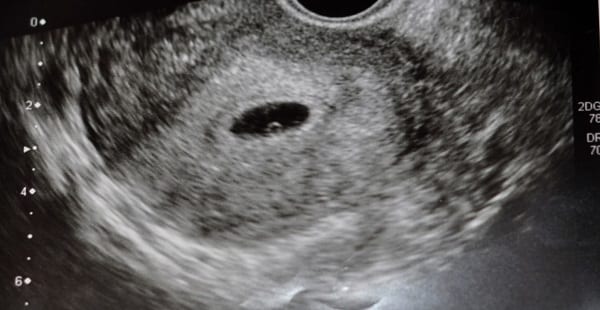
The pro-life movement is all over social media up in arms over the new New York law allowing for abortions to occur in limited circumstances after 24 weeks of gestation. The New York law previously had said that abortions can happen after 24 weeks if the mother and baby will both die otherwise. Now the New York law states that abortion can happen if the fetus is non-viable and if the mother’s “health” (rather than “life”) is at risk.
What has the pro-lifers up in arms is the ambiguity of what “health” can mean. If you define “health” economically or psychologically, then could an elitist doctor pressure a physically healthy 16 year old working class girl to terminate her pregnancy? Or could a woman with mental health challenges be bullied by a manipulative parent or partner into terminating her pregnancy?
I’m one of those people in the middle who’s not supposed to exist. I once had a high school student who had two abortions in the course of a single academic year. She really was using abortion as birth control. That was the point when I became opposed to abortion. However, I don’t think a punitive, legislative approach to stopping abortion is the answer. Also I don’t think I’m disqualified from talking about abortion since I’m a man, though I recognize that I should approach the conversation with humility as someone who will never grow another human inside of my body.
I am unwilling to draw absolute lines on questions like When Does Life Begin. Being a scientist’s son, it seems dishonest to me to call a fetus a person unless it is capable of existing in a physically autonomous body. It’s neither fully a person nor merely a clump of cells. It’s a mystery, like many aspects of life, that does not conform to the needs of authoritarian line-drawing. You can think differently, but writing two thousand word comments to make me see it your way probably isn’t going to change my mind.
On the other hand, I’m also ambivalent about drawing an absolute line regarding bodily autonomy and saying that what women do with their fetuses is no different than what they do with their kidneys. Come to think of it, we can’t just do whatever we want with any part of our bodies. I can’t go right now into a hospital and say, “I want my spleen removed; I’ll pay out of pocket; there’s no medical reason for it, but it’s my body and I can do what I want with it.” No doctor would operate on me and no judge would let me sue a doctor for not respecting my agency over my body.
Should our country legislate as though individual bodily autonomy and agency are absolute? Because in real life, they’re not. Medical professionals have a lot of authority over what we do with our bodies. The boundaries set by health care laws are boundaries for doctors as much as they are boundaries for patients. So I share the concern pro-lifers have about the definition of “health” in the sense that a clearer boundary needs to be set for medical professionals.
Where I part ways with the pro-life movement is my unwillingness to make a phrase like “sanctity of life” into an obtusely mechanistic legalism. I learned recently that a nun was excommunicated by the Roman church for being on the ethics board of a hospital where a woman’s pregnancy was ended because she and the baby would both die otherwise, leaving her five other children without a mother. That should be infuriating to anyone with a conscience and a brain. Only someone who is slavishly devoted to legalistic absolutes would be okay with that.
I also remember a few years ago that the bishop of Nicaragua excommunicated hospital staff at a hospital where a nine-year old girl who was raped by her uncle had a pregnancy terminated since it would have destroyed her body and traumatized her for life. The cruelty and stupidity of that no longer resembles anything like Christian morality.
If life is in fact sacred, then a loving mother should also be able to make the painful decision to spare a severely deformed fetus from being born into a tortured existence that lasts a few minutes. Read this article for examples of what late-term abortion actually looks like. The problem of course is that there’s a lot of gray area. In some countries, fetuses with Down’s Syndrome are routinely terminated. I am absolutely opposed to that. But in general, my instinct is to trust prospective mothers to make these decisions over male politicians and priests.
From what I understand, the Roman church excommunicates people even for aborting a dead fetus. I can’t imagine the cruelty of making a woman wait after discovering her child is no longer alive for a full-term delivery with labor and every other side effect simply for the sake of fulfilling a canon law created by a group of celibate men for whom childbirth is an abstraction.
There’s a phrase Jesus says to the religious authorities criticizing him that has became a major cornerstone of my ethical understanding. He says, “The Sabbath was made for humanity, not humanity for the Sabbath” (Mark 2:27). I think the principle applies to every moral question. The point of moral laws and norms is to serve the best interests of people. Because the universe is complex, sometimes a moral law that is mostly universal needs to be tweaked in a unique circumstance in order to do what is most loving. Holding onto rigid absolutes does not represent a fidelity to divine truth so much as a fidelity to oversimplifying divine truth.
There’s a difference between really caring about the sacredness of life and caring about the absoluteness of rules and church authority. I do think life is sacred. I trust women with their bodies. And I think that clearer boundaries need to be set than those that laid out in the recently revised New York law.
Please check out my book How Jesus Saves the World From Us: 12 Antidotes To Toxic Christianity!
Previous Post

January 22, 2019
Our Sin Is Not A Zero Sum Game
Next Post

January 31, 2019 The Evangelism of a Thousand Clergy Trials
Browse Our Archives
Select a Category Advent Beauty Will Save the World Bible Big Picture: Ephesians Bloggers Book Christian salvation and the Beautitudes Culture Daily Office Danceable Homiletics Deadly Sins Deep Roots: Genesis Devotions Dominican Republic May 2011 El Principio Misericordia (The Mercy Principle) Five verses God tattooed on my heart Fundraising FutureGospel Good Biblical Words Henri Nouwen Interview Jennings' Christian Imagination Jesus inside the beltway Jesus Is My Candidate Jesus vs the Pharisees Jesus vs. Plato Journey to Eternity Looking Back on 2012 Love Actually Monday Merton Monday Merton Music Occupy the manger On Earth As It Is In Heaven Original Sin Podcast Poetry Politics Prayer Psalm 119 Radical Jesus 101 Reviews Sermon on the Mount Sermons Spanish Bible study Special Series Spiritual but not religious Synchroblog Theology Things that made me think Thomas a Kempis Ugliness Into Beauty Uncategorized Viaje Dominicano 2013 Walking in the Valley (Lent) Welcome: It's More than a Mat Wild Goose 2013 Wrestling
Select a Month March 2022 January 2022 December 2021 September 2021 April 2021 September 2020 August 2020 July 2020 June 2020 May 2020 April 2020 March 2020 February 2020 January 2020 December 2019 November 2019 October 2019 September 2019 August 2019 June 2019 May 2019 April 2019 March 2019 February 2019 January 2019 December 2018 November 2018 October 2018 September 2018 August 2018 July 2018 June 2018 May 2018 April 2018 March 2018 February 2018 January 2018 December 2017 November 2017 October 2017 September 2017 August 2017 July 2017 June 2017 May 2017 April 2017 March 2017 February 2017 January 2017 December 2016 November 2016 October 2016 September 2016 August 2016 July 2016 June 2016 May 2016 April 2016 March 2016 February 2016 January 2016 December 2015 November 2015 October 2015 September 2015 August 2015 July 2015 June 2015 May 2015 April 2015 February 2015 January 2015 December 2014 November 2014 October 2014 September 2014 August 2014 July 2014 June 2014 May 2014 April 2014 March 2014 February 2014 January 2014 December 2013 November 2013 October 2013 September 2013 August 2013 July 2013 June 2013 May 2013 April 2013 March 2013 February 2013 January 2013 December 2012 November 2012 October 2012 September 2012 August 2012 July 2012 June 2012 May 2012 April 2012 February 2012 January 2012 December 2011 November 2011 October 2011 September 2011 August 2011 July 2011 June 2011 May 2011
Follow Us!
TAKE THE
Religious Wisdom Quiz
What was Amos' profession?
Select your answer to see how you score.
Fisherman Carpenter Tentmaker Shepherd
Related posts from Mercy Not Sacrifice

When God's A Cop, Every Cop Is God


"All People Are Holy": The Theology Of Alexandria...

Epimenides And The Plague Of Athens
TRENDING AT PATHEOS Progressive Christian

What Being a Modern-Day Apostle Means to Me
In my last column, I discussed the ins and outs of modern-day...

Did Ancient China Once Worship the God of...
Across human history, a common thread weaves through the origins of the...

Love Your Neighbor – Including Earth-Kin: Lev. 19,...
God’s command to love your neighbor means acting in an ethical and...

Lead a Church Study of “Jesus and Lao...
Guest writer Jack Thomas (The Irreverent Reverend) reflects on leading his church...

Pastoral Wisdom for Responding to Sermon Pushback
Getting sermon pushback on your social justice sermon? Learn practical, Proverbs-based strategies...

Principles for Understanding the Apostolic Ministry Today
Whenever people discover that my formal ministry title is "apostle," as in...
view all Progressive Christian blogs
Ad-Free & Subscriber Log-In Subscription Support
- About Us
- 2026 Calendar
- Videos
- Podcasts
- Library of World Religions
- Faith In Media Tracker
- Advertise With Us
- Write for Us
- Privacy Policy
- Terms of Service
- Do Not Sell My Data
- Contact Us
- Radiant Digital
- Manage Newsletter Subscriptions
- Unsubscribe From Notifications
- Sitemap
Copyright 2008-2026, Patheos. All rights reserved.
Subscription Support Ad-Free & Subscriber Log-In
Follow Patheos