
BuddhistCatholicContemplativeEvangelicalGeneral ChristianHinduJewishLatter-day SaintMuslimNew VisionsProgressive Christian
Beliefs
- Buddhist
- Catholic
- Contemplative
- Evangelical
- General Christian
- Hindu
- Jewish
- Latter-day Saint
- More Voices
- Muslim
- New Visions
- Pagan
- Progressive Christian
Topics
- Religion News
- Food and Religion
- Sports and Religion
- Religious Art
- Religious Music and Entertainment
- Religious Events
- History and Religion
- Style and Religion
- Politics and Religion
- Women in Religion
- Recreation Outdoors and Religion
- Business Finance and Religion
- Careers Workplace and Religion
- Education and Religion
- Family Parenting and Religion
- Health Fitness and Religion
- Home and Religion
- Relationships and Religion
- Technology and Religion
- Travel and Religion
Columnists
- Buddhist Columnists
- Business Finance and Religion Columnists
- Careers Workplace and Religion Columnists
- Catholic Columnists
- Contemplative Columnists
- Education and Religion Columnists
- Evangelists Columnists
- Family Parenting and Religion Columnists
- General Christian Columnists
- Health Fitness and Religion Columnists
- Hindu Columnists
- History and Religion Columnists
- Home and Religion Columnists
- Jewish Columnists
- More Voices Columnists
- Latter Day Columnists
- Muslim Columnists
- New Visions Columnists
- Nonreligious Columnists
- Pagan Columnists
- Politics and Religion Columnists
- Progressive Columnists
- Recreation Outdoors and Religion Columnists
- Relationships and Religion Columnists
- Religion News Columnists
- Religious Art Columnists
- Religious Events Columnists
- Religious Music and Entertainment Columnists
- Sports and Religion Columnists
- Style and Religion Columnists
- Technology and Religion Columnists
- Travel and Religion Columnists
- Women in Religion Columnists
Resource Library
- 2026 Calendar
- Library of World Religions
- The 100 Most Holy Places on Earth
- Patheos Answers
- Podcasts
- Videos
- Faith Leaders Database
- Anglican Episcopalian
- Bahai
- Baptist
- Buddhism
- Christianity
- Confucianism
- Eastern Orthodoxy
- Hinduism
- Holiness and Pentecostal
- ISKCON
- Islam
- Judaism
- Lutheran
- Methodist
- The Church of Jesus Christ of Latter-day Saints
- New Age
- Paganism
- Presbytarian and Reformed
- Protestantism
- Religion Behind the Scenes
- Roman Catholic
- Scientology
- Shia Islam
- Sikhism
- Sufism
- Sunni Islam
- Taoism
- Zen
- See all religions
Research Tools
 Ad-Free & Subscriber Log-In Subscription Support
Ad-Free & Subscriber Log-In Subscription Support
Follow Patheos 

- Trending:
- Forgiveness
- |
- Marriage
- |
- Consciousness
- |
- Death Penalty
- |
- Election
- |
- Halloween
 Mercy Not Sacrifice
-
More
- Home
- Progressive Christian
- Satan and the Scandals of the Church
Satan and the Scandals of the Church
Last updated on: September 20, 2018 at 2:26 pm by Morgan Guyton
Satan and the Scandals of the Church 2018-09-20T14:26:15-05:00 Morgan Guyton
Patheos Explore the world's faith through different perspectives on religion and spirituality! Patheos has the views of the prevalent religions and spiritualities of the world.
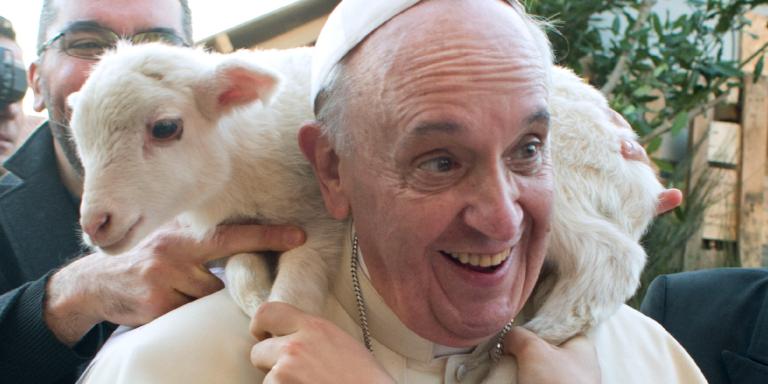
APTOPIX Italy Pope Epiphany
Pope Francis is my problematic fave. I’m sure he’s exhibited plenty of personal moral failures in the Roman church’s ongoing sexual abuse scandal, though I don’t think I could have done better if I were in charge of a complicated organization where almost every bishop and cardinal has dirty hands.
Francis preached a sermon to some bishops recently in which he talked about the role of Satan as the “accuser of the brethren” in perpetuating the church’s scandal. There was a lot of backlash, some genuine, some opportunistic from people who said that Francis’ sermon was effectively throwing the victims of sexual abuse under the bus. Was he saying that people who create scandal by calling out the church’s abuse are doing the work of Satan? I don’t think that was his intent, but it provides an opportunity for reflection.
As a survivor of church-based sexual violence, there’s an email that I’ve almost written several hundred times to the current pastor of the church where I was victimized. I’m not sure exactly what the email should say or how it would be helpful, which is why it hasn’t been written yet.
When I feel strongly about writing it, it’s because it seems like a duty to let the current pastor know that a man who was the scoutmaster, seventh grade Sunday school teacher, and church basketball coach at my former church for many decades may have victimized dozens of other boys too. I only went to one overnight event with Coach Mills. I can’t imagine what he might have done to boys who regularly went camping with him.
I’m just not sure what the current pastor would do with this information. Coach Mills died in January of 2011. I want to believe that there could be some kind of healing, restorative truth-seeking process if all the victims of Coach Mills were able to come together and share our stories. But how would this process happen and what do I expect the current pastor to do?
Is he supposed to stand up in worship and say, “Some guy emailed me and he says he got molested here in the late 1980’s. if anybody else had this experience, can you talk to me after worship in the parlor?” Would he book a room and schedule a meeting to discuss it which he advertised in the church newsletter? Would it require more than one email for him to act? How many emails do you need to get before you put your congregation’s survival in jeopardy by going public with something like this?
At another church that I was connected to, a volunteer with the youth program who was in his mid-twenties but a little underdeveloped socially got into a sexual relationship with a teenager in the youth group. When this was discovered, the church was fully cooperative and the volunteer was prosecuted, but public scandal was avoided. So does that count as a “coverup” or is that simply the best they could have done?
Maybe it’s wrong of me, but one of the things that held me back from sending the email was seeing online how much attendance had declined at my childhood congregation over the past three decades. I’ve been very reluctant to throw a spiritual grenade into their community. I don’t want to force their current pastor to make an impossible choice between blowing up his community and covering up a terrible sin, which would then become his sin that would corrode his soul spiritually.
Of course, the other side of my inner debate says that maybe they’ve declined partly because of what happened to whichever other boys got molested by Coach Mills. Maybe exposing the truth would provide desperately needed healing. The default worldview in our day is to err on the side of calling out and exposing everything. Discretion is not a thing in the age of social media. To even use the word “discretion” in a conversation about exposing sexual violence is itself a scandal.
When I first disclosed my experience publicly, my cousin scolded me for doing so. I’m still trying to forgive her, and yet I also continue to second-guess myself which I always do about everything. Did I just want to get on the #MeToo wagon? Did I just want to get survivor points in the Oppression Olympics? Ultimately I decided that the inner psychological damage that had resulted from what happened was real enough and being able to talk openly about my story was healing enough to justify speaking about it.
But I’ve become very wary of myself. Two years ago, I released a book that described twelve antidotes to toxic Christianity. Though I mostly still stand by the theology in the book, I was definitely a lot more sure of myself when I wrote it than I am now. Part of it has to do with my continuing revision of my spiritual narrative. It doesn’t work for me anymore to say “I grew up evangelical and it was terrible, but then I went to a gay church in Toledo, Ohio and I found the perfect gospel.” I know too many evangelicals with good hearts like my old youth pastor who keeps on liking my Facebook posts, even the ones that are overly harsh which then serves to convict me. So I’ve lost the ability to say #YesAllEvangelicals.
It definitely gets play on Twitter when I savage evangelicalism. I worry about that. There’s something deeply unhealthy about the way that truth has become whatever viralizes. We don’t nuance our truths anymore; we double-down on whatever story gets the most retweets which inevitably involves caricature. The angriest, most self-righteous version of whatever really happened to us is what gets the loudest broadcast signal.
It’s also true that social media has provided an indispensable tool for solidarity between marginalized people, especially those who have been victimized by powerful institutions like the church. Social media has given a lot of power to people who want to hold institutions accountable that they simply did not have before the viralization of information shared through the grassroots was a possibility.
There’s a verse in 1 Corinthians 13 that captures an incredibly important distinction we need to make as we think about the truth-telling that needs to be done: “Love does not delight in evil, but rejoices with the truth.” There’s a kind of scandalizing in our social media world that delights in evil, that loves schadenfreude more than anything else. I would say that the word Satan describes the schadenfreude that takes pleasure in accusation for its own sake. Satan is that force that seduces us into making scandal the entirety of our spiritual identity, because it feels so good to take other people down and get affirmation from a crowd while we’re doing it.
Rejoicing with the truth is different than schadenfreude. It isn’t looking primarily to get people fired, publicly shamed, or canceled; it’s looking for restorative justice that rehabilitates sinners for the sake of living in accountable, healthy community. Rejoicing with the truth also involves rigorous self-examination to ensure that we aren’t making scandal our brand and monetizing our past suffering to build a platform.
I truly believe that a significantly neglected part of the good news of the cross of Jesus Christ is that victims have authority, not the institutions that oppress them even if those institutions are apostolically descended from Jesus himself. But with that authority comes responsibility. My suffering does not make me infallible even in subcultures that center the experiences of victims over the official narratives of institutions.
If I were Pope Francis, I would convene a council of abuse victims and give them the authority to recommend changes to the church. The vast majority of them want the church to do well, despite the suffering that it has caused. I really believe that when God has his way with the Roman church, he will use the scandal that refuses to go quiet to destroy the clericalism that creates a toxic, untruthful environment.
The one thing that has always bothered me about the Roman mass liturgy more than anything else is the part where it says, “Lord Jesus, look not our sins but on the faith of your church.” If you believe that the church is innately infallible by nature, then you will inevitably create a church culture that cannot deal with mistakes made by its authority figures.
If I could revise the liturgy, I would say, “Look not on our sins but on the faith of your Spirit’s work.” Worshiping the human institution of the church is idolatry. Worshiping the Holy Spirit’s agency expressed through human beings in the church is holy.
That being said, I don’t think we need to ask God to look away from our sins. The whole point is that God sees our mess and is unafraid and unscandalized enough that he absorbs our shame into Jesus’ flesh on the cross. So what I would say in conclusion is that we shouldn’t look away from sin but we should also be looking at the faith of the Spirit’s work that often gets lost in times of church scandal.
Rejoice with the truth; don’t delight in evil.
Check out my book How Jesus Saves the World From Us!
Previous Post

September 11, 2018
A White Man Reflects On Serena Williams
Next Post

September 24, 2018 Do Spiritual Roots Matter?
Browse Our Archives
Select a Category Advent Beauty Will Save the World Bible Big Picture: Ephesians Bloggers Book Christian salvation and the Beautitudes Culture Daily Office Danceable Homiletics Deadly Sins Deep Roots: Genesis Devotions Dominican Republic May 2011 El Principio Misericordia (The Mercy Principle) Five verses God tattooed on my heart Fundraising FutureGospel Good Biblical Words Henri Nouwen Interview Jennings' Christian Imagination Jesus inside the beltway Jesus Is My Candidate Jesus vs the Pharisees Jesus vs. Plato Journey to Eternity Looking Back on 2012 Love Actually Monday Merton Monday Merton Music Occupy the manger On Earth As It Is In Heaven Original Sin Podcast Poetry Politics Prayer Psalm 119 Radical Jesus 101 Reviews Sermon on the Mount Sermons Spanish Bible study Special Series Spiritual but not religious Synchroblog Theology Things that made me think Thomas a Kempis Ugliness Into Beauty Uncategorized Viaje Dominicano 2013 Walking in the Valley (Lent) Welcome: It's More than a Mat Wild Goose 2013 Wrestling
Select a Month March 2022 January 2022 December 2021 September 2021 April 2021 September 2020 August 2020 July 2020 June 2020 May 2020 April 2020 March 2020 February 2020 January 2020 December 2019 November 2019 October 2019 September 2019 August 2019 June 2019 May 2019 April 2019 March 2019 February 2019 January 2019 December 2018 November 2018 October 2018 September 2018 August 2018 July 2018 June 2018 May 2018 April 2018 March 2018 February 2018 January 2018 December 2017 November 2017 October 2017 September 2017 August 2017 July 2017 June 2017 May 2017 April 2017 March 2017 February 2017 January 2017 December 2016 November 2016 October 2016 September 2016 August 2016 July 2016 June 2016 May 2016 April 2016 March 2016 February 2016 January 2016 December 2015 November 2015 October 2015 September 2015 August 2015 July 2015 June 2015 May 2015 April 2015 February 2015 January 2015 December 2014 November 2014 October 2014 September 2014 August 2014 July 2014 June 2014 May 2014 April 2014 March 2014 February 2014 January 2014 December 2013 November 2013 October 2013 September 2013 August 2013 July 2013 June 2013 May 2013 April 2013 March 2013 February 2013 January 2013 December 2012 November 2012 October 2012 September 2012 August 2012 July 2012 June 2012 May 2012 April 2012 February 2012 January 2012 December 2011 November 2011 October 2011 September 2011 August 2011 July 2011 June 2011 May 2011
Follow Us!
TAKE THE
Religious Wisdom Quiz
What New Testament book is known for its chapter on charity?
Select your answer to see how you score.
Hebrews 1 Corinthians Philippians Romans
Related posts from Mercy Not Sacrifice

Celebrity-Driven Church Is Not Safe For Kids

Why Kevin DeYoung's "Culture War Strategy" Fails


The Light That Will Not Be Seized
TRENDING AT PATHEOS Progressive Christian

What Being a Modern-Day Apostle Means to Me
In my last column, I discussed the ins and outs of modern-day...

Did Ancient China Once Worship the God of...
Across human history, a common thread weaves through the origins of the...

Love Your Neighbor – Including Earth-Kin: Lev. 19,...
God’s command to love your neighbor means acting in an ethical and...

Lead a Church Study of “Jesus and Lao...
Guest writer Jack Thomas (The Irreverent Reverend) reflects on leading his church...

Pastoral Wisdom for Responding to Sermon Pushback
Getting sermon pushback on your social justice sermon? Learn practical, Proverbs-based strategies...

Principles for Understanding the Apostolic Ministry Today
Whenever people discover that my formal ministry title is "apostle," as in...
view all Progressive Christian blogs
Ad-Free & Subscriber Log-In Subscription Support
- About Us
- 2026 Calendar
- Videos
- Podcasts
- Library of World Religions
- Faith In Media Tracker
- Advertise With Us
- Write for Us
- Privacy Policy
- Terms of Service
- Do Not Sell My Data
- Contact Us
- Radiant Digital
- Manage Newsletter Subscriptions
- Unsubscribe From Notifications
- Sitemap
Copyright 2008-2026, Patheos. All rights reserved.
Subscription Support Ad-Free & Subscriber Log-In
Follow Patheos