
BuddhistCatholicContemplativeEvangelicalGeneral ChristianHinduJewishLatter-day SaintMuslimNew VisionsProgressive Christian
Beliefs
- Buddhist
- Catholic
- Contemplative
- Evangelical
- General Christian
- Hindu
- Jewish
- Latter-day Saint
- More Voices
- Muslim
- New Visions
- Pagan
- Progressive Christian
Topics
- Religion News
- Food and Religion
- Sports and Religion
- Religious Art
- Religious Music and Entertainment
- Religious Events
- History and Religion
- Style and Religion
- Politics and Religion
- Women in Religion
- Recreation Outdoors and Religion
- Business Finance and Religion
- Careers Workplace and Religion
- Education and Religion
- Family Parenting and Religion
- Health Fitness and Religion
- Home and Religion
- Relationships and Religion
- Technology and Religion
- Travel and Religion
Columnists
- Buddhist Columnists
- Business Finance and Religion Columnists
- Careers Workplace and Religion Columnists
- Catholic Columnists
- Contemplative Columnists
- Education and Religion Columnists
- Evangelists Columnists
- Family Parenting and Religion Columnists
- General Christian Columnists
- Health Fitness and Religion Columnists
- Hindu Columnists
- History and Religion Columnists
- Home and Religion Columnists
- Jewish Columnists
- More Voices Columnists
- Latter Day Columnists
- Muslim Columnists
- New Visions Columnists
- Nonreligious Columnists
- Pagan Columnists
- Politics and Religion Columnists
- Progressive Columnists
- Recreation Outdoors and Religion Columnists
- Relationships and Religion Columnists
- Religion News Columnists
- Religious Art Columnists
- Religious Events Columnists
- Religious Music and Entertainment Columnists
- Sports and Religion Columnists
- Style and Religion Columnists
- Technology and Religion Columnists
- Travel and Religion Columnists
- Women in Religion Columnists
Resource Library
- 2026 Calendar
- Library of World Religions
- The 100 Most Holy Places on Earth
- Patheos Answers
- Podcasts
- Videos
- Faith Leaders Database
- Anglican Episcopalian
- Bahai
- Baptist
- Buddhism
- Christianity
- Confucianism
- Eastern Orthodoxy
- Hinduism
- Holiness and Pentecostal
- ISKCON
- Islam
- Judaism
- Lutheran
- Methodist
- The Church of Jesus Christ of Latter-day Saints
- New Age
- Paganism
- Presbytarian and Reformed
- Protestantism
- Religion Behind the Scenes
- Roman Catholic
- Scientology
- Shia Islam
- Sikhism
- Sufism
- Sunni Islam
- Taoism
- Zen
- See all religions
Research Tools
 Ad-Free & Subscriber Log-In Subscription Support
Ad-Free & Subscriber Log-In Subscription Support
Follow Patheos 

- Trending:
- Forgiveness
- |
- Marriage
- |
- Consciousness
- |
- Death Penalty
- |
- Election
- |
- Halloween
 Mercy Not Sacrifice
-
More
- Home
- Progressive Christian
- Evangelicals, Woketivists, and the “Faith” of Believing Hard Things
Evangelicals, Woketivists, and the “Faith” of Believing Hard Things
Last updated on: April 10, 2018 at 8:32 pm by Morgan Guyton
Evangelicals, Woketivists, and the “Faith” of Believing Hard Things 2018-04-10T20:32:58-05:00 Morgan Guyton
Patheos Explore the world's faith through different perspectives on religion and spirituality! Patheos has the views of the prevalent religions and spiritualities of the world.
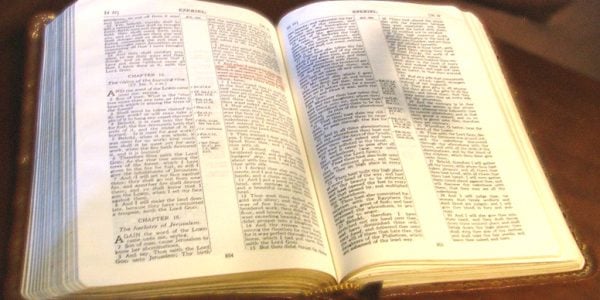
“Bible with Cross Shadow,” David Campbell, Flickr C.C.
The best preparation for me to become a woketivist as an adult was growing up evangelical. In 2000, when I stumbled into radical political circles in DC, I already knew that white men were wretched sinners so there was hardly any need for theological adjustment. My “faith” was still measured by my capacity to believe hard things. It was just that the hard things were slightly different.
The hard things evangelicals believe in are things like hell, God’s wrath, the abject wickedness of every human being, the futility of the supposed progress of human civilization, and of course as the ultimate litmus test, the sinfulness of practicing homosexuality. The hard things woketivists believe in have mostly to do with the all-pervasiveness of corrupt power structures like white supremacy, patriarchy, heteronormativity, and capitalism. I’m not making any commentary on the relative validity of either of these belief systems to state simply that believing hard things is a source of social currency for both evangelicals and woketivists. If I believe things that seem un-self-serving and sacrificial, it’s costly, which is to say that I have paid something and thus deserve some kind of credit. To believe that being gay is wrong in a society that has largely accepted being gay seems costly just like naming and condemning the all-pervasiveness of white supremacy as a white person seems costly.
One thing I should clarify when I’m making this comparison is that I’m defining woketivists as progressive allies whose “wokeness” is not self-empowerment through knowledge (the actual definition of wokeness for marginalized people) but rather believing purportedly sacrificial and costly beliefs that make you a better person than those who are ignorant. What progressive ally woketivists and evangelicals have in common is that we have created “orthodoxies” that are defined by the necessity of believing hard things.
This is why for conservative evangelicals, “orthodoxy” is not about whether your beliefs conform to the doctrine of the recognized ecumenical councils of Christian history that determined the meaning of the word orthodox until very recently, but whether you believe “hard things” that prove your “faith” is sufficiently self-sacrificial (e.g. that homosexuality is a sin). For woketivists, getting your woke points requires posturing on social media with the harshest, most radical possible position on a particular issue and tearing into people who are insufficiently “woke.” Sometimes, it gets confusing like with Syria. Is it more radical to be anti-interventionist or to support overthrowing the fascist dictator of Syria?
In any case, I think there’s a valid place for both wokeness and Christian orthodoxy. The problem is when they are ends unto themselves. “Wokeness” as social currency for the sake of personal branding is toxic; being aware of one’s social position within systemic power structures for the sake of more effective solidarity is indispensable. Similarly, a Christian “orthodoxy” whose boundaries are defined by the need to have “hard beliefs” that feel costly enough to earn salvation is toxic and actually heretical; true Christian orthodoxy is that range of belief about God that best prepares a person’s heart to receive the gift of faith. But people who are completely ignorant about social systems can intuitively act with perfect solidarity simply because of their humility and compassion in the same way that Christians with un-orthodox beliefs can have a real faith in God that is rich and beautiful.
Christians who actually have the gift of faith do not need to bastardize orthodoxy into a set of hard beliefs they can use as currency. Politically conscious people who are most concerned about how to best live in solidarity with marginalized people do not need to perform their wokeness to build their brand and score points. Now this isn’t to say that it’s invalid to debate theological orthodoxy or to write provocative social critiques on social media. We just need to be self-reflective about what we’re doing. If we’re trying to earn points with costly beliefs, we’re going to come across differently than if we’re genuinely seeking the truth or trying to educate others for the sake of love and solidarity.
The irony is that the exhibitionist “costliness” of woketivism and faux “orthodoxy” is actually a whole lot easier than the lived sacrifice of having real solidarity relationships or practicing Christian discipleship. In a social media age in which people escape physical bodily existence by hiding in their virtual words, it makes sense that faith has been defined as believing hard things. Much better to pursue a life of embodied solidarity and a faith that is lived discipleship.
Check out my book How Jesus Saves the World From Us!
Please support my campus ministry NOLA Wesley as a monthly patron or one-time donor!
Previous Post
April 3, 2018
When Martyrs' Legacies Are Whitewashed and Coopted
Next Post

April 12, 2018 Why I'm Not Freaking Out About the Methodist Apocalypse
Browse Our Archives
Select a Category Advent Beauty Will Save the World Bible Big Picture: Ephesians Bloggers Book Christian salvation and the Beautitudes Culture Daily Office Danceable Homiletics Deadly Sins Deep Roots: Genesis Devotions Dominican Republic May 2011 El Principio Misericordia (The Mercy Principle) Five verses God tattooed on my heart Fundraising FutureGospel Good Biblical Words Henri Nouwen Interview Jennings' Christian Imagination Jesus inside the beltway Jesus Is My Candidate Jesus vs the Pharisees Jesus vs. Plato Journey to Eternity Looking Back on 2012 Love Actually Monday Merton Monday Merton Music Occupy the manger On Earth As It Is In Heaven Original Sin Podcast Poetry Politics Prayer Psalm 119 Radical Jesus 101 Reviews Sermon on the Mount Sermons Spanish Bible study Special Series Spiritual but not religious Synchroblog Theology Things that made me think Thomas a Kempis Ugliness Into Beauty Uncategorized Viaje Dominicano 2013 Walking in the Valley (Lent) Welcome: It's More than a Mat Wild Goose 2013 Wrestling
Select a Month March 2022 January 2022 December 2021 September 2021 April 2021 September 2020 August 2020 July 2020 June 2020 May 2020 April 2020 March 2020 February 2020 January 2020 December 2019 November 2019 October 2019 September 2019 August 2019 June 2019 May 2019 April 2019 March 2019 February 2019 January 2019 December 2018 November 2018 October 2018 September 2018 August 2018 July 2018 June 2018 May 2018 April 2018 March 2018 February 2018 January 2018 December 2017 November 2017 October 2017 September 2017 August 2017 July 2017 June 2017 May 2017 April 2017 March 2017 February 2017 January 2017 December 2016 November 2016 October 2016 September 2016 August 2016 July 2016 June 2016 May 2016 April 2016 March 2016 February 2016 January 2016 December 2015 November 2015 October 2015 September 2015 August 2015 July 2015 June 2015 May 2015 April 2015 February 2015 January 2015 December 2014 November 2014 October 2014 September 2014 August 2014 July 2014 June 2014 May 2014 April 2014 March 2014 February 2014 January 2014 December 2013 November 2013 October 2013 September 2013 August 2013 July 2013 June 2013 May 2013 April 2013 March 2013 February 2013 January 2013 December 2012 November 2012 October 2012 September 2012 August 2012 July 2012 June 2012 May 2012 April 2012 February 2012 January 2012 December 2011 November 2011 October 2011 September 2011 August 2011 July 2011 June 2011 May 2011
Follow Us!
TAKE THE
Religious Wisdom Quiz
How many years between Abraham and David?
Select your answer to see how you score.
800 years 1200 years 1000 years 600 years
Related posts from Mercy Not Sacrifice

Why True Christianity Is Anarchist

The Last Battle (A Poem About Narnia)
Babel (A Poem About Empire, Heresy, and Speaking...

The Book (A Poem About Hegemony)
TRENDING AT PATHEOS Progressive Christian

What Being a Modern-Day Apostle Means to Me
In my last column, I discussed the ins and outs of modern-day...

Did Ancient China Once Worship the God of...
Across human history, a common thread weaves through the origins of the...

Love Your Neighbor – Including Earth-Kin: Lev. 19,...
God’s command to love your neighbor means acting in an ethical and...

Lead a Church Study of “Jesus and Lao...
Guest writer Jack Thomas (The Irreverent Reverend) reflects on leading his church...

Pastoral Wisdom for Responding to Sermon Pushback
Getting sermon pushback on your social justice sermon? Learn practical, Proverbs-based strategies...

Principles for Understanding the Apostolic Ministry Today
Whenever people discover that my formal ministry title is "apostle," as in...
view all Progressive Christian blogs
Ad-Free & Subscriber Log-In Subscription Support
- About Us
- 2026 Calendar
- Videos
- Podcasts
- Library of World Religions
- Faith In Media Tracker
- Advertise With Us
- Write for Us
- Privacy Policy
- Terms of Service
- Do Not Sell My Data
- Contact Us
- Radiant Digital
- Manage Newsletter Subscriptions
- Unsubscribe From Notifications
- Sitemap
Copyright 2008-2026, Patheos. All rights reserved.
Subscription Support Ad-Free & Subscriber Log-In
Follow Patheos