
BuddhistCatholicContemplativeEvangelicalGeneral ChristianHinduJewishLatter-day SaintMuslimNew VisionsProgressive Christian
Beliefs
- Buddhist
- Catholic
- Contemplative
- Evangelical
- General Christian
- Hindu
- Jewish
- Latter-day Saint
- More Voices
- Muslim
- New Visions
- Pagan
- Progressive Christian
Topics
- Religion News
- Food and Religion
- Sports and Religion
- Religious Art
- Religious Music and Entertainment
- Religious Events
- History and Religion
- Style and Religion
- Politics and Religion
- Women in Religion
- Recreation Outdoors and Religion
- Business Finance and Religion
- Careers Workplace and Religion
- Education and Religion
- Family Parenting and Religion
- Health Fitness and Religion
- Home and Religion
- Relationships and Religion
- Technology and Religion
- Travel and Religion
Columnists
- Buddhist Columnists
- Business Finance and Religion Columnists
- Careers Workplace and Religion Columnists
- Catholic Columnists
- Contemplative Columnists
- Education and Religion Columnists
- Evangelists Columnists
- Family Parenting and Religion Columnists
- General Christian Columnists
- Health Fitness and Religion Columnists
- Hindu Columnists
- History and Religion Columnists
- Home and Religion Columnists
- Jewish Columnists
- More Voices Columnists
- Latter Day Columnists
- Muslim Columnists
- New Visions Columnists
- Nonreligious Columnists
- Pagan Columnists
- Politics and Religion Columnists
- Progressive Columnists
- Recreation Outdoors and Religion Columnists
- Relationships and Religion Columnists
- Religion News Columnists
- Religious Art Columnists
- Religious Events Columnists
- Religious Music and Entertainment Columnists
- Sports and Religion Columnists
- Style and Religion Columnists
- Technology and Religion Columnists
- Travel and Religion Columnists
- Women in Religion Columnists
Resource Library
- 2026 Calendar
- Library of World Religions
- The 100 Most Holy Places on Earth
- Patheos Answers
- Podcasts
- Videos
- Faith Leaders Database
- Anglican Episcopalian
- Bahai
- Baptist
- Buddhism
- Christianity
- Confucianism
- Eastern Orthodoxy
- Hinduism
- Holiness and Pentecostal
- ISKCON
- Islam
- Judaism
- Lutheran
- Methodist
- The Church of Jesus Christ of Latter-day Saints
- New Age
- Paganism
- Presbytarian and Reformed
- Protestantism
- Religion Behind the Scenes
- Roman Catholic
- Scientology
- Shia Islam
- Sikhism
- Sufism
- Sunni Islam
- Taoism
- Zen
- See all religions
Research Tools
 Ad-Free & Subscriber Log-In Subscription Support
Ad-Free & Subscriber Log-In Subscription Support
Follow Patheos 

- Trending:
- Forgiveness
- |
- Marriage
- |
- Consciousness
- |
- Death Penalty
- |
- Election
- |
- Halloween
 Mercy Not Sacrifice
-
More
- Home
- Progressive Christian
- Four Essential Both/Ands of Jesus’ Cross
Four Essential Both/Ands of Jesus’ Cross
Last updated on: March 30, 2018 at 12:06 pm by Morgan Guyton
Four Essential Both/Ands of Jesus’ Cross 2018-03-30T12:06:11-05:00 Morgan Guyton
Patheos Explore the world's faith through different perspectives on religion and spirituality! Patheos has the views of the prevalent religions and spiritualities of the world.
Jesus’ cross is hard to talk about. It’s an impossibly awkward, illogical mystery. It’s very easy to oversimplify it and get it wrong. So here are some both/ands that I think are essential to how we think about the cross as we ponder it on this Good Friday.
1. Jesus’ cross is both a crime against God and part of God’s plan
When we turn Jesus’ cross into a simple math equation by which God resolves the problem of sin, we erase the most important historical fact about it. Israel’s true messiah was condemned to death by its religious authorities and then executed by the Roman Empire. The first sermon about the cross did not exhort its listeners to accept Jesus as their personal Lord and savior to get into heaven. The punchline of the original sermon about the cross is what Peter says in Acts 2:36: “Therefore let all Israel be assured of this: God has made this Jesus, whom you crucified, both Lord and Messiah.”
In other words, God’s plan is not simply to kill off his son to “pay for” sin. God’s plan is to subvert the sinful plans of people who thought they knew God better than anyone else in order to undermine their power and sabotage the stronghold of sin in the world. It’s very important to understand God’s role in the cross as subversive. Too many Christians are so intent on affirming God’s sovereignty that they erase the subversive aspect of the cross, which makes God into the Caesar who straightforwardly approves everything that is done to Jesus as a way of expressing his wrath against sin. A straightforward Caesar God is much easier to make it into a self-justifying imperial puppet than a God whose plan exploits and sabotages Caesar’s way of doing things.
2. Jesus’ cross both vindicates victims and justifies sinners
To me, the core human need that Christian atonement addresses is the need to be liberated from the ruthless prison of my self-justification. I cannot grow spiritually if I am always trying to prove myself right. I need atonement because it needs to be safe for me to be openly wrong, which requires my placement in a community of people who expect to be wrong and understand themselves primarily as redeemed sinners. That’s completely different than being part of a community of people who see themselves as “basically okay.” Basically okay people cannot be proactively merciful and vulnerable the way that redeemed sinners can.
The other side of the cross is just as important. Victims of sin need Jesus’ solidarity. They need to know that God sees them when they are crucified and that Jesus has been crucified with them. This is the side of the cross that is usually erased in Eurocentric Christian theology and indeed it doesn’t have a lot of scriptural support. But marginalized people experience Jesus’ solidarity intuitively. James Cone makes this point brilliantly in The Cross and the Lynching Tree.
I don’t just need Jesus’ solidarity as a victim and his atonement as a sinner. I need to see Jesus’ solidarity with the victims of my sin. I need to see that I have crucified him with my sins against them. Likewise I need to see Jesus’ atonement of those who have victimized me. Only Jesus has the authority to take my hand in one of his nail-scarred hands and ask me to make peace with someone who has sinned against me.
3. Jesus’ cross defeats both individual and systemic sin
Often conversations about Jesus’ cross either focus on how it addresses the sin of generic individuals (the personal morality gospel) or how it addresses systemic sin (the social justice gospel). There’s no reason for this bifurcation. The cross destroys sin on a cosmic level by conquering the power of imperial terroristic violence with the power of self-sacrificial love. The cross destroys sin on an individual level by giving me a reason why I can confess my sin and ask God’s deliverance from it.
4. Jesus’ cross is both a completed deed and an invitation to be crucified with him
On the one hand, it’s important to understand Jesus’ sacrifice as entirely sufficient for my justification as a sinner. On the other hand, Jesus does define discipleship as taking up my cross to follow him. The apostle Paul describes the goal of Christian salvation as coming to a state of being in which I have been crucified with Christ and it is no longer I who live, but Christ who lives within me. When we put together the theology of the New Testament, we see that atonement is not just substitutionary; it’s also participatory. Jesus’ cross is not just a gift I receive; it’s also something I’m invited to join.
Previous Post

February 14, 2018
Sidewalk Ashes: An Invitation to Be Problematic For a Day
Next Post
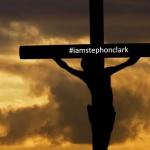
March 31, 2018 Unerasing the Pueblo Crucificado
Browse Our Archives
Select a Category Advent Beauty Will Save the World Bible Big Picture: Ephesians Bloggers Book Christian salvation and the Beautitudes Culture Daily Office Danceable Homiletics Deadly Sins Deep Roots: Genesis Devotions Dominican Republic May 2011 El Principio Misericordia (The Mercy Principle) Five verses God tattooed on my heart Fundraising FutureGospel Good Biblical Words Henri Nouwen Interview Jennings' Christian Imagination Jesus inside the beltway Jesus Is My Candidate Jesus vs the Pharisees Jesus vs. Plato Journey to Eternity Looking Back on 2012 Love Actually Monday Merton Monday Merton Music Occupy the manger On Earth As It Is In Heaven Original Sin Podcast Poetry Politics Prayer Psalm 119 Radical Jesus 101 Reviews Sermon on the Mount Sermons Spanish Bible study Special Series Spiritual but not religious Synchroblog Theology Things that made me think Thomas a Kempis Ugliness Into Beauty Uncategorized Viaje Dominicano 2013 Walking in the Valley (Lent) Welcome: It's More than a Mat Wild Goose 2013 Wrestling
Select a Month March 2022 January 2022 December 2021 September 2021 April 2021 September 2020 August 2020 July 2020 June 2020 May 2020 April 2020 March 2020 February 2020 January 2020 December 2019 November 2019 October 2019 September 2019 August 2019 June 2019 May 2019 April 2019 March 2019 February 2019 January 2019 December 2018 November 2018 October 2018 September 2018 August 2018 July 2018 June 2018 May 2018 April 2018 March 2018 February 2018 January 2018 December 2017 November 2017 October 2017 September 2017 August 2017 July 2017 June 2017 May 2017 April 2017 March 2017 February 2017 January 2017 December 2016 November 2016 October 2016 September 2016 August 2016 July 2016 June 2016 May 2016 April 2016 March 2016 February 2016 January 2016 December 2015 November 2015 October 2015 September 2015 August 2015 July 2015 June 2015 May 2015 April 2015 February 2015 January 2015 December 2014 November 2014 October 2014 September 2014 August 2014 July 2014 June 2014 May 2014 April 2014 March 2014 February 2014 January 2014 December 2013 November 2013 October 2013 September 2013 August 2013 July 2013 June 2013 May 2013 April 2013 March 2013 February 2013 January 2013 December 2012 November 2012 October 2012 September 2012 August 2012 July 2012 June 2012 May 2012 April 2012 February 2012 January 2012 December 2011 November 2011 October 2011 September 2011 August 2011 July 2011 June 2011 May 2011
Follow Us!
TAKE THE
Religious Wisdom Quiz
Who was the strongest man mentioned in the Bible?
Select your answer to see how you score.
Samson Saul David Goliath
Related posts from Mercy Not Sacrifice


When God's A Cop, Every Cop Is God


"All People Are Holy": The Theology Of Alexandria...
TRENDING AT PATHEOS Progressive Christian

What Being a Modern-Day Apostle Means to Me
In my last column, I discussed the ins and outs of modern-day...

Did Ancient China Once Worship the God of...
Across human history, a common thread weaves through the origins of the...

Love Your Neighbor – Including Earth-Kin: Lev. 19,...
God’s command to love your neighbor means acting in an ethical and...

Lead a Church Study of “Jesus and Lao...
Guest writer Jack Thomas (The Irreverent Reverend) reflects on leading his church...

Pastoral Wisdom for Responding to Sermon Pushback
Getting sermon pushback on your social justice sermon? Learn practical, Proverbs-based strategies...

Principles for Understanding the Apostolic Ministry Today
Whenever people discover that my formal ministry title is "apostle," as in...
view all Progressive Christian blogs
Ad-Free & Subscriber Log-In Subscription Support
- About Us
- 2026 Calendar
- Videos
- Podcasts
- Library of World Religions
- Faith In Media Tracker
- Advertise With Us
- Write for Us
- Privacy Policy
- Terms of Service
- Do Not Sell My Data
- Contact Us
- Radiant Digital
- Manage Newsletter Subscriptions
- Unsubscribe From Notifications
- Sitemap
Copyright 2008-2026, Patheos. All rights reserved.
Subscription Support Ad-Free & Subscriber Log-In
Follow Patheos