
BuddhistCatholicContemplativeEvangelicalGeneral ChristianHinduJewishLatter-day SaintMuslimNew VisionsProgressive Christian
Beliefs
- Buddhist
- Catholic
- Contemplative
- Evangelical
- General Christian
- Hindu
- Jewish
- Latter-day Saint
- More Voices
- Muslim
- New Visions
- Pagan
- Progressive Christian
Topics
- Religion News
- Food and Religion
- Sports and Religion
- Religious Art
- Religious Music and Entertainment
- Religious Events
- History and Religion
- Style and Religion
- Politics and Religion
- Women in Religion
- Recreation Outdoors and Religion
- Business Finance and Religion
- Careers Workplace and Religion
- Education and Religion
- Family Parenting and Religion
- Health Fitness and Religion
- Home and Religion
- Relationships and Religion
- Technology and Religion
- Travel and Religion
Columnists
- Buddhist Columnists
- Business Finance and Religion Columnists
- Careers Workplace and Religion Columnists
- Catholic Columnists
- Contemplative Columnists
- Education and Religion Columnists
- Evangelists Columnists
- Family Parenting and Religion Columnists
- General Christian Columnists
- Health Fitness and Religion Columnists
- Hindu Columnists
- History and Religion Columnists
- Home and Religion Columnists
- Jewish Columnists
- More Voices Columnists
- Latter Day Columnists
- Muslim Columnists
- New Visions Columnists
- Nonreligious Columnists
- Pagan Columnists
- Politics and Religion Columnists
- Progressive Columnists
- Recreation Outdoors and Religion Columnists
- Relationships and Religion Columnists
- Religion News Columnists
- Religious Art Columnists
- Religious Events Columnists
- Religious Music and Entertainment Columnists
- Sports and Religion Columnists
- Style and Religion Columnists
- Technology and Religion Columnists
- Travel and Religion Columnists
- Women in Religion Columnists
Resource Library
- 2026 Calendar
- Library of World Religions
- The 100 Most Holy Places on Earth
- Patheos Answers
- Podcasts
- Videos
- Faith Leaders Database
- Anglican Episcopalian
- Bahai
- Baptist
- Buddhism
- Christianity
- Confucianism
- Eastern Orthodoxy
- Hinduism
- Holiness and Pentecostal
- ISKCON
- Islam
- Judaism
- Lutheran
- Methodist
- The Church of Jesus Christ of Latter-day Saints
- New Age
- Paganism
- Presbytarian and Reformed
- Protestantism
- Religion Behind the Scenes
- Roman Catholic
- Scientology
- Shia Islam
- Sikhism
- Sufism
- Sunni Islam
- Taoism
- Zen
- See all religions
Research Tools
 Ad-Free & Subscriber Log-In Subscription Support
Follow Patheos 

- Trending:
- Advent
- |
- Forgiveness
- |
- Thanksgiving
- |
- Election
- |
- Seasonal Holidays
- |
- Marriage
 Mercy Not Sacrifice
-
More
- Home
- Progressive Christian
- How Can We Talk Forgiveness in the Age of #MeToo?
How Can We Talk Forgiveness in the Age of #MeToo?
Last updated on: January 17, 2018 at 8:48 am by Morgan Guyton
How Can We Talk Forgiveness in the Age of #MeToo? 2018-01-17T08:48:33-05:00 Morgan Guyton
Patheos Explore the world's faith through different perspectives on religion and spirituality! Patheos has the views of the prevalent religions and spiritualities of the world.
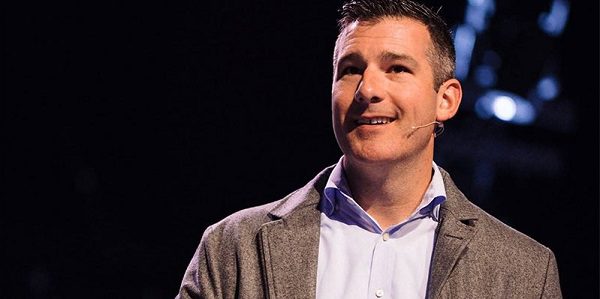
This Sunday I will preach the kickoff sermon of the spring semester at my campus ministry. After meeting with our worship and spiritual formation student leaders, we determined that forgiveness was going to be the message topic. So I’ve started wrestling with how to talk about forgiveness And all I can think about is the 20 minute standing ovation that Memphis evangelical megachurch pastor Andy Savage received after admitting to a “sexual incident” (forced oral sex) with a youth when he was a youth pastor two decades prior.
Andy Savage’s standing ovation is a good snapshot of the evangelical theology of forgiveness. We love redemption stories. We expect humanity to be totally depraved. Horrendously wicked sin is not supposed to scandalize us, as long as it’s in the past (and ideally pre-conversion). We teach that Christians become entirely different, utterly discontinuous people when they’re saved. We don’t like the idea that people always live under the shadow of their past mistakes because they’re new creations; the old is supposed to be gone. Of course it’s a bit of a problem that Savage was a Christian youth pastor and not a “pre-saved” heathen when his sin occurred but that just means that he actually got saved after the incident happened, according to the official way it’s supposed to work.
I understand the ethos of the people giving that standing ovation. They wanted to make it a good redemption story with a happy ending for a pastor they loved. They weren’t thinking about the discrepancy between Savage’s vague account of an “incident” and Jules Woodson’s testimony about being driven to an abandoned location and ordered to perform oral sex on her youth pastor. They presumably didn’t understand that the “biblical counsel” Savage claimed to have sought involved his superiors refusing to remove him from leadership until the pressure got too intense and Savage subsequently transitioning into a new church job four months later. They couldn’t have been contemplating the way that Savage has meticulously managed the narrative and framed it as a violation of “his personal purity standards” and not in any way a crime which would upend his life and career path.
There’s a theological reason that all of these details can be swept aside by a standing ovation. In the evangelical account of forgiveness, Jesus’ sacrifice on the cross erases past sin. Jesus’ blood erases not only the “incident” itself, but all of Savage’s attempts to rationalize and minimize it. It erases any inappropriateness in the responses of his supervisors to his sin. It erases everything except for Jules’ refusal to be “reconciled” to Andy Savage according to his terms. For evangelicals, Jesus’ penal substitution is the same thing as Donald Trump’s pardon pen. It erases all culpability, all accountability, all responsibility for processing, growth, reparation, and reconciliation. This is because evangelical atonement is “objective,” not “subjective.” It’s about satisfying God’s wrath against sin, not about giving a Christian believer the courage to face the evil he’s done with integrity.
In the evangelical nihilistic understanding of sin, what Andy Savage did is no more blameworthy than whatever sins his victim committed in her life (which is why Savage’s senior pastor prayed for forgiveness for Jules). Both Andy and Jules deserve to be tortured forever in hell, and they will only get out of it if they’ve demonstrated their “faith” earnestly enough for God to move them from the “no” column to the “yes” column in the Book of Life. This means that if Andy’s sin has caused Jules to reject Christianity, then he goes to heaven and she goes to hell. His theology allows him to offer publicly with complete sincerity to sit down with Jules and pray with her for her sin of not forgiving him as though he’s the magnanimous one and she’s the one stubbornly resisting the will of God. What’s maddening is that he probably isn’t inwardly tortured because he’s done everything his theology prescribes for him to do.
It’s not just that evangelical theology is patriarchal and creates an unhealthy understanding of sex that lacks any concept of consent. It’s not just that Andy Savage is a complete hypocrite for preaching a sermon series on sexual puritanism while refusing to face the full gravity of the crime he committed against Jules Woodson. The standing ovation in Memphis is a much more fundamental theological failure than either of those points.
Forgiveness is the core of Christian spiritual life. That’s why my student leaders were insistent that we start with forgiveness in our Epiphany season sermon series on the gifts Jesus has to offer. But when forgiveness is made into the erasure of sin and the need to maintain a superficial feel-good narrative in order to keep a community positive, then the one powerful antidote forgiveness is supposed to offer has been completely sabotaged.
Jesus doesn’t erase our sin; he redeems our sin. The difference between those two verbs is everything. Jesus’ atonement is supposed to make it possible for us to face the truth about our lives without shame and embrace whatever reparations or consequences our mistakes require without fear. The only way this makes any sense theologically is if we understand the “payment” of our sin’s debt to be something Jesus does to win our trust as perpetrators and victims of sin, not to make an impersonal, one-size-fits-all transaction with his Father’s heavenly ledger book. A strictly objective atonement theology sabotages the possibility of restorative justice by making God and the sinner the only parties in a heavenly courtroom with no plaintiff. When every sin is nihilistically wicked to the point of requiring an absolute penalty of eternal conscious torment, the victims of sin are completely erased from any resolution of sin. The universe becomes a solipsistic reality composed of the sinner and God.
So what if forgiveness is about redemption rather than erasure? What if Jesus on the cross is not an abstract divine credit card for a heavenly ledger book in the appearance of a man, but an actual living, suffering human being whose wounds strangely become the source of healing for the nations? Jesus does say as he’s being crucified, “Forgive them, Father, for they know not what they do.” That’s true of all of us in all our sins. Andy Savage had no idea what he was doing to Jules Woodson. In accordance with the evangelical sexual ethics he had learned, he understood his actions entirely in terms of his “personal purity standards.” He was remorseful immediately (according to both of their stories), not for causing tremendous harm to Jules but for violating God’s demand for purity and leading Jules into doing something “impure” with him.
So what does it mean to say “forgive them for they know what they do”? Does it mean that because sinners didn’t know what they were doing, the harm they caused doesn’t really exist? Does intention determine culpability? What if forgiving someone for having done evil without understanding what they were doing involves helping them face the evil that they did so that they don’t carry unaddressed guilt in the bottom of their souls for the rest of their existence? What if that unaddressed guilt is the eternal conscious torment of hell from which we need to be saved? What if the standing ovation Andy Savage received is the eternal conscious torment of his personal hell? All I know is I do not want to stand before the One who is absolute truth with unaddressed guilt, because the kinder that One is to me, the more that kindness would be eternal conscious torment if my guilt is unaddressed.
Jesus didn’t die to give us masks of justification to wear and cause the elephants in the rooms of our communities to multiply and suffocate us. Jesus died to heal us. The justification of his blood doesn’t mean “The evil you did doesn’t matter.” It means, “Put your guilt on my cross so that you can focus on the healing that needs to happen.” What we have to understand is that the healing of forgiveness is a slow process in which the victim must be completely empowered and the perpetrator must be completely deferential. It’s not healing to say, “Let’s talk this out and be done with it so I can stop feeling guilty.”
Sometimes when I hurt somebody, healing requires that I disappear from that person’s life and let others be their healer. That’s really hard to do. Healing will absolutely not happen as long as the perpetrator is in control of the process. The pain of unresolved conflict is a critically important part of the healing process for the perpetrator. I’m dealing with that right now in a relationship where the person who is mad at me has refused to accept my apology or even acknowledge my attempt to make one. It’s quite painful and it seems unfair (being a completely different type of situation than Andy Savage’s situation), but God is using it to help me grow. Repentance is short-circuited by a theology of instantaneous absolution and nihilistic whataboutism.
To try to force forgiveness is to play God in the most despicable way. It is blasphemy and sabotage of the real process that needs to occur. True forgiveness is always a gift from God. I can say “I forgive you” to someone else if I’m a victim of their sin, but the actual relief of healing the wound they made is something I receive from God, not something I can will for myself. Likewise when I hear “I forgive you” from someone I have sinned against, the actual internal release from my guilt is a gift I have to receive from God. Forgiveness is long, slow work that God does on our hearts as victims and perpetrators of sin. It’s not a proclamation that demands us to avert our eyes from the truth of the past, though proclamations can be part of the process.
There’s so much more to be said, but I’m limited in time. The question asked by true forgiveness is not: When can we move on and pretend like none of this ever happened? True forgiveness asks: Do you want to be healed? Jesus invites all of us, who have been victims and perpetrators of sin in varying, complicated, and messy ways throughout our lives, to be healed by his wounds and to become wounded healers alongside him. If Christians become wounded healers rather than self-alienated erasers of truth, then we can be the gift to the world that Christ intended.
Check out my book How Jesus Saves the World From Us!
This blog is an integrated part of my ministry (e.g. this blog post exists because of the sermon I will be preaching on Sunday). If you have benefited from reading my blog, then please support NOLA Wesley as a one-time donor or monthly patron!
Previous Post

January 9, 2018
Doubt and Neo-Calvinist Psychology
Next Post

January 16, 2018 Can Player Culture Get Canceled Forever?
Browse Our Archives
Select a Category Advent Beauty Will Save the World Bible Big Picture: Ephesians Bloggers Book Christian salvation and the Beautitudes Culture Daily Office Danceable Homiletics Deadly Sins Deep Roots: Genesis Devotions Dominican Republic May 2011 El Principio Misericordia (The Mercy Principle) Five verses God tattooed on my heart Fundraising FutureGospel Good Biblical Words Henri Nouwen Interview Jennings' Christian Imagination Jesus inside the beltway Jesus Is My Candidate Jesus vs the Pharisees Jesus vs. Plato Journey to Eternity Looking Back on 2012 Love Actually Monday Merton Monday Merton Music Occupy the manger On Earth As It Is In Heaven Original Sin Podcast Poetry Politics Prayer Psalm 119 Radical Jesus 101 Reviews Sermon on the Mount Sermons Spanish Bible study Special Series Spiritual but not religious Synchroblog Theology Things that made me think Thomas a Kempis Ugliness Into Beauty Uncategorized Viaje Dominicano 2013 Walking in the Valley (Lent) Welcome: It's More than a Mat Wild Goose 2013 Wrestling
Select a Month March 2022 January 2022 December 2021 September 2021 April 2021 September 2020 August 2020 July 2020 June 2020 May 2020 April 2020 March 2020 February 2020 January 2020 December 2019 November 2019 October 2019 September 2019 August 2019 June 2019 May 2019 April 2019 March 2019 February 2019 January 2019 December 2018 November 2018 October 2018 September 2018 August 2018 July 2018 June 2018 May 2018 April 2018 March 2018 February 2018 January 2018 December 2017 November 2017 October 2017 September 2017 August 2017 July 2017 June 2017 May 2017 April 2017 March 2017 February 2017 January 2017 December 2016 November 2016 October 2016 September 2016 August 2016 July 2016 June 2016 May 2016 April 2016 March 2016 February 2016 January 2016 December 2015 November 2015 October 2015 September 2015 August 2015 July 2015 June 2015 May 2015 April 2015 February 2015 January 2015 December 2014 November 2014 October 2014 September 2014 August 2014 July 2014 June 2014 May 2014 April 2014 March 2014 February 2014 January 2014 December 2013 November 2013 October 2013 September 2013 August 2013 July 2013 June 2013 May 2013 April 2013 March 2013 February 2013 January 2013 December 2012 November 2012 October 2012 September 2012 August 2012 July 2012 June 2012 May 2012 April 2012 February 2012 January 2012 December 2011 November 2011 October 2011 September 2011 August 2011 July 2011 June 2011 May 2011
Follow Us!
TAKE THE
Religious Wisdom Quiz
What is the main Christian group in Ethiopia called?
Select your answer to see how you score.
Pentecostal Assemblies of God Ethiopian Orthodox Tewahedo Church Baptist
Related posts from Mercy Not Sacrifice

When God's A Cop, Every Cop Is God

"All People Are Holy": The Theology Of Alexandria...

Why Kevin DeYoung's "Culture War Strategy" Fails
TRENDING AT PATHEOS Progressive Christian

Let Matthew 25 Guide You to a Greater...
With the crisp feel of fall in the air, our minds quickly...

Can a Chatbot Touch Your Soul?
Can a chatbot offer genuine spiritual counsel? One conversation brought me to...

Religion and Politics: How Should We Then Live?
Two cultural axioms get repeated in polite company. Don't mix religion and...

7 Things We Get Wrong About Giving Thanks
It's a time of year when many of us turn to the...

Uncaging Truth: Spirituality Beyond Institutions
The Lost Connection: Why True Spirituality, Not Religion, Is the Key to...

Christ the King? Maybe We've Misunderstood the Crown
What do we mean when we say that Jesus is King? What...
view all Progressive Christian blogs
Ad-Free & Subscriber Log-In Subscription Support
- About Us
- 2026 Calendar
- Videos
- Podcasts
- Library of World Religions
- Faith In Media Tracker
- Advertise With Us
- Write for Us
- Privacy Policy
- Terms of Service
- Do Not Sell My Data
- Contact Us
- Radiant Digital
- Manage Newsletter Subscriptions
- Unsubscribe From Notifications
- Sitemap
Copyright 2008-2026, Patheos, part of the Radiant Digital network of media brands. All rights reserved.
Subscription Support Ad-Free & Subscriber Log-In
Follow Patheos