
BuddhistCatholicContemplativeEvangelicalGeneral ChristianHinduJewishLatter-day SaintMuslimNew VisionsProgressive Christian
Beliefs
- Buddhist
- Catholic
- Contemplative
- Evangelical
- General Christian
- Hindu
- Jewish
- Latter-day Saint
- More Voices
- Muslim
- New Visions
- Pagan
- Progressive Christian
Topics
- Religion News
- Food and Religion
- Sports and Religion
- Religious Art
- Religious Music and Entertainment
- Religious Events
- History and Religion
- Style and Religion
- Politics and Religion
- Women in Religion
- Recreation Outdoors and Religion
- Business Finance and Religion
- Careers Workplace and Religion
- Education and Religion
- Family Parenting and Religion
- Health Fitness and Religion
- Home and Religion
- Relationships and Religion
- Technology and Religion
- Travel and Religion
Columnists
- Buddhist Columnists
- Business Finance and Religion Columnists
- Careers Workplace and Religion Columnists
- Catholic Columnists
- Contemplative Columnists
- Education and Religion Columnists
- Evangelists Columnists
- Family Parenting and Religion Columnists
- General Christian Columnists
- Health Fitness and Religion Columnists
- Hindu Columnists
- History and Religion Columnists
- Home and Religion Columnists
- Jewish Columnists
- More Voices Columnists
- Latter Day Columnists
- Muslim Columnists
- New Visions Columnists
- Nonreligious Columnists
- Pagan Columnists
- Politics and Religion Columnists
- Progressive Columnists
- Recreation Outdoors and Religion Columnists
- Relationships and Religion Columnists
- Religion News Columnists
- Religious Art Columnists
- Religious Events Columnists
- Religious Music and Entertainment Columnists
- Sports and Religion Columnists
- Style and Religion Columnists
- Technology and Religion Columnists
- Travel and Religion Columnists
- Women in Religion Columnists
Resource Library
- 2026 Calendar
- Library of World Religions
- The 100 Most Holy Places on Earth
- Patheos Answers
- Podcasts
- Videos
- Faith Leaders Database
- Anglican Episcopalian
- Bahai
- Baptist
- Buddhism
- Christianity
- Confucianism
- Eastern Orthodoxy
- Hinduism
- Holiness and Pentecostal
- ISKCON
- Islam
- Judaism
- Lutheran
- Methodist
- The Church of Jesus Christ of Latter-day Saints
- New Age
- Paganism
- Presbytarian and Reformed
- Protestantism
- Religion Behind the Scenes
- Roman Catholic
- Scientology
- Shia Islam
- Sikhism
- Sufism
- Sunni Islam
- Taoism
- Zen
- See all religions
Research Tools
 Ad-Free & Subscriber Log-In Subscription Support
Ad-Free & Subscriber Log-In Subscription Support
Follow Patheos 

- Trending:
- Forgiveness
- |
- Marriage
- |
- Consciousness
- |
- Death Penalty
- |
- Election
- |
- Halloween
 Mercy Not Sacrifice
-
More
- Home
- Progressive Christian
- Lee Wyatt’s Gospel for People Who Aren’t Guilt-Ridden
Lee Wyatt’s Gospel for People Who Aren’t Guilt-Ridden
Last updated on: January 4, 2018 at 2:46 pm by Morgan Guyton
Lee Wyatt’s Gospel for People Who Aren’t Guilt-Ridden 2018-01-04T14:46:35-05:00 Morgan Guyton
Patheos Explore the world's faith through different perspectives on religion and spirituality! Patheos has the views of the prevalent religions and spiritualities of the world.
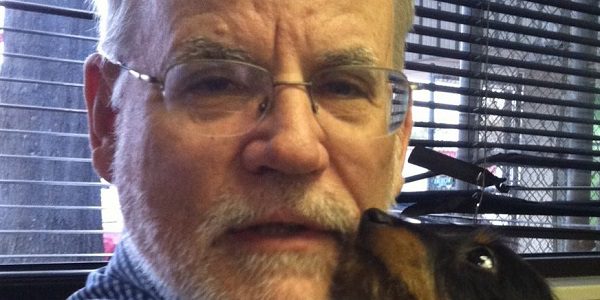
My Facebook friend Lee Wyatt has written a book called The Incredible Shrinking Gospel about the way that the gospel in American Christianity has been reduced to so much less than the gospel really is. One of the things Lee is really passionate about is reaching people who don’t feel bad about themselves which the Four Spiritual Laws gospel seems to require. Here’s what Lee has to share about his book.
MG: Where should we start?
LW: It’s titled “The Incredible Shrinking Gospel.” It’s about the truncated gospel that underwrites the western gospel of Billy Graham and the four spiritual laws. it’s in two parts. Part one is a fleshing out of an “unshrunk” gospel. After a chapter setting the scene, two follow on “gospel” and “kingdom.’ The heart of part 1 are a series of seven chapters: The Jesus Read, Creed, Need, Bleed, Seed, Feed, and Deed. Part 2 is about evangelism and with the help of Bonhoeffer I break some new ground (I think) about approaching people in their strength rather than their weaknesses. The form of the church in a new age I explore in a variety of ways.
MG: So how would you summarize the unshrunk gospel?
LW: I do in several ways in the book. Kingdom-centered (though today I would say Temple-centered, but that’s another story). about God’s purpose from the beginning to have a world of human beings with who he could share life and love as we carry out the human vocation given us in creation to be God’s royal priests. Jesus’ life, death, and resurrection are about not only reclaiming us from sin (the core of the default western gospel) but ultimately about restoring us to our primal dignity and vocation. The SHRINKING gospel stops short of that last part and unwittingly becomes what I call “The Gospel of defeated God” (that is, one who can’t fulfill his ultimate purposes and has to settle for saving some souls, for a disembodied life in a spiritual sphere (heaven).
MG: So if you were a campus minister like me and you had to get college students excited about being God’s royal priests, how would you pitch the idea to them?
LW: I’d work with vocation. College kids are trying to figure out what to do with their lives. As royal priests the vocational question gets refocused. It’s no longer our job or career path. Now its about how we live as royal priests in whatever job or career we launch o . We don’t have to worry about finding “the” place God wants us to work or we miss our calling. Our calling tis to be royal priests in whatever endeavor we decide to pursue. If there is a particular place or job wants us to do, like Moses and Paul, we may trust he will make that known to us.
MG: What does it look like to be a priest? It sounds boring and super-detail-oriented.
LW: Priests stand between God and the world mediating God’s word to the world and the world’s needs and hurts to God. It’s people-oriented and shalom-focused. Meeting human need in light of God’s passion for shalom as we see it in Jesus. Helping folks find the core and heart of their lives and breaking every boundary they encounter to do that for those around them.
MG: I like the way you’ve defined it. I thought it was just about oil and incense and wine or something. I particularly like what you said about helping people find the core and heart of their lives. Can you give an example of what that’s looked like in your experience of priesthood?
LW: As I discovered this way of seeing my life I was led out of the traditional church. The structure and ethos of the local parish church seemed to me antithetical to developing the relational infrastructure and connection to the world needed. Priests may spent their time in the temple, but for Jews the temple was the very center of the world. Spending most of my time in the church and about its business was not for me being in the center of the world in a priestly sense. SO I left that ministry to pursue writing, speaking, and living toward new forms of church in the world.
MG: That’s really interesting. So where do you find your temple today? Who joins you there? What sorts of liturgies take place?
LW: My conviction is that the neighborhood is where the church needs to be. That’s my temple I guess. We’re working to seed small; communities of folks 12-20 people in as many neighborhoods, apartment complexes, other living situations, etc. I find the best guide to all is Alan Roxburgh and his associates in the Missional Network. Their focus is on discerning what God is already doing in the neighborhood.
MG: That’s cool. I’m familiar with Alan’s work. So do you see a connection between the shrunken gospel theology and the ecclesiology of stagnant institutional-church centered Christianity? What kind of theological shift is required to generate a healthier missional ecclesiology?
LW: Shrunken gospel is individualistic (my salvation and life in heaven after death). My proposal is intrinsically communal and needs imho a thorough rethink from the ground-up. It begins with the life people share and then whatever form that life takes which is nearly infinite. infinite and indigenous. We’ve had few truly indigenous North American churches. Maybe the independent Bible church is it. But anything vital will have too break out of the shape of church as we have known it. Part 2 of my book deals with a good bit this stuff.
MG: Interesting that you talk about indigenous North American churches. Would this be in contrast to churches that are defined by 16th century Europe?
LW: Yes. What Roxburgh calls “Euro-tribal” churches.
MG: So how can white Christians throw off Euro-tribalism?
LW: I think it means trying to forget everything we think we know about church and try to rethink it in light of scripture and the dynamics, esp. racism, sexism, homophobia that seem to have us by the balls. I have a book on “What Bonhoeffer Would Say to the North American Church” that gets in all this in more detail.
MG: Let’s get into part 2 of your book where you talk about evangelism and engage some Bonhoeffer. Tell me more about “approaching people in their strength rather than their weaknesses.”
LW: Bonhoeffer despises poaching on people in their weaknesses and sins to bring the gospel to them. He wanted a gospel that could address people in their strength and successes. An understanding of idolatry as the basic human problem and a theology of the cross. People don’t have to be conspicuous “sinners” or evil people who “need’ forgiveness. the gospel addresses the strong and successful, those whose lives are going well and feel no evident need for forgiveness with a query about who or what they serve and a call to join together in seeing the world from the perspective of those who suffer.
MG: So it’s more of a message of come and join the movement.
LW: Like Jesus. He called people to come and follow. Not get forgiven. I suspect many followed him first, joining God’s kingdom movement and discovering forgiveness later. I think we need to address people more as beloved children of God to whom God offers the dignity and vocation they have forfeited rather than sinners who have failed. The gospel is about reclaiming us from sin but that’s a necessary but not sufficient expression of the gospel. Restoration to our created dignity and vocation (royal priests) is the true call of the gospel.
MG: It is interesting that Protestantism has modeled its understanding of salvation after the desperation of an anxious, ruthlessly self-critical monk who had been a Christian for a long time before he renounced works righteousness and discovered justification by faith. We’re expecting pre-converts to be in the same place as a self-flagellating Martin Luther.
LW: Yep. That’s so colored everything in American Christianity.
MG: So what does a “come and follow me” gospel have to offer people who already have a balanced, meaningful life with appropriate levels of service, fellowship, and self-care? I’ve got relationships with quite a few students who have substituted therapy, yoga, and community service for being part of a religious community.
LW: Relation to our true center. Commitment to the one “cause” that finally matters. Evangelism is about idolatry not morality or how our life is going. Rather, it is a call to claim our primal dignity and vocation as a gift from the one who created and redeemed us in Christ. That’s the offer. More of a recruiting call to service: not so much what I need as what God wants and needs from me.
Thanks so much to Lee Wyatt for this insightful interview!!! Be sure to check out his book The Incredible Shrinking Gospel!

Next Post

December 29, 2017 Sandhya Rani Jha: Transformation Is Local
Browse Our Archives
Select a Category Advent Beauty Will Save the World Bible Big Picture: Ephesians Bloggers Book Christian salvation and the Beautitudes Culture Daily Office Danceable Homiletics Deadly Sins Deep Roots: Genesis Devotions Dominican Republic May 2011 El Principio Misericordia (The Mercy Principle) Five verses God tattooed on my heart Fundraising FutureGospel Good Biblical Words Henri Nouwen Interview Jennings' Christian Imagination Jesus inside the beltway Jesus Is My Candidate Jesus vs the Pharisees Jesus vs. Plato Journey to Eternity Looking Back on 2012 Love Actually Monday Merton Monday Merton Music Occupy the manger On Earth As It Is In Heaven Original Sin Podcast Poetry Politics Prayer Psalm 119 Radical Jesus 101 Reviews Sermon on the Mount Sermons Spanish Bible study Special Series Spiritual but not religious Synchroblog Theology Things that made me think Thomas a Kempis Ugliness Into Beauty Uncategorized Viaje Dominicano 2013 Walking in the Valley (Lent) Welcome: It's More than a Mat Wild Goose 2013 Wrestling
Select a Month March 2022 January 2022 December 2021 September 2021 April 2021 September 2020 August 2020 July 2020 June 2020 May 2020 April 2020 March 2020 February 2020 January 2020 December 2019 November 2019 October 2019 September 2019 August 2019 June 2019 May 2019 April 2019 March 2019 February 2019 January 2019 December 2018 November 2018 October 2018 September 2018 August 2018 July 2018 June 2018 May 2018 April 2018 March 2018 February 2018 January 2018 December 2017 November 2017 October 2017 September 2017 August 2017 July 2017 June 2017 May 2017 April 2017 March 2017 February 2017 January 2017 December 2016 November 2016 October 2016 September 2016 August 2016 July 2016 June 2016 May 2016 April 2016 March 2016 February 2016 January 2016 December 2015 November 2015 October 2015 September 2015 August 2015 July 2015 June 2015 May 2015 April 2015 February 2015 January 2015 December 2014 November 2014 October 2014 September 2014 August 2014 July 2014 June 2014 May 2014 April 2014 March 2014 February 2014 January 2014 December 2013 November 2013 October 2013 September 2013 August 2013 July 2013 June 2013 May 2013 April 2013 March 2013 February 2013 January 2013 December 2012 November 2012 October 2012 September 2012 August 2012 July 2012 June 2012 May 2012 April 2012 February 2012 January 2012 December 2011 November 2011 October 2011 September 2011 August 2011 July 2011 June 2011 May 2011
Follow Us!
TAKE THE
Religious Wisdom Quiz
Who said "as for me and my house, we will serve the Lord"?
Select your answer to see how you score.
Peter Joshua Abraham Paul
Related posts from Mercy Not Sacrifice


When God's A Cop, Every Cop Is God


My Best Teachers Are People I Cannot Win
TRENDING AT PATHEOS Progressive Christian

What Being a Modern-Day Apostle Means to Me
In my last column, I discussed the ins and outs of modern-day...

Did Ancient China Once Worship the God of...
Across human history, a common thread weaves through the origins of the...

Love Your Neighbor – Including Earth-Kin: Lev. 19,...
God’s command to love your neighbor means acting in an ethical and...

Lead a Church Study of “Jesus and Lao...
Guest writer Jack Thomas (The Irreverent Reverend) reflects on leading his church...

Pastoral Wisdom for Responding to Sermon Pushback
Getting sermon pushback on your social justice sermon? Learn practical, Proverbs-based strategies...

Principles for Understanding the Apostolic Ministry Today
Whenever people discover that my formal ministry title is "apostle," as in...
view all Progressive Christian blogs
Ad-Free & Subscriber Log-In Subscription Support
- About Us
- 2026 Calendar
- Videos
- Podcasts
- Library of World Religions
- Faith In Media Tracker
- Advertise With Us
- Write for Us
- Privacy Policy
- Terms of Service
- Do Not Sell My Data
- Contact Us
- Radiant Digital
- Manage Newsletter Subscriptions
- Unsubscribe From Notifications
- Sitemap
Copyright 2008-2026, Patheos. All rights reserved.
Subscription Support Ad-Free & Subscriber Log-In
Follow Patheos