
BuddhistCatholicContemplativeEvangelicalGeneral ChristianHinduJewishLatter-day SaintMuslimNew VisionsProgressive Christian
Beliefs
- Buddhist
- Catholic
- Contemplative
- Evangelical
- General Christian
- Hindu
- Jewish
- Latter-day Saint
- More Voices
- Muslim
- New Visions
- Pagan
- Progressive Christian
Topics
- Religion News
- Food and Religion
- Sports and Religion
- Religious Art
- Religious Music and Entertainment
- Religious Events
- History and Religion
- Style and Religion
- Politics and Religion
- Women in Religion
- Recreation Outdoors and Religion
- Business Finance and Religion
- Careers Workplace and Religion
- Education and Religion
- Family Parenting and Religion
- Health Fitness and Religion
- Home and Religion
- Relationships and Religion
- Technology and Religion
- Travel and Religion
Columnists
- Buddhist Columnists
- Business Finance and Religion Columnists
- Careers Workplace and Religion Columnists
- Catholic Columnists
- Contemplative Columnists
- Education and Religion Columnists
- Evangelists Columnists
- Family Parenting and Religion Columnists
- General Christian Columnists
- Health Fitness and Religion Columnists
- Hindu Columnists
- History and Religion Columnists
- Home and Religion Columnists
- Jewish Columnists
- More Voices Columnists
- Latter Day Columnists
- Muslim Columnists
- New Visions Columnists
- Nonreligious Columnists
- Pagan Columnists
- Politics and Religion Columnists
- Progressive Columnists
- Recreation Outdoors and Religion Columnists
- Relationships and Religion Columnists
- Religion News Columnists
- Religious Art Columnists
- Religious Events Columnists
- Religious Music and Entertainment Columnists
- Sports and Religion Columnists
- Style and Religion Columnists
- Technology and Religion Columnists
- Travel and Religion Columnists
- Women in Religion Columnists
Resource Library
- 2026 Calendar
- Library of World Religions
- The 100 Most Holy Places on Earth
- Patheos Answers
- Podcasts
- Videos
- Faith Leaders Database
- Anglican Episcopalian
- Bahai
- Baptist
- Buddhism
- Christianity
- Confucianism
- Eastern Orthodoxy
- Hinduism
- Holiness and Pentecostal
- ISKCON
- Islam
- Judaism
- Lutheran
- Methodist
- The Church of Jesus Christ of Latter-day Saints
- New Age
- Paganism
- Presbytarian and Reformed
- Protestantism
- Religion Behind the Scenes
- Roman Catholic
- Scientology
- Shia Islam
- Sikhism
- Sufism
- Sunni Islam
- Taoism
- Zen
- See all religions
Research Tools
 Ad-Free & Subscriber Log-In Subscription Support
Ad-Free & Subscriber Log-In Subscription Support
Follow Patheos 

- Trending:
- Forgiveness
- |
- Marriage
- |
- Consciousness
- |
- Death Penalty
- |
- Election
- |
- Halloween
 Mercy Not Sacrifice
-
More
- Home
- Progressive Christian
- Why you need to read Henri Nouwen
Why you need to read Henri Nouwen
Last updated on: October 19, 2017 at 6:55 pm by Morgan Guyton
Why you need to read Henri Nouwen 2017-10-19T18:55:43-05:00 Morgan Guyton
Patheos Explore the world's faith through different perspectives on religion and spirituality! Patheos has the views of the prevalent religions and spiritualities of the world.
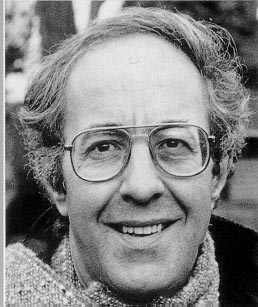
Every other summer, my family goes to visit my wife’s cousin on his ranch in Bastrop, Texas. He has a huge collection of Henri Nouwen books. This summer, I borrowed Here and Now: Living in the Spirit. I’ve been flipping through it the last few months. For some reason, last night I read a section I’d already read multiple times and it hit me powerfully. So I wanted to share some quotes from it with my reflections.
We must learn to live each day, each hour, yes, each minute as a new beginning, as a unique opportunity to make everything new. Imagine that we could live each moment as a moment pregnant with new life. Imagine that we could live each day as a day full of promises. Imagine that we could walk through the new year always listening to a voice saying to us: “I have a gift for you and can’t wait for you to see it!”
This is the kind of writing that first enchanted me when I read Nouwen’s Life of the Beloved. The ability to live each moment as a new beginning is the gift we receive from Jesus’ cross and resurrection. We are constantly being redeemed, restored, and renewed. I believe this way of living in continual renewal and imagination is what it means to have eternal life.
It is hard to live in the present. The past and the future keep harassing us. The past with guilt, the future with worries. So many things have happened in our lives about which we feel uneasy, regretful, angry, confused, or, at least, ambivalent. And all these feelings are often colored by guilt. Guilt that says: “You ought to have done something other than what you did; you ought to have said something other than what you said.” These “oughts” keep us feeling guilty about the past and prevent us from being fully present to the moment. Worse, however, than our guilt are our worries. Our worries fill our lives with “What ifs”: “What if I lose my job, what if my father does, what if there is not enough money, what if the economy goes down, what if a war breaks out?” These many “ifs” can so fill our mind that we become blind to the flowers in the garden and the smiling children on the streets, or deaf to the grateful voice of a friend.
The “oughts” and “ifs” are our greatest enemies. In the recovery community, we talk a lot about the things that bring us resentment, guilt, and anxiety. Those are the things that throw us into harmful addictive behaviors. It may sound simple but a primary goal of spiritual discipline is simply to learn how to live in the here and now.
Prayer is the discipline of the moment. When we pray, we enter into the presence of God whose name is God-with-us. To pray is to listen attentively to the One who addresses us here and now. When we dare to trust that we are never alone but that God is always with us, always cares for us, and always speaks to us, then we can gradually detach ourselves from the voices that make us guilty or anxious and thus allow ourselves to dwell in the present moment.
This blew my mind even though it’s so obvious. Prayer is the way to be the most present to the moment. To be in God’s presence is to be fully present. They are the same thing. Now some of my friends in recovery would say they call their higher power “the universe.” That’s fine if you’re able to experience the universe as a presence that is constantly embracing you and declaring your belovedness.
Listening to the voice of love requires that we direct our minds and hearts toward that voice with all our attention. How can we do that? The most fruitful way — in my experience — is to take a simple prayer, a sentence or a word, and slowly repeat it. We can use the Lord’s prayer, the Jesus Prayer, the name of Jesus, or any word that reminds us of God’s love and put it in the center of our inner room, like a candle in a dark space… This is not always a satisfying experience. Often we are so restless and so unable to find inner quietude that we can’t wait to get busy again…Still, when we remain faithful to our discipline, even if it is only ten minutes a day, we gradually come to see–by the candlelight of our prayers–that there is a space within us where God dwells and where we are invited to dwell with God.
This gave me chills, because it narrates exactly how I discovered contemplative prayer. When I first read Nouwen’s Life of the Beloved, my life was a complete trainwreck. But every night, I would take a candle, put it in the center of room, and say over and over again, “Lord, please clear a space for yourself in my heart.” I said it hundreds of times. And nothing changed. Until everything had. And I realized that God had answered my most desperate prayer. I really believe that saying prayers as mantras is very powerful. The Orthodox say the Jesus Prayer thousands of times a day. Because they understand that prayer is formational rather than transactional. It’s like digging a hole with your shoe. It takes forever, but if you’re patient and persistent, you will eventually have a very deep hole.
We often wonder what we can do for others, especially for those in great need. It is not a sign of powerlessness when we say: “We must pray for one another.” To pray for one another is, first of all, to acknowledge, in the presence of God, that we belong to each other as children of the same God. Without this acknowledgment of human solidarity, what we do for one another does not flow from who we truly are. We are brothers and sisters, not competitors or rivals. We are children of one God, not partisans of different gods. To pray, that is, to listen to the voice of the One who calls us the “beloved,” is to learn that that voice excludes no one. Where I dwell, God dwells with me and where God dwells with me I find all my sisters and brothers. And so intimacy with God and solidarity with all people are two aspects of dwelling in the present moment that can never be separated.
Our relationship with God and our relationships with each other are inseparable. It is tremendously important for whatever I do for other people to come from the right place. If I am not grounded in my belovedness through prayer, then it’s easy for my good deeds to become a substitute for my unconditional acceptance. If I’m trying to earn acceptance through my good deeds, all sorts of ugliness will come from that. If instead, I gain the insight that intimacy with God and solidarity with all people are mutually interdependent, then my actions can truly take the form of love.
Check out my book How Jesus Saves the World From Us!
Become a monthly patron of our ministry NOLA Wesley!
Previous Post

October 17, 2017
How Badly Have Traditional Christian Sexual Ethics Failed?

Browse Our Archives
Select a Category Advent Beauty Will Save the World Bible Big Picture: Ephesians Bloggers Book Christian salvation and the Beautitudes Culture Daily Office Danceable Homiletics Deadly Sins Deep Roots: Genesis Devotions Dominican Republic May 2011 El Principio Misericordia (The Mercy Principle) Five verses God tattooed on my heart Fundraising FutureGospel Good Biblical Words Henri Nouwen Interview Jennings' Christian Imagination Jesus inside the beltway Jesus Is My Candidate Jesus vs the Pharisees Jesus vs. Plato Journey to Eternity Looking Back on 2012 Love Actually Monday Merton Monday Merton Music Occupy the manger On Earth As It Is In Heaven Original Sin Podcast Poetry Politics Prayer Psalm 119 Radical Jesus 101 Reviews Sermon on the Mount Sermons Spanish Bible study Special Series Spiritual but not religious Synchroblog Theology Things that made me think Thomas a Kempis Ugliness Into Beauty Uncategorized Viaje Dominicano 2013 Walking in the Valley (Lent) Welcome: It's More than a Mat Wild Goose 2013 Wrestling
Select a Month March 2022 January 2022 December 2021 September 2021 April 2021 September 2020 August 2020 July 2020 June 2020 May 2020 April 2020 March 2020 February 2020 January 2020 December 2019 November 2019 October 2019 September 2019 August 2019 June 2019 May 2019 April 2019 March 2019 February 2019 January 2019 December 2018 November 2018 October 2018 September 2018 August 2018 July 2018 June 2018 May 2018 April 2018 March 2018 February 2018 January 2018 December 2017 November 2017 October 2017 September 2017 August 2017 July 2017 June 2017 May 2017 April 2017 March 2017 February 2017 January 2017 December 2016 November 2016 October 2016 September 2016 August 2016 July 2016 June 2016 May 2016 April 2016 March 2016 February 2016 January 2016 December 2015 November 2015 October 2015 September 2015 August 2015 July 2015 June 2015 May 2015 April 2015 February 2015 January 2015 December 2014 November 2014 October 2014 September 2014 August 2014 July 2014 June 2014 May 2014 April 2014 March 2014 February 2014 January 2014 December 2013 November 2013 October 2013 September 2013 August 2013 July 2013 June 2013 May 2013 April 2013 March 2013 February 2013 January 2013 December 2012 November 2012 October 2012 September 2012 August 2012 July 2012 June 2012 May 2012 April 2012 February 2012 January 2012 December 2011 November 2011 October 2011 September 2011 August 2011 July 2011 June 2011 May 2011
Follow Us!
TAKE THE
Religious Wisdom Quiz
Which book of the Bible contains the story of Balaam’s talking donkey?
Select your answer to see how you score.
Numbers Exodus Judges 1 Samuel
Related posts from Mercy Not Sacrifice


When God's A Cop, Every Cop Is God


Why Kevin DeYoung's "Culture War Strategy" Fails
TRENDING AT PATHEOS Progressive Christian

What Being a Modern-Day Apostle Means to Me
In my last column, I discussed the ins and outs of modern-day...

Did Ancient China Once Worship the God of...
Across human history, a common thread weaves through the origins of the...

Love Your Neighbor – Including Earth-Kin: Lev. 19,...
God’s command to love your neighbor means acting in an ethical and...

Lead a Church Study of “Jesus and Lao...
Guest writer Jack Thomas (The Irreverent Reverend) reflects on leading his church...

Pastoral Wisdom for Responding to Sermon Pushback
Getting sermon pushback on your social justice sermon? Learn practical, Proverbs-based strategies...

Principles for Understanding the Apostolic Ministry Today
Whenever people discover that my formal ministry title is "apostle," as in...
view all Progressive Christian blogs
Ad-Free & Subscriber Log-In Subscription Support
- About Us
- 2026 Calendar
- Videos
- Podcasts
- Library of World Religions
- Faith In Media Tracker
- Advertise With Us
- Write for Us
- Privacy Policy
- Terms of Service
- Do Not Sell My Data
- Contact Us
- Radiant Digital
- Manage Newsletter Subscriptions
- Unsubscribe From Notifications
- Sitemap
Copyright 2008-2026, Patheos. All rights reserved.
Subscription Support Ad-Free & Subscriber Log-In
Follow Patheos