
BuddhistCatholicContemplativeEvangelicalGeneral ChristianHinduJewishLatter-day SaintMuslimNew VisionsProgressive Christian
Beliefs
- Buddhist
- Catholic
- Contemplative
- Evangelical
- General Christian
- Hindu
- Jewish
- Latter-day Saint
- More Voices
- Muslim
- New Visions
- Pagan
- Progressive Christian
Topics
- Religion News
- Food and Religion
- Sports and Religion
- Religious Art
- Religious Music and Entertainment
- Religious Events
- History and Religion
- Style and Religion
- Politics and Religion
- Women in Religion
- Recreation Outdoors and Religion
- Business Finance and Religion
- Careers Workplace and Religion
- Education and Religion
- Family Parenting and Religion
- Health Fitness and Religion
- Home and Religion
- Relationships and Religion
- Technology and Religion
- Travel and Religion
Columnists
- Buddhist Columnists
- Business Finance and Religion Columnists
- Careers Workplace and Religion Columnists
- Catholic Columnists
- Contemplative Columnists
- Education and Religion Columnists
- Evangelists Columnists
- Family Parenting and Religion Columnists
- General Christian Columnists
- Health Fitness and Religion Columnists
- Hindu Columnists
- History and Religion Columnists
- Home and Religion Columnists
- Jewish Columnists
- More Voices Columnists
- Latter Day Columnists
- Muslim Columnists
- New Visions Columnists
- Nonreligious Columnists
- Pagan Columnists
- Politics and Religion Columnists
- Progressive Columnists
- Recreation Outdoors and Religion Columnists
- Relationships and Religion Columnists
- Religion News Columnists
- Religious Art Columnists
- Religious Events Columnists
- Religious Music and Entertainment Columnists
- Sports and Religion Columnists
- Style and Religion Columnists
- Technology and Religion Columnists
- Travel and Religion Columnists
- Women in Religion Columnists
Resource Library
- 2026 Calendar
- Library of World Religions
- The 100 Most Holy Places on Earth
- Patheos Answers
- Podcasts
- Videos
- Faith Leaders Database
- Anglican Episcopalian
- Bahai
- Baptist
- Buddhism
- Christianity
- Confucianism
- Eastern Orthodoxy
- Hinduism
- Holiness and Pentecostal
- ISKCON
- Islam
- Judaism
- Lutheran
- Methodist
- The Church of Jesus Christ of Latter-day Saints
- New Age
- Paganism
- Presbytarian and Reformed
- Protestantism
- Religion Behind the Scenes
- Roman Catholic
- Scientology
- Shia Islam
- Sikhism
- Sufism
- Sunni Islam
- Taoism
- Zen
- See all religions
Research Tools
 Ad-Free & Subscriber Log-In Subscription Support
Ad-Free & Subscriber Log-In Subscription Support
Follow Patheos 

- Trending:
- Forgiveness
- |
- Marriage
- |
- Consciousness
- |
- Death Penalty
- |
- Election
- |
- Halloween
 Mercy Not Sacrifice
-
More
- Home
- Progressive Christian
- The 12 scriptures that inspired my book
The 12 scriptures that inspired my book
Last updated on: April 15, 2016 at 11:45 pm by Morgan Guyton
The 12 scriptures that inspired my book 2016-04-15T23:45:00-05:00 Morgan Guyton
Patheos Explore the world's faith through different perspectives on religion and spirituality! Patheos has the views of the prevalent religions and spiritualities of the world.

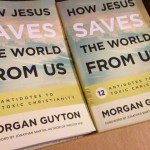
When I was a Southern Baptist, we used to believe that Methodists didn’t read the Bible at all. What may be shocking to some evangelicals is to discover that even progressive, LGBT-affirming Methodists actually read the Bible and develop most of our ideas through years of rumination on particular scriptures. There were way more than 12 scriptures that influenced my book How Jesus Saves the World From Us. But these 12 verses seem to link up the best with the themes of each chapter.
1. “Whoever does not receive the kingdom of God like a child will never enter it.” Mark 10:15 (#WorshipNotPerformance)
I’ve seen people create all kinds of contrived interpretations for this verse. Like it means we need to be humble because children are humble (really?). Or it means we need to be obedient because children are obedient (you’ve never met my children!). As I’ve pondered this verse over many years, the best understanding I have is that children know how to worship in a way that adults have forgotten because children do not yet have agendas and anxieties. Children can delight in the world because they haven’t yet discovered that they’re supposed to be performing and obsessing about their image at all times. To discover the warmth of God’s loving gaze means becoming like a child again in the ways that children are safe until they lose their innocence. Christians would be much less toxic if we could become like children again.
2. “Go and find out what this means, ‘I desire mercy not sacrifice.'” Matthew 9:13 (#MercyNotSacrifice)
This is what Jesus says to the Pharisees when they criticize him for eating and drinking with sinners. Ever since I encountered this verse in 2008, it has been life quest to find out what it means. I think it’s a summary of the gospel. We all have to make sacrifices to follow Jesus. It’s part of our spiritual discipline. The question is whether we use our sacrifices to tally up points for ourselves in a moralistic meritocracy. Christians who give themselves the moral high ground on the basis of their self-perceived sacrifices are some of the most toxic people around. What should define us is the mercy that God has shown us. If we are most fundamentally people who have been shown mercy, then we will show mercy to others. The point of Jesus’ sacrifice on the cross is not to satisfy God’s demand for sacrifice, but to provide a basis for putting all of us under the sovereignty of God’s mercy.
3. “I know and am convinced in Jesus Christ that nothing is unclean in itself, but it is unclean for anyone who thinks it is unclean.” Romans 14:14 (#EmptyNotClean)
The first century Pharisees thought holiness was about staying clean, stringently following a long list of rules and taboos in order to prove their loyalty to God. Many Christians try to create a moral legalism out of the apostle Paul’s teaching, but that completely misunderstands Paul. Paul was not a moral legalist, but an ascetic mystic. Nothing is unclean in itself as a universal principle, but anything can become an idol that destroys our souls. If we want to be filled with Christ, we have to empty our hearts of idols. This is a much more rigorous demand for holiness than merely following the explicitly stated do’s and don’ts of the Bible. Jesus says that moral legalists who stay clean on the outside are like “whitewashed tombs, which on the outside look beautiful, but inside they are full of the bones of the dead and of all kinds of filth” (Matthew 23:27). If on the other hand, we manage to empty our hearts of idols, then they can be filled with God’s love.
4. “Do you not know that your body is a temple of the Holy Spirit within you?” 1 Corinthians 6:19 (#BreathNotMeat)
This verse has been completely poisoned by evangelical purity culture (e.g. since middle school girls’ bodies are temples, they should not only wear one piece bathing suits but also XXL t-shirts over it at every youth pool party). But I want to reclaim it because it’s such an incredibly empowering statement. Each of us is a temple in which the breath of God abides. What? That’s what it means to be fully alive. We are made to be “partakers of the divine nature” (2 Peter 1:4). The problem is that we live in ways that reduce our bodies to meat, what Paul calls “living according to the flesh.” To be fully alive, we need to become God’s breath rather than Satan’s meat. This does not mean that we hate our bodies; it is rather the highest form of physical vitality.
5. “Living in the fear of the Lord and the comfort of the Holy Spirit, [the church] grew in numbers.” Acts 9:31 (#HonorNotTerror)
In 2012, I had a series of encounters with scriptures that talked about the fear of the Lord, and this verse was one of them. It completely blew my mind. At face value, the juxtaposition makes no sense. How can you be afraid and comfortable at the same time? Huh? I still don’t completely understand the fear of the Lord, but it’s definitely not being afraid of God. It’s more living in full awareness of God’s awesome strangeness and infinite power. Living in the fear of the Lord is the opposite of living in the status quo. It means expecting miracles and divine encounters that are impossible to explain. Another meaning of the fear of the Lord is to live in perfect integrity. When you fear the Lord, you do what’s right even if there are no consequences for being oppressive or deceitful. It’s not so much that you’re afraid of getting struck by lightning but that you’re afraid that the lovely presence of God will recede away from you if you succumb to sinful behavior.
6. “The light shines in the darkness, and the darkness did not seize it.” John 1:5 (#PoetryNotMath)
John 1:5 is the perfect metaphor for God’s truth. It is light that cannot be seized. We can touch the light; we can point at it; but the moment we try to wrap our fingers around it to claim it and conquer it, we end up with a fistful of darkness. Because light cannot exist in a space that’s completely closed off from its source. Many Christians approach the Bible as a form of knowledge that they seek to conquer and use to give themselves power. But the wisdom of the Bible cannot be conquered because it’s not mere mathematical knowledge. It’s poetry whose truth must be embodied in a life of prayer. The degree to which Biblical interpretation is a rationalistic rather than liturgical enterprise is the degree to which it ceases to change anything about our hearts.
7. “And all of us, with unveiled faces, seeing the glory of the Lord as though reflected in a mirror, are being transformed into the same image from one degree of glory to another.” 2 Corinthians 3:18 (#CommunionNotCorrectness)
This verse captures the dynamic beauty of true orthodoxy, which is not “right opinion” but “right glory.” The Eastern Orthodox get this; the rationalistic Protestant Christians who call themselves “orthodox” do not. The purpose of all Christian doctrine is to gain the deepest possible encounter with God’s glory. That encounter itself is what makes us holy; it’s what instills faith, hope, and love into our hearts. If what we’re seeking is to be the most correct person in the room, we will end up worshiping our ideas about God rather than God himself, and we will not taste the true glory. People can have stupid, erroneous beliefs about God and still encounter God’s glory in spite of themselves. But the reason to correct our mistaken beliefs is so that we can more deeply experience God’s glory.
8. “One thing I ask of the Lord… that I may dwell in the house of the Lord… to gaze upon the beauty of the Lord and to seek him in his temple.” Psalm 27:4 (#TempleNotProgram)
One of the greatest blessings I’ve had in life is the way that God has given me sacred places. Whether it’s the sea wall in Corpus Christi, Texas or the swimming hole in Seneca Rocks, West Virginia, they are places where I sought the Lord in prayer and he came to be with me. There is no greater disaster in the church today than the complete secularization of our worship space. We need sacred space. We need temples where we can go to gaze upon the beauty of the Lord. If we have made all of our space into utilitarian program space, it will greatly diminish our ability to connect with God.
9. “Above all, maintain constant love for one another, for love covers a multitude of sins.” 1 Peter 4:8 (#SolidarityNotSanctimony)
A certain type of Christian panics about this verse. Sin is not supposed to be covered up. It’s supposed to be measured and accounted for so that the proper punishment can be suffered. But what Jesus shows us time and again is his willingness to not only cover sin, but attack the critics of sinners. The rawest illustration of this comes in Luke 7, when a sinful woman anoints Jesus’ feet, a Pharisee named Simon shoots her a dirty look, and Jesus publicly humiliates Simon in response. Jesus shows solidarity with sinners by destroying those who are sanctimonious about their sins. Indeed, the purpose of ridding my life of sin is not so that I can be a shiny trophy on God’s shelf but so that I can more completely show solidarity to my fellow sinners. The truth is that sin itself should be defined not as the violation of rules, but the failure to love.
10. “He has chosen the despised ones and those who are not to bring to nothing the things that are.” 1 Corinthians 1:28 (#OutsidersNotInsiders)
I discovered this verse in 2003 when I was at rock bottom in clinical depression. It is such a powerful verse because it tells me that God wants to use worthless pieces of shit like me to overthrow the oppressive world order. Is there anything more revolutionary than “bringing to nothing the things that are”? I believe that is the true church’s vocation. We are supposed to be ekklesia, the “called out” ones. To say something even more radical, I honestly believe that this verse prophetically anticipates the wrecking ball that queer identity has brought upon the church. The church was perfectly happy creating a moral system whose purpose was to validate social insiders. As long as you avoid drugs, premarital sex, and cussing, you’re perfectly free to be as selfish as you like with your resources. Queer identity is bringing to nothing the idolatry of the Eisenhower-era heteronormative nuclear family that has kept many Christians from living for the kingdom of God. Yes, queer people are creating a moral lcrisis, and that’s exactly what the church needs to repent of our bourgeois self-satisfaction.
11. “Whoever wishes to become great among you must be your servant.” Mark 10:43 (#ServanthoodNotLeadership)
Evangelical Christian culture has a major leadership fetish. Former megachurch pastor John Maxwell has built an empire off of his tremendously popular leadership development program. Maxwell says famously that “leadership is influence.” I would say that in our day when platforms seem to matter more than relationships and bloggers are more relevant than bishops, Christian leadership is too often influence without responsibility. What Jesus models for his disciples is not platform-building and influence-maximization. He models leadership as servanthood. To be a servant is not merely to serve or do something for someone else; it requires putting yourself beneath the other person. Servant leadership means being focused on the empowerment of others. Insofar as our leadership is about controlling others, it looks nothing like the crucified messiah who is our leader.
12. “Seek first for the kingdom of God and his righteousness.” Matthew 6:33 (#KingdomNotStadium)
Am I seeking the kingdom of God or am I seeking to fill up a stadium? That’s one of the most important questions I wrestle with every day as a pastor. Unfortunately, too often what I care about is filling up my own stadium. I want people to come to my events and my worship service so that I can feel sufficiently validated as a Christian leader. Because I’m the only Christian leader who has it right. All the other ones are toxic. If I’m truly working for the kingdom, I have to abandon this attitude. I have to be willing to share God’s kingdom with Christians who have been shaped radically differently than me. I have to be willing to accept that God is speaking to and working through Christians who disagree with me on major issues, including the great debate of the 21st century that I always talk about. God meets all of us where we are and uses what he has to work with. He is a sower who throws seeds recklessly all over the place. We need to be pilgrims journeying together into the kingdom rather than gatekeepers of our personal self-validation stadiums.
Please like my facebook author page!
How Jesus Saves the World from Us
Previous Post
April 15, 2016
Seven retweetable quotes from my book
Next Post

April 19, 2016 Achievement is the greatest poison
Browse Our Archives
Select a Category Advent Beauty Will Save the World Bible Big Picture: Ephesians Bloggers Book Christian salvation and the Beautitudes Culture Daily Office Danceable Homiletics Deadly Sins Deep Roots: Genesis Devotions Dominican Republic May 2011 El Principio Misericordia (The Mercy Principle) Five verses God tattooed on my heart Fundraising FutureGospel Good Biblical Words Henri Nouwen Interview Jennings' Christian Imagination Jesus inside the beltway Jesus Is My Candidate Jesus vs the Pharisees Jesus vs. Plato Journey to Eternity Looking Back on 2012 Love Actually Monday Merton Monday Merton Music Occupy the manger On Earth As It Is In Heaven Original Sin Podcast Poetry Politics Prayer Psalm 119 Radical Jesus 101 Reviews Sermon on the Mount Sermons Spanish Bible study Special Series Spiritual but not religious Synchroblog Theology Things that made me think Thomas a Kempis Ugliness Into Beauty Uncategorized Viaje Dominicano 2013 Walking in the Valley (Lent) Welcome: It's More than a Mat Wild Goose 2013 Wrestling
Select a Month March 2022 January 2022 December 2021 September 2021 April 2021 September 2020 August 2020 July 2020 June 2020 May 2020 April 2020 March 2020 February 2020 January 2020 December 2019 November 2019 October 2019 September 2019 August 2019 June 2019 May 2019 April 2019 March 2019 February 2019 January 2019 December 2018 November 2018 October 2018 September 2018 August 2018 July 2018 June 2018 May 2018 April 2018 March 2018 February 2018 January 2018 December 2017 November 2017 October 2017 September 2017 August 2017 July 2017 June 2017 May 2017 April 2017 March 2017 February 2017 January 2017 December 2016 November 2016 October 2016 September 2016 August 2016 July 2016 June 2016 May 2016 April 2016 March 2016 February 2016 January 2016 December 2015 November 2015 October 2015 September 2015 August 2015 July 2015 June 2015 May 2015 April 2015 February 2015 January 2015 December 2014 November 2014 October 2014 September 2014 August 2014 July 2014 June 2014 May 2014 April 2014 March 2014 February 2014 January 2014 December 2013 November 2013 October 2013 September 2013 August 2013 July 2013 June 2013 May 2013 April 2013 March 2013 February 2013 January 2013 December 2012 November 2012 October 2012 September 2012 August 2012 July 2012 June 2012 May 2012 April 2012 February 2012 January 2012 December 2011 November 2011 October 2011 September 2011 August 2011 July 2011 June 2011 May 2011
Follow Us!
TAKE THE
Religious Wisdom Quiz
What does James say shows someone their faith by?
Select your answer to see how you score.
Their knowledge Their deeds (works) Their words Their worship
Related posts from Mercy Not Sacrifice

Why Does The Knowledge of Good And Evil...


When God's A Cop, Every Cop Is God

TRENDING AT PATHEOS Progressive Christian

What Being a Modern-Day Apostle Means to Me
In my last column, I discussed the ins and outs of modern-day...

Did Ancient China Once Worship the God of...
Across human history, a common thread weaves through the origins of the...

Love Your Neighbor – Including Earth-Kin: Lev. 19,...
God’s command to love your neighbor means acting in an ethical and...

Lead a Church Study of “Jesus and Lao...
Guest writer Jack Thomas (The Irreverent Reverend) reflects on leading his church...

Pastoral Wisdom for Responding to Sermon Pushback
Getting sermon pushback on your social justice sermon? Learn practical, Proverbs-based strategies...

Principles for Understanding the Apostolic Ministry Today
Whenever people discover that my formal ministry title is "apostle," as in...
view all Progressive Christian blogs
Ad-Free & Subscriber Log-In Subscription Support
- About Us
- 2026 Calendar
- Videos
- Podcasts
- Library of World Religions
- Faith In Media Tracker
- Advertise With Us
- Write for Us
- Privacy Policy
- Terms of Service
- Do Not Sell My Data
- Contact Us
- Radiant Digital
- Manage Newsletter Subscriptions
- Unsubscribe From Notifications
- Sitemap
Copyright 2008-2026, Patheos. All rights reserved.
Subscription Support Ad-Free & Subscriber Log-In
Follow Patheos