
BuddhistCatholicContemplativeEvangelicalGeneral ChristianHinduJewishLatter-day SaintMuslimNew VisionsProgressive Christian
Beliefs
- Buddhist
- Catholic
- Contemplative
- Evangelical
- General Christian
- Hindu
- Jewish
- Latter-day Saint
- More Voices
- Muslim
- New Visions
- Pagan
- Progressive Christian
Topics
- Religion News
- Food and Religion
- Sports and Religion
- Religious Art
- Religious Music and Entertainment
- Religious Events
- History and Religion
- Style and Religion
- Politics and Religion
- Women in Religion
- Recreation Outdoors and Religion
- Business Finance and Religion
- Careers Workplace and Religion
- Education and Religion
- Family Parenting and Religion
- Health Fitness and Religion
- Home and Religion
- Relationships and Religion
- Technology and Religion
- Travel and Religion
Columnists
- Buddhist Columnists
- Business Finance and Religion Columnists
- Careers Workplace and Religion Columnists
- Catholic Columnists
- Contemplative Columnists
- Education and Religion Columnists
- Evangelists Columnists
- Family Parenting and Religion Columnists
- General Christian Columnists
- Health Fitness and Religion Columnists
- Hindu Columnists
- History and Religion Columnists
- Home and Religion Columnists
- Jewish Columnists
- More Voices Columnists
- Latter Day Columnists
- Muslim Columnists
- New Visions Columnists
- Nonreligious Columnists
- Pagan Columnists
- Politics and Religion Columnists
- Progressive Columnists
- Recreation Outdoors and Religion Columnists
- Relationships and Religion Columnists
- Religion News Columnists
- Religious Art Columnists
- Religious Events Columnists
- Religious Music and Entertainment Columnists
- Sports and Religion Columnists
- Style and Religion Columnists
- Technology and Religion Columnists
- Travel and Religion Columnists
- Women in Religion Columnists
Resource Library
- 2026 Calendar
- Library of World Religions
- The 100 Most Holy Places on Earth
- Patheos Answers
- Podcasts
- Videos
- Faith Leaders Database
- Anglican Episcopalian
- Bahai
- Baptist
- Buddhism
- Christianity
- Confucianism
- Eastern Orthodoxy
- Hinduism
- Holiness and Pentecostal
- ISKCON
- Islam
- Judaism
- Lutheran
- Methodist
- The Church of Jesus Christ of Latter-day Saints
- New Age
- Paganism
- Presbytarian and Reformed
- Protestantism
- Religion Behind the Scenes
- Roman Catholic
- Scientology
- Shia Islam
- Sikhism
- Sufism
- Sunni Islam
- Taoism
- Zen
- See all religions
Research Tools
 Ad-Free & Subscriber Log-In Subscription Support
Ad-Free & Subscriber Log-In Subscription Support
Follow Patheos 

- Trending:
- Forgiveness
- |
- Marriage
- |
- Consciousness
- |
- Death Penalty
- |
- Election
- |
- Halloween
 Mercy Not Sacrifice
-
More
- Home
- Progressive Christian
- Water To Wine: the salvation of a megachurch pastor
Water To Wine: the salvation of a megachurch pastor
Last updated on: February 5, 2016 at 5:51 pm by Morgan Guyton
Water To Wine: the salvation of a megachurch pastor 2016-02-05T17:51:24-05:00 Morgan Guyton
Patheos Explore the world's faith through different perspectives on religion and spirituality! Patheos has the views of the prevalent religions and spiritualities of the world.
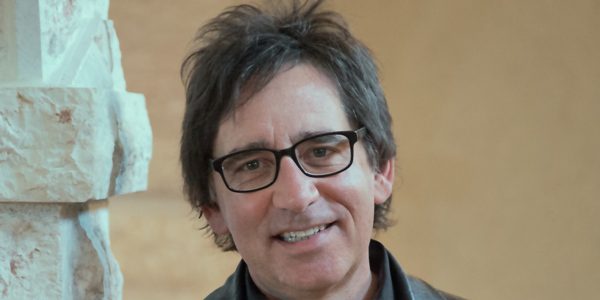
For the past several years, Brian Zahnd has been like an abbott to me. Every week, I listen to his sermon podcasts as part of my spiritual rhythm of life. Brian’s book Beauty Will Save the World completely changed my life. Brian has been on a journey from what he calls the “easy cheesy cotton-candy Christianity” he originally used to build his evangelical megachurch to a much richer, contemplative, sacramental Christian faith. Brian’s new book Water To Wine is a story of salvation from toxic Christianity and a discovery of the deep mysterious beauty of Jesus Christ and the kingdom of God.
His title is taken from Jesus’ first miracle transforming water into wine at a wedding. It’s an excellent metaphor for the conversion that Brian has experienced over the past 12 years. Brian says that in 2004, after twenty years at the helm of what was at one point “one of the twenty fastest growing churches in America,” he found himself restless and dissatisfied with the “shallow, ‘success-in-life’ chaismatic evangelicalism that had been [his] world” (3). He was thirsty for a deeper gospel, “something living, that came from the oak barrels of a vintner, not something concoted from the aluminum vats of an industrialist” (4).
“Water” represents the practical, rationalistic, utilitarian gospel that American evangelicalism has adopted. It is a gospel that turns the Bible into an encyclopedia of black and white answers, that sees worldly partisan political power as the means of transforming society, that reduces Christian discipleship to chaste nuclear family living. The “wine” that Brian discovered is a kingdom full of mystery and beauty, where the Bible isn’t so much an encyclopedia of answers so much as a song to be lived inside of, where the church’s role is to call people to prayer rather than political triumphalism.
One of Brian’s most important reflections is on the way that the church bell symbolizes the way Christians ought to be present and bear witness in the world:
The ringing of a church bell is a public act, but it’s not a political act. The church bell is a public call to prayer. The question is, can the American church once again be known as a praying community? I hope so. I long for our public presence to be more like the beauty of tolling church bells and less like the shrillness of haranguing political ads. [72]
Much of Brian’s journey has been a discovery of the true purpose of prayer. As he studied the ancient church fathers, he realized that the extemporaneous “Jeezuswejuss” prayer of modern evangelicalism fails at the most important goal of prayer, which is spiritual formation. A life of prayer is supposed to lead us to a way of living that is contemplative rather than reactive, with inner peace as our foundation. But Brian cautions us against the shallow understanding of contemplation that is sometimes propagated when people talk about “meditation” and “mindfulness.” He says:
People who try contemplation without first being properly formed in prayer just end up thinking their same old thoughts and calling them Jesus! Prayer that reinforces our egocentric tendencies is entirely counterproductive. The formation of liturgical prayer is necessary to arrive at the place of true contemplation. [99]
This last sentence really slapped me in the face and confirmed my own disappointing experiences at times with what’s called “centering prayer.” We absolutely need to create space each day to be emptied of our neverending rationalistic monologue. But we can’t expect to gain connection with God just by closing our eyes for fifteen minutes once a day. We need to be swimming in the psalms and other scriptures for our silent, empty time to be fruitful. It’s like the way that an organ interlude can create a meditative ambiance in a church service while the stark absence of sound just makes people fidget.
The ultimate goal of our liturgical formation and contemplation is the eucharistic life, a life in which we experience all things around us as the occasion for joy. When we are properly shaped, the communion meal becomes the means by which all life is made sacred to us:
It’s not a rare diamond or a magical elixir that communicates the life of Christ to us, but something as common, earthy, and ordinary as bread and wine. Every time we receive Communion we are reminded that we live in a sacramental world. The wheat fields of Kansas and the vineyards of California are as holy as chapels and cathedrals. [138]
We live in a “spiritual not religious” age. It’s easy to say that divinity is everywhere, but for that statement to have meaning, we must have our eyes opened to the kingdom of God through prayer. What Brian has taught me is that any spirituality worth having requires a religious core. Not religion in the sense of institutional bureaucracy and rationalistic dogma, but religion in the sense of liturgical discipline. Doctrine is important but it only has meaning in the context of liturgy. Of course, I’m talking way more abstract and theologically nerdy about this than Brian would. His writing is accessible and poetic.
If Brian Zahnd is where American evangelicalism is going, then I want to be a part of that movement. I want to learn how to pray and thus discover the sacramental beauty of the universe. Brian’s book is neither a biography nor a theological treatise. He writes and lives like an abbott patiently modeling prayer for his novices. He doesn’t offer us abstract rationalistic concepts, but a model of poetic, liturgical, contemplative living so that we can learn how to listen to God like the monks we are called to be.
If you’re disillusioned with where American Christianity is today, you need to buy a copy of this book and use Brian’s journey to help you embark on your own pilgrimage into the sacramental kingdom.
Please like my blog’s facebook page!
Please become a patron of our campus ministry!
Previous Post

February 4, 2016
The wind is not always God
Next Post
February 6, 2016 Christian salvation and the Beatitudes #4: The pure in heart
Browse Our Archives
Select a Category Advent Beauty Will Save the World Bible Big Picture: Ephesians Bloggers Book Christian salvation and the Beautitudes Culture Daily Office Danceable Homiletics Deadly Sins Deep Roots: Genesis Devotions Dominican Republic May 2011 El Principio Misericordia (The Mercy Principle) Five verses God tattooed on my heart Fundraising FutureGospel Good Biblical Words Henri Nouwen Interview Jennings' Christian Imagination Jesus inside the beltway Jesus Is My Candidate Jesus vs the Pharisees Jesus vs. Plato Journey to Eternity Looking Back on 2012 Love Actually Monday Merton Monday Merton Music Occupy the manger On Earth As It Is In Heaven Original Sin Podcast Poetry Politics Prayer Psalm 119 Radical Jesus 101 Reviews Sermon on the Mount Sermons Spanish Bible study Special Series Spiritual but not religious Synchroblog Theology Things that made me think Thomas a Kempis Ugliness Into Beauty Uncategorized Viaje Dominicano 2013 Walking in the Valley (Lent) Welcome: It's More than a Mat Wild Goose 2013 Wrestling
Select a Month March 2022 January 2022 December 2021 September 2021 April 2021 September 2020 August 2020 July 2020 June 2020 May 2020 April 2020 March 2020 February 2020 January 2020 December 2019 November 2019 October 2019 September 2019 August 2019 June 2019 May 2019 April 2019 March 2019 February 2019 January 2019 December 2018 November 2018 October 2018 September 2018 August 2018 July 2018 June 2018 May 2018 April 2018 March 2018 February 2018 January 2018 December 2017 November 2017 October 2017 September 2017 August 2017 July 2017 June 2017 May 2017 April 2017 March 2017 February 2017 January 2017 December 2016 November 2016 October 2016 September 2016 August 2016 July 2016 June 2016 May 2016 April 2016 March 2016 February 2016 January 2016 December 2015 November 2015 October 2015 September 2015 August 2015 July 2015 June 2015 May 2015 April 2015 February 2015 January 2015 December 2014 November 2014 October 2014 September 2014 August 2014 July 2014 June 2014 May 2014 April 2014 March 2014 February 2014 January 2014 December 2013 November 2013 October 2013 September 2013 August 2013 July 2013 June 2013 May 2013 April 2013 March 2013 February 2013 January 2013 December 2012 November 2012 October 2012 September 2012 August 2012 July 2012 June 2012 May 2012 April 2012 February 2012 January 2012 December 2011 November 2011 October 2011 September 2011 August 2011 July 2011 June 2011 May 2011
Follow Us!
TAKE THE
Religious Wisdom Quiz
Which prophet's visions include "Gog and Magog"?
Select your answer to see how you score.
Amos Daniel Ezekiel Micah
Related posts from Mercy Not Sacrifice

When God's A Cop, Every Cop Is God


"All People Are Holy": The Theology Of Alexandria...

Epimenides And The Plague Of Athens
TRENDING AT PATHEOS Progressive Christian

What Being a Modern-Day Apostle Means to Me
In my last column, I discussed the ins and outs of modern-day...

Did Ancient China Once Worship the God of...
Across human history, a common thread weaves through the origins of the...

Love Your Neighbor – Including Earth-Kin: Lev. 19,...
God’s command to love your neighbor means acting in an ethical and...

Lead a Church Study of “Jesus and Lao...
Guest writer Jack Thomas (The Irreverent Reverend) reflects on leading his church...

Pastoral Wisdom for Responding to Sermon Pushback
Getting sermon pushback on your social justice sermon? Learn practical, Proverbs-based strategies...

Principles for Understanding the Apostolic Ministry Today
Whenever people discover that my formal ministry title is "apostle," as in...
view all Progressive Christian blogs
Ad-Free & Subscriber Log-In Subscription Support
- About Us
- 2026 Calendar
- Videos
- Podcasts
- Library of World Religions
- Faith In Media Tracker
- Advertise With Us
- Write for Us
- Privacy Policy
- Terms of Service
- Do Not Sell My Data
- Contact Us
- Radiant Digital
- Manage Newsletter Subscriptions
- Unsubscribe From Notifications
- Sitemap
Copyright 2008-2026, Patheos. All rights reserved.
Subscription Support Ad-Free & Subscriber Log-In
Follow Patheos