
BuddhistCatholicContemplativeEvangelicalGeneral ChristianHinduJewishLatter-day SaintMuslimNew VisionsProgressive Christian
Beliefs
- Buddhist
- Catholic
- Contemplative
- Evangelical
- General Christian
- Hindu
- Jewish
- Latter-day Saint
- More Voices
- Muslim
- New Visions
- Pagan
- Progressive Christian
Topics
- Religion News
- Food and Religion
- Sports and Religion
- Religious Art
- Religious Music and Entertainment
- Religious Events
- History and Religion
- Style and Religion
- Politics and Religion
- Women in Religion
- Recreation Outdoors and Religion
- Business Finance and Religion
- Careers Workplace and Religion
- Education and Religion
- Family Parenting and Religion
- Health Fitness and Religion
- Home and Religion
- Relationships and Religion
- Technology and Religion
- Travel and Religion
Columnists
- Buddhist Columnists
- Business Finance and Religion Columnists
- Careers Workplace and Religion Columnists
- Catholic Columnists
- Contemplative Columnists
- Education and Religion Columnists
- Evangelists Columnists
- Family Parenting and Religion Columnists
- General Christian Columnists
- Health Fitness and Religion Columnists
- Hindu Columnists
- History and Religion Columnists
- Home and Religion Columnists
- Jewish Columnists
- More Voices Columnists
- Latter Day Columnists
- Muslim Columnists
- New Visions Columnists
- Nonreligious Columnists
- Pagan Columnists
- Politics and Religion Columnists
- Progressive Columnists
- Recreation Outdoors and Religion Columnists
- Relationships and Religion Columnists
- Religion News Columnists
- Religious Art Columnists
- Religious Events Columnists
- Religious Music and Entertainment Columnists
- Sports and Religion Columnists
- Style and Religion Columnists
- Technology and Religion Columnists
- Travel and Religion Columnists
- Women in Religion Columnists
Resource Library
- 2026 Calendar
- Library of World Religions
- The 100 Most Holy Places on Earth
- Patheos Answers
- Podcasts
- Videos
- Faith Leaders Database
- Anglican Episcopalian
- Bahai
- Baptist
- Buddhism
- Christianity
- Confucianism
- Eastern Orthodoxy
- Hinduism
- Holiness and Pentecostal
- ISKCON
- Islam
- Judaism
- Lutheran
- Methodist
- The Church of Jesus Christ of Latter-day Saints
- New Age
- Paganism
- Presbytarian and Reformed
- Protestantism
- Religion Behind the Scenes
- Roman Catholic
- Scientology
- Shia Islam
- Sikhism
- Sufism
- Sunni Islam
- Taoism
- Zen
- See all religions
Research Tools
 Ad-Free & Subscriber Log-In Subscription Support
Ad-Free & Subscriber Log-In Subscription Support
Follow Patheos 

- Trending:
- Forgiveness
- |
- Marriage
- |
- Consciousness
- |
- Death Penalty
- |
- Election
- |
- Halloween
 Mercy Not Sacrifice
-
More
- Home
- Progressive Christian
- Five favorite quotes from Mandy Smith’s The Vulnerable Pastor
Five favorite quotes from Mandy Smith’s The Vulnerable Pastor
Last updated on: November 18, 2015 at 1:08 pm by Morgan Guyton
Five favorite quotes from Mandy Smith’s The Vulnerable Pastor 2015-11-18T13:08:08-05:00 Morgan Guyton
Patheos Explore the world's faith through different perspectives on religion and spirituality! Patheos has the views of the prevalent religions and spiritualities of the world.
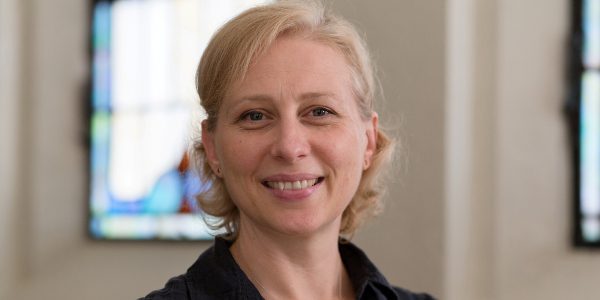
universitychristianchurch.net
I first encountered Mandy Smith at the 2014 Ecclesia National Gathering where she preached an amazing sermon on the “double-edged sword” of God’s word in Hebrews 4. She pointed out that most of us see this sword as a weapon for us to use against our opponents when in fact it’s a scalpel that God uses to operate on our hearts. I originally blogged about her sermon here. Over the past couple of weeks, I’ve been reading through Mandy Smith’s amazing book The Vulnerable Pastor (now featured at the Patheos Book Club). I really hope that she’s right about how God uses weak and broken people for ministry because I’m certainly a mess myself. Anyway, here are my four favorite quotes from her book.
There’s plain old weakness. Then there’s plain old control. But there’s a third thing that I’ve yet to know how to name. It’s when I’m aware of my smallness but there’s no shame in it, no grappling for more but a peace in the immensity around me. [45]
I long to experience the smallness without shame that she describes. I have had glimpses of it. I really want to believe that an omnipotent being is actually running the show and giving me bits and pieces to carry so that I can feel relevant like a five year old proudly helping his dad by stirring the chili in the kitchen. But I haven’t yet learned how to trust in that higher power that I talk and blog about all the time. I still feel completely responsible and completely judged for the results that do or don’t happen in my ministry.
At [University Christian Church] we spend a lot of effort learning to dance wherever God is. Any point of clarity we find, any sign of goodness, any experience of his presence we paint and talk and write and sing about. Alan Hirsch and Michael Frost’s writing about centered and bounded sets has helped us in this. As an Aussie, I love their metaphor, which is taken from the Australian Outback: On huge farms in Australia where the livestock roam over hundreds of miles, the farmers don’t need to build fences but instead, in that arid landscape, they keep their animals close by digging wells. [57]
I am very much an advocate of centered rather than bounded sets when it comes to theology, meaning I’m less concerned about policing the boundaries of who’s in and who’s out and more concerned about articulating the essentials beautifully enough so that people are drawn to them. This is because I believe that we’re all heretics to varying degrees but the Spirit is meeting all of us where we are and drawing us to where we need to go. One of my favorite images of the Holy Spirit comes from C.S. Lewis’ The Lion, The Witch, and the Wardrobe. When the Pevensee children enter into the magical world of Narnia, a talking beaver says to them, “Come further in! Come further in!” That’s what I believe the Holy Spirit is always saying to all of us. The wells of living water are always calling us into deeper communion with God. So it’s not so much about policing conformity to established doctrine as it is about a journey of continued discovery of God’s goodness in which we draw attention to inspiring truths.
Often we begin ministry with a sense of something huge — an immense task, a great need, a vision of God’s grandeur, an overwhelming sense of call– then we shape a ministry program to respond to that challenge. Out of a pure sense of survival, I tried starting the other way. What if we began with our human limitations and shaped a ministry from that? [105]
It’s very comforting and liberating to read someone writing about ministry coming from a place of survival and human limitations rather than pristine, grandiose visions that are innately compelling and draw huge crowds of people. I’m in survival mode, just trying to figure things out as I go along. I’m learning what works and what doesn’t, but it’s more often an expression of survival and human limitations than the “something huge” that the wildly successful, perfectly confident pastors are doing.
Do our sermons ask the question and answer it before our listeners have a chance to hang in the in-between?… It’s not our job as teachers to help people avoid the discomfort but to create space for them to pay attention and learn from it. Instead of serving up prepackaged applications, perhaps we could see our sermons as a field trip that collects people from where they live, takes them to a broad, open place and says, “Go explore and let’s meet back here so that on the way home we can talk about what we’ve found.” [170]
I really like her vision for what sermons are supposed to do. In hierarchical, authoritarian Christianity, preaching isn’t about a learning process so much as indoctrination. So the pastor has all the answers and simply proclaims them; everybody writes down the right answers; and there’s no real thinking or learning that happens. I like this open-ended vision so much better. I will have to think about how to leave open space and not answer every question that I raise.
We may never arrive at a policy on vulnerability for every situation, and that’s part of our vulnerability — to figure it out as we go and give ourselves grace when we over- or undershare. [174]
I think this is one of the most honest sentences I’ve ever read about vulnerability. It’s not something for which we can create a perfect universal policy in all of our relationships and all of our communication. We are constantly testing, learning, and evolving. I’ve gotten burned for oversharing in the past, so I’m learning how to set better boundaries for myself. But even the word boundary is a little bit misleading because it suggests something permanent and fixed. I don’t think that making myself a rigid bureaucrat for the sake of consistency is compatible with being an authentic pastor. Honestly I have to adapt my approach for each individual pastoral relationship because that’s what it takes to be fully present which is my ultimate goal.
Read an excerpt from Mandy’s book at the Patheos Book Club here.
Previous Post

November 14, 2015
Resisting the Great Terrorist
Next Post

November 19, 2015 Support Clothing Drive for Uganda's Good Samaritan Initiative!!!
Browse Our Archives
Select a Category Advent Beauty Will Save the World Bible Big Picture: Ephesians Bloggers Book Christian salvation and the Beautitudes Culture Daily Office Danceable Homiletics Deadly Sins Deep Roots: Genesis Devotions Dominican Republic May 2011 El Principio Misericordia (The Mercy Principle) Five verses God tattooed on my heart Fundraising FutureGospel Good Biblical Words Henri Nouwen Interview Jennings' Christian Imagination Jesus inside the beltway Jesus Is My Candidate Jesus vs the Pharisees Jesus vs. Plato Journey to Eternity Looking Back on 2012 Love Actually Monday Merton Monday Merton Music Occupy the manger On Earth As It Is In Heaven Original Sin Podcast Poetry Politics Prayer Psalm 119 Radical Jesus 101 Reviews Sermon on the Mount Sermons Spanish Bible study Special Series Spiritual but not religious Synchroblog Theology Things that made me think Thomas a Kempis Ugliness Into Beauty Uncategorized Viaje Dominicano 2013 Walking in the Valley (Lent) Welcome: It's More than a Mat Wild Goose 2013 Wrestling
Select a Month March 2022 January 2022 December 2021 September 2021 April 2021 September 2020 August 2020 July 2020 June 2020 May 2020 April 2020 March 2020 February 2020 January 2020 December 2019 November 2019 October 2019 September 2019 August 2019 June 2019 May 2019 April 2019 March 2019 February 2019 January 2019 December 2018 November 2018 October 2018 September 2018 August 2018 July 2018 June 2018 May 2018 April 2018 March 2018 February 2018 January 2018 December 2017 November 2017 October 2017 September 2017 August 2017 July 2017 June 2017 May 2017 April 2017 March 2017 February 2017 January 2017 December 2016 November 2016 October 2016 September 2016 August 2016 July 2016 June 2016 May 2016 April 2016 March 2016 February 2016 January 2016 December 2015 November 2015 October 2015 September 2015 August 2015 July 2015 June 2015 May 2015 April 2015 February 2015 January 2015 December 2014 November 2014 October 2014 September 2014 August 2014 July 2014 June 2014 May 2014 April 2014 March 2014 February 2014 January 2014 December 2013 November 2013 October 2013 September 2013 August 2013 July 2013 June 2013 May 2013 April 2013 March 2013 February 2013 January 2013 December 2012 November 2012 October 2012 September 2012 August 2012 July 2012 June 2012 May 2012 April 2012 February 2012 January 2012 December 2011 November 2011 October 2011 September 2011 August 2011 July 2011 June 2011 May 2011
Follow Us!
TAKE THE
Religious Wisdom Quiz
Who said, "Whom shall I send, and who will go for us?"
Select your answer to see how you score.
God Isaiah Jesus Moses
Related posts from Mercy Not Sacrifice

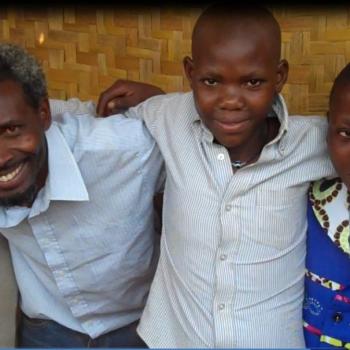
Please Donate To Support Ugandan LGBTI Community!

Ten Spiritual Lessons From A Decade of Failures
TRENDING AT PATHEOS Progressive Christian

Why Christians Have a Sacred Duty to Vote:...
The Bible offers strong support for the sacred duty to vote. Here...

What Being a Modern-Day Apostle Means to Me
In my last column, I discussed the ins and outs of modern-day...

Did Ancient China Once Worship the God of...
Across human history, a common thread weaves through the origins of the...

Love Your Neighbor – Including Earth-Kin: Lev. 19,...
God’s command to love your neighbor means acting in an ethical and...

Lead a Church Study of “Jesus and Lao...
Guest writer Jack Thomas (The Irreverent Reverend) reflects on leading his church...

Principles for Understanding the Apostolic Ministry Today
Whenever people discover that my formal ministry title is "apostle," as in...
view all Progressive Christian blogs
Ad-Free & Subscriber Log-In Subscription Support
- About Us
- 2026 Calendar
- Videos
- Podcasts
- Library of World Religions
- Faith In Media Tracker
- Advertise With Us
- Write for Us
- Privacy Policy
- Terms of Service
- Do Not Sell My Data
- Contact Us
- Radiant Digital
- Manage Newsletter Subscriptions
- Unsubscribe From Notifications
- Sitemap
Copyright 2008-2026, Patheos. All rights reserved.
Subscription Support Ad-Free & Subscriber Log-In
Follow Patheos