
BuddhistCatholicContemplativeEvangelicalGeneral ChristianHinduJewishLatter-day SaintMuslimNew VisionsProgressive Christian
Beliefs
- Buddhist
- Catholic
- Contemplative
- Evangelical
- General Christian
- Hindu
- Jewish
- Latter-day Saint
- More Voices
- Muslim
- New Visions
- Pagan
- Progressive Christian
Topics
- Religion News
- Food and Religion
- Sports and Religion
- Religious Art
- Religious Music and Entertainment
- Religious Events
- History and Religion
- Style and Religion
- Politics and Religion
- Women in Religion
- Recreation Outdoors and Religion
- Business Finance and Religion
- Careers Workplace and Religion
- Education and Religion
- Family Parenting and Religion
- Health Fitness and Religion
- Home and Religion
- Relationships and Religion
- Technology and Religion
- Travel and Religion
Columnists
- Buddhist Columnists
- Business Finance and Religion Columnists
- Careers Workplace and Religion Columnists
- Catholic Columnists
- Contemplative Columnists
- Education and Religion Columnists
- Evangelists Columnists
- Family Parenting and Religion Columnists
- General Christian Columnists
- Health Fitness and Religion Columnists
- Hindu Columnists
- History and Religion Columnists
- Home and Religion Columnists
- Jewish Columnists
- More Voices Columnists
- Latter Day Columnists
- Muslim Columnists
- New Visions Columnists
- Nonreligious Columnists
- Pagan Columnists
- Politics and Religion Columnists
- Progressive Columnists
- Recreation Outdoors and Religion Columnists
- Relationships and Religion Columnists
- Religion News Columnists
- Religious Art Columnists
- Religious Events Columnists
- Religious Music and Entertainment Columnists
- Sports and Religion Columnists
- Style and Religion Columnists
- Technology and Religion Columnists
- Travel and Religion Columnists
- Women in Religion Columnists
Resource Library
- 2026 Calendar
- Library of World Religions
- The 100 Most Holy Places on Earth
- Patheos Answers
- Podcasts
- Videos
- Faith Leaders Database
- Anglican Episcopalian
- Bahai
- Baptist
- Buddhism
- Christianity
- Confucianism
- Eastern Orthodoxy
- Hinduism
- Holiness and Pentecostal
- ISKCON
- Islam
- Judaism
- Lutheran
- Methodist
- The Church of Jesus Christ of Latter-day Saints
- New Age
- Paganism
- Presbytarian and Reformed
- Protestantism
- Religion Behind the Scenes
- Roman Catholic
- Scientology
- Shia Islam
- Sikhism
- Sufism
- Sunni Islam
- Taoism
- Zen
- See all religions
Research Tools
 Ad-Free & Subscriber Log-In Subscription Support
Ad-Free & Subscriber Log-In Subscription Support
Follow Patheos 

- Trending:
- Forgiveness
- |
- Marriage
- |
- Consciousness
- |
- Death Penalty
- |
- Election
- |
- Halloween
 Mercy Not Sacrifice
-
More
- Home
- Progressive Christian
- Why your church men’s group needs to read Nate Pyle’s Man Enough
Why your church men’s group needs to read Nate Pyle’s Man Enough
Last updated on: October 19, 2015 at 4:11 pm by Morgan Guyton
Why your church men’s group needs to read Nate Pyle’s Man Enough 2015-10-19T16:11:21-05:00 Morgan Guyton
Patheos Explore the world's faith through different perspectives on religion and spirituality! Patheos has the views of the prevalent religions and spiritualities of the world.
![Nate Pyle [from natepyle.com]](https://wp-media.patheos.com/blogs/sites/447/2015/10/nate-pyle-2.jpg)
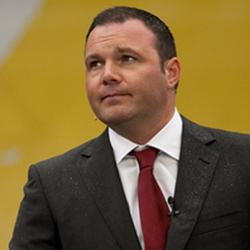
Nate Pyle [from natepyle.com]
I wonder how many other men out there feel as unmanly as I do. Every time I’m at a kid’s soccer game or a Cub Scout campout, I find myself surrounded by a bunch of guys in Oakleys who are bigger, stronger, and more confident than I am. I’d like to think that some of them have the same insecurities when they’re around other men. I wonder how many men would be liberated and healed if we got together to read Nate Pyle’s new book Man Enough. Unlike most Christian books about manhood, it doesn’t tell us the one right way to be a man. It creates the space for men to be vulnerable with one another and name the pressures that are eating us alive.
There’s been a lot of hand-wringing in recent years about a “crisis” for masculinity in America. Because of the strides of feminism, men have seemed to lose their relevance. Former megachurch pastor Mark Driscoll infamously built his empire off of this sense that men need to fight back against our culture’s attempts to “feminize” them and reclaim their authority in their homes and churches. To Nate Pyle, the masculinity crisis has a different source: “Masculinity is not under crisis because of feminizing, but it is in trouble because it is, more often than not, defined by what it is not rather than by what it is. Real men don’t cry. Real men don’t back down from a fight” (47).
I remember the terror I felt as a boy of being accused of throwing or running or dancing like a girl. Now I’ve got sons of my own. I’m not sure that growing up as a boy is any better today than when I was growing up. It seems like kids’ sports culture is much more fiercely competitive than it ever was in the eighties because of helicopter parenting. So if you’re a boy who’s not a jock, you pretty much don’t have an identity. How can I raise my sons to know that they are man enough regardless of what their gifts and interests are?
Like most Christian authors, Nate exhorts us to look to Jesus as a model for masculinity. But instead of manufacturing a masculine Jesus in reaction to the perceived feminization of Jesus by the church, Nate writes that we should allow ourselves to be scandalized by Jesus’ apparent weakness. He looks at one of the most important metaphors for Jesus, the lamb who was slain.
Imitating Jesus begins when we are willing to be slain. Willing to be raked over the coals. Willing to be seen as weak. Very few men will say, “I want to be known as a lamb.” But what does it say that Jesus was willing to be seen as a lamb? It seems he is redefining not only masculinity but strength as well. Jesus reveals that what we think is weak is actually strong. If we were to define masculinity by this Jesus, we would have to admit that masculine stregnth is not the ability to defeat one’s enemies with a show of raw power, but masculine strength that imitates the actions of Jesus is the willingness to play down one’s life for another — including for the lives of one’s enemies. [89]
To be willing to be a weak lamb like Christ means paradoxically having enough emotional and spiritual security to allow your strength to be called into question. All the pageantry of machismo culture is a byproduct of fear and shame. For Nate, the goal of healthy masculinity is not to conform to one particular way of being a man, but to be authentically human. When the goal shifts like that, there’s no reason to fear and belittle “girliness.” Nate writes: “What if men are able to be so secure in their masculinity that strong women are seen not as a threat to their manhood but as a crucial ally in the quest of both men and women to become more human?” (172).
Nate’s book has been great for me in a season in which I’m trying to process and heal from some of my wounds as an unmanly-feeling man. It doesn’t claim to offer brilliant, earth-shattering answers so much as creating the space for men to ask taboo questions about themselves. Throughout the book, Nate teaches vulnerability by modeling it with examples from his own life. The only thing better than reading this book by myself would be to read it with a group of guys, which is something I plan to do in the near future. You should too!
Previous Post

October 5, 2015
I'm grateful that my father never owned a gun
Next Post

October 22, 2015 How Cub Scouts is making me a better dad
Browse Our Archives
Select a Category Advent Beauty Will Save the World Bible Big Picture: Ephesians Bloggers Book Christian salvation and the Beautitudes Culture Daily Office Danceable Homiletics Deadly Sins Deep Roots: Genesis Devotions Dominican Republic May 2011 El Principio Misericordia (The Mercy Principle) Five verses God tattooed on my heart Fundraising FutureGospel Good Biblical Words Henri Nouwen Interview Jennings' Christian Imagination Jesus inside the beltway Jesus Is My Candidate Jesus vs the Pharisees Jesus vs. Plato Journey to Eternity Looking Back on 2012 Love Actually Monday Merton Monday Merton Music Occupy the manger On Earth As It Is In Heaven Original Sin Podcast Poetry Politics Prayer Psalm 119 Radical Jesus 101 Reviews Sermon on the Mount Sermons Spanish Bible study Special Series Spiritual but not religious Synchroblog Theology Things that made me think Thomas a Kempis Ugliness Into Beauty Uncategorized Viaje Dominicano 2013 Walking in the Valley (Lent) Welcome: It's More than a Mat Wild Goose 2013 Wrestling
Select a Month March 2022 January 2022 December 2021 September 2021 April 2021 September 2020 August 2020 July 2020 June 2020 May 2020 April 2020 March 2020 February 2020 January 2020 December 2019 November 2019 October 2019 September 2019 August 2019 June 2019 May 2019 April 2019 March 2019 February 2019 January 2019 December 2018 November 2018 October 2018 September 2018 August 2018 July 2018 June 2018 May 2018 April 2018 March 2018 February 2018 January 2018 December 2017 November 2017 October 2017 September 2017 August 2017 July 2017 June 2017 May 2017 April 2017 March 2017 February 2017 January 2017 December 2016 November 2016 October 2016 September 2016 August 2016 July 2016 June 2016 May 2016 April 2016 March 2016 February 2016 January 2016 December 2015 November 2015 October 2015 September 2015 August 2015 July 2015 June 2015 May 2015 April 2015 February 2015 January 2015 December 2014 November 2014 October 2014 September 2014 August 2014 July 2014 June 2014 May 2014 April 2014 March 2014 February 2014 January 2014 December 2013 November 2013 October 2013 September 2013 August 2013 July 2013 June 2013 May 2013 April 2013 March 2013 February 2013 January 2013 December 2012 November 2012 October 2012 September 2012 August 2012 July 2012 June 2012 May 2012 April 2012 February 2012 January 2012 December 2011 November 2011 October 2011 September 2011 August 2011 July 2011 June 2011 May 2011
Follow Us!
TAKE THE
Religious Wisdom Quiz
What does "Messiah" mean in Hebrew?
Select your answer to see how you score.
Chosen One Son of God Savior Anointed One
Related posts from Mercy Not Sacrifice


Lee Wyatt's Gospel for People Who Aren't Guilt-Ridden
Why I'm not taking my blog down from...

Mark Yaconelli's The Gift of Hard Things
TRENDING AT PATHEOS Progressive Christian

What Being a Modern-Day Apostle Means to Me
In my last column, I discussed the ins and outs of modern-day...

Did Ancient China Once Worship the God of...
Across human history, a common thread weaves through the origins of the...

Love Your Neighbor – Including Earth-Kin: Lev. 19,...
God’s command to love your neighbor means acting in an ethical and...

Lead a Church Study of “Jesus and Lao...
Guest writer Jack Thomas (The Irreverent Reverend) reflects on leading his church...

Pastoral Wisdom for Responding to Sermon Pushback
Getting sermon pushback on your social justice sermon? Learn practical, Proverbs-based strategies...

Principles for Understanding the Apostolic Ministry Today
Whenever people discover that my formal ministry title is "apostle," as in...
view all Progressive Christian blogs
Ad-Free & Subscriber Log-In Subscription Support
- About Us
- 2026 Calendar
- Videos
- Podcasts
- Library of World Religions
- Faith In Media Tracker
- Advertise With Us
- Write for Us
- Privacy Policy
- Terms of Service
- Do Not Sell My Data
- Contact Us
- Radiant Digital
- Manage Newsletter Subscriptions
- Unsubscribe From Notifications
- Sitemap
Copyright 2008-2026, Patheos. All rights reserved.
Subscription Support Ad-Free & Subscriber Log-In
Follow Patheos