
BuddhistCatholicContemplativeEvangelicalGeneral ChristianHinduJewishLatter-day SaintMuslimNew VisionsProgressive Christian
Beliefs
- Buddhist
- Catholic
- Contemplative
- Evangelical
- General Christian
- Hindu
- Jewish
- Latter-day Saint
- More Voices
- Muslim
- New Visions
- Pagan
- Progressive Christian
Topics
- Religion News
- Food and Religion
- Sports and Religion
- Religious Art
- Religious Music and Entertainment
- Religious Events
- History and Religion
- Style and Religion
- Politics and Religion
- Women in Religion
- Recreation Outdoors and Religion
- Business Finance and Religion
- Careers Workplace and Religion
- Education and Religion
- Family Parenting and Religion
- Health Fitness and Religion
- Home and Religion
- Relationships and Religion
- Technology and Religion
- Travel and Religion
Columnists
- Buddhist Columnists
- Business Finance and Religion Columnists
- Careers Workplace and Religion Columnists
- Catholic Columnists
- Contemplative Columnists
- Education and Religion Columnists
- Evangelists Columnists
- Family Parenting and Religion Columnists
- General Christian Columnists
- Health Fitness and Religion Columnists
- Hindu Columnists
- History and Religion Columnists
- Home and Religion Columnists
- Jewish Columnists
- More Voices Columnists
- Latter Day Columnists
- Muslim Columnists
- New Visions Columnists
- Nonreligious Columnists
- Pagan Columnists
- Politics and Religion Columnists
- Progressive Columnists
- Recreation Outdoors and Religion Columnists
- Relationships and Religion Columnists
- Religion News Columnists
- Religious Art Columnists
- Religious Events Columnists
- Religious Music and Entertainment Columnists
- Sports and Religion Columnists
- Style and Religion Columnists
- Technology and Religion Columnists
- Travel and Religion Columnists
- Women in Religion Columnists
Resource Library
- 2026 Calendar
- Library of World Religions
- The 100 Most Holy Places on Earth
- Patheos Answers
- Podcasts
- Videos
- Faith Leaders Database
- Anglican Episcopalian
- Bahai
- Baptist
- Buddhism
- Christianity
- Confucianism
- Eastern Orthodoxy
- Hinduism
- Holiness and Pentecostal
- ISKCON
- Islam
- Judaism
- Lutheran
- Methodist
- The Church of Jesus Christ of Latter-day Saints
- New Age
- Paganism
- Presbytarian and Reformed
- Protestantism
- Religion Behind the Scenes
- Roman Catholic
- Scientology
- Shia Islam
- Sikhism
- Sufism
- Sunni Islam
- Taoism
- Zen
- See all religions
Research Tools
 Ad-Free & Subscriber Log-In Subscription Support
Ad-Free & Subscriber Log-In Subscription Support
Follow Patheos 

- Trending:
- Forgiveness
- |
- Marriage
- |
- Consciousness
- |
- Death Penalty
- |
- Election
- |
- Halloween
 Mercy Not Sacrifice
-
More
- Home
- Progressive Christian
- Six ways I will never stop being evangelical
Six ways I will never stop being evangelical
Last updated on: April 26, 2015 at 1:38 pm by Morgan Guyton
Six ways I will never stop being evangelical 2015-04-26T13:38:13-05:00 Morgan Guyton
Patheos Explore the world's faith through different perspectives on religion and spirituality! Patheos has the views of the prevalent religions and spiritualities of the world.
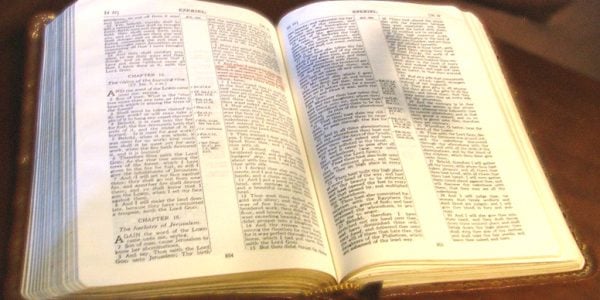
“Bible with Cross Shadow,” David Campbell, Flickr C.C.
The Christian blogosphere seems to viralize two things: 1) numbered lists (five reasons why this, six bad habits of that, seven epic fail church signs, etc) and 2) anything involving the keyword “evangelical” (especially if it involves wringing your hands over what to call yourself now like a post-post-evangelical Christic shaman). Sarcastic metanarrative preface aside, I realize at times that I’m a fish out of water as a progressive evangelical in liberal mainline church culture. Mainliners don’t always get me the way that evangelicals do. My evangelical zeal can be off-putting and scary. So even though all the cool kids are leaving evangelicalism these days, here are six ways I will never stop being evangelical.
1) My life is built around the cross and resurrection of Jesus Christ
I cannot imagine defining Christian discipleship as solely following the teachings of Jesus, because his cross and resurrection are with me every day. Like the apostle Paul, my hope is to be “crucified together with Christ so that it is no longer I who live but Christ who lives within me” (Galatians 2:19-20). Also like Paul, Jesus’ cross and resurrection primarily function as metaphors within my spiritual journey. Or to put it differently, while I definitely believe in the historical events of the cross and resurrection, their power in my life is in their eternal ongoing mystical reality. Jesus never stops being crucified and resurrected. Every day, I put all my sins, spiritual burdens, idols, fears, etc on the cross of Jesus. Every day, I ask him to resurrect me, to radically transform my existence no less than if I were put in a brand-new body and mind. I’m not ashamed of the cross. I don’t feel like we need to update our metaphors to accommodate 21st century sensibilities. It is totally weird that I eat Jesus’ flesh and drink his blood every time I take communion. But that weirdness is part of what heals me from the synthetic, unreal universe in which I live.
2) I believe that God breathes through every word of the Bible
2 Timothy 3:16 says that “All scripture is God-breathed and useful for teaching, reproof, correction, and training in righteousness.” I take that verse exactly at its word. Scripture does not have to be historical or scientific , but all of it is God-breathed and useful. I do not throw away any of it, including passages that make God look hideous and make Christians think that misogyny and homophobia are divinely ordained. God can give us a word for our discipleship even through ugly scripture passages. The problem with the way some of my fellow evangelicals read the Bible is that they’re reading it for ideology rather than discipleship. In the disembodied existence of the information age, our identity has become what we believe about the controversial topics of our day rather than how we treat people in our daily lives. Satan will exploit scripture if we’re reading it to find position statements that make us feel superior to other people. God will breathe his word into us if we reading the Bible to learn how to love God and love our neighbors.
3) I believe that we are justified by faith in Christ and not by works
The doctrinal cornerstone of evangelical theology is supposed to be justification by faith, namely that we are not made right with God through any deed of ours but through the gift of faith that God unilaterally provides us. Ephesians 2:8-9 provides the best summary of this doctrine: “For by grace you have been saved through faith, and this is not your own doing; it is the gift of God, not the result of works, so that no one may boast.” The implication of this doctrine is tremendous. What we are saved from is trying to justify ourselves before God. If “faith” is “not our own doing,” then “faith” can’t in any sense be an effort that God is evaluating to decide whether we pass or fail. We are saved when we actually trust that God loves and forgives us unconditionally and there is no test for us to pass. That’s the foundation for holy, compassionate living, not a constant anxiety over whether we’ve adequately proved our “faith” to God or not. When Christians are obnoxious and self-righteous, it’s because they haven’t actually trusted in God’s unilateral forgiveness yet, even if they’ve memorized all the scripture concerning it. They haven’t been saved from trying to justify themselves through a “faith” that’s really a work.
4) I believe that everyone is a sinner who needs a lot of grace
Some mainline Christians seem to feel icky about calling people sinners. But when you don’t start from that basic assumption, it’s a lot harder to create a community where forgiveness happens. It’s a lot easier just to end relationships with people when they offend you or lash out at you. Forgiveness is one of the hardest things to actually live out. It’s especially hard to admit that you’re wrong and ask for forgiveness from others. That’s why it’s very powerful to be in a community where we expect everyone to be a sinner and have a means of confessing our sins and receiving forgiveness. The problem happens when your church community spends all of its zeal talking about the sins of people outside the church walls. A good sermon should convict the listener of his/her own sin while also offering the good news of God’s grace. Sermons that make their listeners feel self-righteous about condemning other peoples’ sins may pack out a megachurch stadium but they’re still bad sermons.
5) I believe that the world is not okay as it is
When the New Testament talks about “the world,” it tends to speak of it in a negative light. Romans 12:2 says not to be “conformed to the pattern of this world.” James 4:4 says that “friendship with the world is enmity with God.” It’s critically important how Christians interpret what “the world” means. Some Christians interpret “the world” to mean everybody outside their churches, so they build gated communities with fellow believers and avoid contact with people on the outside. Because Ephesians 6:12 says that “our struggle is not against flesh and blood but against powers and principalities,” I believe that “the world” refers to the global socioeconomic order as it currently exists rather than the people who are being oppressed in varying ways by it. “Friendship with the world” means obliviously enjoying the privilege I have been granted by our unjust socioeconomic order rather than fighting for a more just world. Some Christians who think that they’re standing against the world because they shield their children from R-rated movies and cuss words are actually in a state of “friendship with the world” because of their unconcern with changing the social order that privileges them. The “kingdom of God” is a phrase the New Testament uses to talk about the just and compassionate order that God wants to bring to the world. When Jesus says in Matthew 6:33 to “seek first the kingdom of God,” he makes it clear that we are called to give our lives to making the world just, not bide our time in privilege waiting to go to heaven after we die.
6) I believe in evangelism
When I was a freshman in college, I handed out tracts to complete strangers on the Lawn at the University of Virginia. I was convinced that if they read my brilliant arguments, then they would immediately become Christians on the spot. My understanding of evangelism has changed a whole lot since then, but I still believe in it. I understand evangelism to mean simply sharing the good news of God’s love. It can be done without words, but using words isn’t bad. The biggest difference between now and when I was a college freshman is that I enter into every conversation with another person expecting that God will evangelize me through them at least as much as God evangelizes them through me. God is the one who evangelizes, not me. The goal of evangelism is not to manipulate somebody else into converting over to my way of believing things. It’s to be inspired by each others’ stories and rejoice at God’s goodness together which will always look different depending on the unique spiritual journeys of the people talking. When I share the exciting, beautiful things that God has done in my life, I trust God to use my words for whatever purpose God has. There are no insiders and outsiders when it comes to evangelism, because it’s not about recruiting; it’s about mutual inspiration. God has used both Christians and non-Christians alike to evangelize me to a deeper level of communion and love with God.
Previous Post

April 24, 2015
How to create sanctuary in our lives (with Terry Hershey)
Next Post

April 28, 2015 Why is it only violence when windows get smashed?
Browse Our Archives
Select a Category Advent Beauty Will Save the World Bible Big Picture: Ephesians Bloggers Book Christian salvation and the Beautitudes Culture Daily Office Danceable Homiletics Deadly Sins Deep Roots: Genesis Devotions Dominican Republic May 2011 El Principio Misericordia (The Mercy Principle) Five verses God tattooed on my heart Fundraising FutureGospel Good Biblical Words Henri Nouwen Interview Jennings' Christian Imagination Jesus inside the beltway Jesus Is My Candidate Jesus vs the Pharisees Jesus vs. Plato Journey to Eternity Looking Back on 2012 Love Actually Monday Merton Monday Merton Music Occupy the manger On Earth As It Is In Heaven Original Sin Podcast Poetry Politics Prayer Psalm 119 Radical Jesus 101 Reviews Sermon on the Mount Sermons Spanish Bible study Special Series Spiritual but not religious Synchroblog Theology Things that made me think Thomas a Kempis Ugliness Into Beauty Uncategorized Viaje Dominicano 2013 Walking in the Valley (Lent) Welcome: It's More than a Mat Wild Goose 2013 Wrestling
Select a Month March 2022 January 2022 December 2021 September 2021 April 2021 September 2020 August 2020 July 2020 June 2020 May 2020 April 2020 March 2020 February 2020 January 2020 December 2019 November 2019 October 2019 September 2019 August 2019 June 2019 May 2019 April 2019 March 2019 February 2019 January 2019 December 2018 November 2018 October 2018 September 2018 August 2018 July 2018 June 2018 May 2018 April 2018 March 2018 February 2018 January 2018 December 2017 November 2017 October 2017 September 2017 August 2017 July 2017 June 2017 May 2017 April 2017 March 2017 February 2017 January 2017 December 2016 November 2016 October 2016 September 2016 August 2016 July 2016 June 2016 May 2016 April 2016 March 2016 February 2016 January 2016 December 2015 November 2015 October 2015 September 2015 August 2015 July 2015 June 2015 May 2015 April 2015 February 2015 January 2015 December 2014 November 2014 October 2014 September 2014 August 2014 July 2014 June 2014 May 2014 April 2014 March 2014 February 2014 January 2014 December 2013 November 2013 October 2013 September 2013 August 2013 July 2013 June 2013 May 2013 April 2013 March 2013 February 2013 January 2013 December 2012 November 2012 October 2012 September 2012 August 2012 July 2012 June 2012 May 2012 April 2012 February 2012 January 2012 December 2011 November 2011 October 2011 September 2011 August 2011 July 2011 June 2011 May 2011
Follow Us!
TAKE THE
Religious Wisdom Quiz
What river did the Israelites cross to enter the Promised Land?
Select your answer to see how you score.
Jordan River Nile River Red Sea Euphrates River
Related posts from Mercy Not Sacrifice


When God's A Cop, Every Cop Is God


"All People Are Holy": The Theology Of Alexandria...
TRENDING AT PATHEOS Progressive Christian

What Being a Modern-Day Apostle Means to Me
In my last column, I discussed the ins and outs of modern-day...

Did Ancient China Once Worship the God of...
Across human history, a common thread weaves through the origins of the...

Love Your Neighbor – Including Earth-Kin: Lev. 19,...
God’s command to love your neighbor means acting in an ethical and...

Lead a Church Study of “Jesus and Lao...
Guest writer Jack Thomas (The Irreverent Reverend) reflects on leading his church...

Pastoral Wisdom for Responding to Sermon Pushback
Getting sermon pushback on your social justice sermon? Learn practical, Proverbs-based strategies...

Principles for Understanding the Apostolic Ministry Today
Whenever people discover that my formal ministry title is "apostle," as in...
view all Progressive Christian blogs
Ad-Free & Subscriber Log-In Subscription Support
- About Us
- 2026 Calendar
- Videos
- Podcasts
- Library of World Religions
- Faith In Media Tracker
- Advertise With Us
- Write for Us
- Privacy Policy
- Terms of Service
- Do Not Sell My Data
- Contact Us
- Radiant Digital
- Manage Newsletter Subscriptions
- Unsubscribe From Notifications
- Sitemap
Copyright 2008-2026, Patheos. All rights reserved.
Subscription Support Ad-Free & Subscriber Log-In
Follow Patheos