
BuddhistCatholicContemplativeEvangelicalGeneral ChristianHinduJewishLatter-day SaintMuslimNew VisionsProgressive Christian
Beliefs
- Buddhist
- Catholic
- Contemplative
- Evangelical
- General Christian
- Hindu
- Jewish
- Latter-day Saint
- More Voices
- Muslim
- New Visions
- Pagan
- Progressive Christian
Topics
- Religion News
- Food and Religion
- Sports and Religion
- Religious Art
- Religious Music and Entertainment
- Religious Events
- History and Religion
- Style and Religion
- Politics and Religion
- Women in Religion
- Recreation Outdoors and Religion
- Business Finance and Religion
- Careers Workplace and Religion
- Education and Religion
- Family Parenting and Religion
- Health Fitness and Religion
- Home and Religion
- Relationships and Religion
- Technology and Religion
- Travel and Religion
Columnists
- Buddhist Columnists
- Business Finance and Religion Columnists
- Careers Workplace and Religion Columnists
- Catholic Columnists
- Contemplative Columnists
- Education and Religion Columnists
- Evangelists Columnists
- Family Parenting and Religion Columnists
- General Christian Columnists
- Health Fitness and Religion Columnists
- Hindu Columnists
- History and Religion Columnists
- Home and Religion Columnists
- Jewish Columnists
- More Voices Columnists
- Latter Day Columnists
- Muslim Columnists
- New Visions Columnists
- Nonreligious Columnists
- Pagan Columnists
- Politics and Religion Columnists
- Progressive Columnists
- Recreation Outdoors and Religion Columnists
- Relationships and Religion Columnists
- Religion News Columnists
- Religious Art Columnists
- Religious Events Columnists
- Religious Music and Entertainment Columnists
- Sports and Religion Columnists
- Style and Religion Columnists
- Technology and Religion Columnists
- Travel and Religion Columnists
- Women in Religion Columnists
Resource Library
- 2026 Calendar
- Library of World Religions
- The 100 Most Holy Places on Earth
- Patheos Answers
- Podcasts
- Videos
- Faith Leaders Database
- Anglican Episcopalian
- Bahai
- Baptist
- Buddhism
- Christianity
- Confucianism
- Eastern Orthodoxy
- Hinduism
- Holiness and Pentecostal
- ISKCON
- Islam
- Judaism
- Lutheran
- Methodist
- The Church of Jesus Christ of Latter-day Saints
- New Age
- Paganism
- Presbytarian and Reformed
- Protestantism
- Religion Behind the Scenes
- Roman Catholic
- Scientology
- Shia Islam
- Sikhism
- Sufism
- Sunni Islam
- Taoism
- Zen
- See all religions
Research Tools
 Ad-Free & Subscriber Log-In Subscription Support
Ad-Free & Subscriber Log-In Subscription Support
Follow Patheos 

- Trending:
- Forgiveness
- |
- Marriage
- |
- Consciousness
- |
- Death Penalty
- |
- Election
- |
- Halloween
 Mercy Not Sacrifice
-
More
- Home
- Progressive Christian
- An enemy is someone whose story you haven’t heard
An enemy is someone whose story you haven’t heard
Last updated on: July 20, 2014 at 10:18 am by Morgan Guyton
An enemy is someone whose story you haven’t heard 2014-07-20T10:18:55-05:00 Morgan Guyton
Patheos Explore the world's faith through different perspectives on religion and spirituality! Patheos has the views of the prevalent religions and spiritualities of the world.
A couple of weeks ago, Brian Zahnd 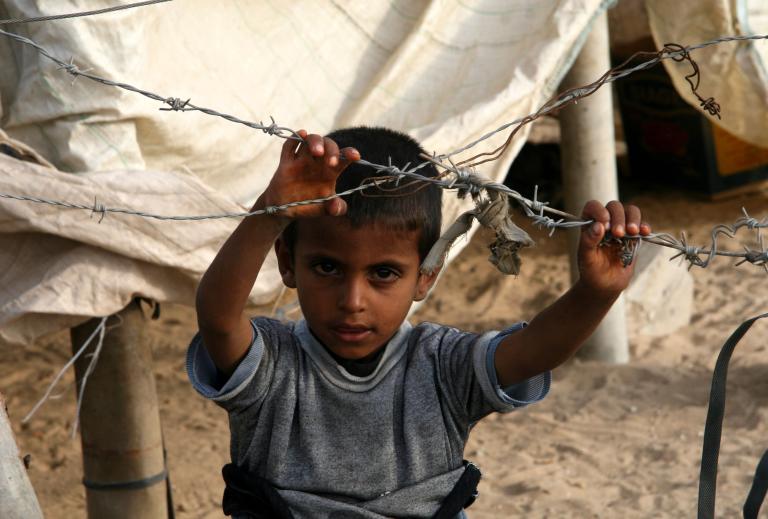 preached a sermon on the healing of Naaman the Syrian commander by the Israelite prophet Elisha. He pointed out that Naaman was the head of an army that had been at war with the Israelites for years, so the analogy today would be if an Israelite prophet had healed the commander of Hamas. Zahnd made a profound statement as part of his sermon that I’ve been contemplating over the past couple of weeks: “An enemy is someone whose story you haven’t heard.” Jesus commands us to love our enemies. It’s easy to say that I love my enemies, but what does it mean to do that with any real sincerity? I would contend that loving your enemies means that we proactively seek to hear and understand their stories, which Brian suggests will cause us to lose our enmity for them as we are exposed to their humanity. I wanted to think about this question against the backdrop of the complex, bitter struggle taking place right now between Israel and Gaza.
The postmodern landscape of the information age is defined by a fierce battle over narrative. The physical battlefield in today’s warfare is secondary to the narrative battlefield. It feels very wrong to say that, but it’s true. This is why Hamas is winning the battle with Israel even though they’re getting steamrolled on the physical battlefield. I don’t know if this has any precedent in history. The longer that Israel’s battle in Gaza goes and the more successfully Israel decimates its enemy, the more unanimously global public opinion will turn against Israel, at least outside of the American evangelical/Zionist echo chamber. It’s absolutely unfair that Israel gets penalized on the narrative battlefield for having the technology to protect their civilians from Hamas’ rocket attacks. Because they’ve suffered very few civilian casualties, their attack on Gaza seems cruel and grotesque. What’s sick is that if Israel “accidentally” allowed a few Hamas rockets to get through their defenses and bloody up some Jewish elementary students, then they would regain the narrative upper hand. Such is the strange narrative world that we inhabit today.
Now it’s also true that the Israeli government has said and done things that legitimately undermine their credibility. The fate of the three kidnapped and murdered Israeli settlers who were the catalyst of the latest round of hostilities was discovered by Israeli intelligence very soon after the kidnapping, but Netanyahu withheld this information from the public in order to justify sweeping through the West Bank and imprisoning hundreds of Hamas affiliates without charges. It’s also true that the Israeli PR machine has preemptively circulated unsubstantiated memes about Hamas hiding weapons in schools and hospitals in order to give itself cover when schools and hospitals blow up in the inevitable messiness of fighting war in a densely populated area. Additionally, when a Palestinian kid was kidnapped and burned to death in retaliation for the kidnapping of the settlers, the Israeli PR machine tried to circulate a rumor that it was a family honor killing in response to him being gay instead of a racist attack carried out by Jewish settlers, but this rumor didn’t stick so they quietly withdrew it.
There are all kinds of reasons to discredit each side of this conflict. There are photos of Jewish kids painting messages to the Palestinians on the missiles that will blow them up. There are stories about Palestinian textbooks that teach their kids to slaughter Jews. There are tweets from Israeli teenage girls saying “Death to all Arabs,” and tweets from Palestinians saying, “Hitler was right.” The Palestinians show that they aren’t worthy of being treated as human beings by dancing in the streets to celebrate the murder of the three kidnapped Jewish settlers, while the Israelis reveal their innate monstrosity by putting out lawn chairs on the hillside at Sderot to watch and cheer the fireworks in Gaza as Palestinians are butchered by Israeli missiles. And so the self-righteous, outraged tweets go back and forth ad nauseum. All while Satan watches and fans the flames with a huge grin on his face.
I’ve been unsure of my own responsibility as I watch the narrative battle unfold in social media. A long-time friend of mine is a solidarity activist stationed in Gaza City. The last time Israel was bombing Gaza in 2012, he was sharing a lot of information from Gaza. I wanted to try to understand the perspective of the people there since they weren’t being given a voice in US media coverage of the conflict, so I started following a bunch of Gazan activists on twitter. And then I started sharing the information I was getting from them with my own circles. Now two years later, my twitter feed is filled with live updates from Gaza, so when I look at it, I feel responsible for disseminating their stories, because what is happening in Gaza is horrible. You can’t dismiss the horror of what’s happening by blaming it on Hamas and their pathetically stupid rocket attacks. Furthermore, it grows increasingly difficult to use a phrase like “human shields” as a blanket dismissal of the value of life in Gaza when you learn the details about how people have gotten killed. Basically, my solidarity activist friend has put me in the position of encountering stories that I feel morally obligated to read and share because the mainstream media is ignoring or repressing them. If I knew somebody in South Sudan or Iraq or Ukraine or the Congo instead, then I would be responsible for sharing their stories instead.
In any case, I want to be better than just a reactionary; I want to somehow contribute to reducing the enmity that surrounds this terrible conflict at least within my own corner of American Christianity. I know that I’ve mostly failed so far, because my gut instinct is simply to take whatever the opposite side is from the mainstream evangelical view that I grew up with. I’ve gotten sucked into the unthoughtful ideological back and forth rather than thinking about how I can increase the empathy in my audience for a group of people whom I think God has called me to support in solidarity despite their hated Samaritan status. So here are some principles that come to mind regarding what it means and doesn’t mean to hear and share the stories of your enemy. I hope to keep these principles in mind as I think about how I share stories and offer commentary in the future.
1) No story is allowed to trump or invalidate any other story
I can’t imagine what it would be like to spend your whole summer in a bomb shelter. That would suck. It would be hot and claustrophobic. I would be very irritable if that were my life right now. Just because the people in Gaza don’t have bomb shelters to go to doesn’t mean that it doesn’t suck for Israelis to have to spend their summer there. I don’t have to do either. I get to sit in the air conditioning and type words onto a screen completely out of any semblance of danger. Of course, I have a story too that isn’t invalidated by the fact that two groups of people have tougher stories. Too often in conversations where there are two sides, the stories from each side are measured against each other quantifiably as though narrative can be converted into a numeric value, which is entirely ludicrous. No, Israelis have a story to tell that is worthy of my sympathy just like people in Gaza do. One story does not cancel out or invalidate the other.
2) No story justifies violence
To say that a group of human beings are worthy of our sympathy because of difficult things they’ve been through is very different than endorsing any particular actions that these human beings undertake in response to their difficulties. Many times in stupid internet arguments, we conflate sympathy for someone’s humanity with a blanket endorsement of their “side,” which is itself falsely reduced to a single monolithic position. It’s completely untruthful to reduce what’s happening between Israel and Gaza to two sides. Not everyone in Israel is happy with Netanyahu’s choices, just like not everyone in Gaza is happy with Hamas. So sharing the story of four boys who get killed on a beach should never be read as a justification for firing off rockets against Israel, nor should any story about Israeli suffering be read as an endorsement of any and all violence Israel inflicts on the Palestinians.
3) No story is invalidated by the sins of its protagonist
One of the chief goals within a postmodern argument is to invalidate the story of your opponent. This is because of the rhetorical tactic of deconstruction. Instead of engaging other people’s arguments on their own terms, we look for character flaws and other ad hominem attacks that can excuse us from having a straightforward conversation. Showing me pictures of Israelis cheering the missiles in Gaza or Palestinians cheering the kidnapping and murder of Israeli settlers tells me nothing more than that they hate their enemies, which is a very human thing to do. It’s wrong and sinful for us to hate whole races of people regardless of the circumstances, but it doesn’t mean that the story underneath our hatred didn’t happen. There are real reasons for the hatred. These real reasons aren’t canceled out by subsequent sin on the part of the person who has been hurt. They still exist and still ought to engender sympathy regardless of whatever evil the person does in response.
4) I don’t have to tell every story just because I’m telling one
One of the most obnoxious cheap shots in these conversations is for people to say, “Why aren’t you equally outraged about what’s going on in _______?” I am not responsible for telling every story and giving them all an equal percentage of my attention just because I’m telling one story. God has called other people into solidarity with Iraqi Christians, Nigerian kidnapped girls, South Sudanese, Ukrainians, Thai political prisoners, Central African Republic Muslims who are being massacred by their Christian neighbors, etc. I happen to find myself called into solidarity with the people of Gaza. Millions of my fellow evangelicals pray every day for Israel’s safety and know every story there is to tell about what Israelis have been through. It’s good that they’re praying for Israel and that they care about Israel’s story. If our goal is to reduce enmity by sharing stories, then having sympathy for the stories of Israelis is not somehow antithetical to sympathizing with the stories of Gazans. It’s only according to Satan’s logic that sympathy for Palestinians means enmity with Israel. If I add the stories I receive from Gaza to the small sphere of influence that I have in the world, it’s not an attempt to silence or trump or discredit any other story that’s out there. It’s simply a set of stories that God has given me to hear and share. Don’t berate me for not sharing all the other stories that are out there; share them yourself and I’ll listen.
Previous Post

July 18, 2014
When children get in the way of our boundaries in Gaza and California

Browse Our Archives
Select a Category Advent Beauty Will Save the World Bible Big Picture: Ephesians Bloggers Book Christian salvation and the Beautitudes Culture Daily Office Danceable Homiletics Deadly Sins Deep Roots: Genesis Devotions Dominican Republic May 2011 El Principio Misericordia (The Mercy Principle) Five verses God tattooed on my heart Fundraising FutureGospel Good Biblical Words Henri Nouwen Interview Jennings' Christian Imagination Jesus inside the beltway Jesus Is My Candidate Jesus vs the Pharisees Jesus vs. Plato Journey to Eternity Looking Back on 2012 Love Actually Monday Merton Monday Merton Music Occupy the manger On Earth As It Is In Heaven Original Sin Podcast Poetry Politics Prayer Psalm 119 Radical Jesus 101 Reviews Sermon on the Mount Sermons Spanish Bible study Special Series Spiritual but not religious Synchroblog Theology Things that made me think Thomas a Kempis Ugliness Into Beauty Uncategorized Viaje Dominicano 2013 Walking in the Valley (Lent) Welcome: It's More than a Mat Wild Goose 2013 Wrestling
Select a Month March 2022 January 2022 December 2021 September 2021 April 2021 September 2020 August 2020 July 2020 June 2020 May 2020 April 2020 March 2020 February 2020 January 2020 December 2019 November 2019 October 2019 September 2019 August 2019 June 2019 May 2019 April 2019 March 2019 February 2019 January 2019 December 2018 November 2018 October 2018 September 2018 August 2018 July 2018 June 2018 May 2018 April 2018 March 2018 February 2018 January 2018 December 2017 November 2017 October 2017 September 2017 August 2017 July 2017 June 2017 May 2017 April 2017 March 2017 February 2017 January 2017 December 2016 November 2016 October 2016 September 2016 August 2016 July 2016 June 2016 May 2016 April 2016 March 2016 February 2016 January 2016 December 2015 November 2015 October 2015 September 2015 August 2015 July 2015 June 2015 May 2015 April 2015 February 2015 January 2015 December 2014 November 2014 October 2014 September 2014 August 2014 July 2014 June 2014 May 2014 April 2014 March 2014 February 2014 January 2014 December 2013 November 2013 October 2013 September 2013 August 2013 July 2013 June 2013 May 2013 April 2013 March 2013 February 2013 January 2013 December 2012 November 2012 October 2012 September 2012 August 2012 July 2012 June 2012 May 2012 April 2012 February 2012 January 2012 December 2011 November 2011 October 2011 September 2011 August 2011 July 2011 June 2011 May 2011
Follow Us!
TAKE THE
Religious Wisdom Quiz
True or False: All Scripture is God-breathed and is useful for teaching, rebuking, correcting and training in righteousness.
Select your answer to see how you score.
TRUE FALSE
Related posts from Mercy Not Sacrifice

When God's A Cop, Every Cop Is God

Epimenides And The Plague Of Athens
Thugs (A Poem About Men In Uniform Who...
TRENDING AT PATHEOS Progressive Christian

What Being a Modern-Day Apostle Means to Me
In my last column, I discussed the ins and outs of modern-day...

Did Ancient China Once Worship the God of...
Across human history, a common thread weaves through the origins of the...

Love Your Neighbor – Including Earth-Kin: Lev. 19,...
God’s command to love your neighbor means acting in an ethical and...

Lead a Church Study of “Jesus and Lao...
Guest writer Jack Thomas (The Irreverent Reverend) reflects on leading his church...

Pastoral Wisdom for Responding to Sermon Pushback
Getting sermon pushback on your social justice sermon? Learn practical, Proverbs-based strategies...

Principles for Understanding the Apostolic Ministry Today
Whenever people discover that my formal ministry title is "apostle," as in...
view all Progressive Christian blogs
Ad-Free & Subscriber Log-In Subscription Support
- About Us
- 2026 Calendar
- Videos
- Podcasts
- Library of World Religions
- Faith In Media Tracker
- Advertise With Us
- Write for Us
- Privacy Policy
- Terms of Service
- Do Not Sell My Data
- Contact Us
- Radiant Digital
- Manage Newsletter Subscriptions
- Unsubscribe From Notifications
- Sitemap
Copyright 2008-2026, Patheos. All rights reserved.
Subscription Support Ad-Free & Subscriber Log-In
Follow Patheos