
BuddhistCatholicContemplativeEvangelicalGeneral ChristianHinduJewishLatter-day SaintMuslimNew VisionsProgressive Christian
Beliefs
- Buddhist
- Catholic
- Contemplative
- Evangelical
- General Christian
- Hindu
- Jewish
- Latter-day Saint
- More Voices
- Muslim
- New Visions
- Pagan
- Progressive Christian
Topics
- Religion News
- Food and Religion
- Sports and Religion
- Religious Art
- Religious Music and Entertainment
- Religious Events
- History and Religion
- Style and Religion
- Politics and Religion
- Women in Religion
- Recreation Outdoors and Religion
- Business Finance and Religion
- Careers Workplace and Religion
- Education and Religion
- Family Parenting and Religion
- Health Fitness and Religion
- Home and Religion
- Relationships and Religion
- Technology and Religion
- Travel and Religion
Columnists
- Buddhist Columnists
- Business Finance and Religion Columnists
- Careers Workplace and Religion Columnists
- Catholic Columnists
- Contemplative Columnists
- Education and Religion Columnists
- Evangelists Columnists
- Family Parenting and Religion Columnists
- General Christian Columnists
- Health Fitness and Religion Columnists
- Hindu Columnists
- History and Religion Columnists
- Home and Religion Columnists
- Jewish Columnists
- More Voices Columnists
- Latter Day Columnists
- Muslim Columnists
- New Visions Columnists
- Nonreligious Columnists
- Pagan Columnists
- Politics and Religion Columnists
- Progressive Columnists
- Recreation Outdoors and Religion Columnists
- Relationships and Religion Columnists
- Religion News Columnists
- Religious Art Columnists
- Religious Events Columnists
- Religious Music and Entertainment Columnists
- Sports and Religion Columnists
- Style and Religion Columnists
- Technology and Religion Columnists
- Travel and Religion Columnists
- Women in Religion Columnists
Resource Library
- 2026 Calendar
- Library of World Religions
- The 100 Most Holy Places on Earth
- Patheos Answers
- Podcasts
- Videos
- Faith Leaders Database
- Anglican Episcopalian
- Bahai
- Baptist
- Buddhism
- Christianity
- Confucianism
- Eastern Orthodoxy
- Hinduism
- Holiness and Pentecostal
- ISKCON
- Islam
- Judaism
- Lutheran
- Methodist
- The Church of Jesus Christ of Latter-day Saints
- New Age
- Paganism
- Presbytarian and Reformed
- Protestantism
- Religion Behind the Scenes
- Roman Catholic
- Scientology
- Shia Islam
- Sikhism
- Sufism
- Sunni Islam
- Taoism
- Zen
- See all religions
Research Tools
 Ad-Free & Subscriber Log-In Subscription Support
Ad-Free & Subscriber Log-In Subscription Support
Follow Patheos 

- Trending:
- Forgiveness
- |
- Marriage
- |
- Consciousness
- |
- Death Penalty
- |
- Election
- |
- Halloween
 Mercy Not Sacrifice
-
More
- Home
- Progressive Christian
- Can we define sin as “that which causes death”?
Can we define sin as “that which causes death”?
Last updated on: July 17, 2014 at 2:13 pm by Morgan Guyton
Can we define sin as “that which causes death”? 2014-07-17T14:13:18-05:00 Morgan Guyton
Patheos Explore the world's faith through different perspectives on religion and spirituality! Patheos has the views of the prevalent religions and spiritualities of the world.
In the spring of 2010, I bought a Spanish language theology book, El Principio Misericordia (The Mercy Principle) by Jon Sobrino, at the bookstore of the Universidad de Centroamerica (UCA) in San Salvador. I’ve been reading it off and on for the past three years, and I finally finished it in my most recent trip to the Dominican Republic (my Spanish reading tends to happen when I’m actively thinking in Spanish). So I’ve decided to do a series exploring some of the concepts Sobrino introduces in his book. This first post has to do with his definition of sin.
Sobrino offers the following definition of sin (in my imperfect translation into English):
Sin is “that which causes death.” Sin is what caused the death of the Son of God, and sin is what keeps causing the deaths of the sons and daughters of God. You could believe or not believe in God, but the thing you cannot doubt is that there is sin, because there is death. 17
First of all, even though Sobrino doesn’t proof-text himself the way that some evangelicals are accustomed, he’s basically restating what Paul writes in Romans 5:12: “Therefore, just as sin came into the world through one man, and death came through sin… so death spread to all because all have sinned.”
I’ve had some debate with a reader in the context of my recent sermon on the Garden of Eden regarding the question of whether Paul’s use of thanatos (death) in this context refers to physical mortality in a literal sense or some sort of spiritual “death” or decay. I don’t want to be too quick to say that all the intricacies of biological decay are literally and only the product of sin, because the physical death of plant life that happens in my compost pile every moment is integral to the life that God provides in the new plants that are nourished by this compost. Without sin, would there be no compost? If we imagine a perfect, sinless created order in which there are no natural life cycles, what we’re imagining is a non-physical world in which plants no longer need the nitrogen of other rotting plants to grow. So I’m not sure what to do with that.
In any case, I don’t think Sobrino is trying to say that only actions which directly cause death are sinful. Murder isn’t the only sin. I interpret Sobrino to mean that sin is any action that contributes to a culture of death, even if it is one of a billion indirect contributing factors (e.g. The lust of men addicted to pornography creates a market for sex trafficking which involves physical abuse that has led to death). Most other sins contribute to a culture of death in a less obvious and seemingly miniscule way (e.g. A thousand stressed-out, anxious drivers who are greedy with their time and angry at other drivers for existing create a flow of traffic that is unsafe and results in a fatal accident that isn’t entirely the fault of any of the parties directly involved).
Sobrino’s definition of sin only makes sense if we recognize that none of our actions happen in an individualist vacuum; they are always interconnected with other peoples’ actions. We create synergies and traffic jams and mobs and echo chambers and blogospheres. Avoiding sin is not just a matter of avoiding the “Thou shalt not’s” in the Bible. They are indispensable guides to creating a harmonious social order, but they do not anticipate all the possible ways that we can contribute to a culture of death.
Now the other aspect of this is that under Sobrino’s definition, systems can sin. In our increasingly mechanized world, many of the forces that cause people to starve and lose their homes and die from treatable illnesses are impersonal powers and principalities for which no single person is entirely culpable. Sobrino argues that many of the same impersonal forces that cause death for two thirds of the world are the basis for the privilege and convenience of those of us who are affluent (which includes anyone who has the resources to read this blog post). So when the privileged choose to ignore the fruit of these powers and principalities which is easy for us to do, we are participating in their sin by our inaction even if we aren’t actively violating a “Thou shalt not” from the Bible.
Many privileged Christians get defensive at this point, but the whole point of our justification through Jesus’ cross is to eliminate our defensiveness, so that when we learn about the ways that we are contributing to the suffering of others even without actively willing it, we can change our actions accordingly. Obviously, there are a number of problems in the world that we legitimately can’t do anything about, but Sobrino would challenge us to make the problems that the poor face our problems before we throw up our hands and shrug them off.
So what do you think about this definition of sin? Does it seem valid to you? What alternative would you propose if not?
El Principio Misericordia (The Mercy Principle)
Previous Post

June 12, 2013
Could you worship a God who makes Himself nothing?
Next Post
June 13, 2013 Is private philanthropy more efficient than the state at helping the poor?
Browse Our Archives
Select a Category Advent Beauty Will Save the World Bible Big Picture: Ephesians Bloggers Book Christian salvation and the Beautitudes Culture Daily Office Danceable Homiletics Deadly Sins Deep Roots: Genesis Devotions Dominican Republic May 2011 El Principio Misericordia (The Mercy Principle) Five verses God tattooed on my heart Fundraising FutureGospel Good Biblical Words Henri Nouwen Interview Jennings' Christian Imagination Jesus inside the beltway Jesus Is My Candidate Jesus vs the Pharisees Jesus vs. Plato Journey to Eternity Looking Back on 2012 Love Actually Monday Merton Monday Merton Music Occupy the manger On Earth As It Is In Heaven Original Sin Podcast Poetry Politics Prayer Psalm 119 Radical Jesus 101 Reviews Sermon on the Mount Sermons Spanish Bible study Special Series Spiritual but not religious Synchroblog Theology Things that made me think Thomas a Kempis Ugliness Into Beauty Uncategorized Viaje Dominicano 2013 Walking in the Valley (Lent) Welcome: It's More than a Mat Wild Goose 2013 Wrestling
Select a Month March 2022 January 2022 December 2021 September 2021 April 2021 September 2020 August 2020 July 2020 June 2020 May 2020 April 2020 March 2020 February 2020 January 2020 December 2019 November 2019 October 2019 September 2019 August 2019 June 2019 May 2019 April 2019 March 2019 February 2019 January 2019 December 2018 November 2018 October 2018 September 2018 August 2018 July 2018 June 2018 May 2018 April 2018 March 2018 February 2018 January 2018 December 2017 November 2017 October 2017 September 2017 August 2017 July 2017 June 2017 May 2017 April 2017 March 2017 February 2017 January 2017 December 2016 November 2016 October 2016 September 2016 August 2016 July 2016 June 2016 May 2016 April 2016 March 2016 February 2016 January 2016 December 2015 November 2015 October 2015 September 2015 August 2015 July 2015 June 2015 May 2015 April 2015 February 2015 January 2015 December 2014 November 2014 October 2014 September 2014 August 2014 July 2014 June 2014 May 2014 April 2014 March 2014 February 2014 January 2014 December 2013 November 2013 October 2013 September 2013 August 2013 July 2013 June 2013 May 2013 April 2013 March 2013 February 2013 January 2013 December 2012 November 2012 October 2012 September 2012 August 2012 July 2012 June 2012 May 2012 April 2012 February 2012 January 2012 December 2011 November 2011 October 2011 September 2011 August 2011 July 2011 June 2011 May 2011
Follow Us!
TAKE THE
Religious Wisdom Quiz
What did God use to speak to Moses in the wilderness?
Select your answer to see how you score.
A thunderstorm A pillar of fire A mighty wind A burning bush
Related posts from Mercy Not Sacrifice

Why Kevin DeYoung's "Culture War Strategy" Fails

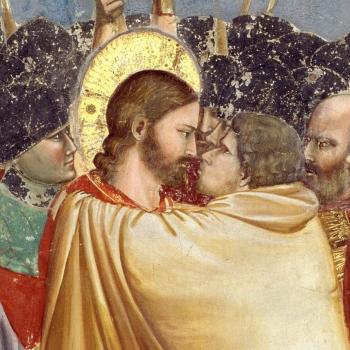
Judas (A Poem About The Freedom To Be...

TRENDING AT PATHEOS Progressive Christian

What Being a Modern-Day Apostle Means to Me
In my last column, I discussed the ins and outs of modern-day...

Did Ancient China Once Worship the God of...
Across human history, a common thread weaves through the origins of the...

Love Your Neighbor – Including Earth-Kin: Lev. 19,...
God’s command to love your neighbor means acting in an ethical and...

Lead a Church Study of “Jesus and Lao...
Guest writer Jack Thomas (The Irreverent Reverend) reflects on leading his church...

Pastoral Wisdom for Responding to Sermon Pushback
Getting sermon pushback on your social justice sermon? Learn practical, Proverbs-based strategies...

Principles for Understanding the Apostolic Ministry Today
Whenever people discover that my formal ministry title is "apostle," as in...
view all Progressive Christian blogs
Ad-Free & Subscriber Log-In Subscription Support
- About Us
- 2026 Calendar
- Videos
- Podcasts
- Library of World Religions
- Faith In Media Tracker
- Advertise With Us
- Write for Us
- Privacy Policy
- Terms of Service
- Do Not Sell My Data
- Contact Us
- Radiant Digital
- Manage Newsletter Subscriptions
- Unsubscribe From Notifications
- Sitemap
Copyright 2008-2026, Patheos. All rights reserved.
Subscription Support Ad-Free & Subscriber Log-In
Follow Patheos