
BuddhistCatholicContemplativeEvangelicalGeneral ChristianHinduJewishLatter-day SaintMuslimNew VisionsProgressive Christian
Beliefs
- Buddhist
- Catholic
- Contemplative
- Evangelical
- General Christian
- Hindu
- Jewish
- Latter-day Saint
- More Voices
- Muslim
- New Visions
- Pagan
- Progressive Christian
Topics
- Religion News
- Food and Religion
- Sports and Religion
- Religious Art
- Religious Music and Entertainment
- Religious Events
- History and Religion
- Style and Religion
- Politics and Religion
- Women in Religion
- Recreation Outdoors and Religion
- Business Finance and Religion
- Careers Workplace and Religion
- Education and Religion
- Family Parenting and Religion
- Health Fitness and Religion
- Home and Religion
- Relationships and Religion
- Technology and Religion
- Travel and Religion
Columnists
- Buddhist Columnists
- Business Finance and Religion Columnists
- Careers Workplace and Religion Columnists
- Catholic Columnists
- Contemplative Columnists
- Education and Religion Columnists
- Evangelists Columnists
- Family Parenting and Religion Columnists
- General Christian Columnists
- Health Fitness and Religion Columnists
- Hindu Columnists
- History and Religion Columnists
- Home and Religion Columnists
- Jewish Columnists
- More Voices Columnists
- Latter Day Columnists
- Muslim Columnists
- New Visions Columnists
- Nonreligious Columnists
- Pagan Columnists
- Politics and Religion Columnists
- Progressive Columnists
- Recreation Outdoors and Religion Columnists
- Relationships and Religion Columnists
- Religion News Columnists
- Religious Art Columnists
- Religious Events Columnists
- Religious Music and Entertainment Columnists
- Sports and Religion Columnists
- Style and Religion Columnists
- Technology and Religion Columnists
- Travel and Religion Columnists
- Women in Religion Columnists
Resource Library
- 2026 Calendar
- Library of World Religions
- The 100 Most Holy Places on Earth
- Patheos Answers
- Podcasts
- Videos
- Faith Leaders Database
- Anglican Episcopalian
- Bahai
- Baptist
- Buddhism
- Christianity
- Confucianism
- Eastern Orthodoxy
- Hinduism
- Holiness and Pentecostal
- ISKCON
- Islam
- Judaism
- Lutheran
- Methodist
- The Church of Jesus Christ of Latter-day Saints
- New Age
- Paganism
- Presbytarian and Reformed
- Protestantism
- Religion Behind the Scenes
- Roman Catholic
- Scientology
- Shia Islam
- Sikhism
- Sufism
- Sunni Islam
- Taoism
- Zen
- See all religions
Research Tools
 Ad-Free & Subscriber Log-In Subscription Support
Ad-Free & Subscriber Log-In Subscription Support
Follow Patheos 

- Trending:
- Forgiveness
- |
- Marriage
- |
- Consciousness
- |
- Death Penalty
- |
- Election
- |
- Halloween
 Mercy Not Sacrifice
-
More
- Home
- Progressive Christian
- Bob Edgar: A Christian for the Common Good (1943-2013)
Bob Edgar: A Christian for the Common Good (1943-2013)
Last updated on: July 17, 2014 at 2:17 pm by Morgan Guyton
Bob Edgar: A Christian for the Common Good (1943-2013) 2014-07-17T14:17:06-05:00 Morgan Guyton
Patheos Explore the world's faith through different perspectives on religion and spirituality! Patheos has the views of the prevalent religions and spiritualities of the world.
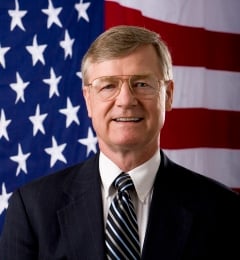 He always had a joke for the pastor in the handshake line, often a slapstick pun characteristic of an older guy who didn’t mind being corny. He carried himself with the confidence of an ordained Methodist minister, former congressman, seminary president, and National Council of Churches secretary-general, but he was thoroughly humble and approachable, caring intimately about the personal lives of his fellow parishioners at Burke United Methodist Church. I was deeply honored to be a pastor in the church that Bob Edgar attended. His most recent position was the president of Common Cause, a national campaign to get corporate money out of politics. Bob believed in democracy, and he believed that Christians should fight for the common good. It was devastating to learn of his sudden death this week in a dark time when his prophetic vision has never been more sorely needed.
Bob began his career as a Methodist pastor when he was 19 years old. He couldn’t afford to pay for college and he had been active on the district level in the Methodist Youth Fellowship so he was able to talk the bishop into letting him pastor a small country church in Gilberton, Pennsylvania that couldn’t afford a fully ordained pastor but could pay Bob enough to cover his tuition at Lycoming College. In Bob’s senior year of college, he married Merle Deaver, whom he had dated since he was fifteen after meeting her at a Methodist youth event in September 1958.
Bob went on to attend seminary at Drew University and then took an appointment at a parish in the East Falls neighborhood of Philadelphia. It was the only parish congregation he would serve as an ordained minister. In the late sixties, East Falls was rapidly transitioning into an African American neighborhood as whites were fleeing en masse to the suburbs. Much to the chagrin of his congregation, Bob began to build relationships with the African American community, a process he would continue when he took his second appointment as the campus chaplain at Drexel University.
While at Drexel, Bob saw that battered women in his neighborhood were sleeping in bus stations because they had no place to go when they ran away from their abusive husbands, so he collaborated with Jim Hallam, the pastor of Asbury United Methodist Church to start the Peoples’ Emergency Center, an emergency homeless shelter and resource center for poor people. Bob came to see the lack of resources for the poor in his community as a systemic problem that started at the very top, so he decided that he was going to run for congress.
His candidacy as a Democrat in a district that had voted Republican since 1858 was a tremendous long-shot, but he won in 1974. Bob was able to maintain his incumbency in a conservative district for six terms despite having one of the most liberal voting records in Congress. He describes his relationship with his constituents in his book Middle Church:
When I voted for things like increasing the minimum wage, I went to the chamber of commerce and explained why I believed as I did. More often than not, their answer was: “Bob, we disagree with you, but we respect the fact that we know where you stand.” Especially in times of rapid change and perceived dangers like those in which we live today, people gravitate toward leaders with a clear sense of purpose and vision, even when they disagree with them. [204]
Some of Bob’s colleagues in Congress described him as the meanest Methodist minister they had ever met, because he refused to play along with the good old boy network. In his role on the Public Work and Transportation Committee, he ruthlessly attacked corporate welfare pork barrel spending, killing about $1.4 billion worth of government-subsidized “bridges to nowhere.” Bob hated waste and corruption, but he also refused to countenance the view that government could not possibly contribute any good to society, as he commented in his book:
Government is not the only means we have for making a difference… But government is how we express ourselves and our values as a people. It is often the single largest lever we have for moving large amounts of resources when circumstances call for them. It is the only institution capable of compelling corporations and individuals to observe the rules of fair play in the marketplace. And simply to write the government off, to concoct some false distinction by which the Bible deprives it of jurisdiction or relieves it of responsibility, is to surrender an important and often powerful means of helping the poor while letting politicians off the hook. [167]
Bob vacated his congressional seat to run in a losing race for the Senate against Arlen Specter in 1986. Since that time, he spent a decade as the president of the Claremont School of Theology in California, seven years as the secretary-general of the National Council of Churches, and most recently served as the president of Common Cause, a government accountability and campaign finance reform organization.
Bob wrote a sentence in his book that was very convicting to me: “Corruption isn’t nearly as big a threat to our democracy as corrosive cynicism” (221). Many Christians sanctify their cynicism in pious-sounding rhetoric about the inherent wickedness of humanity. This cynicism becomes very convenient when we’re talking about a corrupt political process from which we reap benefits. As an evangelical, I was taught that people aren’t serious Christians if they profess a faith in the goodness of people. It was actually Bob’s optimistic view of human nature that drove his ruthless expectations for our government to behave like a democracy and care for the poor. He describes his faith thus:
My church, my faith, is the one grounded in love, not fear, in hope, not hellfire. For me, God is a God of love. God isn’t telling us to love one another in exchange for a reward. God is telling us to do it because it’s right. I believe in God as a creator, but a creator who was smart enough not to undertake such an awesome task alone, who instead invited each of us to join in the ongoing call to renew the world. [27]
The mainline Christian tradition that Bob represents has been on the losing side of our national cultural argument for the past several decades. An apocalyptic nihilism of suburban privilege has become the predominant voice of American Christianity. It’s time for Christians to stop congratulating ourselves for being cynical about the possibility of good in our world. Whether our approach is to start grassroots faith-based community resource centers for the poor like Bob did in 1972 in Philadelphia or to join in Bob’s most recent project attacking Washington’s corrupt lobby culture to restore democracy to our government, we can honor the legacy of a true American prophet, Bob Edgar, by joining other human beings, Christian and otherwise, in God’s mission to renew the world.
Previous Post

April 24, 2013
How does a Wesleyan deal with predestination and election?
Next Post
April 25, 2013 What does the blood of Jesus actually do?
Browse Our Archives
Select a Category Advent Beauty Will Save the World Bible Big Picture: Ephesians Bloggers Book Christian salvation and the Beautitudes Culture Daily Office Danceable Homiletics Deadly Sins Deep Roots: Genesis Devotions Dominican Republic May 2011 El Principio Misericordia (The Mercy Principle) Five verses God tattooed on my heart Fundraising FutureGospel Good Biblical Words Henri Nouwen Interview Jennings' Christian Imagination Jesus inside the beltway Jesus Is My Candidate Jesus vs the Pharisees Jesus vs. Plato Journey to Eternity Looking Back on 2012 Love Actually Monday Merton Monday Merton Music Occupy the manger On Earth As It Is In Heaven Original Sin Podcast Poetry Politics Prayer Psalm 119 Radical Jesus 101 Reviews Sermon on the Mount Sermons Spanish Bible study Special Series Spiritual but not religious Synchroblog Theology Things that made me think Thomas a Kempis Ugliness Into Beauty Uncategorized Viaje Dominicano 2013 Walking in the Valley (Lent) Welcome: It's More than a Mat Wild Goose 2013 Wrestling
Select a Month March 2022 January 2022 December 2021 September 2021 April 2021 September 2020 August 2020 July 2020 June 2020 May 2020 April 2020 March 2020 February 2020 January 2020 December 2019 November 2019 October 2019 September 2019 August 2019 June 2019 May 2019 April 2019 March 2019 February 2019 January 2019 December 2018 November 2018 October 2018 September 2018 August 2018 July 2018 June 2018 May 2018 April 2018 March 2018 February 2018 January 2018 December 2017 November 2017 October 2017 September 2017 August 2017 July 2017 June 2017 May 2017 April 2017 March 2017 February 2017 January 2017 December 2016 November 2016 October 2016 September 2016 August 2016 July 2016 June 2016 May 2016 April 2016 March 2016 February 2016 January 2016 December 2015 November 2015 October 2015 September 2015 August 2015 July 2015 June 2015 May 2015 April 2015 February 2015 January 2015 December 2014 November 2014 October 2014 September 2014 August 2014 July 2014 June 2014 May 2014 April 2014 March 2014 February 2014 January 2014 December 2013 November 2013 October 2013 September 2013 August 2013 July 2013 June 2013 May 2013 April 2013 March 2013 February 2013 January 2013 December 2012 November 2012 October 2012 September 2012 August 2012 July 2012 June 2012 May 2012 April 2012 February 2012 January 2012 December 2011 November 2011 October 2011 September 2011 August 2011 July 2011 June 2011 May 2011
Follow Us!
TAKE THE
Religious Wisdom Quiz
What did Jeremiah see in his first vision as a young prophet?
Select your answer to see how you score.
A burning coal A lion An almond branch A scroll
Related posts from Mercy Not Sacrifice

When God's A Cop, Every Cop Is God

Epimenides And The Plague Of Athens
Thugs (A Poem About Men In Uniform Who...
TRENDING AT PATHEOS Progressive Christian

Why Christians Have a Sacred Duty to Vote:...
The Bible offers strong support for the sacred duty to vote. Here...

What Being a Modern-Day Apostle Means to Me
In my last column, I discussed the ins and outs of modern-day...

Did Ancient China Once Worship the God of...
Across human history, a common thread weaves through the origins of the...

Love Your Neighbor – Including Earth-Kin: Lev. 19,...
God’s command to love your neighbor means acting in an ethical and...

Lead a Church Study of “Jesus and Lao...
Guest writer Jack Thomas (The Irreverent Reverend) reflects on leading his church...

Principles for Understanding the Apostolic Ministry Today
Whenever people discover that my formal ministry title is "apostle," as in...
view all Progressive Christian blogs
Ad-Free & Subscriber Log-In Subscription Support
- About Us
- 2026 Calendar
- Videos
- Podcasts
- Library of World Religions
- Faith In Media Tracker
- Advertise With Us
- Write for Us
- Privacy Policy
- Terms of Service
- Do Not Sell My Data
- Contact Us
- Radiant Digital
- Manage Newsletter Subscriptions
- Unsubscribe From Notifications
- Sitemap
Copyright 2008-2026, Patheos. All rights reserved.
Subscription Support Ad-Free & Subscriber Log-In
Follow Patheos