
BuddhistCatholicContemplativeEvangelicalGeneral ChristianHinduJewishLatter-day SaintMuslimNew VisionsProgressive Christian
Beliefs
- Buddhist
- Catholic
- Contemplative
- Evangelical
- General Christian
- Hindu
- Jewish
- Latter-day Saint
- More Voices
- Muslim
- New Visions
- Pagan
- Progressive Christian
Topics
- Religion News
- Food and Religion
- Sports and Religion
- Religious Art
- Religious Music and Entertainment
- Religious Events
- History and Religion
- Style and Religion
- Politics and Religion
- Women in Religion
- Recreation Outdoors and Religion
- Business Finance and Religion
- Careers Workplace and Religion
- Education and Religion
- Family Parenting and Religion
- Health Fitness and Religion
- Home and Religion
- Relationships and Religion
- Technology and Religion
- Travel and Religion
Columnists
- Buddhist Columnists
- Business Finance and Religion Columnists
- Careers Workplace and Religion Columnists
- Catholic Columnists
- Contemplative Columnists
- Education and Religion Columnists
- Evangelists Columnists
- Family Parenting and Religion Columnists
- General Christian Columnists
- Health Fitness and Religion Columnists
- Hindu Columnists
- History and Religion Columnists
- Home and Religion Columnists
- Jewish Columnists
- More Voices Columnists
- Latter Day Columnists
- Muslim Columnists
- New Visions Columnists
- Nonreligious Columnists
- Pagan Columnists
- Politics and Religion Columnists
- Progressive Columnists
- Recreation Outdoors and Religion Columnists
- Relationships and Religion Columnists
- Religion News Columnists
- Religious Art Columnists
- Religious Events Columnists
- Religious Music and Entertainment Columnists
- Sports and Religion Columnists
- Style and Religion Columnists
- Technology and Religion Columnists
- Travel and Religion Columnists
- Women in Religion Columnists
Resource Library
- 2026 Calendar
- Library of World Religions
- The 100 Most Holy Places on Earth
- Patheos Answers
- Podcasts
- Videos
- Faith Leaders Database
- Anglican Episcopalian
- Bahai
- Baptist
- Buddhism
- Christianity
- Confucianism
- Eastern Orthodoxy
- Hinduism
- Holiness and Pentecostal
- ISKCON
- Islam
- Judaism
- Lutheran
- Methodist
- The Church of Jesus Christ of Latter-day Saints
- New Age
- Paganism
- Presbytarian and Reformed
- Protestantism
- Religion Behind the Scenes
- Roman Catholic
- Scientology
- Shia Islam
- Sikhism
- Sufism
- Sunni Islam
- Taoism
- Zen
- See all religions
Research Tools
 Ad-Free & Subscriber Log-In Subscription Support
Ad-Free & Subscriber Log-In Subscription Support
Follow Patheos 

- Trending:
- Forgiveness
- |
- Marriage
- |
- Consciousness
- |
- Death Penalty
- |
- Election
- |
- Halloween
 Mercy Not Sacrifice
-
More
- Home
- Progressive Christian
- Mary: God-bearer
Mary: God-bearer
Last updated on: July 17, 2014 at 2:36 pm by Morgan Guyton
Mary: God-bearer 2014-07-17T14:36:55-05:00 Morgan Guyton
Patheos Explore the world's faith through different perspectives on religion and spirituality! Patheos has the views of the prevalent religions and spiritualities of the world.
Sermon preached at LifeSign, Burke UMC on 12/17/11
Text: Luke 1:26-38
“Mr. Guyton,” she said, “I’m pregnant.” Sadie was one of my best students. I had been impressed enough by her writing in my 10th grade English class that I recommended she join our school newspaper staff, which she did and continued to excel so I promoted her to an editor position and was grooming her to be our next editor-in-chief. The high school where I taught didn’t send many graduates off to college, but Sadie was unusually bright, so I had held high hopes for her future.
When she shared her news with the girls in our class, they all squealed with joy and ran over to hug and congratulate her. I can’t remember what I said, but I tried my best to smile even though I felt devastated. I wanted her to keep the baby and I wanted her to know that I would be there for her no matter what.
I wonder what it would have been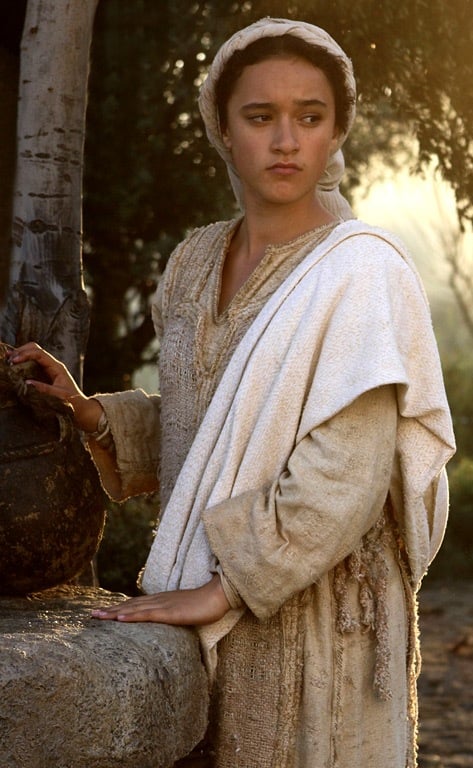 like if Mary had been one of my students, if she had said one day, “I’m pregnant, Mr. Guyton, but it’s not what you think. See, this angel Gabriel came and told me that the Holy Spirit would conceive in me and I would have a son who would grow up to be the savior of the world.” What would I have said to that? Would I have said to tell Gabriel to get a job so he could pay her child support?
Teenage pregnancy has become normal in our society today. In 2007, almost half of the babies born in America were delivered by unwed mothers. But in Mary’s day, it was an utter scandal to be pregnant out of wedlock. This was not just a matter of morality; it was a matter of survival. Girls were betrothed to be married almost immediately after puberty, so the prospective husband could be ensured of his wife’s virginity. If a girl lost her virginity before getting married, no husband would take her, meaning that she would remain dependent upon her parents for food and shelter until they died. Poor first-century Jewish households did not have the room or resources to support disgraced, unmarried daughters.
Imagine how devastated Mary’s parents must have felt when they first learned about their daughter’s pregnancy. And while it’s true that people believed in angels a lot more readily in Mary’s day than in ours, why would anyone believe her story? How in the world could a thirteen year old girl have the spiritual strength to carry herself with dignity and somehow trust the word of an angel against the ostracism of her entire community?
I say all this as a preface because we badly need a reality check when it comes to the identity of the mother of Jesus. Centuries of pious artwork and well-intentioned veneration have left us with a Mary who’s too pure to be human. In most paintings, Mary seems like she’s in her thirties or forties rather than early teens. Perhaps the only depiction of Mary I’ve found that actually shows her as a teenager is Keisha Castle-Hughes’ portrayal in The Nativity Story. Mary has been revered as a flawless symbol of virginity for so long that the scandal of her seemingly illegitimate teenage pregnancy has been erased.
The amazing irony is that it’s the scandal of Mary’s pregnancy that makes her story a uniquely heroic model of faithfulness for all Christians today to follow. Would you trust God if He forced something upon you that would cause your entire community to gossip about you and even potentially stone you to death? Mary trusted God in spite of scandalous circumstances, and that’s what makes her one of the most amazing human beings that has ever lived. The early Christians called her the “God-bearer” because she physically carried the Lord inside of her for nine months. And Mary became a role model not just for women but also men of how to respond to God’s call with trust and obedience.
The word obedience often gets a bad rap in our culture of democracy and individualism where questioning authority is the premise upon which our nation was founded. Obedience seems more akin to what happened in Germany in the Thirties and Forties. But Mary’s obedience is different than what we’re used to calling obedience. I’d like to highlight three things about her obedience that make her an example we can emulate today.
First of all, Mary was scared. She didn’t just smile and shake the angel’s hand exuberantly when he came to share his good news. The fact that Gabriel has to say, “Do not be afraid” makes it clear that Mary had a strong negative reaction to his initial appearance. How many of you have ever been visited by an angel before? I’d be terrified if a really bright creature with a loud voice suddenly appeared in front of me. Gabriel was not a cute five-year old boy with a white choir robe and a tinsel halo. Whatever Gabriel looked like, he made Mary afraid, just like it’s understandable for us to be afraid when God presents us with His call.
The second thing is Mary asked questions. Usually we assume that obedience means doing as you’re told without asking questions. But what Gabriel says doesn’t make any sense to Mary so she questions it: “How is this possible since I’ve never been with a man?” Gabriel’s answer includes a sign that Mary can test out for herself: her middle-aged cousin Elizabeth just got pregnant herself. Gabriel doesn’t tell Mary to go visit Elizabeth. He just reveals this information to her. She could have simply taken him at his word, but she didn’t. She packed her bags and went to pay Elizabeth a visit, which was a way bigger deal than it might seem. In Mary’s time, you didn’t just hitch a ride from Galilee to the Judean hill country on a whim, especially not a young teenage girl betrothed to be married in the most critical year of her parent’s supervision. I’m not sure how Mary convinced her parents to agree to a journey like that.
But Mary needed a second opinion. And Elizabeth prophetically confirms the word of Gabriel the moment Mary walks in the door. It’s important to name what is being modeled for us in this part of the story. Just like Mary, when we receive a call from God, it is completely appropriate to seek out a mentor like Elizabeth. This does not show a lack of faith, but an attentive faithfulness. Finding mentors we can trust to ask candid questions is critical to our discernment and obedience, since it’s often hard to distinguish between our own impulses and the prodding of the Holy Spirit.
Now, the third aspect of Mary’s obedience might take a minute to grasp, because Mary wasn’t really being asked to do anything. Gabriel came to tell Mary what God was going to do. The question for Mary to answer was how she would accept her circumstances. Would she view her pregnancy as a predicament or an honorable calling? Gabriel’s prophecy would represent a complete social disaster for a betrothed teenage girl in Mary’s time or ours. But Mary’s response to Gabriel is one of the most heroic expressions of dignity in the Bible: “I am the Lord’s servant; let it be with me according to your word.” When Mary says yes to God, she is not agreeing to do something, but to be open to what God is doing. Mary’s yes is an interpretive choice by which she receives her circumstances with honor. It is her willingness to trust that something really beautiful will happen after a very hard nine months full of scornful stares and disapproving whispers.
During the past few days, I’ve had the opportunity to talk to some people who have responded to difficult circumstances with dignity, seeing the opportunity to learn and grow in situations that I would not be able to cope with. Their patient trust and obedience to God has been a powerful witness that is teaching me hope. And it has helped me to understand why people like Mary are our world’s true heroes. They may not do anything extraordinary, because they realize that God alone can save the world. But the true heroes are those who let God make them into the wombs of His salvation. It’s not about effort; it’s about surrender.
When we say yes to God like Mary said yes, God will help us find His calling in whatever circumstances we face. Just like Mary had dignity in facing a pregnancy that probably caused a lot of people to judge her, we can carry ourselves with dignity despite whatever mental illnesses, addictions, or embarrassing memories have caused other people to make assumptions about us. There is a calling amidst our brokenness. There is a voice saying to us, “Greetings, favored one! The Lord is with you.” The question is what we will say back. Will we have the trust to say to God, “I am the Lord’s servant. Let it be with me according to Your word”? Who’s willing to say that with me? I am the Lord’s servant. Let it be with me according to Your word.
When we say that and mean it, we become God-bearers too, just like Mary was, because God is constantly spreading His seed all around us. If we are ready to open our hearts to Him, then God is ready to grow beautiful fruit within us. It’s okay to be afraid. It’s appropriate to ask lots of questions. Surrender, not effort, is how we say yes to God and bear His word before the world.
Previous Post

December 15, 2011
Occupy the manger #6: God chooses homelessness
Next Post
December 19, 2011 Occupy the manger #7: Mary's uncomfortable prophecy
Browse Our Archives
Select a Category Advent Beauty Will Save the World Bible Big Picture: Ephesians Bloggers Book Christian salvation and the Beautitudes Culture Daily Office Danceable Homiletics Deadly Sins Deep Roots: Genesis Devotions Dominican Republic May 2011 El Principio Misericordia (The Mercy Principle) Five verses God tattooed on my heart Fundraising FutureGospel Good Biblical Words Henri Nouwen Interview Jennings' Christian Imagination Jesus inside the beltway Jesus Is My Candidate Jesus vs the Pharisees Jesus vs. Plato Journey to Eternity Looking Back on 2012 Love Actually Monday Merton Monday Merton Music Occupy the manger On Earth As It Is In Heaven Original Sin Podcast Poetry Politics Prayer Psalm 119 Radical Jesus 101 Reviews Sermon on the Mount Sermons Spanish Bible study Special Series Spiritual but not religious Synchroblog Theology Things that made me think Thomas a Kempis Ugliness Into Beauty Uncategorized Viaje Dominicano 2013 Walking in the Valley (Lent) Welcome: It's More than a Mat Wild Goose 2013 Wrestling
Select a Month March 2022 January 2022 December 2021 September 2021 April 2021 September 2020 August 2020 July 2020 June 2020 May 2020 April 2020 March 2020 February 2020 January 2020 December 2019 November 2019 October 2019 September 2019 August 2019 June 2019 May 2019 April 2019 March 2019 February 2019 January 2019 December 2018 November 2018 October 2018 September 2018 August 2018 July 2018 June 2018 May 2018 April 2018 March 2018 February 2018 January 2018 December 2017 November 2017 October 2017 September 2017 August 2017 July 2017 June 2017 May 2017 April 2017 March 2017 February 2017 January 2017 December 2016 November 2016 October 2016 September 2016 August 2016 July 2016 June 2016 May 2016 April 2016 March 2016 February 2016 January 2016 December 2015 November 2015 October 2015 September 2015 August 2015 July 2015 June 2015 May 2015 April 2015 February 2015 January 2015 December 2014 November 2014 October 2014 September 2014 August 2014 July 2014 June 2014 May 2014 April 2014 March 2014 February 2014 January 2014 December 2013 November 2013 October 2013 September 2013 August 2013 July 2013 June 2013 May 2013 April 2013 March 2013 February 2013 January 2013 December 2012 November 2012 October 2012 September 2012 August 2012 July 2012 June 2012 May 2012 April 2012 February 2012 January 2012 December 2011 November 2011 October 2011 September 2011 August 2011 July 2011 June 2011 May 2011
Follow Us!
TAKE THE
Religious Wisdom Quiz
Who was Abraham's wife?
Select your answer to see how you score.
Rebekah Rachel Sarah Leah
Related posts from Mercy Not Sacrifice
How Christians overcome the scandal of a baby...
Jesus' name and the meaning of salvation

A rap about a teenage mom named Mary...

God's love in 4-D: Ephesians 3:14-21
TRENDING AT PATHEOS Progressive Christian

What Being a Modern-Day Apostle Means to Me
In my last column, I discussed the ins and outs of modern-day...

Did Ancient China Once Worship the God of...
Across human history, a common thread weaves through the origins of the...

Love Your Neighbor – Including Earth-Kin: Lev. 19,...
God’s command to love your neighbor means acting in an ethical and...

Lead a Church Study of “Jesus and Lao...
Guest writer Jack Thomas (The Irreverent Reverend) reflects on leading his church...

Pastoral Wisdom for Responding to Sermon Pushback
Getting sermon pushback on your social justice sermon? Learn practical, Proverbs-based strategies...

Principles for Understanding the Apostolic Ministry Today
Whenever people discover that my formal ministry title is "apostle," as in...
view all Progressive Christian blogs
Ad-Free & Subscriber Log-In Subscription Support
- About Us
- 2026 Calendar
- Videos
- Podcasts
- Library of World Religions
- Faith In Media Tracker
- Advertise With Us
- Write for Us
- Privacy Policy
- Terms of Service
- Do Not Sell My Data
- Contact Us
- Radiant Digital
- Manage Newsletter Subscriptions
- Unsubscribe From Notifications
- Sitemap
Copyright 2008-2026, Patheos. All rights reserved.
Subscription Support Ad-Free & Subscriber Log-In
Follow Patheos