
BuddhistCatholicContemplativeEvangelicalGeneral ChristianHinduJewishLatter-day SaintMuslimNew VisionsProgressive Christian
Beliefs
- Buddhist
- Catholic
- Contemplative
- Evangelical
- General Christian
- Hindu
- Jewish
- Latter-day Saint
- More Voices
- Muslim
- New Visions
- Pagan
- Progressive Christian
Topics
- Religion News
- Food and Religion
- Sports and Religion
- Religious Art
- Religious Music and Entertainment
- Religious Events
- History and Religion
- Style and Religion
- Politics and Religion
- Women in Religion
- Recreation Outdoors and Religion
- Business Finance and Religion
- Careers Workplace and Religion
- Education and Religion
- Family Parenting and Religion
- Health Fitness and Religion
- Home and Religion
- Relationships and Religion
- Technology and Religion
- Travel and Religion
Columnists
- Buddhist Columnists
- Business Finance and Religion Columnists
- Careers Workplace and Religion Columnists
- Catholic Columnists
- Contemplative Columnists
- Education and Religion Columnists
- Evangelists Columnists
- Family Parenting and Religion Columnists
- General Christian Columnists
- Health Fitness and Religion Columnists
- Hindu Columnists
- History and Religion Columnists
- Home and Religion Columnists
- Jewish Columnists
- More Voices Columnists
- Latter Day Columnists
- Muslim Columnists
- New Visions Columnists
- Nonreligious Columnists
- Pagan Columnists
- Politics and Religion Columnists
- Progressive Columnists
- Recreation Outdoors and Religion Columnists
- Relationships and Religion Columnists
- Religion News Columnists
- Religious Art Columnists
- Religious Events Columnists
- Religious Music and Entertainment Columnists
- Sports and Religion Columnists
- Style and Religion Columnists
- Technology and Religion Columnists
- Travel and Religion Columnists
- Women in Religion Columnists
Resource Library
- 2026 Calendar
- Library of World Religions
- The 100 Most Holy Places on Earth
- Patheos Answers
- Podcasts
- Videos
- Faith Leaders Database
- Anglican Episcopalian
- Bahai
- Baptist
- Buddhism
- Christianity
- Confucianism
- Eastern Orthodoxy
- Hinduism
- Holiness and Pentecostal
- ISKCON
- Islam
- Judaism
- Lutheran
- Methodist
- The Church of Jesus Christ of Latter-day Saints
- New Age
- Paganism
- Presbytarian and Reformed
- Protestantism
- Religion Behind the Scenes
- Roman Catholic
- Scientology
- Shia Islam
- Sikhism
- Sufism
- Sunni Islam
- Taoism
- Zen
- See all religions
Research Tools
 Ad-Free & Subscriber Log-In Subscription Support
Ad-Free & Subscriber Log-In Subscription Support
Follow Patheos 

- Trending:
- Forgiveness
- |
- Marriage
- |
- Consciousness
- |
- Death Penalty
- |
- Election
- |
- Halloween
 Mercy Not Sacrifice
-
More
- Home
- Progressive Christian
- When the Escalator Breaks Down (Jacob’s Ladder)
When the Escalator Breaks Down (Jacob’s Ladder)
Last updated on: July 17, 2014 at 2:58 pm by Morgan Guyton
When the Escalator Breaks Down (Jacob’s Ladder) 2014-07-17T14:58:48-05:00 Morgan Guyton
Patheos Explore the world's faith through different perspectives on religion and spirituality! Patheos has the views of the prevalent religions and spiritualities of the world.
Sermon preached on 7/23/2011 at Burke UMC Lifesign service
Text: Genesis 27-28 (Jacob’s ladder with back-story of stealing blessing from Esau)
[Note: The motif for this sermon was inspired by this video that we saw at a Virginia conference provisional elders’ retreat. I showed the video before preaching the sermon so watch it before reading. It’s hilarious and the sermon might not make sense without it.]
Everything was falling into place. Jacob’s life was like an escalator going up to heaven. First he bagged the family birthright from his brother Esau. Then he stole his father’s blessing. Jacob was on his way to greatness. It was as exactly as his mother had told him. She had shared the prophecy from the Lord that she received when Jacob was born clinging to his brother’s heel. God had said that the elder would serve the younger. So she had named her younger son Yacov, which means in Hebrew, “He who supplants.”
Jacob knew that his mother was looking out for him so he followed her advice to the letter. And it worked. He put on his brother’s coat and put the special spices in his stew to make it taste like wild game so that he could trick his father into blessing him and making him the master of his older brother. But there was one small problem. Jacob was an inside boy. While the other boys were wrestling and learning how to throw spears, Jacob had sat quietly inside the tents learning how to write poetry and helping his mother in the kitchen. His brother Esau was only 90 seconds older than he was, but that didn’t stop him from pushing Jacob around. Esau could wrestle with wolves. He was the jock; he was the one who got the ladies; he already had two Hittite wives who drove their parents crazy. Women weren’t interested in Jacob; he didn’t know anything about hunting or even tending a flock. What good could he ever amount to as a man?
And this was precisely why it was such a major coup to snatch his father’s blessing from Esau. But this was also why the major coup turned out to be completely irrelevant. Jacob hadn’t really thought about the next step, the fact that blessing or no blessing, his brother could pin him down and make him cry uncle in five seconds flat. How you can be the master of someone who’s always been your bully? And so what had seemed like such a perfect idea was now a complete disaster. Esau was plotting to kill Jacob. So Rebekah had to cook up an excuse for Jacob to flee to a distant land and stay with relatives he had never met before. Isaac’s blessing was no match for Esau’s muscles. The escalator to heaven had broken down. Isaac had made Jacob the master of his older brother Esau, and now all that Jacob had to sleep on was a rock in the middle of the desert. What do you do when the escalator of your destiny stops?
All of our lives are somewhat like an escalator ride. We all go through various rites of passage that seem like steps on an automatic journey: first steps, first words, first day of kindergarten, first kiss, first college frat party, and so on. And some of us stay on this escalator for our entire lives. Everything just falls into place. We get a job that fits us perfectly, we find a spouse who’s our perfect complement, we have well-adjusted, completely agreeable kids, and we stay healthy enough to enjoy a wonderful retirement that we spend in places like Norway and New Zealand. How many people are living that kind of perfect escalator life right now? How many of you have been through a time when the escalator broke down? How many of you are stuck on a broken escalator right now?
I remember when my life’s escalator broke down. I was always kind of an inside boy like Jacob, never very good at sports or quick on my feet in the joke-telling competition that teenagers call conversation. I was surrounded by Esaus who were always better-looking and better-built and funnier than I was. But I took solace in the thought that I would rule over the Esaus one day if I worked hard enough in school to get better grades than they did. It seemed only fair. The outside boys scored all the touchdowns and got the best girls in high school, while the inside boys quietly learned the skills to be their future masters.
So I studied hard and got into the University of Virginia. In addition to doing well academically, I took leadership roles in campus Christian groups, joined a service fraternity, and founded two organizations: the Undergraduate Writers’ Guild and the Roundtable Group discussion club. In fall of my third year, I had established myself as a student leader on campus and had applied for a coveted honorary residence on the Lawn where the 54 most qualified seniors live together in the original rooms that Thomas Jefferson built. The escalator was moving right on schedule.
One of my courses that fall semester was a very challenging and stimulating religion and literature class that culminated in a 15-18 page term paper that was three times as long as anything I had ever written. Due to all my extracurricular activities, I got behind in my reading for that class and I found myself in a spiraling state of panic as the end of the semester approached, until on December 11th, 1998, the escalator broke. I couldn’t write my term paper, which meant that I would fail the class, which meant that I would fail out of college, which meant that my life would be over. So I went to the medicine cabinet, took out a bottle of Advil, poured the pills out into my hand, chased them down with Nyquil, and lay down on my bed, the whole time whispering to God how sorry I was. After five minutes, I got impatient and called 911.
It turned out that my cocktail wouldn’t have given me more than a bad ulcer. At the hospital, they gave me a nasty black drink, which resulted in a very unpleasant two hours. I’m not going to tell you that God opened up the sky that night and sent angels down to comfort me on a stairway from heaven down to earth like He did for Jacob, but He did send a man named Steve, an ER nurse with a long, white pony tail, a guy with Esau muscles and a Jacob voice. Steve said, “I know you don’t believe me, but you really are going to make it.”
There have been several points in the journey since that I’ve wanted to go back and tell Steve that he was right: when I got an A on the term paper that I thought I couldn’t write, when I graduated college, and every time since then that I’ve told somebody else what Steve told me. When I got out of the psych ward, I kept my hospital bracelet as a sign of a new covenant with God. I wrote on the bracelet nunca jamas, which means “never again.”
I don’t think I’ve ever gotten back on the escalator I was riding on before the weekend that I spent in the UVA hospital. God reset my destiny when the escalator broke down. The bracelet that I kept is a symbol of who I aspire to be, someone who can tell others, “I didn’t think I would make it either, but God can make it happen for you too.”
I’m not sure you’ll believe me, but there’s a beautiful freedom that we cannot taste until God pulls us off the escalator. He gives us a different destiny than the best that our world has to offer. Jacob’s mother Rebekah had completely misinterpreted God’s prophecy by assuming that she knew how Jacob would be greater than Esau. When God came to Jacob in a dream, it was not to reassure him about the destiny he thought he had, but to call him to a new destiny. If you read on in Genesis, you’ll find that Esau ended up with far more cattle and servants than Jacob had when they meet up again decades later.
But God needed an inside boy, an unmanly man to father the nation of outsiders and wanderers that He would use to save humanity. God pulled Jacob off the escalator of his life to make him part of God’s stairway down from heaven to earth, to start the tiny nation of nomads and freed slaves called Israel who would become the hope of all nations by giving birth to our savior Jesus Christ, the One who brought God’s Word from heaven to earth in the flesh. It’s through God’s stairway from heaven to earth that He pulls all the Jacobs and Esaus of the world into His divine embrace.
So if your life’s escalator has broken down, it may be because God has a better staircase for you to walk on. You might not recognize the angels while He’s sending them to you, but years from now, you’ll remember who they were, and you’ll become one for the next Jacob.
Previous Post

July 20, 2011
An Answer for the Taunting: Monster-Psalm Meditation #6
Next Post
July 25, 2011 Dave Ramsey: great debt advice, not so great theology
Browse Our Archives
Select a Category Advent Beauty Will Save the World Bible Big Picture: Ephesians Bloggers Book Christian salvation and the Beautitudes Culture Daily Office Danceable Homiletics Deadly Sins Deep Roots: Genesis Devotions Dominican Republic May 2011 El Principio Misericordia (The Mercy Principle) Five verses God tattooed on my heart Fundraising FutureGospel Good Biblical Words Henri Nouwen Interview Jennings' Christian Imagination Jesus inside the beltway Jesus Is My Candidate Jesus vs the Pharisees Jesus vs. Plato Journey to Eternity Looking Back on 2012 Love Actually Monday Merton Monday Merton Music Occupy the manger On Earth As It Is In Heaven Original Sin Podcast Poetry Politics Prayer Psalm 119 Radical Jesus 101 Reviews Sermon on the Mount Sermons Spanish Bible study Special Series Spiritual but not religious Synchroblog Theology Things that made me think Thomas a Kempis Ugliness Into Beauty Uncategorized Viaje Dominicano 2013 Walking in the Valley (Lent) Welcome: It's More than a Mat Wild Goose 2013 Wrestling
Select a Month March 2022 January 2022 December 2021 September 2021 April 2021 September 2020 August 2020 July 2020 June 2020 May 2020 April 2020 March 2020 February 2020 January 2020 December 2019 November 2019 October 2019 September 2019 August 2019 June 2019 May 2019 April 2019 March 2019 February 2019 January 2019 December 2018 November 2018 October 2018 September 2018 August 2018 July 2018 June 2018 May 2018 April 2018 March 2018 February 2018 January 2018 December 2017 November 2017 October 2017 September 2017 August 2017 July 2017 June 2017 May 2017 April 2017 March 2017 February 2017 January 2017 December 2016 November 2016 October 2016 September 2016 August 2016 July 2016 June 2016 May 2016 April 2016 March 2016 February 2016 January 2016 December 2015 November 2015 October 2015 September 2015 August 2015 July 2015 June 2015 May 2015 April 2015 February 2015 January 2015 December 2014 November 2014 October 2014 September 2014 August 2014 July 2014 June 2014 May 2014 April 2014 March 2014 February 2014 January 2014 December 2013 November 2013 October 2013 September 2013 August 2013 July 2013 June 2013 May 2013 April 2013 March 2013 February 2013 January 2013 December 2012 November 2012 October 2012 September 2012 August 2012 July 2012 June 2012 May 2012 April 2012 February 2012 January 2012 December 2011 November 2011 October 2011 September 2011 August 2011 July 2011 June 2011 May 2011
Follow Us!
TAKE THE
Religious Wisdom Quiz
What nation took Israel into captivity in 722 BC?
Select your answer to see how you score.
Assyria Persia Egypt Babylon
Related posts from Mercy Not Sacrifice
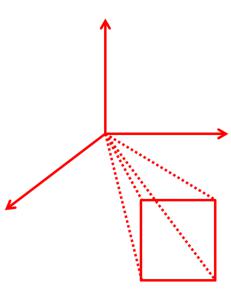
God's love in 4-D: Ephesians 3:14-21

The song of God's power (Ephesians 1:15-23) #rethinkchurch

Sharing the gift of God's forgiveness

TRENDING AT PATHEOS Progressive Christian

What Being a Modern-Day Apostle Means to Me
In my last column, I discussed the ins and outs of modern-day...

Did Ancient China Once Worship the God of...
Across human history, a common thread weaves through the origins of the...

Love Your Neighbor – Including Earth-Kin: Lev. 19,...
God’s command to love your neighbor means acting in an ethical and...

Lead a Church Study of “Jesus and Lao...
Guest writer Jack Thomas (The Irreverent Reverend) reflects on leading his church...

Pastoral Wisdom for Responding to Sermon Pushback
Getting sermon pushback on your social justice sermon? Learn practical, Proverbs-based strategies...

Principles for Understanding the Apostolic Ministry Today
Whenever people discover that my formal ministry title is "apostle," as in...
view all Progressive Christian blogs
Ad-Free & Subscriber Log-In Subscription Support
- About Us
- 2026 Calendar
- Videos
- Podcasts
- Library of World Religions
- Faith In Media Tracker
- Advertise With Us
- Write for Us
- Privacy Policy
- Terms of Service
- Do Not Sell My Data
- Contact Us
- Radiant Digital
- Manage Newsletter Subscriptions
- Unsubscribe From Notifications
- Sitemap
Copyright 2008-2026, Patheos. All rights reserved.
Subscription Support Ad-Free & Subscriber Log-In
Follow Patheos