
BuddhistCatholicContemplativeEvangelicalGeneral ChristianHinduJewishLatter-day SaintMuslimNew VisionsProgressive Christian
Beliefs
- Buddhist
- Catholic
- Contemplative
- Evangelical
- General Christian
- Hindu
- Jewish
- Latter-day Saint
- More Voices
- Muslim
- New Visions
- Pagan
- Progressive Christian
Topics
- Religion News
- Food and Religion
- Sports and Religion
- Religious Art
- Religious Music and Entertainment
- Religious Events
- History and Religion
- Style and Religion
- Politics and Religion
- Women in Religion
- Recreation Outdoors and Religion
- Business Finance and Religion
- Careers Workplace and Religion
- Education and Religion
- Family Parenting and Religion
- Health Fitness and Religion
- Home and Religion
- Relationships and Religion
- Technology and Religion
- Travel and Religion
Columnists
- Buddhist Columnists
- Business Finance and Religion Columnists
- Careers Workplace and Religion Columnists
- Catholic Columnists
- Contemplative Columnists
- Education and Religion Columnists
- Evangelists Columnists
- Family Parenting and Religion Columnists
- General Christian Columnists
- Health Fitness and Religion Columnists
- Hindu Columnists
- History and Religion Columnists
- Home and Religion Columnists
- Jewish Columnists
- More Voices Columnists
- Latter Day Columnists
- Muslim Columnists
- New Visions Columnists
- Nonreligious Columnists
- Pagan Columnists
- Politics and Religion Columnists
- Progressive Columnists
- Recreation Outdoors and Religion Columnists
- Relationships and Religion Columnists
- Religion News Columnists
- Religious Art Columnists
- Religious Events Columnists
- Religious Music and Entertainment Columnists
- Sports and Religion Columnists
- Style and Religion Columnists
- Technology and Religion Columnists
- Travel and Religion Columnists
- Women in Religion Columnists
Resource Library
- 2026 Calendar
- Library of World Religions
- The 100 Most Holy Places on Earth
- Patheos Answers
- Podcasts
- Videos
- Faith Leaders Database
- Anglican Episcopalian
- Bahai
- Baptist
- Buddhism
- Christianity
- Confucianism
- Eastern Orthodoxy
- Hinduism
- Holiness and Pentecostal
- ISKCON
- Islam
- Judaism
- Lutheran
- Methodist
- The Church of Jesus Christ of Latter-day Saints
- New Age
- Paganism
- Presbytarian and Reformed
- Protestantism
- Religion Behind the Scenes
- Roman Catholic
- Scientology
- Shia Islam
- Sikhism
- Sufism
- Sunni Islam
- Taoism
- Zen
- See all religions
Research Tools
 Ad-Free & Subscriber Log-In Subscription Support
Ad-Free & Subscriber Log-In Subscription Support
Follow Patheos 

- Trending:
- Forgiveness
- |
- Marriage
- |
- Consciousness
- |
- Death Penalty
- |
- Election
- |
- Halloween

- Home
- Evangelical
- Family, Parenting and Religion
- The Tower of London and The Name of the Lord
The Tower of London and The Name of the Lord
Last updated on: September 6, 2024 at 9:40 am by Tosha Lamdin Williams
The Tower of London and The Name of the Lord 2024-09-06T09:40:00-06:00 Tosha Lamdin Williams
Patheos Explore the world's faith through different perspectives on religion and spirituality! Patheos has the views of the prevalent religions and spiritualities of the world.
Throughout history, the Tower of London has not typically been a place people wanted to visit. After all, pain and suffering is something most of us want to avoid. However, back in May, when our gracious hosts offered to take us to the Tower, I jumped at the opportunity. I’ve always been curious about the Tower of London and was excited to see it in person. So, as we began our visit to London on a bright and beautiful May day, this historic landmark was our first stop.
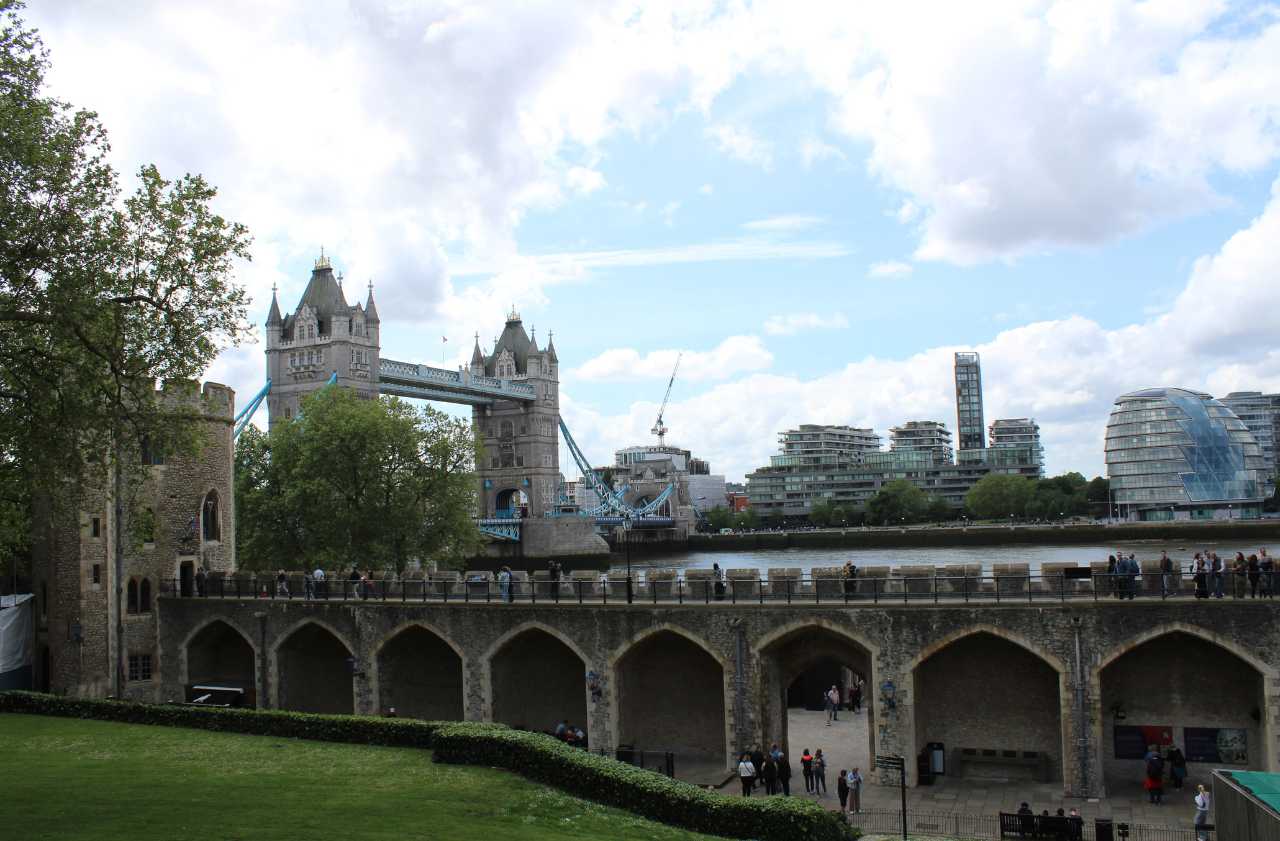
View of London Bridge from Inside the Walls of the Tower of London // Photo by Author
The Tower of London in Real Life
Turns out, the Tower is nothing like I’d pictured it. I had imagined it to be a slim high rise in downtown London, tucked in somewhere near Big Ben, Parliament or Buckingham Palace. Instead, the Tower is more like a fortress within a fortress, occupying about twelve acres near a completely different subway stop than those other historic sites.

View of the White Tower from outside the Tower of London // Photo by Author
With nearly 1000 years of history at the Tower, it is nigh upon impossible to take it all in in one visit. Built in the 1070s AD by William the Conqueror, the original tower was a tall white fortress designed as an impressive display of dominance over his newly conquered city. This original building is known as “The White Tower.”
Built as a fortress and also used as a royal residence, subsequent rulers added to the site, creating more rings of walls and buildings.
A moat was also built around the Tower, for both plumbing and additional defense purposes. During our May visit, the moat was filled with flowers, but, back in the day, it was filled with, well, let’s just say some less agreeable items.
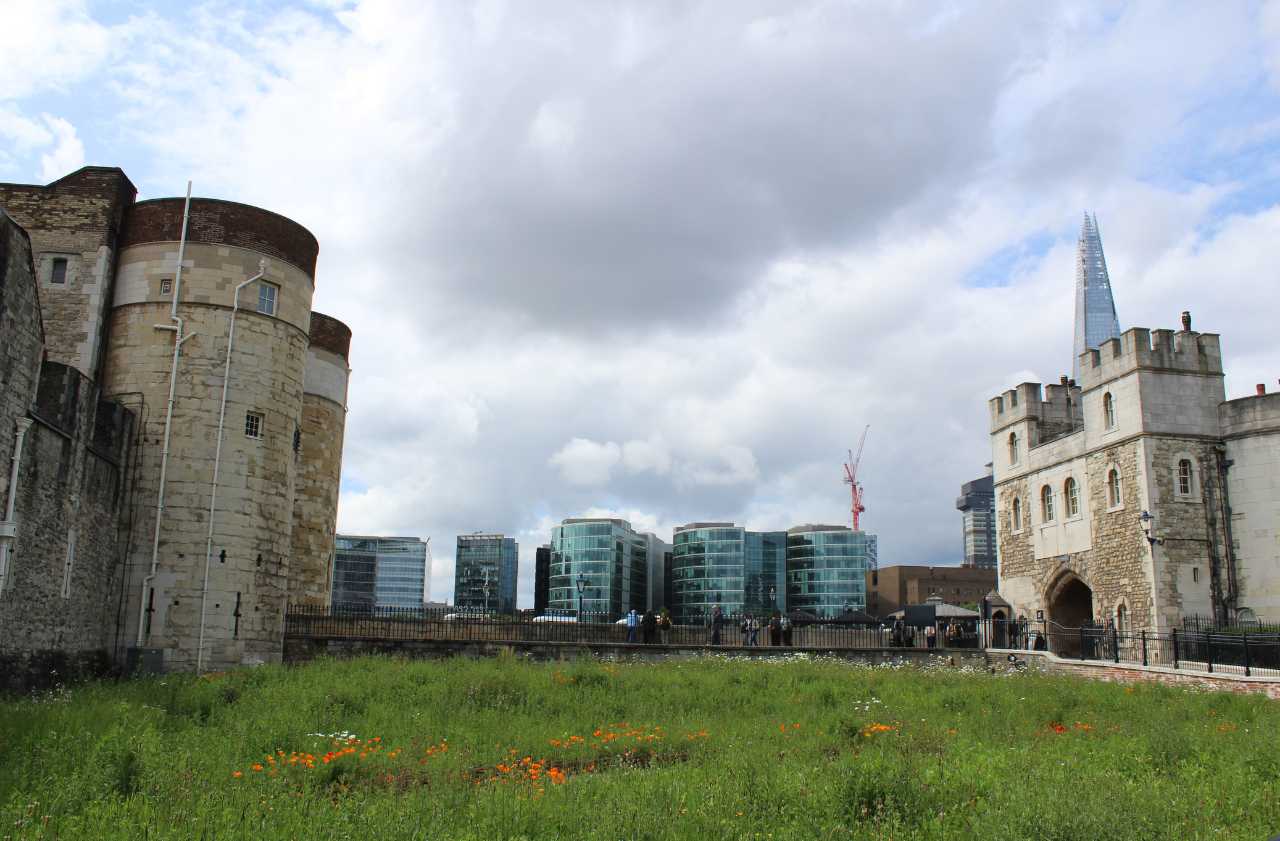
The “Moat” Surrounding the Tower of London, filled with wildflowers in “No Mow May” // Photo by Author
It was a stinking mess. That moat, designed to flush plumbing wastes to the sea (!!!) was in actuality a cesspool.
The Tower was barely a quarter century old when it began to be used as a prison. History says Ranulf Flambard was the earliest unlucky victim, though he figured out a way to escape. Future prisoners – of war, politics, religion, or a ruler’s caprice – were not so fortunate. As the medieval ages unfolded, the Tower was a place to avoid by all means possible, not just for its smell, but for its sadistic nature.
The Tower became notorious for brutal imprisonment, torture and executions. As I began to follow the threads of stories surrounding the Tower, I found a quote by one prisoner Margaret Cheyne, whose sisters later wrote that she “vowed that she would rather be torn to pieces than go to London,” that was, the Tower of London. Her statement was not hyperbole. In fact, when Margaret was finally captured and imprisoned there, her worst nightmares came true when she was burned at the stake while her husband was simultaneously hung and decapitated. The Tower was no joke.
So while human excrement floated around the Tower’s external walls, human cruelty festered within. Depending on the reigning monarch’s whim, the place was either a palace or a prison – or both. One day, you could be in a lavish guestroom preparing for a pompous dinner; the next day you could be in a loathsome cell awaiting a gruesome death.
The Chapel of St. Peter ad Vincula
Tucked into a corner of the tower of London, there is a very small (compared to what we would later see on our trip) chapel.
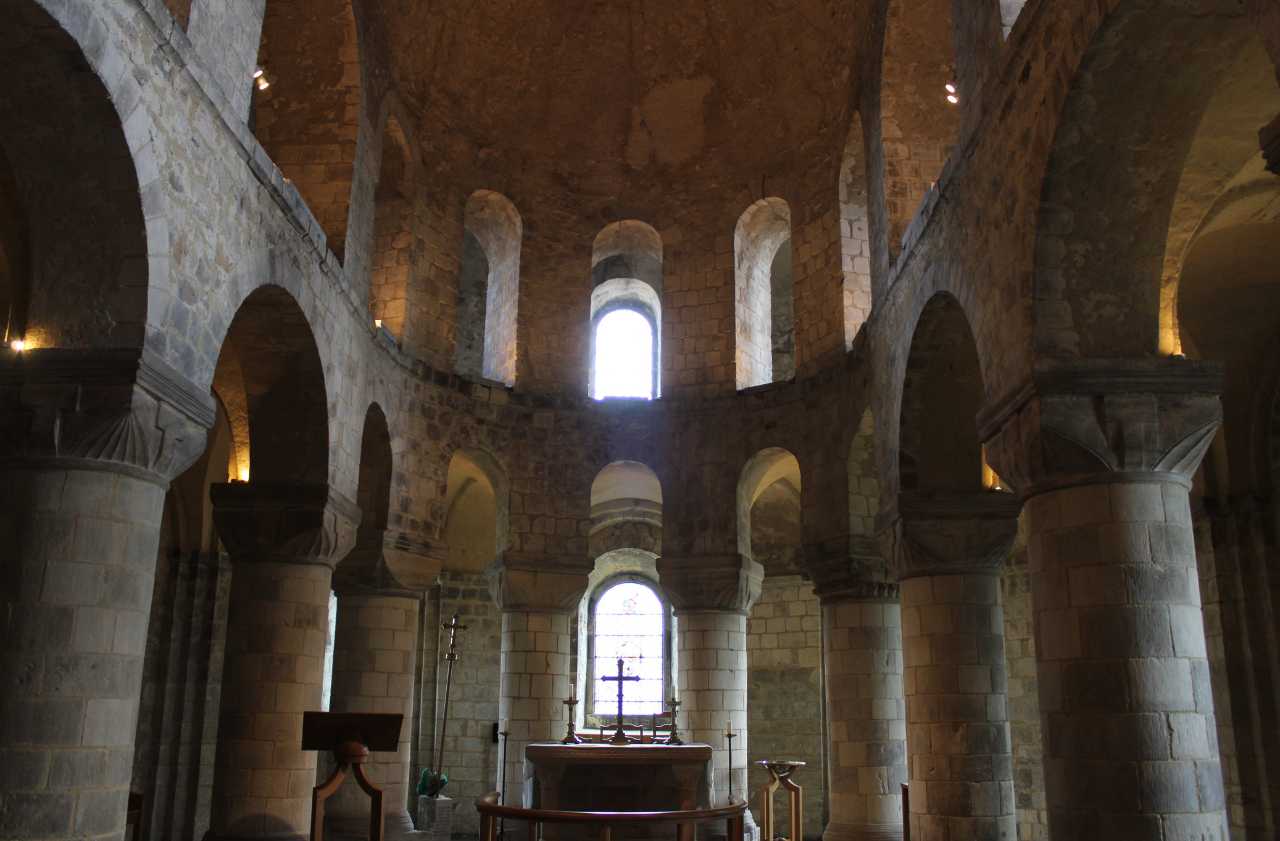
Inside The Chapel of St. Peter ad Vincula // Photo by Author
In the 1500s, the Chapel of St. Peter ad Vincula was built within the tower complex. Somebody must have felt entirely clever when they named it, given that “ad vincula” means “in chains.” The chapel’s name purportedly commemorates Peter’s imprisonment in Jerusalem.
While I am certain that over the centuries, people have genuinely worshiped within its walls, I could not. Being in that chapel made me think more about those executed and buried in and around ad Vincula than the Lord.
Lawn by the Chapel ad Vincula were Anne Boleyn was executed // Photo by Author
Though regular services are still held there, I would have a hard time worshiping God at St. Peter ad Vincula on a regular basis. I just could not get past the brutality of the Tower to appreciate the beauty and sanctity of its chapel.
The juxtaposition of the “sacred” to the sadistic was just too much. Despite its majesty and splendor, that chapel felt godless to me.
But God…
Finding God in Hard Places
Thing is, even in the worst, most desperate, dark places, the Lord God can be found there, too. The Apostle Peter encountered God in the most difficult places, during his own imprisonment. And, as I walked through the Tower and the chapel, I began to discover a trail of other people’s lives whose stories proclaim the same truth. These people captivated me, and I have spent a great deal of time studying and learning about their stories ever since. Their testimonies of faith and of holding onto Jesus has taken my own faith to a new level.
Men like Thomas Moore and Thomas Cranmer, and women like Lady Jane Grey and Anne Askew, left behind testimonies that profoundly impacted me.
Anne Askew, in particular, captivated me. She was a 25-year old woman who was brutalized at the Tower. She was tortured on the racks because of her Protestant faith, Calvinist beliefs and evangelical preaching. Though stretched limb from limb in at least three torture sessions, she would neither renounce her faith nor give up the names of her sisters in Christ. Following these terrible rounds of racking, Anne was carried to an execution site and there burned to death with three men (at least one of whom was also a Protestant martyr).
Stories like hers reverberate now, as they certainly reverberated in prior centuries. Thing is, though Anne and other Christ followers were imprisoned, tortured and executed at (or near) the Tower, along the way, they found their fortress and refuge in an ever stronger tower: in the Name of the Lord God, for whom they lived and died.
Proverbs 18:10 says, “The name of the Lord is a strong tower; the righteous man runs into it and is safe.”
But – – – how can one be “safe” when horrors surround and await you?
How can one be “safe” when you will never again walk free?
How can one be “safe” when you are powerless to escape your circumstances?
How can one be “safe” when the Tower you are in is humanly inescapable?
I found within these martyrs’ stories an answer to those questions. I found within their testimonies a hope and a freedom that surpasses what this world offers.
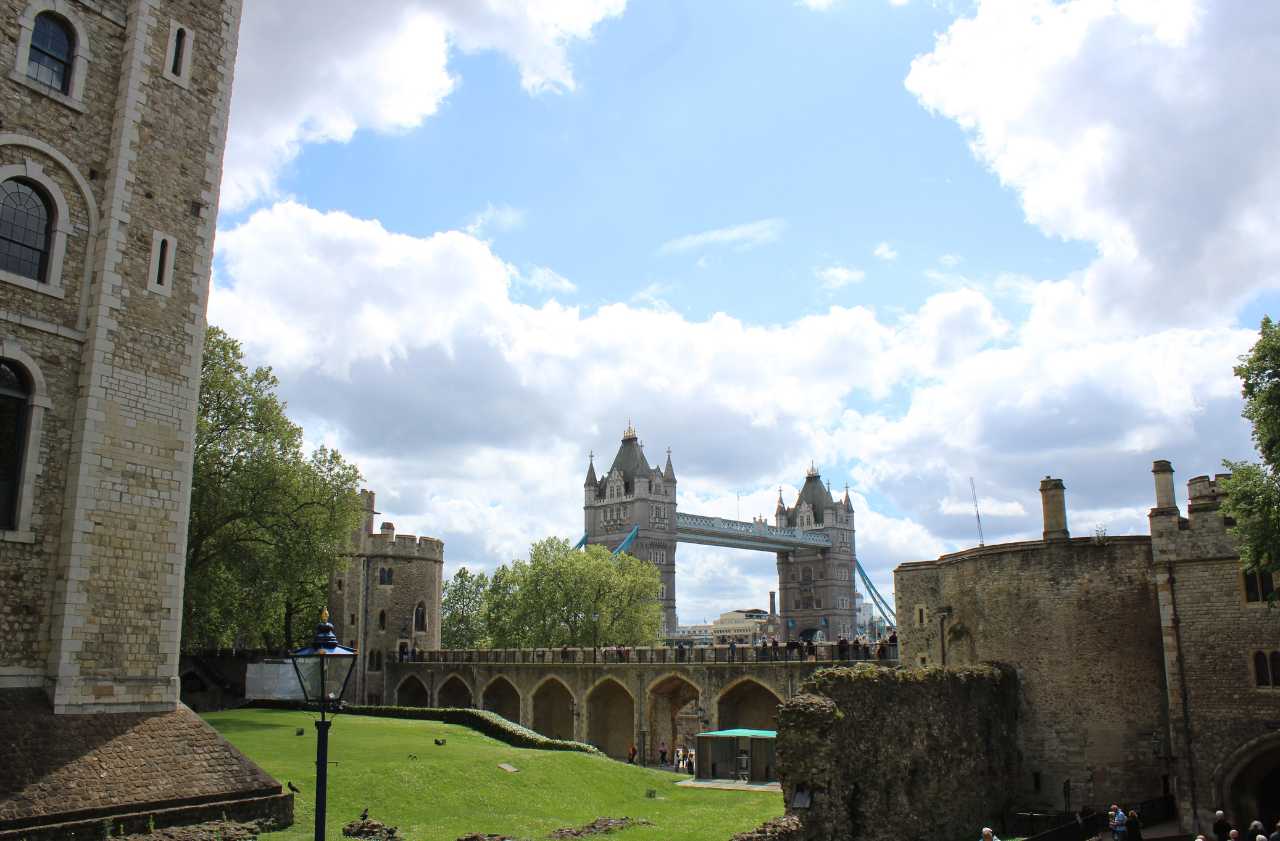
Another Perspective from Within the Grounds of the Tower of London // Photo by Author
The Story that Shines Greater than the Tower
Praise God, my life contains nothing like the brutality of the Tower. However, like the Tower’s many victims, I do have difficult situations and circumstances of my life that I cannot run away from. The question is, who will I run to?
That morning at the Tower, the sadness of the place overwhelmed me. For sure, one could easily walk through as a tourist and be fascinated and horrified, yet remain detached. However, my goal throughout our trip of a lifetime was to have eyes to see, not just on a tourist level, but on a spiritual level.
Yes, the tales of the Tower’s darkness are as rank as legends of the sewage-filled moat. And yet, even there, in one of history’s darkest places, I found a shining truth – a truth I would see over and over and over during our time in England and Scotland.
Death, torture, brutality, cruelty – – – none of these things win when Jesus is welcomed into the story.
That day at the Tower, we had a ticket time awaiting us at St. Paul’s Cathedral, so we didn’t tarry extra long. Indeed, I felt more than ready to take leave free from the oppressive place.
However, I carry with me still the reminder to run to the Name of the Lord, the strong Tower that beckons to me as a place to not just visit, but to stay.
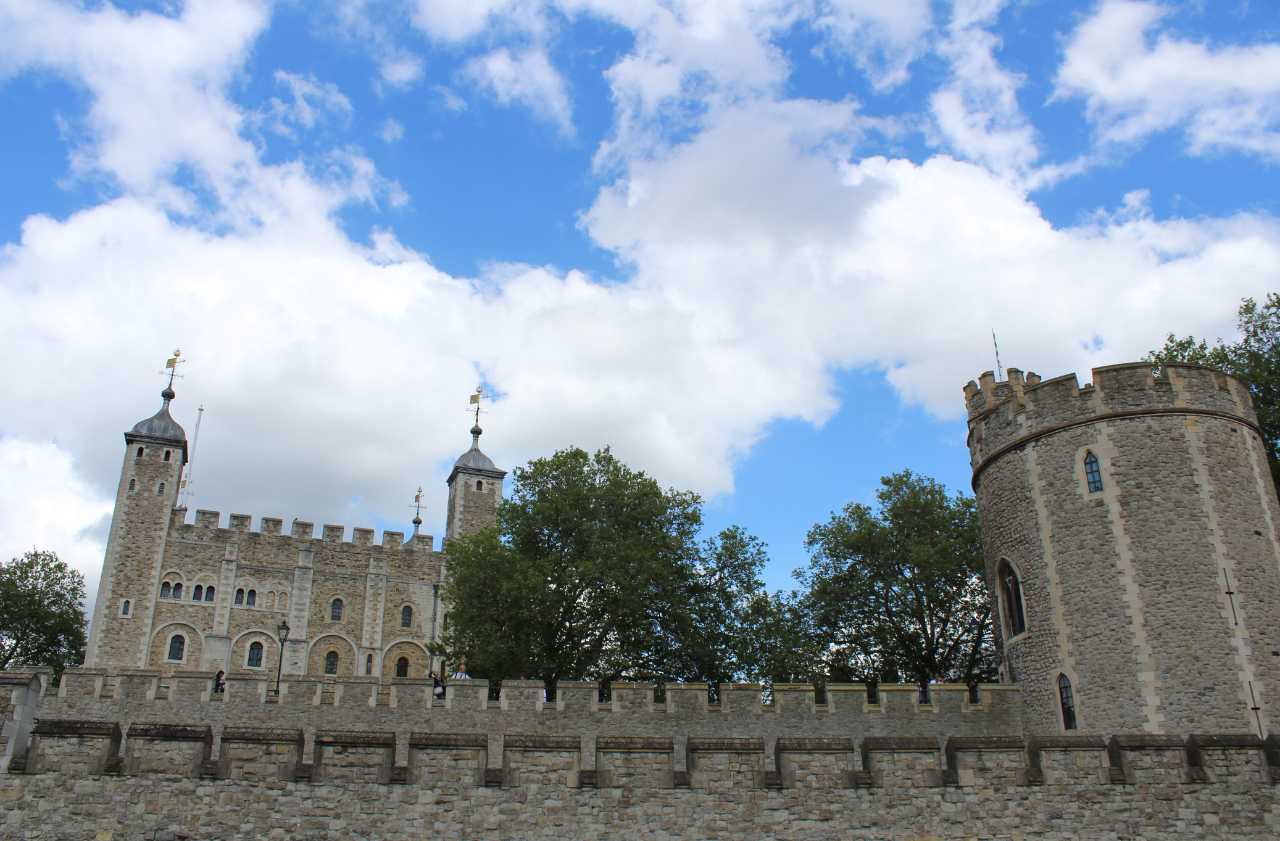
View of Tower of London // Photo by Author
Travel and Religion
the Chapel of St. Peter ad Vincula
Previous Post
August 14, 2024
The River Thames and Peace Like a River
Next Post

September 9, 2024 Come and See
Browse Our Archives
Select a Category children Devotion discipleship easter family kids marriage ministry ministry to kids next generation for jesus travel Uncategorized women in ministry women pastors
Select a Month September 2026 March 2026 February 2026 August 2025 April 2025 March 2025 January 2025 October 2024 September 2024 August 2024 June 2024 February 2024 January 2024 December 2023 August 2023 July 2023 June 2023 December 2022 November 2022
Follow Us!
TAKE THE
Religious Wisdom Quiz
I came from stone when struck, satisfying a grumbling multitude in the wilderness. What am I
Select your answer to see how you score.
Water The Spirit Manna Quail
Related posts from Meet With God Make Him Known

What These Books Make Me Ponder 500 Years...
The Great Instead - A Poem for Good...
God Does Not Waste Daughters — So Why...
TRENDING AT PATHEOS Evangelical

The REST of Your Life: A Creative Wrestles...
This week I had a conversation with a good friend from church....

How the author of the world's best hymn...
I've been working with John Newton for a while now. This makes...

Long before this Lectio Divina, Psalm 130 - the song - started...

What About the Trees? Another Living Parable
After I finished writing the last article about falling leaves as a...

Why Classical Education Is a Conversation, Not a...
Come and Read: Joy in Classical Education When I was a little...

Cornell University has received a great deal of negative publicity and intense...
view all Evangelical blogs
Ad-Free & Subscriber Log-In Subscription Support
- About Us
- 2026 Calendar
- Videos
- Podcasts
- Library of World Religions
- Faith In Media Tracker
- Advertise With Us
- Write for Us
- Privacy Policy
- Terms of Service
- Do Not Sell My Data
- Contact Us
- Radiant Digital
- Manage Newsletter Subscriptions
- Unsubscribe From Notifications
- Sitemap
Copyright 2008-2026, Patheos. All rights reserved.
Subscription Support Ad-Free & Subscriber Log-In
Follow Patheos