
BuddhistCatholicContemplativeEvangelicalGeneral ChristianHinduJewishLatter-day SaintMuslimNew VisionsProgressive Christian
Beliefs
- Buddhist
- Catholic
- Contemplative
- Evangelical
- General Christian
- Hindu
- Jewish
- Latter-day Saint
- More Voices
- Muslim
- New Visions
- Pagan
- Progressive Christian
Topics
- Religion News
- Food and Religion
- Sports and Religion
- Religious Art
- Religious Music and Entertainment
- Religious Events
- History and Religion
- Style and Religion
- Politics and Religion
- Women in Religion
- Recreation Outdoors and Religion
- Business Finance and Religion
- Careers Workplace and Religion
- Education and Religion
- Family Parenting and Religion
- Health Fitness and Religion
- Home and Religion
- Relationships and Religion
- Technology and Religion
- Travel and Religion
Columnists
- Buddhist Columnists
- Business Finance and Religion Columnists
- Careers Workplace and Religion Columnists
- Catholic Columnists
- Contemplative Columnists
- Education and Religion Columnists
- Evangelists Columnists
- Family Parenting and Religion Columnists
- General Christian Columnists
- Health Fitness and Religion Columnists
- Hindu Columnists
- History and Religion Columnists
- Home and Religion Columnists
- Jewish Columnists
- More Voices Columnists
- Latter Day Columnists
- Muslim Columnists
- New Visions Columnists
- Nonreligious Columnists
- Pagan Columnists
- Politics and Religion Columnists
- Progressive Columnists
- Recreation Outdoors and Religion Columnists
- Relationships and Religion Columnists
- Religion News Columnists
- Religious Art Columnists
- Religious Events Columnists
- Religious Music and Entertainment Columnists
- Sports and Religion Columnists
- Style and Religion Columnists
- Technology and Religion Columnists
- Travel and Religion Columnists
- Women in Religion Columnists
Resource Library
- 2026 Calendar
- Library of World Religions
- The 100 Most Holy Places on Earth
- Patheos Answers
- Podcasts
- Videos
- Faith Leaders Database
- Anglican Episcopalian
- Bahai
- Baptist
- Buddhism
- Christianity
- Confucianism
- Eastern Orthodoxy
- Hinduism
- Holiness and Pentecostal
- ISKCON
- Islam
- Judaism
- Lutheran
- Methodist
- The Church of Jesus Christ of Latter-day Saints
- New Age
- Paganism
- Presbytarian and Reformed
- Protestantism
- Religion Behind the Scenes
- Roman Catholic
- Scientology
- Shia Islam
- Sikhism
- Sufism
- Sunni Islam
- Taoism
- Zen
- See all religions
Research Tools
 Ad-Free & Subscriber Log-In Subscription Support
Ad-Free & Subscriber Log-In Subscription Support
Follow Patheos 

- Trending:
- Forgiveness
- |
- Marriage
- |
- Consciousness
- |
- Death Penalty
- |
- Election
- |
- Halloween
 McNamara's Blog
- Home
- Catholic
- John Wayne and the Catholic Church
John Wayne and the Catholic Church
Last updated on: May 26, 2020 at 5:49 am by Pat McNamara
John Wayne and the Catholic Church 2020-05-26T05:49:06-06:00 Pat McNamara
Patheos Explore the world's faith through different perspectives on religion and spirituality! Patheos has the views of the prevalent religions and spiritualities of the world.
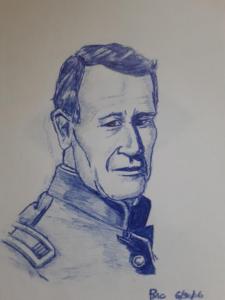 John Wayne and the Catholics
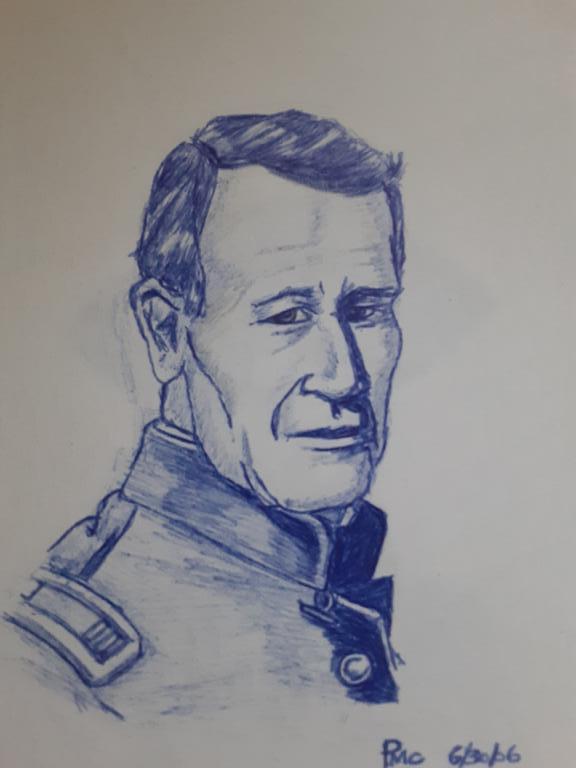
For me today is a big “OTD” moment. That’s because, in 1907, my favorite actor, Marion Robert Morrison, was born in Winterset, Iowa. Known to the world as John Wayne, he’s also one of my favorite Catholic converts.
Raised Protestant, Wayne frequently referred to himself as a “Presbygoddamnterian.” But throughout his adult life, many of his close connections were Catholic. His first wife, Josephine Saenz, was a daily communicant and an active volunteer for Catholic causes throughout her life. It was said that she prayed regularly for his conversion. Their children were raised Catholic. Michael and Patrick both graduated from what is now Loyola Marymount University in Los Angeles.
And of course John Wayne’s closest professional acquaintance, and mentor, was director John Ford (1907-1979). An Irish Catholic from New England, Ford (born John Martin Feeney) was not a terribly religious person per se, but a strong Catholic worldview does permeate his films. Loretta Young, for many years the face of Catholic Hollywood, was Michael’s godmother.
John Wayne’s Conversion
At the end of his long bout with cancer, Wayne asked to be baptized a Catholic. In his recent biography of Wayne (the best to date), Scott Eyman interviewed the Duke’s grandson, Father Matthew Munoz, a priest of the Diocese of Orange. Father Munoz says:
My grandmother [Josephine] was very devout and so was my mother. In fact, my grandfather… was very true to God. He always believed in God, but he wasn’t much of a church attendee. I really think my grandfather’s admiration of my grandmother is what made him take that spiritual step and say yes. I also believe my grandmother’s prayers were heard.
Wayne’s funeral Mass at Our Lady Queen of Angels, celebrated by his friend Archbishop Marcos McGrath of Panama, was a private affair restricted to immediate family members. But, Eyman writes,
The tribute that might have meant the most to Wayne happened in Durango, Mexico, where Burt Lancaster was on location. When word came that John Wayne had died, the cast and crew paused for a minute of silence. They were making “Cattle Annie and Little Britches.” They were making a western.
John Wayne and the Western
To me, watching John Wayne movies brings back happy memories of Saturday afternoons with my father. (My mother would never watch a war movie of his because, she said, “He never served in World War II and he could have.”)
Many people who say they don’t like John Wayne have never seen some of his best films. Far from a womanizer, his characters were diffident, gentle, even tender towards women. There was no swagger in the Wayne hero, but a quiet toughness that didn’t look for trouble. He was the prime cinematic example of courage, which Hemingway called “grace under pressure.” Director John Milius writes: “John Ford and John Wayne taught us how to be men.”
When you discuss the actor John Wayne (as opposed to the actual person), you’re actually addressing the whole question of why the Western genre matters. In her book Wayne and Ford, Professor Nancy Schoenberger of the College of William and Mary aptly writes:
Why do I love Westerns? Maybe I like to see men trying to do the right thing, often against tremendous odds and often for the protection of women and children, who are frequently as tough and feisty as the men who do the actual fighting. Though mostly written by men for men, the Western lays claim to anyone who loves storytelling because it is an inherently dramatic form– usually a quest narrative that follows the hero’s progression from innocence to experience, ignorance to knowledge, shame to redemption, outcast to community. Sometimes the trajectory is reversed, a fall from grace. These are all human journeys. They transcend any one demographic.
Which John Wayne Movies Should You Watch?
The best ones! I would recommend the following:
- Stagecoach (1939)– A young Wayne’s breakthrough role under the tutelage of John Ford.
- Red River (1948)– Wayne showed his “acting chops” here as a ruthless cattle baron.
- She Wore a Yellow Ribbon (1949)– A movie you appreciate as you get older.
- The Searchers (1956)– Regarded by many as the greatest Western ever made.
- The Man Who Shot Liberty Valance (1962)– A subtle meditation on the West itself.
These are great human stories. That’s why I love them. They’re about things that really matter to me, like courage, friendship, community, and doing the right thing. Not a bad list of attributes there!
*The drawing of John Wayne from Fort Apache (1948) is by Pat McNamara.
Previous Post

May 22, 2020
A Great Book for Memorial Day-- Catholics and the Civil War
Next Post
May 30, 2020 This Week in America: What Would St. Francis Do?
Browse Our Archives
Select a Category African-American Catholics Alabama Catholics American Catholic History American Catholic women American History Anniversaries Anti-Catholicism Arkansas Catholics Benedictines Bishops Blessed John Henry Newman Book Reviews Books Boston College Brooklyn churches Brothers California Catholics Capuchins Cardinals Carlo Carretto Carmelites Catholic authors Catholic Cemeteries Catholic Historians Catholic History in Less Than 5 Minutes Catholic musicians Catholic Poetry Catholic Press Catholic School Textbook Catholic University of America Catholic Worker Catholics and Music Catholics and Race Catholics in Politics Catholics in the American Revolution Catholics in the Military Catholics in the Movies Catholics in the South Catholics in the West Catholics on Stage Catjolic Women Catolic Poetry Charles de Foucauld Children's Masses Christian Brothers Christmas Church Reform Civil Rights Movement Civil War Colleges and universities Converts D.C. Catholics Deaf Catholics Dominicans. Dorothy Day English Catholics Florida Catholics Fordham University Franciscans French Catholics Georgetown University German Americans Good Shepherd Sisters Hispanic Catholics Historians and Archivists Holy Cross Fathers Holy Name Society Idaho Catholics Illinois Catholics Indian Wars Indiana Catholics Irish Americans Irish Catholicism Italian Americans Italian Catholics Jesuits Josephite Sisters Kentucky Catholics Know-Nothings Laetare Medal Recipients laity Liturgical Movement Maine Catholics Manhattan College Maryland Catholicism Michigan Catholics Middle Ages Minnesota Catholics Missionaries Mississippi Catholics Missouri Catholics Monasteries Montana Catholics Native Americans New England Catholicism New Jersey Catholics New York Catholics North American College Ohio Catholics Oratorians Oregon Catholics Parish Mission Parishes Passionists Pat McNamara's Books Paulists Pennsylvania Catholics Popes Presidents Priests Quotations Religious Orders Rhode Island Catholics Saints Salesians Seminarians Seminaries Sermons Servants of God Siisters of Charity Sisters of Mercy South Carolina Catholics Spanish-American War Sports St. Francis of Assiai St. John Henry Newman Suplicians Tennessee Catholics Texas Catholics The year in review Thomas Merton Throwback Thursday Photograph Trappists Uncategorized University of Notre Dame Video Presentations Vincentians Virginia Catholics Visitation Nuns Washington West Point West Virginia Catholics West Viriginia Catholics Wisconsin Catholicism Women Religious World War II
Select a Month December 2020 June 2020 May 2020 April 2020 March 2020 March 2019 February 2019 January 2019 December 2018 November 2018 November 2014 October 2014 September 2014 August 2014 July 2014 June 2014 May 2014 December 2013 November 2013 October 2013 August 2013 July 2013 June 2013 May 2013 April 2013 March 2013 February 2013 January 2013 December 2012 November 2012 October 2012 September 2012 August 2012 July 2012 June 2012 April 2012 March 2012 December 2011 November 2011 October 2011 September 2011 August 2011 July 2011 June 2011 May 2011 April 2011 March 2011 February 2011 January 2011 December 2010 November 2010 October 2010 January 2010 December 2009 November 2009 October 2009 September 2009 August 2009 July 2009 June 2009 May 2009 April 2009 March 2009 February 2009 January 2009 December 2008
Follow Us!
TAKE THE
Religious Wisdom Quiz
Who predicted the fall of Tyre?
Select your answer to see how you score.
Jeremiah Isaiah Daniel Ezekiel
Related posts from McNamara's Blog

St. John Henry Newman and the “Special Charm...
McNamara's Catholic Poets: Monsignor Robert Hugh Benson
"A Victorian Mother Teresa": Servant of God Elizabeth...
TRENDING AT PATHEOS Catholic

The Parable Of The Sower And The Word...
One of Christ’s most famous parables is that of the sower who...

Rejecting Doom: Christian Hope And Human Action
Christianity is a religion of hope. We are to have hope and...

Why I Choose the Eucharist Over the Sermon
Choose the Eucharist, Not the Sermon What are we supposed to get...

5 Design Elements Found in Spiritually Rooted Homes
Putting Spirituality Into Home Decor Our homes are more than our living...

Credo: A Story of God Told with the...
About 10 years ago, I began to imagine a personal "Credo" that...

The Anatomy of Divine Revelation in Catholic Thought
The claim that God has made Himself known to human beings is...
view all Catholic blogs
Ad-Free & Subscriber Log-In Subscription Support
- About Us
- 2026 Calendar
- Videos
- Podcasts
- Library of World Religions
- Faith In Media Tracker
- Advertise With Us
- Write for Us
- Privacy Policy
- Terms of Service
- Do Not Sell My Data
- Contact Us
- Radiant Digital
- Manage Newsletter Subscriptions
- Unsubscribe From Notifications
- Sitemap
Copyright 2008-2026, Patheos. All rights reserved.
Subscription Support Ad-Free & Subscriber Log-In
Follow Patheos