
BuddhistCatholicContemplativeEvangelicalGeneral ChristianHinduJewishLatter-day SaintMuslimNew VisionsProgressive Christian
Beliefs
- Buddhist
- Catholic
- Contemplative
- Evangelical
- General Christian
- Hindu
- Jewish
- Latter-day Saint
- More Voices
- Muslim
- New Visions
- Pagan
- Progressive Christian
Topics
- Religion News
- Food and Religion
- Sports and Religion
- Religious Art
- Religious Music and Entertainment
- Religious Events
- History and Religion
- Style and Religion
- Politics and Religion
- Women in Religion
- Recreation Outdoors and Religion
- Business Finance and Religion
- Careers Workplace and Religion
- Education and Religion
- Family Parenting and Religion
- Health Fitness and Religion
- Home and Religion
- Relationships and Religion
- Technology and Religion
- Travel and Religion
Columnists
- Buddhist Columnists
- Business Finance and Religion Columnists
- Careers Workplace and Religion Columnists
- Catholic Columnists
- Contemplative Columnists
- Education and Religion Columnists
- Evangelists Columnists
- Family Parenting and Religion Columnists
- General Christian Columnists
- Health Fitness and Religion Columnists
- Hindu Columnists
- History and Religion Columnists
- Home and Religion Columnists
- Jewish Columnists
- More Voices Columnists
- Latter Day Columnists
- Muslim Columnists
- New Visions Columnists
- Nonreligious Columnists
- Pagan Columnists
- Politics and Religion Columnists
- Progressive Columnists
- Recreation Outdoors and Religion Columnists
- Relationships and Religion Columnists
- Religion News Columnists
- Religious Art Columnists
- Religious Events Columnists
- Religious Music and Entertainment Columnists
- Sports and Religion Columnists
- Style and Religion Columnists
- Technology and Religion Columnists
- Travel and Religion Columnists
- Women in Religion Columnists
Resource Library
- 2026 Calendar
- Library of World Religions
- The 100 Most Holy Places on Earth
- Patheos Answers
- Podcasts
- Videos
- Faith Leaders Database
- Anglican Episcopalian
- Bahai
- Baptist
- Buddhism
- Christianity
- Confucianism
- Eastern Orthodoxy
- Hinduism
- Holiness and Pentecostal
- ISKCON
- Islam
- Judaism
- Lutheran
- Methodist
- The Church of Jesus Christ of Latter-day Saints
- New Age
- Paganism
- Presbytarian and Reformed
- Protestantism
- Religion Behind the Scenes
- Roman Catholic
- Scientology
- Shia Islam
- Sikhism
- Sufism
- Sunni Islam
- Taoism
- Zen
- See all religions
Research Tools
 Ad-Free & Subscriber Log-In Subscription Support
Ad-Free & Subscriber Log-In Subscription Support
Follow Patheos 

- Trending:
- Forgiveness
- |
- Marriage
- |
- Consciousness
- |
- Death Penalty
- |
- Election
- |
- Halloween
 McNamara's Blog
- Home
- Catholic
- Newman, the Scandals, and the Laity
Newman, the Scandals, and the Laity
Last updated on: February 24, 2019 at 9:44 am by Pat McNamara
Newman, the Scandals, and the Laity 2019-02-24T09:44:36-07:00 Pat McNamara
Patheos Explore the world's faith through different perspectives on religion and spirituality! Patheos has the views of the prevalent religions and spiritualities of the world.
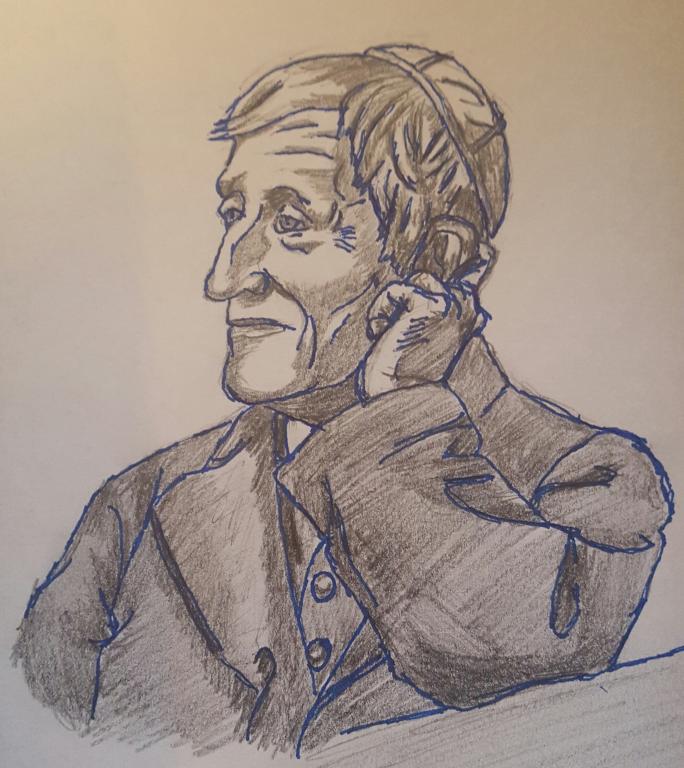 Pope Francis has formally cleared the way for the canonization of Blessed John Henry Newman (1801-1890), whom many consider the most important Catholic thinker since St. Thomas Aquinas. It’s been suggested that Newman could one day join Aquinas as a Doctor of the Church, for his unique contributions to Catholic intellectual life.
Many people know Newman, without actually knowing him. For example, The Pillar of the Cloud, better known by its first line, “Lead, kindly light,” was one of the most popular verses of his time, loved by Protestants and Catholics alike. Newman biographer Brian Martin writes: “It is a poem of conviction, confidence, and strong acceptance of God’s steady guidance.”
Similarly, many Catholics feel Newman’s theological influence without being fully aware of it. Newman saw that secularization would become a driving force in modern life, and that Christianity must address it in a positive, meaningful way, devoid of simple condemnation. Hence Vatican II owed Newman much, both for his understanding of the historical development of Christian doctrine, and for his assessment of the laity’s role in the world. What Newman had to say about the laity was years ahead of its time. Martin aptly comments:
He wanted Catholics to accept responsibilities in the world, exert their influence for the good, assert themselves, broaden their minds all the time knowing where truth lay; and he wanted them to be guided like fully responsible people by their educated and enlightened consciences.
Newman’s Idea of a University is still a cornerstone on higher education. In his time, too many Catholic colleges were quasi-seminaries, offering lay people a framework for pious living and little more, shielding them from modern intellectual trends. For Newman, however, the university wasn’t a seminary, but “a place to fit men of the world for the world.” Students shouldn’t be excluded from the “dangerous,” because “it is not the way to learn to swim in troubled waters never to have gone into them.”
In 1859, as Newman was having a conversation with his bishop, William Ullathorne, the topic of lay people in the Church arose. As Newman recalled, Ullathorne asked rhetorically, “Who are the laity?” Newman replied that “the Church would look foolish without them.” Today in 2019, in light of the scandals engulfing the Church, it would look doubly foolish without them.
Too often, Newman wrote, the laity “were treated like good little boys.” But when he was putting together the Catholic University of Ireland in the 1850’s, his biographer Father Ian Ker writes, he “wanted all but the theology chairs to be filled with the ablest laymen available (whatever their politics) rather than by inferior priests.” (Interestingly, Ker notes, it was the medical school that turned out to the university’s most successful institution.)
In one of his earliest works, The Arians of the Fourth Century, Newman looked at the theological controversies of that era, particularly the theological debates surrounding the nature of Christ. Was Jesus really God, or was He merely a good man? Arians argued the latter, and for a while they held power in the Church. Many bishops went Arian, while the orthodox, like St. Athanasius, were driven into exile.
Somebody had to keep the correct teaching alive, and, Newman points out, it wasn’t the bishops. It was the laity. During the fourth century, “the divine tradition committed to the infallible Church was proclaimed and maintained far more by the faithful than by the episcopate.” The majority of bishops, Newman writes, “was unfaithful to its commission, while the body of the laity was faithful to its baptism.”
In his famous essay “On Consulting the Faithful in Matters of Doctrine,” Newman asks the question why the Church should do so:
Because the body of the faithful is one of the witnesses to the fact of the tradition of Revealed doctrine, and because their consensus throughout Christendom is the voice of the Infallibility of the Church.
By the nineteenth century, finding orthodox bishops wasn’t a problem; it was, rather, writes Ker, “that the role of the laity would be neglected.” For Newman, “each constituent portion of the Church” had “its proper functions, and no portion can safely be neglected.” If Church leaders didn’t encourage laity to study its teaching in order to be fuller witnesses in the world, Newman predicted “indifference” among the “educated classes” and increased “superstition” among the poorer.
Don’t we find ourselves in a situation similar to Athanasius’ time? Today we admittedly face a moral scandal rather than a theological one. But we have seen many bishops unfaithful to their commission. Clearly reform has to take place. But from where? As Newman pointed out, the Church is made up of many parts, including the laity, and the Church would definitely look foolish without them.
So if reform takes place, the laity must step up to the plate and do its part. That means witnessing to the faith in the world. Priests, deacons, and religious can’t do this alone. We need an informed laity that knows the faith, and knows the world, and is ready to engage in dialogue between the two, in a mature, intelligent and positive manner. Newman saw this two hundred years ago, and that’s one of the reasons why he still speaks to us today, “heart to heart,” as his episcopal motto says.
(The drawing of Blessed John Henry Newman is by Pat McNamara.)
Previous Post

February 20, 2019
Nuns as Sex Slaves: Fact, Fiction, and Maria Monk
Next Post
February 28, 2019 The Council of Trent-- And Church Reform Today
Browse Our Archives
Select a Category African-American Catholics Alabama Catholics American Catholic History American Catholic women American History Anniversaries Anti-Catholicism Arkansas Catholics Benedictines Bishops Blessed John Henry Newman Book Reviews Books Boston College Brooklyn churches Brothers California Catholics Capuchins Cardinals Carlo Carretto Carmelites Catholic authors Catholic Cemeteries Catholic Historians Catholic History in Less Than 5 Minutes Catholic musicians Catholic Poetry Catholic Press Catholic School Textbook Catholic University of America Catholic Worker Catholics and Music Catholics and Race Catholics in Politics Catholics in the American Revolution Catholics in the Military Catholics in the Movies Catholics in the South Catholics in the West Catholics on Stage Catjolic Women Catolic Poetry Charles de Foucauld Children's Masses Christian Brothers Christmas Church Reform Civil Rights Movement Civil War Colleges and universities Converts D.C. Catholics Deaf Catholics Dominicans. Dorothy Day English Catholics Florida Catholics Fordham University Franciscans French Catholics Georgetown University German Americans Good Shepherd Sisters Hispanic Catholics Historians and Archivists Holy Cross Fathers Holy Name Society Idaho Catholics Illinois Catholics Indian Wars Indiana Catholics Irish Americans Irish Catholicism Italian Americans Italian Catholics Jesuits Josephite Sisters Kentucky Catholics Know-Nothings Laetare Medal Recipients laity Liturgical Movement Maine Catholics Manhattan College Maryland Catholicism Michigan Catholics Middle Ages Minnesota Catholics Missionaries Mississippi Catholics Missouri Catholics Monasteries Montana Catholics Native Americans New England Catholicism New Jersey Catholics New York Catholics North American College Ohio Catholics Oratorians Oregon Catholics Parish Mission Parishes Passionists Pat McNamara's Books Paulists Pennsylvania Catholics Popes Presidents Priests Quotations Religious Orders Rhode Island Catholics Saints Salesians Seminarians Seminaries Sermons Servants of God Siisters of Charity Sisters of Mercy South Carolina Catholics Spanish-American War Sports St. Francis of Assiai St. John Henry Newman Suplicians Tennessee Catholics Texas Catholics The year in review Thomas Merton Throwback Thursday Photograph Trappists Uncategorized University of Notre Dame Video Presentations Vincentians Virginia Catholics Visitation Nuns Washington West Point West Virginia Catholics West Viriginia Catholics Wisconsin Catholicism Women Religious World War II
Select a Month December 2020 June 2020 May 2020 April 2020 March 2020 March 2019 February 2019 January 2019 December 2018 November 2018 November 2014 October 2014 September 2014 August 2014 July 2014 June 2014 May 2014 December 2013 November 2013 October 2013 August 2013 July 2013 June 2013 May 2013 April 2013 March 2013 February 2013 January 2013 December 2012 November 2012 October 2012 September 2012 August 2012 July 2012 June 2012 April 2012 March 2012 December 2011 November 2011 October 2011 September 2011 August 2011 July 2011 June 2011 May 2011 April 2011 March 2011 February 2011 January 2011 December 2010 November 2010 October 2010 January 2010 December 2009 November 2009 October 2009 September 2009 August 2009 July 2009 June 2009 May 2009 April 2009 March 2009 February 2009 January 2009 December 2008
Follow Us!
TAKE THE
Religious Wisdom Quiz
How was Haman punished for his plot?
Select your answer to see how you score.
He was turned into a pillar of salt He was beheaded He was hanged on the gallows he built He was exiled
Related posts from McNamara's Blog
The Council of Trent-- And Church Reform Today
Looking at the Scandals-- A Church Historian’s Perspective
A Poem by Blessed John Henry Newman, 1857
TRENDING AT PATHEOS Catholic

Rejecting Doom: Christian Hope And Human Action
Christianity is a religion of hope. We are to have hope and...

It’s What Comes From Within Which Matters
One of the most difficult things for us to understand is why...

Why I Choose the Eucharist Over the Sermon
Choose the Eucharist, Not the Sermon What are we supposed to get...

5 Design Elements Found in Spiritually Rooted Homes
Putting Spirituality Into Home Decor Our homes are more than our living...

Credo: A Story of God Told with the...
About 10 years ago, I began to imagine a personal "Credo" that...

The Anatomy of Divine Revelation in Catholic Thought
The claim that God has made Himself known to human beings is...
view all Catholic blogs
Ad-Free & Subscriber Log-In Subscription Support
- About Us
- 2026 Calendar
- Videos
- Podcasts
- Library of World Religions
- Faith In Media Tracker
- Advertise With Us
- Write for Us
- Privacy Policy
- Terms of Service
- Do Not Sell My Data
- Contact Us
- Radiant Digital
- Manage Newsletter Subscriptions
- Unsubscribe From Notifications
- Sitemap
Copyright 2008-2026, Patheos. All rights reserved.
Subscription Support Ad-Free & Subscriber Log-In
Follow Patheos