
BuddhistCatholicContemplativeEvangelicalGeneral ChristianHinduJewishLatter-day SaintMuslimNew VisionsProgressive Christian
Beliefs
- Buddhist
- Catholic
- Contemplative
- Evangelical
- General Christian
- Hindu
- Jewish
- Latter-day Saint
- More Voices
- Muslim
- New Visions
- Pagan
- Progressive Christian
Topics
- Religion News
- Food and Religion
- Sports and Religion
- Religious Art
- Religious Music and Entertainment
- Religious Events
- History and Religion
- Style and Religion
- Politics and Religion
- Women in Religion
- Recreation Outdoors and Religion
- Business Finance and Religion
- Careers Workplace and Religion
- Education and Religion
- Family Parenting and Religion
- Health Fitness and Religion
- Home and Religion
- Relationships and Religion
- Technology and Religion
- Travel and Religion
Columnists
- Buddhist Columnists
- Business Finance and Religion Columnists
- Careers Workplace and Religion Columnists
- Catholic Columnists
- Contemplative Columnists
- Education and Religion Columnists
- Evangelists Columnists
- Family Parenting and Religion Columnists
- General Christian Columnists
- Health Fitness and Religion Columnists
- Hindu Columnists
- History and Religion Columnists
- Home and Religion Columnists
- Jewish Columnists
- More Voices Columnists
- Latter Day Columnists
- Muslim Columnists
- New Visions Columnists
- Nonreligious Columnists
- Pagan Columnists
- Politics and Religion Columnists
- Progressive Columnists
- Recreation Outdoors and Religion Columnists
- Relationships and Religion Columnists
- Religion News Columnists
- Religious Art Columnists
- Religious Events Columnists
- Religious Music and Entertainment Columnists
- Sports and Religion Columnists
- Style and Religion Columnists
- Technology and Religion Columnists
- Travel and Religion Columnists
- Women in Religion Columnists
Resource Library
- 2026 Calendar
- Library of World Religions
- The 100 Most Holy Places on Earth
- Patheos Answers
- Podcasts
- Videos
- Faith Leaders Database
- Anglican Episcopalian
- Bahai
- Baptist
- Buddhism
- Christianity
- Confucianism
- Eastern Orthodoxy
- Hinduism
- Holiness and Pentecostal
- ISKCON
- Islam
- Judaism
- Lutheran
- Methodist
- The Church of Jesus Christ of Latter-day Saints
- New Age
- Paganism
- Presbytarian and Reformed
- Protestantism
- Religion Behind the Scenes
- Roman Catholic
- Scientology
- Shia Islam
- Sikhism
- Sufism
- Sunni Islam
- Taoism
- Zen
- See all religions
Research Tools
 Ad-Free & Subscriber Log-In Subscription Support
Ad-Free & Subscriber Log-In Subscription Support
Follow Patheos 

- Trending:
- Forgiveness
- |
- Marriage
- |
- Consciousness
- |
- Death Penalty
- |
- Election
- |
- Halloween
 McNamara's Blog
- Home
- Catholic
- Christopher Columbus and Notre Dame: A Church Historian’s Perspective
Christopher Columbus and Notre Dame: A Church Historian’s Perspective
Last updated on: January 24, 2019 at 9:56 am by Pat McNamara
Christopher Columbus and Notre Dame: A Church Historian’s Perspective 2019-01-24T09:56:02-07:00 Pat McNamara
Patheos Explore the world's faith through different perspectives on religion and spirituality! Patheos has the views of the prevalent religions and spiritualities of the world.
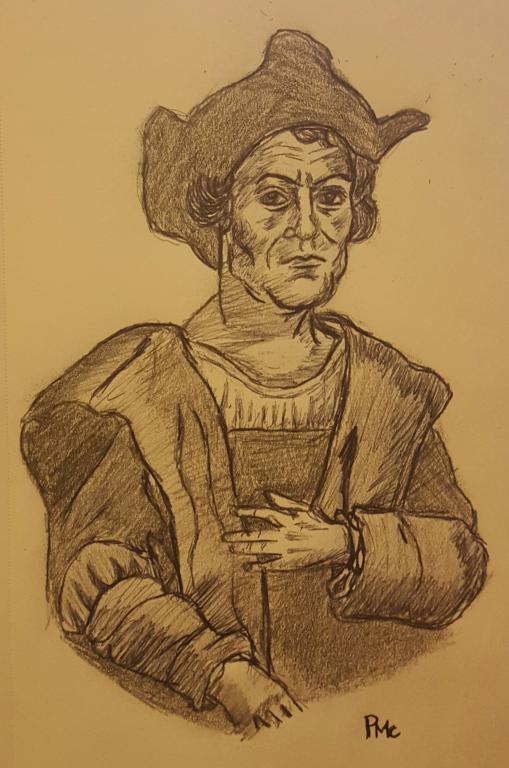 Among institutes of higher education, Notre Dame has a storied place in American Catholic culture and life. In his 1972 book That Most Distressful Nation, Father Andrew Greeley wrote that for many American Catholics, “the Fighting Irish of Notre Dame were folk heroes of which to be proud.” For some, going to South Bend was a bigger deal than being accepted to the Ivy Leagues.
When Notre Dame does something, Catholics take notice: whether it’s giving an honorary degree to Barack Obama, or inviting Mike Pence to address graduates. Its annual Laetare Medal award is an event of interest to the whole Catholic community, not just the university. In short, what happens at Notre Dame matters.
That’s why it’s such a big deal when university president Father John Jenkins, C.S.C., recently addressed complaints about murals in the Main Building depicting Christopher Columbus:
The murals… reflect the attitudes of the time and were intended as a didactic presentation… In recent years, however, many have come to see the murals as at best blind to the consequences of Columbus’s voyage for the indigenous peoples who inhabited this “new” world and at worst demeaning toward them.
Father Jenkins’s letter was a response to a university-wide petition to have the murals removed, which they called Notre Dame’s “own version of a Confederate monument.”
As a historian of American Catholicism (I know some peers will disagree), my own feeling is that they should stay as they are. First of all, murals can’t be removed without great damage to the image. This is a teachable moment. Notre Dame has the best program in the country for American Catholic history. Perhaps the faculty could organize a public listening session to promote further dialogue on the subject.
Another option would be to post a permanent public disclaimer next to the murals. This could briefly explain the historical context of the paintings. At the same time, it could also give the university the chance to formally eschew all forms of imperialism. No institution has a perfect past, but the beauty of the past is that we can learn from it if we choose.
Let’s also keep in mind that during the 1880’s, when these murals were painted, anti-Catholicism was quite powerful. Catholic immigrants were suspected of having double loyalties. In response, Catholics wanted to show Protestant America that they were good Americans too. Hence they pointed to a seminal figure in American history, a Catholic. That’s why they chose Christopher Columbus. They were trying to fight hatred, not promote it.
If we look close enough, we’d find that many Catholic universities (not to mention many non-Catholic ones) have skeletons in their closet. Until the 1830’s, the Georgetown Jesuits were slaveholders. Recently the university made a formal amends to their descendants. There are other examples.
At Minnesota’s University of St. Thomas, for instance, there stands a statue of Archbishop John Ireland, who alienated Ukrainian Catholic immigrants to the point where thousands left to join the Orthodox Church. Many Eastern Rite Catholics find his statue offensive. Similarly, Fordham has a statue of its founder, Archbishop John Hughes, who was well known to be racist. Georgetown houses a statue of a slaveholder, Archbishop John Carroll. Are we going to remove or cover these statues too?
So let a disclaimer be posted at Notre Dame, by all means, and let the university expressly disavow all forms of imperialism, cultural and otherwise. But leave the murals alone. They’re as much a part of the university’s history as Touchdown Jesus, maybe even more.
Let’s acknowledge our collective American Catholic history, warts and all. Let’s talk about the fact that symbols which once had one meaning now signify something else to the modern mind. Let’s learn from it. But, for God’s sake, let’s not destroy and distort the past to make ourselves feel better today. Tampering with history, as history has shown us, can have dangerous consequences.
(*The drawing of Christopher Columbus is by Pat McNamara.)
Previous Post

January 24, 2019
St. Joseph‘s School for the Deaf Celebrates 150 Years in the Bronx
Next Post
January 25, 2019 Peace and Good at Graymoor
Browse Our Archives
Select a Category African-American Catholics Alabama Catholics American Catholic History American Catholic women American History Anniversaries Anti-Catholicism Arkansas Catholics Benedictines Bishops Blessed John Henry Newman Book Reviews Books Boston College Brooklyn churches Brothers California Catholics Capuchins Cardinals Carlo Carretto Carmelites Catholic authors Catholic Cemeteries Catholic Historians Catholic History in Less Than 5 Minutes Catholic musicians Catholic Poetry Catholic Press Catholic School Textbook Catholic University of America Catholic Worker Catholics and Music Catholics and Race Catholics in Politics Catholics in the American Revolution Catholics in the Military Catholics in the Movies Catholics in the South Catholics in the West Catholics on Stage Catjolic Women Catolic Poetry Charles de Foucauld Children's Masses Christian Brothers Christmas Church Reform Civil Rights Movement Civil War Colleges and universities Converts D.C. Catholics Deaf Catholics Dominicans. Dorothy Day English Catholics Florida Catholics Fordham University Franciscans French Catholics Georgetown University German Americans Good Shepherd Sisters Hispanic Catholics Historians and Archivists Holy Cross Fathers Holy Name Society Idaho Catholics Illinois Catholics Indian Wars Indiana Catholics Irish Americans Irish Catholicism Italian Americans Italian Catholics Jesuits Josephite Sisters Kentucky Catholics Know-Nothings Laetare Medal Recipients laity Liturgical Movement Maine Catholics Manhattan College Maryland Catholicism Michigan Catholics Middle Ages Minnesota Catholics Missionaries Mississippi Catholics Missouri Catholics Monasteries Montana Catholics Native Americans New England Catholicism New Jersey Catholics New York Catholics North American College Ohio Catholics Oratorians Oregon Catholics Parish Mission Parishes Passionists Pat McNamara's Books Paulists Pennsylvania Catholics Popes Presidents Priests Quotations Religious Orders Rhode Island Catholics Saints Salesians Seminarians Seminaries Sermons Servants of God Siisters of Charity Sisters of Mercy South Carolina Catholics Spanish-American War Sports St. Francis of Assiai St. John Henry Newman Suplicians Tennessee Catholics Texas Catholics The year in review Thomas Merton Throwback Thursday Photograph Trappists Uncategorized University of Notre Dame Video Presentations Vincentians Virginia Catholics Visitation Nuns Washington West Point West Virginia Catholics West Viriginia Catholics Wisconsin Catholicism Women Religious World War II
Select a Month December 2020 June 2020 May 2020 April 2020 March 2020 March 2019 February 2019 January 2019 December 2018 November 2018 November 2014 October 2014 September 2014 August 2014 July 2014 June 2014 May 2014 December 2013 November 2013 October 2013 August 2013 July 2013 June 2013 May 2013 April 2013 March 2013 February 2013 January 2013 December 2012 November 2012 October 2012 September 2012 August 2012 July 2012 June 2012 April 2012 March 2012 December 2011 November 2011 October 2011 September 2011 August 2011 July 2011 June 2011 May 2011 April 2011 March 2011 February 2011 January 2011 December 2010 November 2010 October 2010 January 2010 December 2009 November 2009 October 2009 September 2009 August 2009 July 2009 June 2009 May 2009 April 2009 March 2009 February 2009 January 2009 December 2008
Follow Us!
TAKE THE
Religious Wisdom Quiz
Who prayed three times a day facing Jerusalem?
Select your answer to see how you score.
Ezekiel Jonah Micah Daniel
Related posts from McNamara's Blog
General Sherman Speaks at Notre Dame, 1865
“A Million Foreigners, Most of Them Papists”: The...
Civil War General Receives Notre Dame’s Laetare Medal,...
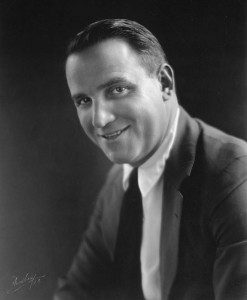
Catholics in the Movies: Allan Dwan (1885-1981)
TRENDING AT PATHEOS Catholic

Rejecting Doom: Christian Hope And Human Action
Christianity is a religion of hope. We are to have hope and...

It’s What Comes From Within Which Matters
One of the most difficult things for us to understand is why...

Why I Choose the Eucharist Over the Sermon
Choose the Eucharist, Not the Sermon What are we supposed to get...

5 Design Elements Found in Spiritually Rooted Homes
Putting Spirituality Into Home Decor Our homes are more than our living...

Credo: A Story of God Told with the...
About 10 years ago, I began to imagine a personal "Credo" that...

The Anatomy of Divine Revelation in Catholic Thought
The claim that God has made Himself known to human beings is...
view all Catholic blogs
Ad-Free & Subscriber Log-In Subscription Support
- About Us
- 2026 Calendar
- Videos
- Podcasts
- Library of World Religions
- Faith In Media Tracker
- Advertise With Us
- Write for Us
- Privacy Policy
- Terms of Service
- Do Not Sell My Data
- Contact Us
- Radiant Digital
- Manage Newsletter Subscriptions
- Unsubscribe From Notifications
- Sitemap
Copyright 2008-2026, Patheos. All rights reserved.
Subscription Support Ad-Free & Subscriber Log-In
Follow Patheos