
BuddhistCatholicContemplativeEvangelicalGeneral ChristianHinduJewishLatter-day SaintMuslimNew VisionsProgressive Christian
Beliefs
- Buddhist
- Catholic
- Contemplative
- Evangelical
- General Christian
- Hindu
- Jewish
- Latter-day Saint
- More Voices
- Muslim
- New Visions
- Pagan
- Progressive Christian
Topics
- Religion News
- Food and Religion
- Sports and Religion
- Religious Art
- Religious Music and Entertainment
- Religious Events
- History and Religion
- Style and Religion
- Politics and Religion
- Women in Religion
- Recreation Outdoors and Religion
- Business Finance and Religion
- Careers Workplace and Religion
- Education and Religion
- Family Parenting and Religion
- Health Fitness and Religion
- Home and Religion
- Relationships and Religion
- Technology and Religion
- Travel and Religion
Columnists
- Buddhist Columnists
- Business Finance and Religion Columnists
- Careers Workplace and Religion Columnists
- Catholic Columnists
- Contemplative Columnists
- Education and Religion Columnists
- Evangelists Columnists
- Family Parenting and Religion Columnists
- General Christian Columnists
- Health Fitness and Religion Columnists
- Hindu Columnists
- History and Religion Columnists
- Home and Religion Columnists
- Jewish Columnists
- More Voices Columnists
- Latter Day Columnists
- Muslim Columnists
- New Visions Columnists
- Nonreligious Columnists
- Pagan Columnists
- Politics and Religion Columnists
- Progressive Columnists
- Recreation Outdoors and Religion Columnists
- Relationships and Religion Columnists
- Religion News Columnists
- Religious Art Columnists
- Religious Events Columnists
- Religious Music and Entertainment Columnists
- Sports and Religion Columnists
- Style and Religion Columnists
- Technology and Religion Columnists
- Travel and Religion Columnists
- Women in Religion Columnists
Resource Library
- 2026 Calendar
- Library of World Religions
- The 100 Most Holy Places on Earth
- Patheos Answers
- Podcasts
- Videos
- Faith Leaders Database
- Anglican Episcopalian
- Bahai
- Baptist
- Buddhism
- Christianity
- Confucianism
- Eastern Orthodoxy
- Hinduism
- Holiness and Pentecostal
- ISKCON
- Islam
- Judaism
- Lutheran
- Methodist
- The Church of Jesus Christ of Latter-day Saints
- New Age
- Paganism
- Presbytarian and Reformed
- Protestantism
- Religion Behind the Scenes
- Roman Catholic
- Scientology
- Shia Islam
- Sikhism
- Sufism
- Sunni Islam
- Taoism
- Zen
- See all religions
Research Tools
 Ad-Free & Subscriber Log-In Subscription Support
Ad-Free & Subscriber Log-In Subscription Support
Follow Patheos 

- Trending:
- Forgiveness
- |
- Marriage
- |
- Consciousness
- |
- Death Penalty
- |
- Election
- |
- Halloween
 McNamara's Blog
- Home
- Catholic
- Lacordaire: The Fulton Sheen of the 1800’s
Lacordaire: The Fulton Sheen of the 1800’s
Last updated on: December 1, 2018 at 5:21 am by Pat McNamara
Lacordaire: The Fulton Sheen of the 1800’s 2018-12-01T05:21:07-07:00 Pat McNamara
Patheos Explore the world's faith through different perspectives on religion and spirituality! Patheos has the views of the prevalent religions and spiritualities of the world.
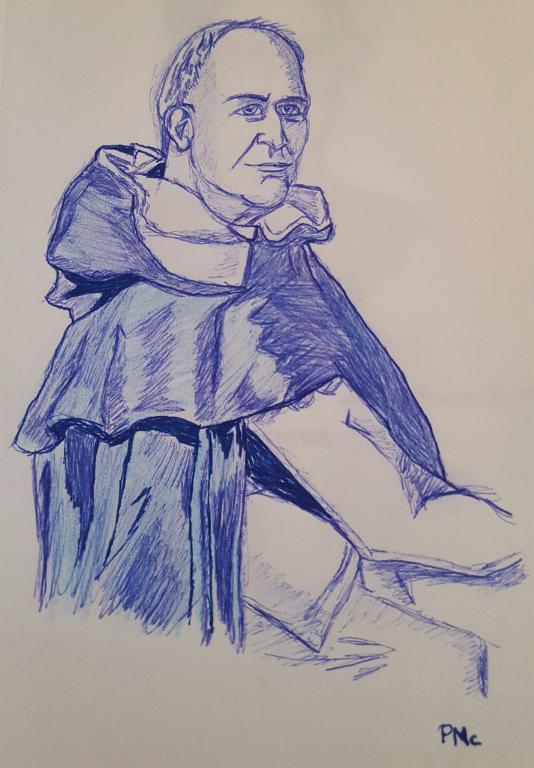 Church History can often surprise you. Just when you think the Church is on her last legs, she manages to regenerate herself through the saints she produces. For example, following the disasters of the French Revolution, a revived Church produced saints like John Vianney, Therese of Lisieux, and Blessed Frederic Ozanam, to name a few. Marian apparitions like Lourdes occurred with surprising frequency. New religious orders arose regularly, and French missionaries traveled worldwide.
One of this revival’s major figures was Jean-Baptiste Lacordaire (1802-1861), who almost single-handedly revived the Dominican Order in post-Revolution France. A theologian and activist, Lacordaire was also considered the century’s greatest Catholic preacher, whose sermons from the Notre Dame pulpit attracted thousands. His two main themes were God and liberty.
Born in the French Republic’s final days, religion didn’t play a large role in Lacordaire’s upbringing. But the revolutionary principles of freedom, equality, and fraternity did. Originally intent on a legal career, with a talent for public speaking, he declared that the Roman Senate “would not have made me nervous.” Things looked promising, except he felt “an unsatisfied want in his heart,” which led him to re-embrace Catholicism and discern a religious vocation.
After his ordination in 1827, Lacordaire served as a diocesan priest. Contemporaries remembered him as “tall, slight, of an elegant figure, his face pale and already ascetic, but lighted up by deep eyes.” Assigned to several school chaplaincies, he found it wasn’t the classroom, but the pulpit, that attracted him.
In post-Napoleonic France, the Church allied with reactionary rulers. State control was tighter than ever. Yet Lacordaire saw Catholicism as a dynamic force capable of changing the world. With Felicite de Lammenais and Charles de Montalembert, he founded a newspaper titled L’Avenir (“The Future”); its motto was “God and Liberty.” Calling for a free Church in a free State, they looked to the the hierarchy to take the lead. But the arch-conservative Gregory XVI condemned their movement in the 1832 encyclical Mirari Vos. Lacordaire and Montalembert submitted, but Lammenais refused and was excommunicated.
In 1835, Lacordaire started preaching to large audiences at Paris’s College Stanislas, on Catholicism and citizenship. At Notre Dame in 1835 and 1836, he attracted several thousand:
What, after astonishing his hearers, conquered and captivated them, was that they did not feel in this priest either blame or contempt for the age to which they were proud to belong, and the great destiny of which was one of their dogmas. He loved it as much as they did.
The lectures were a phenomenal success. The Archbishop of Paris called him “a new prophet.” Around this time, Lacordaire became interested in the Dominicans, officially titled the Order of Preachers, but there were none in France since the Revolution. So Lacordaire decided he would bring them back.
In 1839, he received the Dominican habit in Rome. He planned to return home: “We belong to [France]… by our baptisms, our misfortunes, and our needs, by our profound faith in her destiny, by our whole souls; we wish to die her children and her servants.” Returning in 1841, he reestablished the order’s French province and preached nationwide.
In 1843, Lacordaire was re-invited to Notre Dame. In addition to what contemporaries called a “marvelous voice,” his strengths included “clearness, force, brilliancy, the power to discuss the graver topics of the day at short notice in limited space, and in a manner adapted to the general intelligence.” Lacordaire was mainly an extemporaneous speaker. After sermons, he often fell prostrate, which he called “the torments of public speaking.”
Lacordaire seemed an ideal candidate for bishop, a friend suggested. In response, he wrote:
Do you imagine the hell there must be in the hearts of all those… who rule their lives in order to have a bishopric; who do not say a word and do not make a gesture that can place an obstacle in the way of their dream?…. Do you think, besides, that a bishopric suits my nature, and that I should be comfortable under the heap of papers and administrative notes that today constitute a bishop’s life? Pray, then, let us leave bishoprics alone… with the sincere desire that they may go to good priests.
While he welcomed the Revolution of 1848, serving briefly in the National Assembly, Lacordaire unsuccessfully opposed Napoleon III’s rise. Preaching against his regime at Notre Dame in 1852, he was forced into semi-exile. His last years were tinged with sadness. A biographer notes: “He had dreamed of an alliance in France between the Church and liberty; he saw the Church seeking an alliance with power.”
To the end, Lacordaire remained committed to reconciling Church and society. In February 1860, he was elected to the Academie Francais, which one historian calls “an honor which cast a gleam of brightness over his last days.” “I wish to die,” he said shortly before his death, “a penitent religious and unrepentant liberal.” (The term “Liberal” then was used to refer to those espousing the principles of the French Revolution.)
Lacordaire matters today not just because he was a great pulpit orator in 1800’s France. But because he reminds us that the Church is not a political agency. It’s a living and life-giving force capable of bringing about positive change in society. Hence he anticipated Vatican II’s emphasis on the Church in the world, as well as the Church as the People of God. He also understood that Church and society need to be at the service of God’s People, not the rich and powerful.
(*The above drawing of Lacordaire is by Pat McNamara.)
Previous Post

November 30, 2018
Soon-to-be-Saints: Servant of God Francis J. Parater (1897-1920)
Next Post
December 2, 2018 Old Catholic Poems: "Courtesy"
Browse Our Archives
Select a Category African-American Catholics Alabama Catholics American Catholic History American Catholic women American History Anniversaries Anti-Catholicism Arkansas Catholics Benedictines Bishops Blessed John Henry Newman Book Reviews Books Boston College Brooklyn churches Brothers California Catholics Capuchins Cardinals Carlo Carretto Carmelites Catholic authors Catholic Cemeteries Catholic Historians Catholic History in Less Than 5 Minutes Catholic musicians Catholic Poetry Catholic Press Catholic School Textbook Catholic University of America Catholic Worker Catholics and Music Catholics and Race Catholics in Politics Catholics in the American Revolution Catholics in the Military Catholics in the Movies Catholics in the South Catholics in the West Catholics on Stage Catjolic Women Catolic Poetry Charles de Foucauld Children's Masses Christian Brothers Christmas Church Reform Civil Rights Movement Civil War Colleges and universities Converts D.C. Catholics Deaf Catholics Dominicans. Dorothy Day English Catholics Florida Catholics Fordham University Franciscans French Catholics Georgetown University German Americans Good Shepherd Sisters Hispanic Catholics Historians and Archivists Holy Cross Fathers Holy Name Society Idaho Catholics Illinois Catholics Indian Wars Indiana Catholics Irish Americans Irish Catholicism Italian Americans Italian Catholics Jesuits Josephite Sisters Kentucky Catholics Know-Nothings Laetare Medal Recipients laity Liturgical Movement Maine Catholics Manhattan College Maryland Catholicism Michigan Catholics Middle Ages Minnesota Catholics Missionaries Mississippi Catholics Missouri Catholics Monasteries Montana Catholics Native Americans New England Catholicism New Jersey Catholics New York Catholics North American College Ohio Catholics Oratorians Oregon Catholics Parish Mission Parishes Passionists Pat McNamara's Books Paulists Pennsylvania Catholics Popes Presidents Priests Quotations Religious Orders Rhode Island Catholics Saints Salesians Seminarians Seminaries Sermons Servants of God Siisters of Charity Sisters of Mercy South Carolina Catholics Spanish-American War Sports St. Francis of Assiai St. John Henry Newman Suplicians Tennessee Catholics Texas Catholics The year in review Thomas Merton Throwback Thursday Photograph Trappists Uncategorized University of Notre Dame Video Presentations Vincentians Virginia Catholics Visitation Nuns Washington West Point West Virginia Catholics West Viriginia Catholics Wisconsin Catholicism Women Religious World War II
Select a Month December 2020 June 2020 May 2020 April 2020 March 2020 March 2019 February 2019 January 2019 December 2018 November 2018 November 2014 October 2014 September 2014 August 2014 July 2014 June 2014 May 2014 December 2013 November 2013 October 2013 August 2013 July 2013 June 2013 May 2013 April 2013 March 2013 February 2013 January 2013 December 2012 November 2012 October 2012 September 2012 August 2012 July 2012 June 2012 April 2012 March 2012 December 2011 November 2011 October 2011 September 2011 August 2011 July 2011 June 2011 May 2011 April 2011 March 2011 February 2011 January 2011 December 2010 November 2010 October 2010 January 2010 December 2009 November 2009 October 2009 September 2009 August 2009 July 2009 June 2009 May 2009 April 2009 March 2009 February 2009 January 2009 December 2008
Follow Us!
TAKE THE
Religious Wisdom Quiz
Which book of the Bible contains the most direct prophecies about the Messiah?
Select your answer to see how you score.
Micah Psalms Zechariah Isaiah
Related posts from McNamara's Blog
As St. Patrick’s Day Approaches: An Irish American...
St. Mary Euphrasia and the Good Shepherd Charism
A Dominican in Memphis: Father Joseph A. Kelly,...
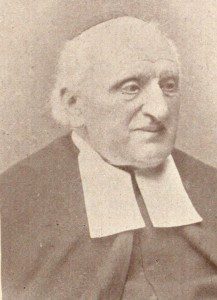
“A Heart and a Half”: Brother Andronis, F.S.C....
TRENDING AT PATHEOS Catholic

Creation, Preservation, and Teleology in Catholic Theology
As I write this, it is very early Monday morning. Like millions...

The Parable Of The Sower And The Word...
One of Christ’s most famous parables is that of the sower who...

Rejecting Doom: Christian Hope And Human Action
Christianity is a religion of hope. We are to have hope and...

Why I Choose the Eucharist Over the Sermon
Choose the Eucharist, Not the Sermon What are we supposed to get...

5 Design Elements Found in Spiritually Rooted Homes
Putting Spirituality Into Home Decor Our homes are more than our living...

Credo: A Story of God Told with the...
About 10 years ago, I began to imagine a personal "Credo" that...
view all Catholic blogs
Ad-Free & Subscriber Log-In Subscription Support
- About Us
- 2026 Calendar
- Videos
- Podcasts
- Library of World Religions
- Faith In Media Tracker
- Advertise With Us
- Write for Us
- Privacy Policy
- Terms of Service
- Do Not Sell My Data
- Contact Us
- Radiant Digital
- Manage Newsletter Subscriptions
- Unsubscribe From Notifications
- Sitemap
Copyright 2008-2026, Patheos. All rights reserved.
Subscription Support Ad-Free & Subscriber Log-In
Follow Patheos