
BuddhistCatholicContemplativeEvangelicalGeneral ChristianHinduJewishLatter-day SaintMuslimNew VisionsProgressive Christian
Beliefs
- Buddhist
- Catholic
- Contemplative
- Evangelical
- General Christian
- Hindu
- Jewish
- Latter-day Saint
- More Voices
- Muslim
- New Visions
- Pagan
- Progressive Christian
Topics
- Religion News
- Food and Religion
- Sports and Religion
- Religious Art
- Religious Music and Entertainment
- Religious Events
- History and Religion
- Style and Religion
- Politics and Religion
- Women in Religion
- Recreation Outdoors and Religion
- Business Finance and Religion
- Careers Workplace and Religion
- Education and Religion
- Family Parenting and Religion
- Health Fitness and Religion
- Home and Religion
- Relationships and Religion
- Technology and Religion
- Travel and Religion
Columnists
- Buddhist Columnists
- Business Finance and Religion Columnists
- Careers Workplace and Religion Columnists
- Catholic Columnists
- Contemplative Columnists
- Education and Religion Columnists
- Evangelists Columnists
- Family Parenting and Religion Columnists
- General Christian Columnists
- Health Fitness and Religion Columnists
- Hindu Columnists
- History and Religion Columnists
- Home and Religion Columnists
- Jewish Columnists
- More Voices Columnists
- Latter Day Columnists
- Muslim Columnists
- New Visions Columnists
- Nonreligious Columnists
- Pagan Columnists
- Politics and Religion Columnists
- Progressive Columnists
- Recreation Outdoors and Religion Columnists
- Relationships and Religion Columnists
- Religion News Columnists
- Religious Art Columnists
- Religious Events Columnists
- Religious Music and Entertainment Columnists
- Sports and Religion Columnists
- Style and Religion Columnists
- Technology and Religion Columnists
- Travel and Religion Columnists
- Women in Religion Columnists
Resource Library
- 2026 Calendar
- Library of World Religions
- The 100 Most Holy Places on Earth
- Patheos Answers
- Podcasts
- Videos
- Faith Leaders Database
- Anglican Episcopalian
- Bahai
- Baptist
- Buddhism
- Christianity
- Confucianism
- Eastern Orthodoxy
- Hinduism
- Holiness and Pentecostal
- ISKCON
- Islam
- Judaism
- Lutheran
- Methodist
- The Church of Jesus Christ of Latter-day Saints
- New Age
- Paganism
- Presbytarian and Reformed
- Protestantism
- Religion Behind the Scenes
- Roman Catholic
- Scientology
- Shia Islam
- Sikhism
- Sufism
- Sunni Islam
- Taoism
- Zen
- See all religions
Research Tools
 Ad-Free & Subscriber Log-In Subscription Support
Ad-Free & Subscriber Log-In Subscription Support
Follow Patheos 

- Trending:
- Forgiveness
- |
- Marriage
- |
- Consciousness
- |
- Death Penalty
- |
- Election
- |
- Halloween
 McNamara's Blog
- Home
- Catholic
- Forgotten Catholic Poets: John Bannister Tabb (1845-1909)
Forgotten Catholic Poets: John Bannister Tabb (1845-1909)
Last updated on: December 14, 2018 at 4:42 am by Pat McNamara
Forgotten Catholic Poets: John Bannister Tabb (1845-1909) 2018-12-14T04:42:30-07:00 Pat McNamara
Patheos Explore the world's faith through different perspectives on religion and spirituality! Patheos has the views of the prevalent religions and spiritualities of the world.
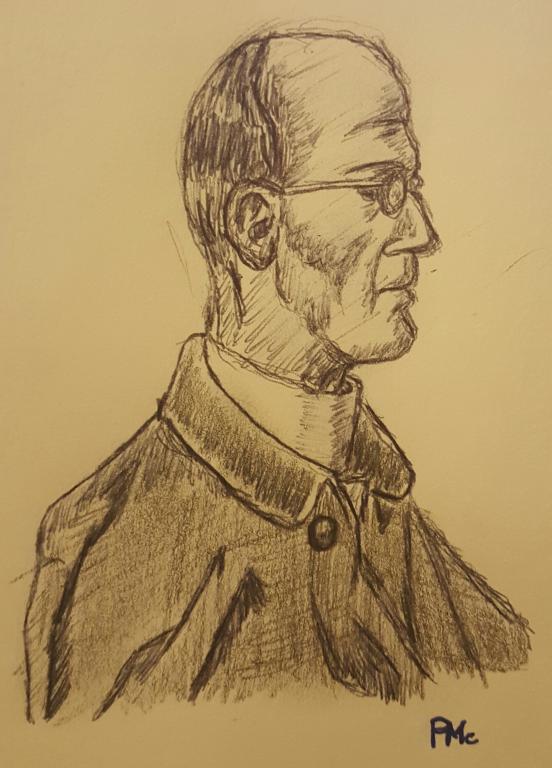 It’s hard to imagine just how profoundly different Catholics in 1800’s America felt from their neighbors. Much of this had to do with anti-Catholicism, which led them, writes Charles Morris, to “execute a remarkable emotional withdrawal from secular America.” As a result, Morris notes, there arose a “parallel of Catholic organizations of every variety”: academic societies, publishing houses, lawyers’ and doctors’ guilds, to name a few.
Catholics even had their own separate literary world, replete with “Catholic novelists” and “Catholic poets.” By the early twentieth century, Father John Banister Tabb (1845-1909) was one of the shining stars of American Catholic poetry. (Tabb Poetry Societies were common up through the 1950’s.) A Confederate veteran from a distinguished Southern family, Tabb converted to Catholicism and became a priest at age 39. He spent the rest of his life teaching seminarians English literature and writing poems on the side.
A descendant of George Washington, Tabb grew up on a plantation near Richmond amid, his biographer notes, “a multitude of slaves.” Tabb made little reference to slavery in his life, except in paternalistic terms. (One of his later poems, titled “Mammy,” pays tribute to his childhood nurse.) Educated by a private tutor, he was raised Episcopalian.
Yet Tabb was raised with “a dense ignorance of Catholicity.” When he met his first Catholic priest, he asked the man if his father had also been a priest. “No, my son,” the cleric gently replied.
As the Civil War broke out, Tabb enlisted in the Confederate Navy. For three years he ran Union blockades until captured. In a prison camp. he befriended another future poet, Sidney Lanier. Tabb never relinquished his devotion to the Confederacy. When a student suggested he visit the North, he replied: “I am a Rebel unredeemed and unredeemable, and should not feel at home there.” Like many of his former comrades, Tabb had little interest in the plight of the newly freed slaves. Although he wasn’t an avowed racist, neither his personal nor public writings show any interest in the subject.
After the war, Tabb taught in an Episcopalian school in Baltimore, where he befriended the rector, Alfred Curtis. A “High Church” Episcopalian, Curtis later converted to Catholicism and became Bishop of Wilmington, Delaware. As Tabb’s spiritual director, Curtis was a strong influence. Tabb soon “crossed the Tiber” not long thereafter. In his later years, he wrote: “I would have been a member of the Church years before if I had learned what the Catholic doctrines were.”
In 1874, Tabb entered St. Charles College, a seminary in Ellicott City, Maryland, where he would spend the rest of his life as a seminarian and a faculty member. For several years his ordination was postponed while he taught English at the college level. (The faculty at St. Charles was always short-handed.)
Tabb was a “born teacher,” reciting long passages of poetry and prose with “rare ease and force.” One student recalled him reciting Percy Bysshe Shelley’s “Ode to a Skylark”:
When he had finished he was on tiptoe at the opposite corner of the room, breathless, as if eager to follow the bird in its flight. Instinctively the class broke out in applause. He modestly suppressed our enthusiasm with the remark: ‘Gentlemen, did you see that skylark soar? If there is a single boy in this class who did not see that lark and hear him sing, I forbid him ever again to open a book of poetry, for it would be a sheer waste of time.’ Need it be said that most of those present saw the lark and heard him sing?
Later on Tabb would dedicate one of his books to his students “active and passive; perfect and imperfect; past, present and future.”
After his ordination in December 1884, Tabb soon published his first volume of poems. Over the nest 25 years he wrote nearly a dozen books, including an English textbook. His subjects varied between religion and nature; reviews tended to be fairly positive. Tabb took great pride in his accomplishments; one former student recalled: “of his own published works, he was a liberal donor.”
Tabb was widely published in magazines such as Harper’s Monthly, The Atlantic Monthly, and Cosmopolitan. Yet his main influence was in Catholic circles, where he soon became a minor celebrity. At the time, many American Catholics were highly proud of the fact that one of their own had made it in the literary world. Well into the twentieth century, his poems were standard reading in Catholic colleges and universities.
Tabb’s specialty was the short, epigrammatic poem. Of all his poems, perhaps the one that has survived best is the poem he wrote for St. Damien of Molokai, better know at the time as “Father Damien”:
O God, the cleanest offering
Of tainted earth below,
Unblushing to my feet we bring–
‘A leper white as snow!’
Described as a “spare, tall man,” Tabb never enjoyed good health. Toward the end of his life, blindness set in, but he still dictated poems to a student-secretary. After his death on November 19, 1909, Tabb was buried in his native Virginia, whose hills and mountains he loved so much and frequently visited. Despite his sizable literary output, Tabb remained first and foremost a priest-teacher forming future priests. As his eulogist put it, “his religion consisted not in sentiment, but in service.”
(*The above drawing of Father Tabb is by Pat McNamara.)
Next Post

December 18, 2018 Isaac Hecker: Who He is, Why He Matters
Browse Our Archives
Select a Category African-American Catholics Alabama Catholics American Catholic History American Catholic women American History Anniversaries Anti-Catholicism Arkansas Catholics Benedictines Bishops Blessed John Henry Newman Book Reviews Books Boston College Brooklyn churches Brothers California Catholics Capuchins Cardinals Carlo Carretto Carmelites Catholic authors Catholic Cemeteries Catholic Historians Catholic History in Less Than 5 Minutes Catholic musicians Catholic Poetry Catholic Press Catholic School Textbook Catholic University of America Catholic Worker Catholics and Music Catholics and Race Catholics in Politics Catholics in the American Revolution Catholics in the Military Catholics in the Movies Catholics in the South Catholics in the West Catholics on Stage Catjolic Women Catolic Poetry Charles de Foucauld Children's Masses Christian Brothers Christmas Church Reform Civil Rights Movement Civil War Colleges and universities Converts D.C. Catholics Deaf Catholics Dominicans. Dorothy Day English Catholics Florida Catholics Fordham University Franciscans French Catholics Georgetown University German Americans Good Shepherd Sisters Hispanic Catholics Historians and Archivists Holy Cross Fathers Holy Name Society Idaho Catholics Illinois Catholics Indian Wars Indiana Catholics Irish Americans Irish Catholicism Italian Americans Italian Catholics Jesuits Josephite Sisters Kentucky Catholics Know-Nothings Laetare Medal Recipients laity Liturgical Movement Maine Catholics Manhattan College Maryland Catholicism Michigan Catholics Middle Ages Minnesota Catholics Missionaries Mississippi Catholics Missouri Catholics Monasteries Montana Catholics Native Americans New England Catholicism New Jersey Catholics New York Catholics North American College Ohio Catholics Oratorians Oregon Catholics Parish Mission Parishes Passionists Pat McNamara's Books Paulists Pennsylvania Catholics Popes Presidents Priests Quotations Religious Orders Rhode Island Catholics Saints Salesians Seminarians Seminaries Sermons Servants of God Siisters of Charity Sisters of Mercy South Carolina Catholics Spanish-American War Sports St. Francis of Assiai St. John Henry Newman Suplicians Tennessee Catholics Texas Catholics The year in review Thomas Merton Throwback Thursday Photograph Trappists Uncategorized University of Notre Dame Video Presentations Vincentians Virginia Catholics Visitation Nuns Washington West Point West Virginia Catholics West Viriginia Catholics Wisconsin Catholicism Women Religious World War II
Select a Month December 2020 June 2020 May 2020 April 2020 March 2020 March 2019 February 2019 January 2019 December 2018 November 2018 November 2014 October 2014 September 2014 August 2014 July 2014 June 2014 May 2014 December 2013 November 2013 October 2013 August 2013 July 2013 June 2013 May 2013 April 2013 March 2013 February 2013 January 2013 December 2012 November 2012 October 2012 September 2012 August 2012 July 2012 June 2012 April 2012 March 2012 December 2011 November 2011 October 2011 September 2011 August 2011 July 2011 June 2011 May 2011 April 2011 March 2011 February 2011 January 2011 December 2010 November 2010 October 2010 January 2010 December 2009 November 2009 October 2009 September 2009 August 2009 July 2009 June 2009 May 2009 April 2009 March 2009 February 2009 January 2009 December 2008
Follow Us!
TAKE THE
Religious Wisdom Quiz
How did Jesus heal the mute and deaf man in Decapolis?
Select your answer to see how you score.
Anointed his head Said "Go in peace" Put fingers in ears and touched tongue Gave bread
Related posts from McNamara's Blog

St. John Henry Newman and the “Special Charm...
John Wayne and the Catholic Church
McNamara's Catholic Poets: Monsignor Robert Hugh Benson
TRENDING AT PATHEOS Catholic

The Parable Of The Sower And The Word...
One of Christ’s most famous parables is that of the sower who...

Rejecting Doom: Christian Hope And Human Action
Christianity is a religion of hope. We are to have hope and...

Why I Choose the Eucharist Over the Sermon
Choose the Eucharist, Not the Sermon What are we supposed to get...

5 Design Elements Found in Spiritually Rooted Homes
Putting Spirituality Into Home Decor Our homes are more than our living...

Credo: A Story of God Told with the...
About 10 years ago, I began to imagine a personal "Credo" that...

The Anatomy of Divine Revelation in Catholic Thought
The claim that God has made Himself known to human beings is...
view all Catholic blogs
Ad-Free & Subscriber Log-In Subscription Support
- About Us
- 2026 Calendar
- Videos
- Podcasts
- Library of World Religions
- Faith In Media Tracker
- Advertise With Us
- Write for Us
- Privacy Policy
- Terms of Service
- Do Not Sell My Data
- Contact Us
- Radiant Digital
- Manage Newsletter Subscriptions
- Unsubscribe From Notifications
- Sitemap
Copyright 2008-2026, Patheos. All rights reserved.
Subscription Support Ad-Free & Subscriber Log-In
Follow Patheos