
BuddhistCatholicContemplativeEvangelicalGeneral ChristianHinduJewishLatter-day SaintMuslimNew VisionsProgressive Christian
Beliefs
- Buddhist
- Catholic
- Contemplative
- Evangelical
- General Christian
- Hindu
- Jewish
- Latter-day Saint
- More Voices
- Muslim
- New Visions
- Pagan
- Progressive Christian
Topics
- Religion News
- Food and Religion
- Sports and Religion
- Religious Art
- Religious Music and Entertainment
- Religious Events
- History and Religion
- Style and Religion
- Politics and Religion
- Women in Religion
- Recreation Outdoors and Religion
- Business Finance and Religion
- Careers Workplace and Religion
- Education and Religion
- Family Parenting and Religion
- Health Fitness and Religion
- Home and Religion
- Relationships and Religion
- Technology and Religion
- Travel and Religion
Columnists
- Buddhist Columnists
- Business Finance and Religion Columnists
- Careers Workplace and Religion Columnists
- Catholic Columnists
- Contemplative Columnists
- Education and Religion Columnists
- Evangelists Columnists
- Family Parenting and Religion Columnists
- General Christian Columnists
- Health Fitness and Religion Columnists
- Hindu Columnists
- History and Religion Columnists
- Home and Religion Columnists
- Jewish Columnists
- More Voices Columnists
- Latter Day Columnists
- Muslim Columnists
- New Visions Columnists
- Nonreligious Columnists
- Pagan Columnists
- Politics and Religion Columnists
- Progressive Columnists
- Recreation Outdoors and Religion Columnists
- Relationships and Religion Columnists
- Religion News Columnists
- Religious Art Columnists
- Religious Events Columnists
- Religious Music and Entertainment Columnists
- Sports and Religion Columnists
- Style and Religion Columnists
- Technology and Religion Columnists
- Travel and Religion Columnists
- Women in Religion Columnists
Resource Library
- 2026 Calendar
- Library of World Religions
- The 100 Most Holy Places on Earth
- Patheos Answers
- Podcasts
- Videos
- Faith Leaders Database
- Anglican Episcopalian
- Bahai
- Baptist
- Buddhism
- Christianity
- Confucianism
- Eastern Orthodoxy
- Hinduism
- Holiness and Pentecostal
- ISKCON
- Islam
- Judaism
- Lutheran
- Methodist
- The Church of Jesus Christ of Latter-day Saints
- New Age
- Paganism
- Presbytarian and Reformed
- Protestantism
- Religion Behind the Scenes
- Roman Catholic
- Scientology
- Shia Islam
- Sikhism
- Sufism
- Sunni Islam
- Taoism
- Zen
- See all religions
Research Tools
 Ad-Free & Subscriber Log-In Subscription Support
Ad-Free & Subscriber Log-In Subscription Support
Follow Patheos 

- Trending:
- Forgiveness
- |
- Marriage
- |
- Consciousness
- |
- Death Penalty
- |
- Election
- |
- Halloween
 McNamara's Blog
- Home
- Catholic
- Brooklyn Catholic Architect Receives Notre Dame’s Laetare Medal, 1884
Brooklyn Catholic Architect Receives Notre Dame’s Laetare Medal, 1884
Last updated on: December 5, 2018 at 4:49 am by Pat McNamara
Brooklyn Catholic Architect Receives Notre Dame’s Laetare Medal, 1884 2018-12-05T04:49:19-07:00 Pat McNamara
Patheos Explore the world's faith through different perspectives on religion and spirituality! Patheos has the views of the prevalent religions and spiritualities of the world.
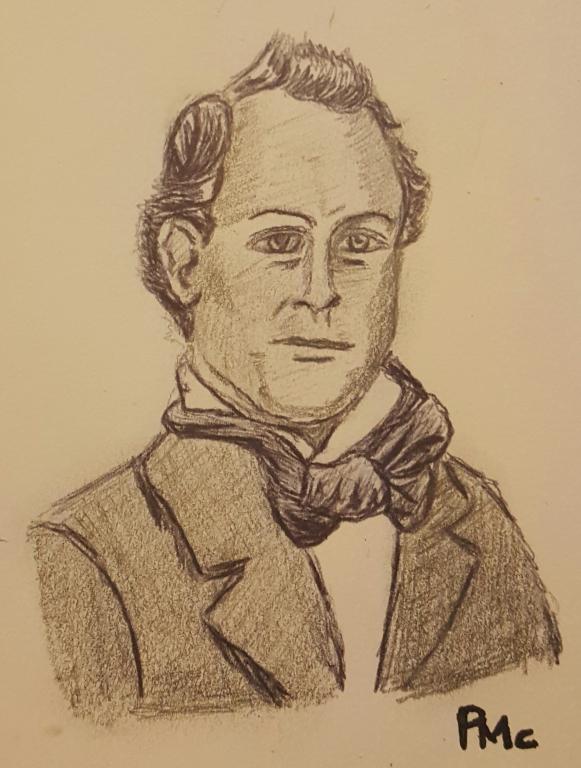 Patrick C. Keely Receives Laetare Medal, March 30, 1884, The Catholic Review, April 5, 1884
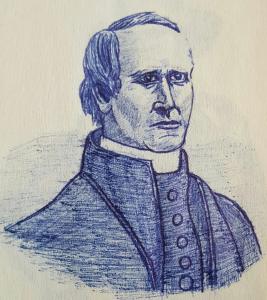
The Laetare Medal of the University of Notre Dame was conferred last Sunday on the great Catholic architect, Mr. Patrick Charles Keely of Brooklyn. No more honorable selection could have been made, nor one that would certainly reflect back on the University conferring it an honor fully corresponding to that which it gave. All public testimonies of honor, such as this, ought to have a mutual and reciprocal effect. In this case it undoubtedly had. In material value and external ornament the Laetare Medal and its accompanying address, designed and wrought by skillful hands, are things of beauty, and coming from such a respectable, progressive, and far-seeing Institution such as Notre Dame are well worthy of acceptance by even so eminent a master as Mr. Keely. On the other hand, when the University of Notre Dame determined to mark out for its homage and distinction a man eminent in his science and a great master in his truly Christian art, it selected one, the glory of whose achievements and the lustre of whose life must reflect honorably on it and this great prize that it has established. The personal modesty of Mr. Keely’s life will not permit us to say a single word in praise of himself, but everyone can infer what might be said when it is remembered to what Mr. Keely has devoted himself and his wonderful gifts. “The devout astronomer is mad.” Certainly it would be equally impossible for a Christian architect, who designs temples for the Eucharistic Sacrifice, to lack that enthusiasm for his faith which come from the hourly expression in permanent forms of the most precious thoughts of religion. The condition of the Laetare medal may therefore be passed as entirely filled in this case. Of Mr. Keely’s genius we need speak just as briefly. Already he has built seven hundred churches in honor of the Christian name, not to speak of the numberless institutions that accompanied them. The number is wholly unprecedented in the history of any architect of ancient or modern times. It could only have been reached in the phenomenal period of Catholic history that the Church in America has known during the present half century. Mr. Keely was a Providential man, raised up to meet, in his particular line, the this marvelous emergency. Nor must it be supposed that these are petty little structures, suitable for mission chapels in rural districts. Few of them are of that character. Numbers of them are works of the first class. Scores of them are cathedrals that in cost, size and structure recall the amazement of those who saw the Cathedral of Seville and believed its designers and builders mad to attempt such a gigantic task. His first great work was to carve out, with his own hands, the beautiful canopies of the altars in the old Cathedral of Brooklyn, and the crown of all his works, though we trust not his last, will be the new Cathedral of Brooklyn. That in size alone will be greater than any church yet planned on the American continent. Those who have been favored with a glimpse of the well nigh completed plans, are of opinion that its great size will be the very least of its claims to notice. Mr. Keely in his modesty never permits without protest its comparison with any other work. We will therefore say simply that it will be a most beautiful as well as a massive and impressive structure, leaving to the future to contrast it with anything that the piety of a succeeding generation may achieve. Among his other works, of which every newspaper reader must have heard, are the Jesuit churches in Montreal, Boston, and New York, the cathedrals of Buffalo, Boston, Providence, Hartford, Chicago, and Newark. That which he is building for Bishop Hendricken, though not the largest, will be in every way one of the most complete and beautiful in the country. These facts may show that Notre Dame in selecting Mr. Keely as the medallist of this year, has chosen a man of great eminence, whose life and work will be a suggestion to the young men who are growing up in the fine atmosphere of Catholic public spirit that this Western University is creating within its sphere.
NOTE: The leading Catholic architect in 1800’s America, Keely emigrated to New York in the 1840’s. The article refers to Brooklyn’s uncompleted Cathedral of the Immaculate Conception, the cornerstone of which was dedicated in the summer of 1868. Only one part of that project remains standing, the residence at Bishop Loughlin Memorial High School in Brooklyn’s Fort Greene section. A recent study suggests that the number of churches and church buildings attributed is actually much lower than seven hundred: probably closer to two hundred. A big difference, but it goes to show how anxious Catholics were to flaunt the accomplishments of one of their own in an era of intense anti-Catholicism.
(*The above drawing of Patrick Keely is by Pat McNamara.)
Previous Post

December 4, 2018
The Sisters of Mercy in Early San Francisco
Next Post
December 7, 2018 Before Alcoholics Anonymous: Father Mathew and the Pledge
Browse Our Archives
Select a Category African-American Catholics Alabama Catholics American Catholic History American Catholic women American History Anniversaries Anti-Catholicism Arkansas Catholics Benedictines Bishops Blessed John Henry Newman Book Reviews Books Boston College Brooklyn churches Brothers California Catholics Capuchins Cardinals Carlo Carretto Carmelites Catholic authors Catholic Cemeteries Catholic Historians Catholic History in Less Than 5 Minutes Catholic musicians Catholic Poetry Catholic Press Catholic School Textbook Catholic University of America Catholic Worker Catholics and Music Catholics and Race Catholics in Politics Catholics in the American Revolution Catholics in the Military Catholics in the Movies Catholics in the South Catholics in the West Catholics on Stage Catjolic Women Catolic Poetry Charles de Foucauld Children's Masses Christian Brothers Christmas Church Reform Civil Rights Movement Civil War Colleges and universities Converts D.C. Catholics Deaf Catholics Dominicans. Dorothy Day English Catholics Florida Catholics Fordham University Franciscans French Catholics Georgetown University German Americans Good Shepherd Sisters Hispanic Catholics Historians and Archivists Holy Cross Fathers Holy Name Society Idaho Catholics Illinois Catholics Indian Wars Indiana Catholics Irish Americans Irish Catholicism Italian Americans Italian Catholics Jesuits Josephite Sisters Kentucky Catholics Know-Nothings Laetare Medal Recipients laity Liturgical Movement Maine Catholics Manhattan College Maryland Catholicism Michigan Catholics Middle Ages Minnesota Catholics Missionaries Mississippi Catholics Missouri Catholics Monasteries Montana Catholics Native Americans New England Catholicism New Jersey Catholics New York Catholics North American College Ohio Catholics Oratorians Oregon Catholics Parish Mission Parishes Passionists Pat McNamara's Books Paulists Pennsylvania Catholics Popes Presidents Priests Quotations Religious Orders Rhode Island Catholics Saints Salesians Seminarians Seminaries Sermons Servants of God Siisters of Charity Sisters of Mercy South Carolina Catholics Spanish-American War Sports St. Francis of Assiai St. John Henry Newman Suplicians Tennessee Catholics Texas Catholics The year in review Thomas Merton Throwback Thursday Photograph Trappists Uncategorized University of Notre Dame Video Presentations Vincentians Virginia Catholics Visitation Nuns Washington West Point West Virginia Catholics West Viriginia Catholics Wisconsin Catholicism Women Religious World War II
Select a Month December 2020 June 2020 May 2020 April 2020 March 2020 March 2019 February 2019 January 2019 December 2018 November 2018 November 2014 October 2014 September 2014 August 2014 July 2014 June 2014 May 2014 December 2013 November 2013 October 2013 August 2013 July 2013 June 2013 May 2013 April 2013 March 2013 February 2013 January 2013 December 2012 November 2012 October 2012 September 2012 August 2012 July 2012 June 2012 April 2012 March 2012 December 2011 November 2011 October 2011 September 2011 August 2011 July 2011 June 2011 May 2011 April 2011 March 2011 February 2011 January 2011 December 2010 November 2010 October 2010 January 2010 December 2009 November 2009 October 2009 September 2009 August 2009 July 2009 June 2009 May 2009 April 2009 March 2009 February 2009 January 2009 December 2008
Follow Us!
TAKE THE
Religious Wisdom Quiz
What did Moses break upon seeing the people worshiping an idol?
Select your answer to see how you score.
Aaron's staff The Ark The altar Stone tablets
Related posts from McNamara's Blog
As St. Patrick’s Day Approaches: An Irish American...
St. Joseph‘s School for the Deaf Celebrates 150...
Who’s It Named For? Archbishop Thomas E. Molloy...
Three Giants of Brooklyn Catholicism
TRENDING AT PATHEOS Catholic

Creation, Preservation, and Teleology in Catholic Theology
As I write this, it is very early Monday morning. Like millions...

The Parable Of The Sower And The Word...
One of Christ’s most famous parables is that of the sower who...

Rejecting Doom: Christian Hope And Human Action
Christianity is a religion of hope. We are to have hope and...

Why I Choose the Eucharist Over the Sermon
Choose the Eucharist, Not the Sermon What are we supposed to get...

5 Design Elements Found in Spiritually Rooted Homes
Putting Spirituality Into Home Decor Our homes are more than our living...

Credo: A Story of God Told with the...
About 10 years ago, I began to imagine a personal "Credo" that...
view all Catholic blogs
Ad-Free & Subscriber Log-In Subscription Support
- About Us
- 2026 Calendar
- Videos
- Podcasts
- Library of World Religions
- Faith In Media Tracker
- Advertise With Us
- Write for Us
- Privacy Policy
- Terms of Service
- Do Not Sell My Data
- Contact Us
- Radiant Digital
- Manage Newsletter Subscriptions
- Unsubscribe From Notifications
- Sitemap
Copyright 2008-2026, Patheos. All rights reserved.
Subscription Support Ad-Free & Subscriber Log-In
Follow Patheos