
BuddhistCatholicContemplativeEvangelicalGeneral ChristianHinduJewishLatter-day SaintMuslimNew VisionsProgressive Christian
Beliefs
- Buddhist
- Catholic
- Contemplative
- Evangelical
- General Christian
- Hindu
- Jewish
- Latter-day Saint
- More Voices
- Muslim
- New Visions
- Pagan
- Progressive Christian
Topics
- Religion News
- Food and Religion
- Sports and Religion
- Religious Art
- Religious Music and Entertainment
- Religious Events
- History and Religion
- Style and Religion
- Politics and Religion
- Women in Religion
- Recreation Outdoors and Religion
- Business Finance and Religion
- Careers Workplace and Religion
- Education and Religion
- Family Parenting and Religion
- Health Fitness and Religion
- Home and Religion
- Relationships and Religion
- Technology and Religion
- Travel and Religion
Columnists
- Buddhist Columnists
- Business Finance and Religion Columnists
- Careers Workplace and Religion Columnists
- Catholic Columnists
- Contemplative Columnists
- Education and Religion Columnists
- Evangelists Columnists
- Family Parenting and Religion Columnists
- General Christian Columnists
- Health Fitness and Religion Columnists
- Hindu Columnists
- History and Religion Columnists
- Home and Religion Columnists
- Jewish Columnists
- More Voices Columnists
- Latter Day Columnists
- Muslim Columnists
- New Visions Columnists
- Nonreligious Columnists
- Pagan Columnists
- Politics and Religion Columnists
- Progressive Columnists
- Recreation Outdoors and Religion Columnists
- Relationships and Religion Columnists
- Religion News Columnists
- Religious Art Columnists
- Religious Events Columnists
- Religious Music and Entertainment Columnists
- Sports and Religion Columnists
- Style and Religion Columnists
- Technology and Religion Columnists
- Travel and Religion Columnists
- Women in Religion Columnists
Resource Library
- 2026 Calendar
- Library of World Religions
- The 100 Most Holy Places on Earth
- Patheos Answers
- Podcasts
- Videos
- Faith Leaders Database
- Anglican Episcopalian
- Bahai
- Baptist
- Buddhism
- Christianity
- Confucianism
- Eastern Orthodoxy
- Hinduism
- Holiness and Pentecostal
- ISKCON
- Islam
- Judaism
- Lutheran
- Methodist
- The Church of Jesus Christ of Latter-day Saints
- New Age
- Paganism
- Presbytarian and Reformed
- Protestantism
- Religion Behind the Scenes
- Roman Catholic
- Scientology
- Shia Islam
- Sikhism
- Sufism
- Sunni Islam
- Taoism
- Zen
- See all religions
Research Tools
 Ad-Free & Subscriber Log-In Subscription Support
Ad-Free & Subscriber Log-In Subscription Support
Follow Patheos 

- Trending:
- Forgiveness
- |
- Marriage
- |
- Consciousness
- |
- Death Penalty
- |
- Election
- |
- Halloween
 McNamara's Blog
- Home
- Catholic
- Scandal and Renewal at Gethsemani Abbey
Scandal and Renewal at Gethsemani Abbey
Last updated on: December 10, 2018 at 5:05 am by Pat McNamara
Scandal and Renewal at Gethsemani Abbey 2018-12-10T05:05:40-07:00 Pat McNamara
Patheos Explore the world's faith through different perspectives on religion and spirituality! Patheos has the views of the prevalent religions and spiritualities of the world.
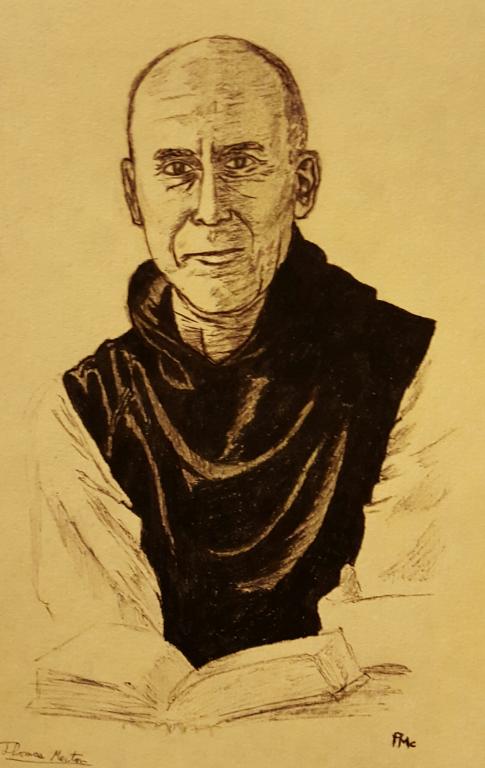 In 1948, the book world’s surprise hit was The Seven Storey Mountain, the autobiography of a Trappist monk named Thomas Merton. That year also marked the centennial of his monastery, Our Lady of Gethsemani Abbey. Over the next few years, Merton’s writings would attract unprecedented numbers of applicants to the monastery. As the year closed, Merton praised “the great sea of graces that was flowing down on Gethsemani.”
But during the abbey’s early years, its survival seemed doubtful. Lack of funds and vocations, natural disasters and scandals threatened to end America’s first Trappist experiment. (The first three abbots all resigned.) Merton himself notes, “The devil . . . has spent a hundred years trying to interfere with Gethsemani—and in the early days the battle was not altogether to his disadvantage.”
The Trappists are a branch of the Cistercian monks, a centuries old order. Over time, some Cistercians felt the order’s rule was being inadequately observed. Beginning in 1664, Normandy’s La Trappe Abbey hosted a reform movement. (The Trappists’ official title is “Cistercians of the Strict Observance.”) The monastic day, beginning at 2 a.m. and finishing at 7 p.m., consisted of prayer, reading, and labor. Silence was part of the daily regime, and they developed their own sign language.
As the French Revolution targeted the Church, many Trappists left the country. Some tried to make a fresh start in America, but for several reasons (mostly financial) they didn’t get far. In the 1840s, however, Trappists at France’s Melleray Abbey decided to try again. They purchased a piece of property in Kentucky for five thousand dollars from a group of nuns.
In November 1848, Father Eutropius Proust started off with forty-four monks. He envisioned them working in “the forests of North America, among the tigers and panthers and wolves of Kentucky.” When they arrived, there were no tigers, but there were plenty of other challenges. To attract local support, he built a school, a rare commodity on the frontier. Gethsemani College’s opening in 1851 as a boarding school had long-term consequences, not all of them positive.
In the first thirty years only eight men entered, and they all left. One was a Civil War veteran named Joseph Dutton who worked with Hawaiian lepers for decades. The first to stay was a Texas cowboy named John Hanning. Others came less willingly, troubled priests sent by their bishops to live a “life of penance and prayer.” Over the years, Gethsemani had to work hard to overcome its reputation as a clerical penitentiary.
In 1859, Father Eutropius returned to France for health reasons. His successor, Dom Benedict Berger, led Gethsemani for thirty years. (“Dom” is the official title for the abbey head.) A capable administrator, he held it together during the Civil War. The monks supported themselves through their own labor. (One local proclaimed their cider “superior to the best wine I ever drank.”) For a few years, a group of Franciscan nuns ran a boarding school, but financial difficulties led to an early closing.
When Dom Benedict resigned in 1889, he was in a wheelchair. He had been a stickler for the monastic rule, but his successor took a milder approach. Dom Edward Chaix-Bourbon’s short tenure, Merton writes, “almost ruined” the abbey. It started when he hired an Englishman named Darnley Beaufort as the college headmaster. Claiming all sorts of qualifications, including noble ancestry, Beaufort charmed the guileless abbot, but the monks distrusted him. It turned out they had good reason, for Beaufort was sexually abusing the boys at the school.
Paralyzed by shock and indecision, Dom Edward took no action. The monks lost confidence in him, forcing his return to France. Beaufort was arrested for fraud and embezzlement (but not sexual misconduct). The news made the front pages, and Beaufort ended up in jail. But the whole affair cost the monastery dearly. Merton comments that it was doubtful whether Gethsemani “would be able to endure for fifty years more.”
In 1898, there arrived the man who would revitalize Gethsemani. He was Dom Edmond Obrecht (1852-1935), the last French-born abbot, a larger than life figure. He previously worked in New York as the order’s fundraiser. A sophisticated diplomat whose collection of medieval manuscripts was one of the world’s largest, he was also a born leader who knew how to get things done.
In 1920 he made it a policy not to take any more “penitent” priests, and he started retreats for laymen. In 1912, the college burned down, but the monks weren’t greatly distressed. Most, Merton writes, “felt that God had done them a favor.” When alumni tried to raise money to rebuild the schools, Dom Edmond promptly returned their donations. After his passing, Frederic Dunne (1874-1948) became the first American to head a Trappist monastery.
Born in Georgia, Dunne worked in the publishing industry before entering Gethsemani. Historian Dianne Aprile writes: “He believed in the power of the written word, and sensed the time was right to use it to the monastery’s advantage.” When Thomas Merton entered in 1941, he assumed his writing days were finished, but Dom Frederic encouraged him to continue. During his years there, Merton published hundred of articles and nearly fifty books (all royalties go to Gethsemani).
One hundred and seventy years after its founding, Gethsemani Abbey holds pride of place as Catholic America’s flagship monastery. This makes it easy to overlook the fact that for many of those years, its existence was at best precarious. Its recovery from scandal, and its subsequent revitalization, should offer encouragement to those who ask whether the Church can recover from its present challenges. The Gethsemani story shows that the answer is a resounding “Yes.”
NOTE: The above article originally appeared in Patheos in February 2011, and is reprinted on the occasion today of the fiftieth anniversary of Thomas Merton’s death. The above drawing of Merton is by Pat McNamara.
Previous Post

December 9, 2018
Catholics in the Movies: Raoul Walsh (1887-1980)
Next Post
December 11, 2018 The Unwilling Catholic: General William Tecumseh Sherman
Browse Our Archives
Select a Category African-American Catholics Alabama Catholics American Catholic History American Catholic women American History Anniversaries Anti-Catholicism Arkansas Catholics Benedictines Bishops Blessed John Henry Newman Book Reviews Books Boston College Brooklyn churches Brothers California Catholics Capuchins Cardinals Carlo Carretto Carmelites Catholic authors Catholic Cemeteries Catholic Historians Catholic History in Less Than 5 Minutes Catholic musicians Catholic Poetry Catholic Press Catholic School Textbook Catholic University of America Catholic Worker Catholics and Music Catholics and Race Catholics in Politics Catholics in the American Revolution Catholics in the Military Catholics in the Movies Catholics in the South Catholics in the West Catholics on Stage Catjolic Women Catolic Poetry Charles de Foucauld Children's Masses Christian Brothers Christmas Church Reform Civil Rights Movement Civil War Colleges and universities Converts D.C. Catholics Deaf Catholics Dominicans. Dorothy Day English Catholics Florida Catholics Fordham University Franciscans French Catholics Georgetown University German Americans Good Shepherd Sisters Hispanic Catholics Historians and Archivists Holy Cross Fathers Holy Name Society Idaho Catholics Illinois Catholics Indian Wars Indiana Catholics Irish Americans Irish Catholicism Italian Americans Italian Catholics Jesuits Josephite Sisters Kentucky Catholics Know-Nothings Laetare Medal Recipients laity Liturgical Movement Maine Catholics Manhattan College Maryland Catholicism Michigan Catholics Middle Ages Minnesota Catholics Missionaries Mississippi Catholics Missouri Catholics Monasteries Montana Catholics Native Americans New England Catholicism New Jersey Catholics New York Catholics North American College Ohio Catholics Oratorians Oregon Catholics Parish Mission Parishes Passionists Pat McNamara's Books Paulists Pennsylvania Catholics Popes Presidents Priests Quotations Religious Orders Rhode Island Catholics Saints Salesians Seminarians Seminaries Sermons Servants of God Siisters of Charity Sisters of Mercy South Carolina Catholics Spanish-American War Sports St. Francis of Assiai St. John Henry Newman Suplicians Tennessee Catholics Texas Catholics The year in review Thomas Merton Throwback Thursday Photograph Trappists Uncategorized University of Notre Dame Video Presentations Vincentians Virginia Catholics Visitation Nuns Washington West Point West Virginia Catholics West Viriginia Catholics Wisconsin Catholicism Women Religious World War II
Select a Month December 2020 June 2020 May 2020 April 2020 March 2020 March 2019 February 2019 January 2019 December 2018 November 2018 November 2014 October 2014 September 2014 August 2014 July 2014 June 2014 May 2014 December 2013 November 2013 October 2013 August 2013 July 2013 June 2013 May 2013 April 2013 March 2013 February 2013 January 2013 December 2012 November 2012 October 2012 September 2012 August 2012 July 2012 June 2012 April 2012 March 2012 December 2011 November 2011 October 2011 September 2011 August 2011 July 2011 June 2011 May 2011 April 2011 March 2011 February 2011 January 2011 December 2010 November 2010 October 2010 January 2010 December 2009 November 2009 October 2009 September 2009 August 2009 July 2009 June 2009 May 2009 April 2009 March 2009 February 2009 January 2009 December 2008
Follow Us!
TAKE THE
Religious Wisdom Quiz
How long did Persian empire rule?
Select your answer to see how you score.
150 years 180 years 250 years 200 years
Related posts from McNamara's Blog
A Review of Daniel P. Horan, O.F.M., "The...
Carmelites Celebrate Centennial in U.S., 1890

St. John Henry Newman and the “Special Charm...

American Catholics and Race in 2020: A Church...
TRENDING AT PATHEOS Catholic

Creation, Preservation, and Teleology in Catholic Theology
As I write this, it is very early Monday morning. Like millions...

The Parable Of The Sower And The Word...
One of Christ’s most famous parables is that of the sower who...

Rejecting Doom: Christian Hope And Human Action
Christianity is a religion of hope. We are to have hope and...

Why I Choose the Eucharist Over the Sermon
Choose the Eucharist, Not the Sermon What are we supposed to get...

5 Design Elements Found in Spiritually Rooted Homes
Putting Spirituality Into Home Decor Our homes are more than our living...

Credo: A Story of God Told with the...
About 10 years ago, I began to imagine a personal "Credo" that...
view all Catholic blogs
Ad-Free & Subscriber Log-In Subscription Support
- About Us
- 2026 Calendar
- Videos
- Podcasts
- Library of World Religions
- Faith In Media Tracker
- Advertise With Us
- Write for Us
- Privacy Policy
- Terms of Service
- Do Not Sell My Data
- Contact Us
- Radiant Digital
- Manage Newsletter Subscriptions
- Unsubscribe From Notifications
- Sitemap
Copyright 2008-2026, Patheos. All rights reserved.
Subscription Support Ad-Free & Subscriber Log-In
Follow Patheos