
BuddhistCatholicContemplativeEvangelicalGeneral ChristianHinduJewishLatter-day SaintMuslimNew VisionsProgressive Christian
Beliefs
- Buddhist
- Catholic
- Contemplative
- Evangelical
- General Christian
- Hindu
- Jewish
- Latter-day Saint
- More Voices
- Muslim
- New Visions
- Pagan
- Progressive Christian
Topics
- Religion News
- Food and Religion
- Sports and Religion
- Religious Art
- Religious Music and Entertainment
- Religious Events
- History and Religion
- Style and Religion
- Politics and Religion
- Women in Religion
- Recreation Outdoors and Religion
- Business Finance and Religion
- Careers Workplace and Religion
- Education and Religion
- Family Parenting and Religion
- Health Fitness and Religion
- Home and Religion
- Relationships and Religion
- Technology and Religion
- Travel and Religion
Columnists
- Buddhist Columnists
- Business Finance and Religion Columnists
- Careers Workplace and Religion Columnists
- Catholic Columnists
- Contemplative Columnists
- Education and Religion Columnists
- Evangelists Columnists
- Family Parenting and Religion Columnists
- General Christian Columnists
- Health Fitness and Religion Columnists
- Hindu Columnists
- History and Religion Columnists
- Home and Religion Columnists
- Jewish Columnists
- More Voices Columnists
- Latter Day Columnists
- Muslim Columnists
- New Visions Columnists
- Nonreligious Columnists
- Pagan Columnists
- Politics and Religion Columnists
- Progressive Columnists
- Recreation Outdoors and Religion Columnists
- Relationships and Religion Columnists
- Religion News Columnists
- Religious Art Columnists
- Religious Events Columnists
- Religious Music and Entertainment Columnists
- Sports and Religion Columnists
- Style and Religion Columnists
- Technology and Religion Columnists
- Travel and Religion Columnists
- Women in Religion Columnists
Resource Library
- 2026 Calendar
- Library of World Religions
- The 100 Most Holy Places on Earth
- Patheos Answers
- Podcasts
- Videos
- Faith Leaders Database
- Anglican Episcopalian
- Bahai
- Baptist
- Buddhism
- Christianity
- Confucianism
- Eastern Orthodoxy
- Hinduism
- Holiness and Pentecostal
- ISKCON
- Islam
- Judaism
- Lutheran
- Methodist
- The Church of Jesus Christ of Latter-day Saints
- New Age
- Paganism
- Presbytarian and Reformed
- Protestantism
- Religion Behind the Scenes
- Roman Catholic
- Scientology
- Shia Islam
- Sikhism
- Sufism
- Sunni Islam
- Taoism
- Zen
- See all religions
Research Tools
 Ad-Free & Subscriber Log-In Subscription Support
Ad-Free & Subscriber Log-In Subscription Support
Follow Patheos 

- Trending:
- Forgiveness
- |
- Marriage
- |
- Consciousness
- |
- Death Penalty
- |
- Election
- |
- Halloween
 McNamara's Blog
- Home
- Catholic
- Holiness is Contagious: The “Social Saints” of 19th Century Turin
Holiness is Contagious: The “Social Saints” of 19th Century Turin
Last updated on: November 22, 2018 at 3:30 am by Pat McNamara
Holiness is Contagious: The “Social Saints” of 19th Century Turin 2018-11-22T03:30:42-07:00 Pat McNamara
Patheos Explore the world's faith through different perspectives on religion and spirituality! Patheos has the views of the prevalent religions and spiritualities of the world.
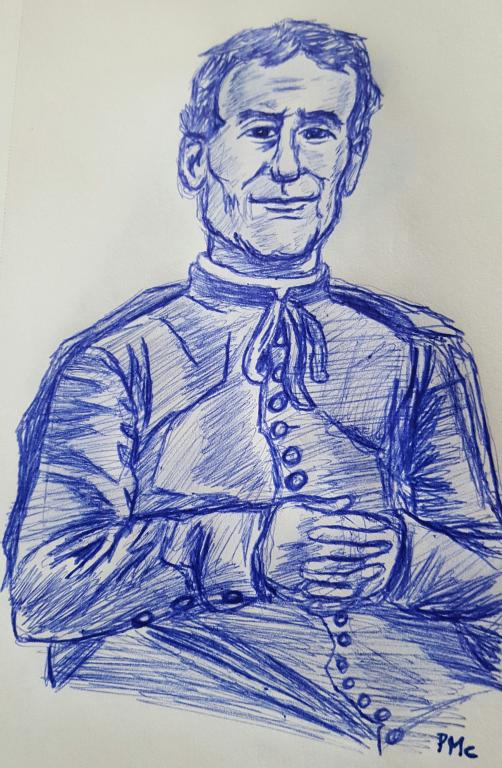 The city of Turin in northwest Italy is famous for several reasons. During the 1860’s, it was the first capital of a united Italy. Today its Cathedral of St. John the Baptist houses the famed Shroud of Turin, Christ’s alleged burial cloth, whose authenticity has been long debated. While the Church has never made an official pronouncement on this, in a 1998 visit to Turin, St. John Paul II noted: “For the believer, what counts above all is that the Shroud is a mirror of the Gospel.”
During the nineteenth century, Turin was home to a remarkable number of men and women whose lives mirrored the Gospel, men and women since raised to the altar. Known as the “social saints” for their work with the poor and destitute, Pope Francis has called their ministry a school of mercy. They are:
- St. John Bosco (1815-1888), the most famous of the group. Don Bosco was one of the giants of nineteenth century Catholicism, founder of the Salesian Fathers and Brothers who dedicated their lives to educating and evangelizing the young. Later named the patron saint of youth, he once said: “It is not enough to love the young; they must know they are loved.” (Don Bosco’s own mother, Margaret, was declared Venerable in 2006.)
- St. Joseph Cafasso (1811-1860), a friend and mentor to young Bosco, Cafasso was a seminary professor and popular spiritual director. Known as “the patron saint of the gallows,” he also ministered to Turin’s death row inmates. Frail and sickly, he burned with an apostolic enthusiasm, once declaring: “Heaven is full of converted sinners, and there is room for more.” Don Bosco preached his eulogy.
- St. Joseph Cottolengo (1786-1842). In a city fraught with poverty and destitution, at middle age Don Cottolengo experienced a call to radical service. Through his House of Divine Providence (known as the Piccola Casa), he served and lived with the sick, the poor, the exploited, the dying, and the suffering. A strong influence on Don Bosco, he founded over a dozen religious communities.
- St. Mary Mazzarello (1837-1881), Together with Don Bosco, St. Mary co-founded the Salesian Sisters to serve young women in the classroom and beyond. They grew rapidly; by 1900 they had 800 foundations worldwide. Her zeal is reflected in the following quote: “If we can do nothing more than save one soul for God we shall be more than repaid for any sacrifice that we make.”
- Venerable Juliette Colbert di Barolo (1786-1864). A transplanted French aristocrat, as a young woman she moved to Turin with her husband (who is also being considered for canonization.) A philanthropist who supported the work of Dons Bosco and Cottolengo, as a lay person she founded two women’s religious orders. (Don Cafasso was her spiritual director.) In addition, she ministered personally to Turin’s women, especially to victims of sex trafficking and other forms of exploitation and abuse.
- St. Leonardo Murialdo (1828-1900). A champion of Turin’s workers, he was called a Socialist for advocating an eight-hour workday. A protege of Dons Bosco and Cafasso, he also worked with abandoned youth and founded a religious order. Pope Benedict XVI noted that underlying his “vigorously flourishing works” was a “conviction of the merciful love of God.”
- Blessed Francesco Faa di Bruno (1825-1888). A soldier and scholar who became a priest and social reformer through the influence of Dons Cafasso and Bosco, he founded a religious order and ministered to Turin’s exploited and needy. St. John Paul II called him a “giant of faith and charity.”
Blessed John Henry Newman once remarked that the tremendous outpouring of saints in sixteenth century Europe, following the Renaissance papacy’s “monstrous corruption,” was “one of the great arguments for Christianity.” The same could be said for nineteenth century Turin, which Pope Benedict XVI called “a land made fruitful by so many examples of holiness.”
Each of these men and women were remarkable in their own right, but together they are simply amazing. Between them, they founded nearly twenty religious communities, and many of the apostolates they began continue to this day. They worked with and inspired one another. Together they illustrate a central point: holiness is contagious.
It goes without saying that the Church is undergoing a tough time right now. But if nothing else, Church history shows us that we need not despair. There is hope. Nineteenth century Turin is a great example of that. Perhaps Father James Kent Stone, an American Passionist, put it best when he wrote: “Yes, there have been scandals, if we look for them. But there have been saints and martyrs, of whom the world knows nothing. And there are saints still.”
*(The above drawing of St. John Bosco is by Pat McNamara.)
Previous Post

November 21, 2018
Books: The Perfect Christmas Gift!
Next Post
November 23, 2018 How to Preach Missions to Non-Catholics
Browse Our Archives
Select a Category African-American Catholics Alabama Catholics American Catholic History American Catholic women American History Anniversaries Anti-Catholicism Arkansas Catholics Benedictines Bishops Blessed John Henry Newman Book Reviews Books Boston College Brooklyn churches Brothers California Catholics Capuchins Cardinals Carlo Carretto Carmelites Catholic authors Catholic Cemeteries Catholic Historians Catholic History in Less Than 5 Minutes Catholic musicians Catholic Poetry Catholic Press Catholic School Textbook Catholic University of America Catholic Worker Catholics and Music Catholics and Race Catholics in Politics Catholics in the American Revolution Catholics in the Military Catholics in the Movies Catholics in the South Catholics in the West Catholics on Stage Catjolic Women Catolic Poetry Charles de Foucauld Children's Masses Christian Brothers Christmas Church Reform Civil Rights Movement Civil War Colleges and universities Converts D.C. Catholics Deaf Catholics Dominicans. Dorothy Day English Catholics Florida Catholics Fordham University Franciscans French Catholics Georgetown University German Americans Good Shepherd Sisters Hispanic Catholics Historians and Archivists Holy Cross Fathers Holy Name Society Idaho Catholics Illinois Catholics Indian Wars Indiana Catholics Irish Americans Irish Catholicism Italian Americans Italian Catholics Jesuits Josephite Sisters Kentucky Catholics Know-Nothings Laetare Medal Recipients laity Liturgical Movement Maine Catholics Manhattan College Maryland Catholicism Michigan Catholics Middle Ages Minnesota Catholics Missionaries Mississippi Catholics Missouri Catholics Monasteries Montana Catholics Native Americans New England Catholicism New Jersey Catholics New York Catholics North American College Ohio Catholics Oratorians Oregon Catholics Parish Mission Parishes Passionists Pat McNamara's Books Paulists Pennsylvania Catholics Popes Presidents Priests Quotations Religious Orders Rhode Island Catholics Saints Salesians Seminarians Seminaries Sermons Servants of God Siisters of Charity Sisters of Mercy South Carolina Catholics Spanish-American War Sports St. Francis of Assiai St. John Henry Newman Suplicians Tennessee Catholics Texas Catholics The year in review Thomas Merton Throwback Thursday Photograph Trappists Uncategorized University of Notre Dame Video Presentations Vincentians Virginia Catholics Visitation Nuns Washington West Point West Virginia Catholics West Viriginia Catholics Wisconsin Catholicism Women Religious World War II
Select a Month December 2020 June 2020 May 2020 April 2020 March 2020 March 2019 February 2019 January 2019 December 2018 November 2018 November 2014 October 2014 September 2014 August 2014 July 2014 June 2014 May 2014 December 2013 November 2013 October 2013 August 2013 July 2013 June 2013 May 2013 April 2013 March 2013 February 2013 January 2013 December 2012 November 2012 October 2012 September 2012 August 2012 July 2012 June 2012 April 2012 March 2012 December 2011 November 2011 October 2011 September 2011 August 2011 July 2011 June 2011 May 2011 April 2011 March 2011 February 2011 January 2011 December 2010 November 2010 October 2010 January 2010 December 2009 November 2009 October 2009 September 2009 August 2009 July 2009 June 2009 May 2009 April 2009 March 2009 February 2009 January 2009 December 2008
Follow Us!
TAKE THE
Religious Wisdom Quiz
What Christian group follows the "Watchtower" publication?
Select your answer to see how you score.
Baptists Jehovah’s Witnesses Seventh-day Adventists Pentecostals
Related posts from McNamara's Blog

St. John Henry Newman and the “Special Charm...
Saint Aloysius Gonzaga: A Reflection for Troubled Times
Love Before Fear: St. John Bosco and the...
St. Mary Euphrasia and the Good Shepherd Charism
TRENDING AT PATHEOS Catholic

Creation, Preservation, and Teleology in Catholic Theology
As I write this, it is very early Monday morning. Like millions...

The Parable Of The Sower And The Word...
One of Christ’s most famous parables is that of the sower who...

Rejecting Doom: Christian Hope And Human Action
Christianity is a religion of hope. We are to have hope and...

Why I Choose the Eucharist Over the Sermon
Choose the Eucharist, Not the Sermon What are we supposed to get...

5 Design Elements Found in Spiritually Rooted Homes
Putting Spirituality Into Home Decor Our homes are more than our living...

Credo: A Story of God Told with the...
About 10 years ago, I began to imagine a personal "Credo" that...
view all Catholic blogs
Ad-Free & Subscriber Log-In Subscription Support
- About Us
- 2026 Calendar
- Videos
- Podcasts
- Library of World Religions
- Faith In Media Tracker
- Advertise With Us
- Write for Us
- Privacy Policy
- Terms of Service
- Do Not Sell My Data
- Contact Us
- Radiant Digital
- Manage Newsletter Subscriptions
- Unsubscribe From Notifications
- Sitemap
Copyright 2008-2026, Patheos. All rights reserved.
Subscription Support Ad-Free & Subscriber Log-In
Follow Patheos