
BuddhistCatholicContemplativeEvangelicalGeneral ChristianHinduJewishLatter-day SaintMuslimNew VisionsProgressive Christian
Beliefs
- Buddhist
- Catholic
- Contemplative
- Evangelical
- General Christian
- Hindu
- Jewish
- Latter-day Saint
- More Voices
- Muslim
- New Visions
- Pagan
- Progressive Christian
Topics
- Religion News
- Food and Religion
- Sports and Religion
- Religious Art
- Religious Music and Entertainment
- Religious Events
- History and Religion
- Style and Religion
- Politics and Religion
- Women in Religion
- Recreation Outdoors and Religion
- Business Finance and Religion
- Careers Workplace and Religion
- Education and Religion
- Family Parenting and Religion
- Health Fitness and Religion
- Home and Religion
- Relationships and Religion
- Technology and Religion
- Travel and Religion
Columnists
- Buddhist Columnists
- Business Finance and Religion Columnists
- Careers Workplace and Religion Columnists
- Catholic Columnists
- Contemplative Columnists
- Education and Religion Columnists
- Evangelists Columnists
- Family Parenting and Religion Columnists
- General Christian Columnists
- Health Fitness and Religion Columnists
- Hindu Columnists
- History and Religion Columnists
- Home and Religion Columnists
- Jewish Columnists
- More Voices Columnists
- Latter Day Columnists
- Muslim Columnists
- New Visions Columnists
- Nonreligious Columnists
- Pagan Columnists
- Politics and Religion Columnists
- Progressive Columnists
- Recreation Outdoors and Religion Columnists
- Relationships and Religion Columnists
- Religion News Columnists
- Religious Art Columnists
- Religious Events Columnists
- Religious Music and Entertainment Columnists
- Sports and Religion Columnists
- Style and Religion Columnists
- Technology and Religion Columnists
- Travel and Religion Columnists
- Women in Religion Columnists
Resource Library
- 2026 Calendar
- Library of World Religions
- The 100 Most Holy Places on Earth
- Patheos Answers
- Podcasts
- Videos
- Faith Leaders Database
- Anglican Episcopalian
- Bahai
- Baptist
- Buddhism
- Christianity
- Confucianism
- Eastern Orthodoxy
- Hinduism
- Holiness and Pentecostal
- ISKCON
- Islam
- Judaism
- Lutheran
- Methodist
- The Church of Jesus Christ of Latter-day Saints
- New Age
- Paganism
- Presbytarian and Reformed
- Protestantism
- Religion Behind the Scenes
- Roman Catholic
- Scientology
- Shia Islam
- Sikhism
- Sufism
- Sunni Islam
- Taoism
- Zen
- See all religions
Research Tools
 Ad-Free & Subscriber Log-In Subscription Support
Ad-Free & Subscriber Log-In Subscription Support
Follow Patheos 

- Trending:
- Forgiveness
- |
- Marriage
- |
- Consciousness
- |
- Death Penalty
- |
- Election
- |
- Halloween
 McNamara's Blog
- Home
- Catholic
- Holy Cross College Alumnus Becomes Confederate General, 1863
Holy Cross College Alumnus Becomes Confederate General, 1863
Last updated on: November 20, 2013 at 5:42 am by Pat McNamara
Holy Cross College Alumnus Becomes Confederate General, 1863 2013-11-20T05:42:38-07:00 Pat McNamara
Patheos Explore the world's faith through different perspectives on religion and spirituality! Patheos has the views of the prevalent religions and spiritualities of the world.
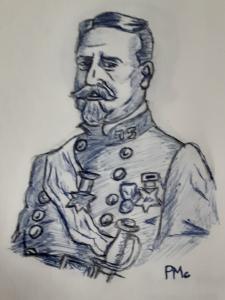
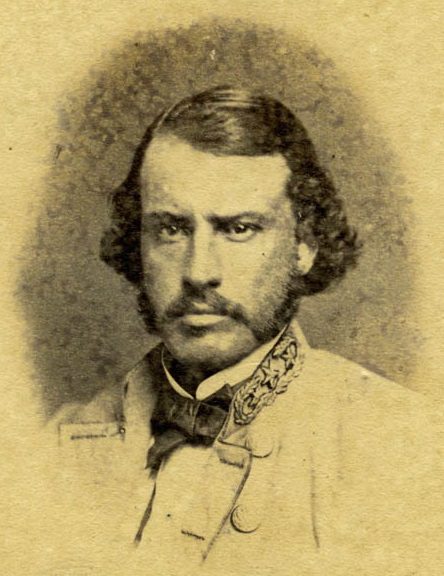 The College of the Holy Cross was founded in 1843 by Father Benedict Joseph Fenwick, a Jesuit who later became second Bishop of Boston. New England’s first Catholic college, its early students Irish immigrants like General Patrick Guiney, who fought for the North in the Civil War, as well as the Healy brothers Patrick, James and Alexander, the country’s first African-American priests. Southerners and Northerners attended the college side by side, and later fought against each other in the Civil War. Frank Armstrong, who attended Holy Cross in its early years (and was a relative of Bishop Fenwick), later served as a general in the Confederate Army. The attached article appeared in one of the college’s early yearbooks:
HOLY CROSS STUDENTS IN THE CIVIL WAR: General Armstrong,” The Holy Cross Purple, Volume 3, No. 1 (June 1896): 20-23.
Gen. Frank C. Armstrong is the son of Major Frank W. Armstrong of Tennessee, who served under Gen. Andrew Jackson, and was his personal friend. His mother, Anne M. Millard, came of an old Catholic family of Maryland, connected with the Fenwicks and Mannings. Frank C. Armstrong entered Holy Cross College in 1845. In 1854, he went to Texas, and in company with his step-father, Gen. Persifor F. Smith, U.S.A., he made a trip across the state from Corpus Christi to El Paso. It was during this year that he was recommended for an appointment in the army for the bravery he displayed in an encounter with the Indians in Texas.
In June, 1855, he was appointed Lieutenant in the 2nd U.S. Dragoons serving in Texas, Kansas, and Nebraska, until 1857, when he went with his regiment to Utah in the expedition under Gen. Albert Sydney Johnston. In 1861, he resigned his commission and joined the Confederate Army. It would require far more space than we have at our disposal to give a detailed account of the prominent part taken by Gen. Armstrong in the Civil War.
Throughout the entire war records, we find his name mentioned in terms of the highest praise. In the beginning of the war, when serving as volunteer aide-de-camp, we read how he went gallantly into the fight, and bore himself with great courage and coolness. His conduct, say the records, is ever active and soldierly, a meritorious officer whose value is lost to the service by his not receiving rank more accordant with his worth and experience. This was in March 1862.
The same year and month, Gen. Van Dorn writes, requesting that the President be pleased to confer the rank of Lieutenant Colonel on F.C. Armstrong. Nor was his promotion long deferred. After reporting to the War Department, in Richmond, Va., he joined Gen. McCulloch, commanding the Confederate forces in Arkansas, and was assigned to duty as adjutant general in his division. After the death of McCulloch, Armstrong was appointed Major, and in the reorganization at Corinth, he was elected Colonel of the 3rd Louisiana Infantry. He was soon detached from this regiment, and assigned by Gen. Bragg to organize a cavalry command.
Gen. Armstrong was now engaged in Northern Mississippi and Alabama. He attacked and captured the Federal Camp at Courtland, Ala. Having left Baldwyn at the head of 1,100 men, he was reinforced at Holly Spring by about 1,100 cavalry, pushed boldly forward toward Bolivar, met a largely superior force in front of that town, and drove them back with heavy loss, killing and wounding a large number, and capturing seventy-three prisoners. When this was accomplished, he did not delay, but pushed northward, crossed the Hatchie River, passed between Jackson and Bolivar, at which places there were heavy bodies of Federal troops, and took and held possession of the railroad for more than thirty hours, during which time he destroyed all the bridges and a mile of trestle work.
On his return, he encountered the enemy in force near Denmark, attacked and routed them, killing and wounding about seventy-five, capturing 213 prisoners and taking two pieces of artillery. The highest praise was awarded to Gen. Armstrong, for the prudence, discretion, and good sense with which he conducted this expedition. His gallant conduct was made the subject of a special despatch to the government. He was soon appointed Brigadier General, and assigned to a brigade under Van Dorn.
Later he was assigned to Forrest’s division, and commanded a brigade during the campaign in Tennessee and on the retreat to Chattanooga. In the retreat at Corinth, he proved the salvation of the retreating forces by rebuilding, with great foresight and energy, the bridge the Northern forces had burned. He served with Forrest until after the battle of Chickamauga. In the official records of this battle, special praise is given to Armstrong’s brigade, for his command was dismounted and fought almost entirely on foot, always up, and frequently in advance of, the infantry. The charges made by Armstrong’s division while fighting on foot in the battle of Chickamauga would be creditable, according to the official report, to the best drilled infantry.
After Chickamauga, he moved with Longstreet to East Tennessee, under Gen. Joe Wheeler. An inspection of the latter’s papers shows Armstrong singled out for praise for gallant and good conduct. He was engaged in no battle in which his bravery did not make him prominent, even among prominent officers. When Longstreet fell back to Virginia, Armstrong moved to Virginia, serving there until the fall of Atlanta. His coolness and foresight, his energy and determination, did not desert him during these trying days. He went with Hood’s army to Tennessee, and assisted in covering Hood’s retreat, from Franklin to the Tennessee River. His was the last Confederate brigade to cross the Pontoon bridge to the south side of the Tennessee River.
Hood knew well the bravery of his faithful follower, for he had already recommended him to Beauregard as the best man in his army for the post of Major General. Armstrong now operated in Mississippi with Forrest, but on the surrender of Generals Lee and Johnston, Forrest’s command was surrendered by Gen. Taylor to Gen. Canby.
For several years after the war, Gen. Armstrong was engaged in overland mail service in Texas, Kansas, and Indian Territory. During Mr. Cleveland’s first administration, he was made United States Indian Inspector, served for four years, and was removed by President Harrison. Under the present administration, he was appointed Assistant Commissioner of Indian Affairs, but resigned on January 1, 1895. The Secretary of the Interior expressed his regret at Gen. Armstrong’s resignation, for he was generally conceded to be the best informed man on Indian matters in the public service, and the department could not but feel his loss keenly. Gen. Armstrong is now a member of the Commission authorized by Congress to treat with the Five Civilized Tribes in the Indian Territory.
Previous Post

November 19, 2013
Montana's First Bishop Recounts Audience with Pope Leo XIII, 1890
Next Post
November 21, 2013 Catholics on Stage, 1919
Browse Our Archives
Select a Category African-American Catholics Alabama Catholics American Catholic History American Catholic women American History Anniversaries Anti-Catholicism Arkansas Catholics Benedictines Bishops Blessed John Henry Newman Book Reviews Books Boston College Brooklyn churches Brothers California Catholics Capuchins Cardinals Carlo Carretto Carmelites Catholic authors Catholic Cemeteries Catholic Historians Catholic History in Less Than 5 Minutes Catholic musicians Catholic Poetry Catholic Press Catholic School Textbook Catholic University of America Catholic Worker Catholics and Music Catholics and Race Catholics in Politics Catholics in the American Revolution Catholics in the Military Catholics in the Movies Catholics in the South Catholics in the West Catholics on Stage Catjolic Women Catolic Poetry Charles de Foucauld Children's Masses Christian Brothers Christmas Church Reform Civil Rights Movement Civil War Colleges and universities Converts D.C. Catholics Deaf Catholics Dominicans. Dorothy Day English Catholics Florida Catholics Fordham University Franciscans French Catholics Georgetown University German Americans Good Shepherd Sisters Hispanic Catholics Historians and Archivists Holy Cross Fathers Holy Name Society Idaho Catholics Illinois Catholics Indian Wars Indiana Catholics Irish Americans Irish Catholicism Italian Americans Italian Catholics Jesuits Josephite Sisters Kentucky Catholics Know-Nothings Laetare Medal Recipients laity Liturgical Movement Maine Catholics Manhattan College Maryland Catholicism Michigan Catholics Middle Ages Minnesota Catholics Missionaries Mississippi Catholics Missouri Catholics Monasteries Montana Catholics Native Americans New England Catholicism New Jersey Catholics New York Catholics North American College Ohio Catholics Oratorians Oregon Catholics Parish Mission Parishes Passionists Pat McNamara's Books Paulists Pennsylvania Catholics Popes Presidents Priests Quotations Religious Orders Rhode Island Catholics Saints Salesians Seminarians Seminaries Sermons Servants of God Siisters of Charity Sisters of Mercy South Carolina Catholics Spanish-American War Sports St. Francis of Assiai St. John Henry Newman Suplicians Tennessee Catholics Texas Catholics The year in review Thomas Merton Throwback Thursday Photograph Trappists Uncategorized University of Notre Dame Video Presentations Vincentians Virginia Catholics Visitation Nuns Washington West Point West Virginia Catholics West Viriginia Catholics Wisconsin Catholicism Women Religious World War II
Select a Month December 2020 June 2020 May 2020 April 2020 March 2020 March 2019 February 2019 January 2019 December 2018 November 2018 November 2014 October 2014 September 2014 August 2014 July 2014 June 2014 May 2014 December 2013 November 2013 October 2013 August 2013 July 2013 June 2013 May 2013 April 2013 March 2013 February 2013 January 2013 December 2012 November 2012 October 2012 September 2012 August 2012 July 2012 June 2012 April 2012 March 2012 December 2011 November 2011 October 2011 September 2011 August 2011 July 2011 June 2011 May 2011 April 2011 March 2011 February 2011 January 2011 December 2010 November 2010 October 2010 January 2010 December 2009 November 2009 October 2009 September 2009 August 2009 July 2009 June 2009 May 2009 April 2009 March 2009 February 2009 January 2009 December 2008
Follow Us!
TAKE THE
Religious Wisdom Quiz
Who is traditionally believed to have written the book of Ecclesiastes?
Select your answer to see how you score.
David Isaiah Ezra Solomon
Related posts from McNamara's Blog
A House Divided: The American Bishops and the...
A Great Book for Memorial Day-- Catholics and...
General Sherman Speaks at Notre Dame, 1865
Who’s Buried in Catholic Cemeteries?
TRENDING AT PATHEOS Catholic

Creation, Preservation, and Teleology in Catholic Theology
As I write this, it is very early Monday morning. Like millions...

The Parable Of The Sower And The Word...
One of Christ’s most famous parables is that of the sower who...

Rejecting Doom: Christian Hope And Human Action
Christianity is a religion of hope. We are to have hope and...

Why I Choose the Eucharist Over the Sermon
Choose the Eucharist, Not the Sermon What are we supposed to get...

5 Design Elements Found in Spiritually Rooted Homes
Putting Spirituality Into Home Decor Our homes are more than our living...

Credo: A Story of God Told with the...
About 10 years ago, I began to imagine a personal "Credo" that...
view all Catholic blogs
Ad-Free & Subscriber Log-In Subscription Support
- About Us
- 2026 Calendar
- Videos
- Podcasts
- Library of World Religions
- Faith In Media Tracker
- Advertise With Us
- Write for Us
- Privacy Policy
- Terms of Service
- Do Not Sell My Data
- Contact Us
- Radiant Digital
- Manage Newsletter Subscriptions
- Unsubscribe From Notifications
- Sitemap
Copyright 2008-2026, Patheos. All rights reserved.
Subscription Support Ad-Free & Subscriber Log-In
Follow Patheos