
BuddhistCatholicContemplativeEvangelicalGeneral ChristianHinduJewishLatter-day SaintMuslimNew VisionsProgressive Christian
Beliefs
- Buddhist
- Catholic
- Contemplative
- Evangelical
- General Christian
- Hindu
- Jewish
- Latter-day Saint
- More Voices
- Muslim
- New Visions
- Pagan
- Progressive Christian
Topics
- Religion News
- Food and Religion
- Sports and Religion
- Religious Art
- Religious Music and Entertainment
- Religious Events
- History and Religion
- Style and Religion
- Politics and Religion
- Women in Religion
- Recreation Outdoors and Religion
- Business Finance and Religion
- Careers Workplace and Religion
- Education and Religion
- Family Parenting and Religion
- Health Fitness and Religion
- Home and Religion
- Relationships and Religion
- Technology and Religion
- Travel and Religion
Columnists
- Buddhist Columnists
- Business Finance and Religion Columnists
- Careers Workplace and Religion Columnists
- Catholic Columnists
- Contemplative Columnists
- Education and Religion Columnists
- Evangelists Columnists
- Family Parenting and Religion Columnists
- General Christian Columnists
- Health Fitness and Religion Columnists
- Hindu Columnists
- History and Religion Columnists
- Home and Religion Columnists
- Jewish Columnists
- More Voices Columnists
- Latter Day Columnists
- Muslim Columnists
- New Visions Columnists
- Nonreligious Columnists
- Pagan Columnists
- Politics and Religion Columnists
- Progressive Columnists
- Recreation Outdoors and Religion Columnists
- Relationships and Religion Columnists
- Religion News Columnists
- Religious Art Columnists
- Religious Events Columnists
- Religious Music and Entertainment Columnists
- Sports and Religion Columnists
- Style and Religion Columnists
- Technology and Religion Columnists
- Travel and Religion Columnists
- Women in Religion Columnists
Resource Library
- 2026 Calendar
- Library of World Religions
- The 100 Most Holy Places on Earth
- Patheos Answers
- Podcasts
- Videos
- Faith Leaders Database
- Anglican Episcopalian
- Bahai
- Baptist
- Buddhism
- Christianity
- Confucianism
- Eastern Orthodoxy
- Hinduism
- Holiness and Pentecostal
- ISKCON
- Islam
- Judaism
- Lutheran
- Methodist
- The Church of Jesus Christ of Latter-day Saints
- New Age
- Paganism
- Presbytarian and Reformed
- Protestantism
- Religion Behind the Scenes
- Roman Catholic
- Scientology
- Shia Islam
- Sikhism
- Sufism
- Sunni Islam
- Taoism
- Zen
- See all religions
Research Tools
 Ad-Free & Subscriber Log-In Subscription Support
Ad-Free & Subscriber Log-In Subscription Support
Follow Patheos 

- Trending:
- Forgiveness
- |
- Marriage
- |
- Consciousness
- |
- Death Penalty
- |
- Election
- |
- Halloween
 McNamara's Blog
- Home
- Catholic
- Catholics on Stage, 1919
Catholics on Stage, 1919
Last updated on: November 21, 2013 at 2:33 am by Pat McNamara
Catholics on Stage, 1919 2013-11-21T02:33:02-07:00 Pat McNamara
Patheos Explore the world's faith through different perspectives on religion and spirituality! Patheos has the views of the prevalent religions and spiritualities of the world.
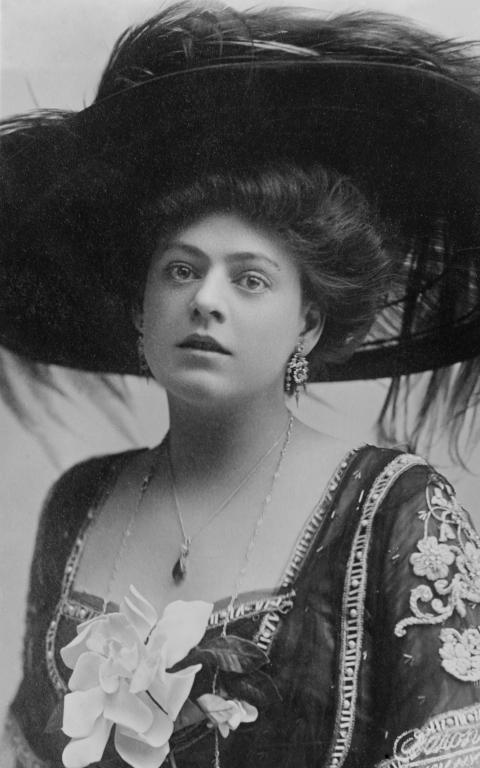 Hubert Savile, “Convent-Bred Thespians,” Theatre Magazine, Volume 30 (July 1919): 34.
SHAKESPEARE, the patron saint of actors and actresses, caused Hamlet to say to Ophelia, “Get thee to a nunnery.” It is a curious fact that many of the successful stage players were educated in religious institutions. A careful investigation reveals some interesting details. Sarah Bernhardt, undoubtedly the greatest actress of this generation, was educated at the Convent de Grandchamps, at Versailles, and is said to have astonished the good nuns by her dramatic ability, even as a young child.
Mary Anderson, whose beauty and charm attracted great attention a generation ago, was educated at the Ursuline Convent and Presentation Academy in Louisville, Kentucky, and all through her life has remained sincerely devoted to the church.
Eleanor Robson was educated at the Sisters of St. Peter’s Academy, near Fort Wadsworth, Staten Island, and even before her marriage to August Belmont, and her retirement from the stage, was deeply interested in Roman Catholic institutions and charities.
Maxine Elliott, one of the great beauties of the American stage, attended the Notre Dame Academy at Roxbury, Massachusetts. Julie Opp, another great beauty, was born in New York, and attended a local convent. Marie Nordstrom went to Georgetown Convent, District of Columbia.
Ethel Barrymore went to the Convent of Notre Dame in Philadelphia. Ethel and her brothers Lionel and John were brought up in the faith of their mother, Georgie Drew Barrymore, who became a convert to Roman Catholicism. Ethel Barrymore was instrumental in the conversion of her cousin Louise, daughter of John Drew.
Lillian Russell was educated at the Convent of the Sacred Heart in Chicago, and in after years, sent her daughter, Dorothy Solomon, to a convent. Dorothy Donnelly attended the Convent of the Sacred Heart, New York City. Minnie Maddern Fiske went to convents in Cincinnati and St Louis.
Margaret Mayo went to the Convent of the Sacred Heart in Salem, Oregon. Marguerite Clark attended the Brown County Convent in Ohio, and has always held to a high ideal in work on the stage and before the camera. Adele Ritchie went to the Villa Marie Convent, West Chester, Pennsylvania.
Rose Stahl was educated at the Convent of Mont St. Marie in Montreal. Miriam Nesbitt attended St. Mary’s Convent, Notre Dame, Indiana. Adelaide Keim went to St Joseph’s in New York City.
Pauline Chase, who achieved fame and fortune as “Peter Pan” in England, was educated at the Convent of the Sisters of the Holy Cross in Washington, District of Columbia. Cecilia Loftus, who long specialized in imitations of stage celebrities, went to the Convent of the Holy Child in Blackpool, England. Marie Tempest, who triumphed first in comic opera, and then in plays without music, attended the Convent des Ursulines at Thildonck, Belgium.
Minnie Palmer, for many years an international favorite, especially in a piece called “My Sweetheart,” was educated at the Convent of the Sacred Heart in Manhattanville New York. Sadie Martinot, who created the part of Hebe in the American production of “HMS Pinafore,” and only recently retired from the stage, was educated at the Ursuline Convent in Westchester County, New York.
Among the well-known actors who were educated at Roman Catholic institutions are Arnold Daly, who attended the Sacred Heart Academy in Brooklyn, and William Courtenay, who went to the Holy Cross College in Worcester, Massachusetts.
Wilton Lackaye attended Georgetown University in the District of Columbia, as did also Willard Mack, who has been highly successful as an actor and a playwright. Emmett Corrigan attended St Joseph’s College in Baltimore, and James J. Corbett, formerly a fighter but now an actor, went to the Sacred Heart College in San Francisco.
After Maude Adams’ appearances as the pathetic little Duc de Reichstadt in “L’Aiglon,” in 1901, her health gave way, and she suddenly left the stage to seek rest in Europe. It was not until some months later that the public learned that their favorite actress had taken refuge from a noisy world in a convent at Tours, France. There, for months, Miss Adams lived the life of the nuns, and on her return to New York, she arranged in her house, half a block from fashionable Fifth Avenue, an exact replica of the cell she occupied in the convent; the bare white walls, the iron bedstead, pathetic in its simplicity.
Fritz Williams, at the age of fourteen, attracted attention as Sir Joseph Porter, in a juvenile “Pinafore” company, after which he became known as a concert soloist singing “Gilmore’s American Anthem,” at a concert at Madison Square Garden, on St Patrick’s Day, 1880. During this time, he was studying at St. John’s College, Fordham, New York, from which institution he graduated at the age of twenty.
The early training received by these actors and actresses must surely have molded their characters, and taught things that have never been forgotten, even through the trials and tribulations of a stage career.
Previous Post

November 20, 2013
Holy Cross College Alumnus Becomes Confederate General, 1863
Next Post
November 22, 2013 Father Alexis Granger, C.S.C., University of Notre Dame (1817-1893)
Browse Our Archives
Select a Category African-American Catholics Alabama Catholics American Catholic History American Catholic women American History Anniversaries Anti-Catholicism Arkansas Catholics Benedictines Bishops Blessed John Henry Newman Book Reviews Books Boston College Brooklyn churches Brothers California Catholics Capuchins Cardinals Carlo Carretto Carmelites Catholic authors Catholic Cemeteries Catholic Historians Catholic History in Less Than 5 Minutes Catholic musicians Catholic Poetry Catholic Press Catholic School Textbook Catholic University of America Catholic Worker Catholics and Music Catholics and Race Catholics in Politics Catholics in the American Revolution Catholics in the Military Catholics in the Movies Catholics in the South Catholics in the West Catholics on Stage Catjolic Women Catolic Poetry Charles de Foucauld Children's Masses Christian Brothers Christmas Church Reform Civil Rights Movement Civil War Colleges and universities Converts D.C. Catholics Deaf Catholics Dominicans. Dorothy Day English Catholics Florida Catholics Fordham University Franciscans French Catholics Georgetown University German Americans Good Shepherd Sisters Hispanic Catholics Historians and Archivists Holy Cross Fathers Holy Name Society Idaho Catholics Illinois Catholics Indian Wars Indiana Catholics Irish Americans Irish Catholicism Italian Americans Italian Catholics Jesuits Josephite Sisters Kentucky Catholics Know-Nothings Laetare Medal Recipients laity Liturgical Movement Maine Catholics Manhattan College Maryland Catholicism Michigan Catholics Middle Ages Minnesota Catholics Missionaries Mississippi Catholics Missouri Catholics Monasteries Montana Catholics Native Americans New England Catholicism New Jersey Catholics New York Catholics North American College Ohio Catholics Oratorians Oregon Catholics Parish Mission Parishes Passionists Pat McNamara's Books Paulists Pennsylvania Catholics Popes Presidents Priests Quotations Religious Orders Rhode Island Catholics Saints Salesians Seminarians Seminaries Sermons Servants of God Siisters of Charity Sisters of Mercy South Carolina Catholics Spanish-American War Sports St. Francis of Assiai St. John Henry Newman Suplicians Tennessee Catholics Texas Catholics The year in review Thomas Merton Throwback Thursday Photograph Trappists Uncategorized University of Notre Dame Video Presentations Vincentians Virginia Catholics Visitation Nuns Washington West Point West Virginia Catholics West Viriginia Catholics Wisconsin Catholicism Women Religious World War II
Select a Month December 2020 June 2020 May 2020 April 2020 March 2020 March 2019 February 2019 January 2019 December 2018 November 2018 November 2014 October 2014 September 2014 August 2014 July 2014 June 2014 May 2014 December 2013 November 2013 October 2013 August 2013 July 2013 June 2013 May 2013 April 2013 March 2013 February 2013 January 2013 December 2012 November 2012 October 2012 September 2012 August 2012 July 2012 June 2012 April 2012 March 2012 December 2011 November 2011 October 2011 September 2011 August 2011 July 2011 June 2011 May 2011 April 2011 March 2011 February 2011 January 2011 December 2010 November 2010 October 2010 January 2010 December 2009 November 2009 October 2009 September 2009 August 2009 July 2009 June 2009 May 2009 April 2009 March 2009 February 2009 January 2009 December 2008
Follow Us!
TAKE THE
Religious Wisdom Quiz
Which prophet called bears out of the woods to attack boys who mocked him?
Select your answer to see how you score.
Samuel Elisha Isaiah Elijah
Related posts from McNamara's Blog
The Unwilling Catholic: General William Tecumseh Sherman
Civil War General Receives Notre Dame’s Laetare Medal,...
Catholics in the Movies: Pedro de Cordoba (1881-1950)
Catholics in Public Service: Senator Francis Kernan, New...
TRENDING AT PATHEOS Catholic

Rejecting Doom: Christian Hope And Human Action
Christianity is a religion of hope. We are to have hope and...

It’s What Comes From Within Which Matters
One of the most difficult things for us to understand is why...

Why I Choose the Eucharist Over the Sermon
Choose the Eucharist, Not the Sermon What are we supposed to get...

5 Design Elements Found in Spiritually Rooted Homes
Putting Spirituality Into Home Decor Our homes are more than our living...

Credo: A Story of God Told with the...
About 10 years ago, I began to imagine a personal "Credo" that...

The Anatomy of Divine Revelation in Catholic Thought
The claim that God has made Himself known to human beings is...
view all Catholic blogs
Ad-Free & Subscriber Log-In Subscription Support
- About Us
- 2026 Calendar
- Videos
- Podcasts
- Library of World Religions
- Faith In Media Tracker
- Advertise With Us
- Write for Us
- Privacy Policy
- Terms of Service
- Do Not Sell My Data
- Contact Us
- Radiant Digital
- Manage Newsletter Subscriptions
- Unsubscribe From Notifications
- Sitemap
Copyright 2008-2026, Patheos. All rights reserved.
Subscription Support Ad-Free & Subscriber Log-In
Follow Patheos