
BuddhistCatholicContemplativeEvangelicalGeneral ChristianHinduJewishLatter-day SaintMuslimNew VisionsProgressive Christian
Beliefs
- Buddhist
- Catholic
- Contemplative
- Evangelical
- General Christian
- Hindu
- Jewish
- Latter-day Saint
- More Voices
- Muslim
- New Visions
- Pagan
- Progressive Christian
Topics
- Religion News
- Food and Religion
- Sports and Religion
- Religious Art
- Religious Music and Entertainment
- Religious Events
- History and Religion
- Style and Religion
- Politics and Religion
- Women in Religion
- Recreation Outdoors and Religion
- Business Finance and Religion
- Careers Workplace and Religion
- Education and Religion
- Family Parenting and Religion
- Health Fitness and Religion
- Home and Religion
- Relationships and Religion
- Technology and Religion
- Travel and Religion
Columnists
- Buddhist Columnists
- Business Finance and Religion Columnists
- Careers Workplace and Religion Columnists
- Catholic Columnists
- Contemplative Columnists
- Education and Religion Columnists
- Evangelists Columnists
- Family Parenting and Religion Columnists
- General Christian Columnists
- Health Fitness and Religion Columnists
- Hindu Columnists
- History and Religion Columnists
- Home and Religion Columnists
- Jewish Columnists
- More Voices Columnists
- Latter Day Columnists
- Muslim Columnists
- New Visions Columnists
- Nonreligious Columnists
- Pagan Columnists
- Politics and Religion Columnists
- Progressive Columnists
- Recreation Outdoors and Religion Columnists
- Relationships and Religion Columnists
- Religion News Columnists
- Religious Art Columnists
- Religious Events Columnists
- Religious Music and Entertainment Columnists
- Sports and Religion Columnists
- Style and Religion Columnists
- Technology and Religion Columnists
- Travel and Religion Columnists
- Women in Religion Columnists
Resource Library
- 2026 Calendar
- Library of World Religions
- The 100 Most Holy Places on Earth
- Patheos Answers
- Podcasts
- Videos
- Faith Leaders Database
- Anglican Episcopalian
- Bahai
- Baptist
- Buddhism
- Christianity
- Confucianism
- Eastern Orthodoxy
- Hinduism
- Holiness and Pentecostal
- ISKCON
- Islam
- Judaism
- Lutheran
- Methodist
- The Church of Jesus Christ of Latter-day Saints
- New Age
- Paganism
- Presbytarian and Reformed
- Protestantism
- Religion Behind the Scenes
- Roman Catholic
- Scientology
- Shia Islam
- Sikhism
- Sufism
- Sunni Islam
- Taoism
- Zen
- See all religions
Research Tools
 Ad-Free & Subscriber Log-In Subscription Support
Ad-Free & Subscriber Log-In Subscription Support
Follow Patheos 

- Trending:
- Forgiveness
- |
- Marriage
- |
- Consciousness
- |
- Death Penalty
- |
- Election
- |
- Halloween
 McNamara's Blog
- Home
- Catholic
- Bishop Arrested in Civil War Mississippi, 1864
Bishop Arrested in Civil War Mississippi, 1864
Last updated on: November 8, 2013 at 7:13 am by Pat McNamara
Bishop Arrested in Civil War Mississippi, 1864 2013-11-08T07:13:21-07:00 Pat McNamara
Patheos Explore the world's faith through different perspectives on religion and spirituality! Patheos has the views of the prevalent religions and spiritualities of the world.
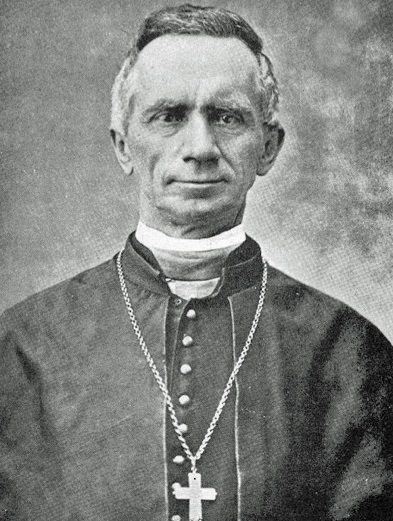 MOST REV. WILLIAM HENRY ELDER Third Bishop of Natchez Second Archbishop of Cincinnati
William Henry Elder was born in Baltimore in the year 1819, and, corresponding to the pious wish of his parents early in life, looked forward to the priesthood as the work of his life. He began his studies in Mount St Mary’s College, but pursued a theological course for three years in the College of the Propaganda at Rome. He was ordained in 1846, and, returning to the United States, was for several years president and professor of theology at Mount St Mary’s. In this quiet field of labor, he had impressed many bishops with his singular abilities.
On the 9th of January, 1857, he was selected for the see of Natchez, and received episcopal consecration on the 3rd day of May, in the cathedral of Baltimore, the consecrator being the Most Rev. Francis P. Kenrick, assisted by the Right Rev. John McGill of Richmond, and Rt. Rev James F. Wood, coadjutor of Philadelphia. He was the twelfth bishop that Mount St Mary’s had given to the Church in the United States.
Bishop Elder was actively laboring for his flock in Mississippi when the civil war began. In time, the State became the scene of battle, and the bishop with his few priests, and the communities of sisters, did all in their power to alleviate suffering, and to prepare men for a Christian death. One of his priests died amid his charitable labors. In 1864, the post commandant at Natchez, one of those fanatics who confound their Protestantism and their citizenship, issued an order requiring all clergymen to insert in their public worship a prayer for the President of the United States. Bishop Elder remonstrated, showing how nobly he and his clergy had acted, but taking the broad ground, that Congress itself could not make alterations in the form of the Mass, as offered by Catholics throughout the world, and that no Catholic priest could obey such an order. The brutal Colonel Farrar arrested Bishop Elder and sent him out of his diocese to Vidalia, Louisiana. It was one of the most daring and outrageous infringements of liberty of conscience ever perpetrated in the United States, and was committed by an officer of the general government. General Brayman soon revoked the order, but manifested his own bigotry, by the use of terms of grossest insult to the noble Catholic bishop.
When peace was at last restored, Catholicity in Mississippi was in a wretched condition; flocks had been scattered, priests were gone, institutions suspended. Bishop Elder went zealously to work to restore all, but when prosperity was beginning to dawn, the yellow fever of 1878 visited the diocese. Bishop Elder showed his wonted zeal, and was stricken down; the report even spread that he was dead as three of his priests and many sisters were. But he lived to resume his labors, and to decline in the following year the position of coadjutor to the Archbishop of San Francisco.
He yielded indeed on the 30th of January, 1880, to the command that he should proceed to Cincinnati to assume, as Bishop of Avara, a duty before which many had quailed: the administration of the diocese amid its financial wreck. The diocese of Natchez was endeared to him by his missionary labors, and his patient care; he left it with a population of 12,500, attended by twenty priests who offered the Holy Sacrifice in 41 churches scattered through the State. The Catholic body was gaining by natural increase, and by conversion, nearly one fourth, the baptisms being of adult,s and there were several religious orders laboring by good example and sound instruction to diffuse the gospel of truth. Still retaining the administration of Natchez, Bishop Elder took his residence in Cincinnati. Difficulties beset him, but his wise, temperate, and prudent course soon restored order, and around him the best elements in the diocese. In February 1882, he presided in the Fourth Provincial Council of Cincinnati, where decrees were adopted based on the necessities of the time. By the death of Archbishop Purcell, July 4th, he became Archbishop of Cincinnati and soon received the pallium. Elder took a prominent part in the work of the Third Plenary Council of Baltimore, the sessions of which were through nearly the whole month of November, 1884.
John Gilmary Shea, The Catholic Hierarchy of the United States (New York: The Office of Catholic Publications, 1886), 110-111.
NOTE: Archbishop died in 1904 as Archbishop of Cincinnati.
Previous Post

November 7, 2013
A Detroit Pastor: Father Ernest Van Dyke (1845-1918)
Next Post
November 9, 2013 Catholic Poetry: "Newman," by George N. Shuster
Browse Our Archives
Select a Category African-American Catholics Alabama Catholics American Catholic History American Catholic women American History Anniversaries Anti-Catholicism Arkansas Catholics Benedictines Bishops Blessed John Henry Newman Book Reviews Books Boston College Brooklyn churches Brothers California Catholics Capuchins Cardinals Carlo Carretto Carmelites Catholic authors Catholic Cemeteries Catholic Historians Catholic History in Less Than 5 Minutes Catholic musicians Catholic Poetry Catholic Press Catholic School Textbook Catholic University of America Catholic Worker Catholics and Music Catholics and Race Catholics in Politics Catholics in the American Revolution Catholics in the Military Catholics in the Movies Catholics in the South Catholics in the West Catholics on Stage Catjolic Women Catolic Poetry Charles de Foucauld Children's Masses Christian Brothers Christmas Church Reform Civil Rights Movement Civil War Colleges and universities Converts D.C. Catholics Deaf Catholics Dominicans. Dorothy Day English Catholics Florida Catholics Fordham University Franciscans French Catholics Georgetown University German Americans Good Shepherd Sisters Hispanic Catholics Historians and Archivists Holy Cross Fathers Holy Name Society Idaho Catholics Illinois Catholics Indian Wars Indiana Catholics Irish Americans Irish Catholicism Italian Americans Italian Catholics Jesuits Josephite Sisters Kentucky Catholics Know-Nothings Laetare Medal Recipients laity Liturgical Movement Maine Catholics Manhattan College Maryland Catholicism Michigan Catholics Middle Ages Minnesota Catholics Missionaries Mississippi Catholics Missouri Catholics Monasteries Montana Catholics Native Americans New England Catholicism New Jersey Catholics New York Catholics North American College Ohio Catholics Oratorians Oregon Catholics Parish Mission Parishes Passionists Pat McNamara's Books Paulists Pennsylvania Catholics Popes Presidents Priests Quotations Religious Orders Rhode Island Catholics Saints Salesians Seminarians Seminaries Sermons Servants of God Siisters of Charity Sisters of Mercy South Carolina Catholics Spanish-American War Sports St. Francis of Assiai St. John Henry Newman Suplicians Tennessee Catholics Texas Catholics The year in review Thomas Merton Throwback Thursday Photograph Trappists Uncategorized University of Notre Dame Video Presentations Vincentians Virginia Catholics Visitation Nuns Washington West Point West Virginia Catholics West Viriginia Catholics Wisconsin Catholicism Women Religious World War II
Select a Month December 2020 June 2020 May 2020 April 2020 March 2020 March 2019 February 2019 January 2019 December 2018 November 2018 November 2014 October 2014 September 2014 August 2014 July 2014 June 2014 May 2014 December 2013 November 2013 October 2013 August 2013 July 2013 June 2013 May 2013 April 2013 March 2013 February 2013 January 2013 December 2012 November 2012 October 2012 September 2012 August 2012 July 2012 June 2012 April 2012 March 2012 December 2011 November 2011 October 2011 September 2011 August 2011 July 2011 June 2011 May 2011 April 2011 March 2011 February 2011 January 2011 December 2010 November 2010 October 2010 January 2010 December 2009 November 2009 October 2009 September 2009 August 2009 July 2009 June 2009 May 2009 April 2009 March 2009 February 2009 January 2009 December 2008
Follow Us!
TAKE THE
Religious Wisdom Quiz
What did Eve eat in the Garden of Eden?
Select your answer to see how you score.
Bread Fruit from the Tree of Knowledge A vine branch An unclean animal
Related posts from McNamara's Blog
A House Divided: The American Bishops and the...
“I No Longer Call You Slaves”: Race, Religion,...
Who’s It Named For? Archbishop Thomas E. Molloy...
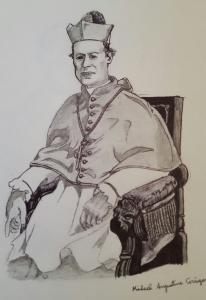
Who's It Named For? Corrigan Hall, Seton Hall...
TRENDING AT PATHEOS Catholic

Rejecting Doom: Christian Hope And Human Action
Christianity is a religion of hope. We are to have hope and...

It’s What Comes From Within Which Matters
One of the most difficult things for us to understand is why...

Why I Choose the Eucharist Over the Sermon
Choose the Eucharist, Not the Sermon What are we supposed to get...

5 Design Elements Found in Spiritually Rooted Homes
Putting Spirituality Into Home Decor Our homes are more than our living...

Credo: A Story of God Told with the...
About 10 years ago, I began to imagine a personal "Credo" that...

The Anatomy of Divine Revelation in Catholic Thought
The claim that God has made Himself known to human beings is...
view all Catholic blogs
Ad-Free & Subscriber Log-In Subscription Support
- About Us
- 2026 Calendar
- Videos
- Podcasts
- Library of World Religions
- Faith In Media Tracker
- Advertise With Us
- Write for Us
- Privacy Policy
- Terms of Service
- Do Not Sell My Data
- Contact Us
- Radiant Digital
- Manage Newsletter Subscriptions
- Unsubscribe From Notifications
- Sitemap
Copyright 2008-2026, Patheos. All rights reserved.
Subscription Support Ad-Free & Subscriber Log-In
Follow Patheos